
Last chance! 50% off DataCamp Premium
Sale ends in
Buy Now

Practice and track your progress.
Continue with GoogleBy continuing, you accept our Terms of Use, our Privacy Policy and that your data is stored in the USA.One of the biggest trends uncovered this year is the accelerating importance of AI literacy. While 86% of leaders still rank data literacy as essential for day-to-day work, a growing 69% say the same for AI literacy—a significant 7-point increase from last year.
In fact, when asked to identify the fastest-growing skills needed on their teams, AI literacy now matches business intelligence at the top of the list, surpassing data science and data literacy year-over-year. For executives, the emphasis on AI is even more pronounced.
But while AI is gaining momentum, it would be shortsighted to think of it in isolation. Data and AI literacy are deeply intertwined. Without a strong foundation in data—governance, interpretation, and analytical thinking—AI adoption risks becoming a surface-level trend. The report shows that organizations investing in both areas are better positioned to extract real value, avoid bias, and accelerate innovation.
Enterprise AI adoption is quickly shifting from early experimentation to real-world deployment. Only 9% of leaders report that no one in their organization uses AI—meaning, for the vast majority, AI is already integrated into workflows.
Tools like ChatGPT and Google Gemini dominate usage, while copilots and even custom-built AI solutions are gaining traction. AI is being used regularly: 82% of teams use AI at least once a week, and 39% use it daily.
Technical teams like IT, analytics, and R&D are leading adoption, but there remains a significant gap among business functions—including marketing, operations, sales, and finance. These are areas where AI has enormous potential to boost productivity, enhance decision-making, and personalize customer engagement.
While leaders report measurable gains in productivity, concerns remain around hallucinations, bias, and low-quality outputs. The message is clear: AI adoption is here, but responsible, effective usage depends on skills.
Over the past two years, the enterprise skills agenda has matured. Organizations have moved from ad-hoc initiatives to structured programs that reflect a growing urgency to close the data and AI skills gap.
The numbers tell a clear story. 46% of leaders now report having a mature, organization-wide data literacy program, up from 35% last year. AI training has seen even greater growth—43% of organizations now offer mature AI upskilling, nearly doubling from 25% in 2024. Meanwhile, the number of organizations offering no training at all continues to decline.
However, challenges remain. Budget constraints, employee resistance, lack of executive support, and difficulty measuring ROI continue to stall progress. Many leaders also cite a lack of interactivity and personalization in existing training resources, making it harder to drive real engagement and skill retention. The report highlights that while the infrastructure for upskilling is improving, the need for more tailored, outcome-oriented approaches is greater than ever.
In the previous section, we uncovered the biggest challenges to scaling skills across the enterprise—from budget limitations to lack of ownership and employee resistance. To better understand how organizations can overcome these challenges, we turned to the experience of DataCamp for Business customers—those leading the way in workforce upskilling.
Here are five key lessons drawn from their success:
Personalize Learning at Scale: Roles and responsibilities vary widely. A one-size-fits-all approach doesn’t work. The report recommends creating learning personas across departments to tailor content and ensure relevance—from marketing to finance to engineering. We also recommend checking out our data and AI competency framework, updated for 2025.
A free, editable version of our data competency framework is included in the report
The State of Data & AI Literacy Report 2025 is a clear call to action: in a world increasingly shaped by artificial intelligence, skills are the greatest differentiator. Organizations that invest in data and AI literacy today are better equipped to innovate, compete, and grow responsibly.
We’ve only scratched the surface here. Download the full report to explore the data, frameworks, and strategies shaping the future of the AI-powered workforce.
blog
 DataCamp Team• 3 min
blog
 Lynn Heidmann• 5 min
blog
Lynn Heidmann• 4 minContinue your Data and AI skills journey today
Course
Discover how to extract business value from AI. Learn to scope opportunities for AI, create POCs, implement solutions, and develop an AI strategy.
Course
Get your AI Act together! Understand the obligations, risks, and requirements of the EU AI Act.
Practice and track your progress.
Continue with GoogleBy continuing, you accept our Terms of Use, our Privacy Policy and that your data is stored in the USA.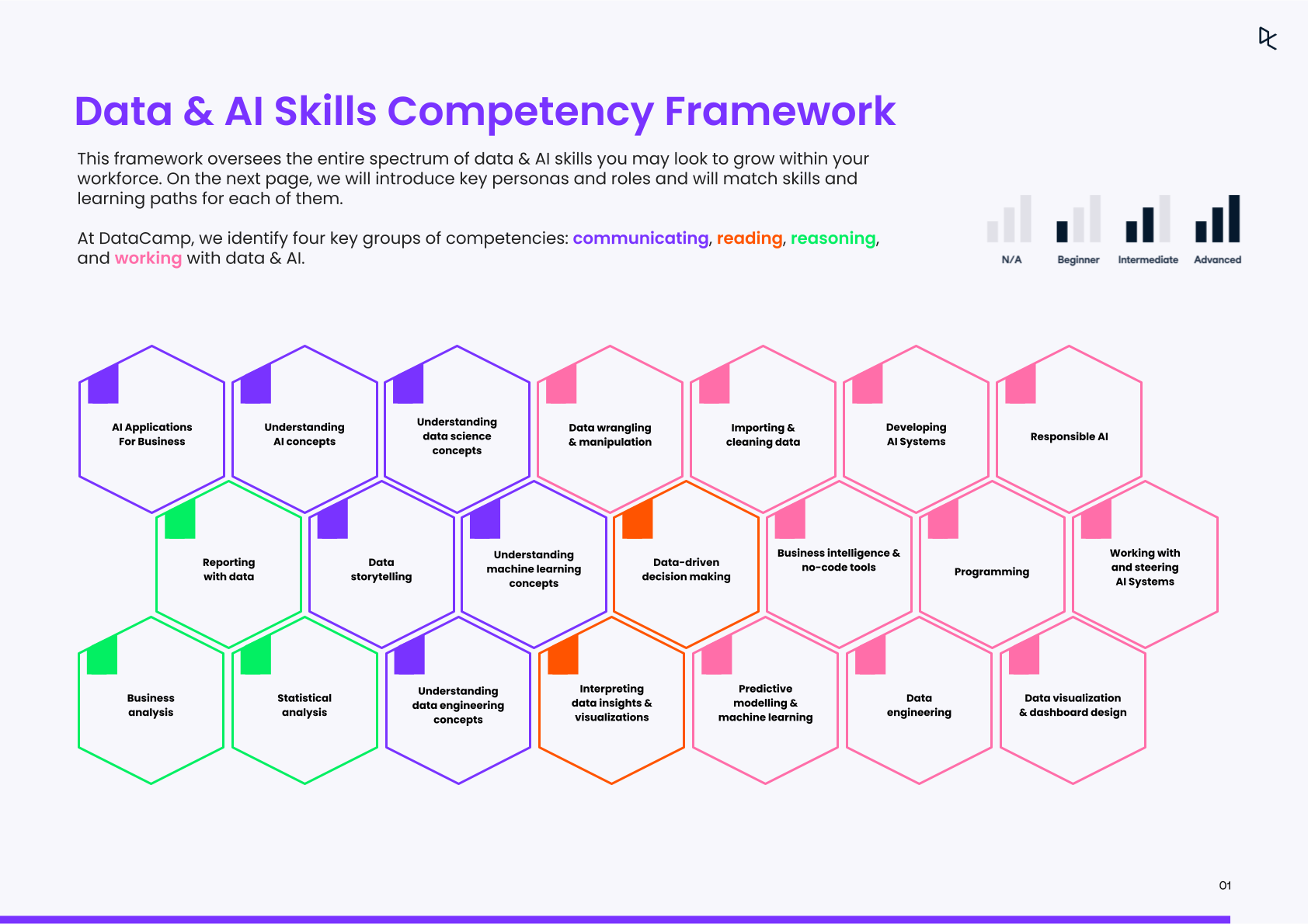


Explore the key takeaways from the 2025 edition of the State of Data & AI Literacy report, based on a survey of 500+ global leaders and expert insights from organizations like Colgate, BP, Rolls Royce, JPMorgan Chase, and more.
For the past two years, the State of Data Literacy Report has been a staple resource for understanding how data and AI literacy impact workforce readiness. This year is no different—except now, the conversation has grown in urgency. As AI moves from research labs into daily workflows, leaders are grappling with a new question: Is my team ready for the AI era?
In this year’s State of Data & AI Literacy Report, we surveyed 500+ leaders across the US and UK and drew insights from top thinkers in the industry and DataCamp for Business customers to explore the evolving data and AI skills landscape.
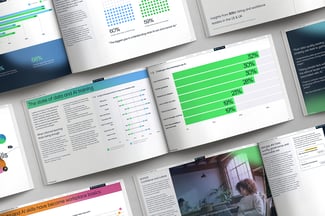
Below, you’ll find a summary of key insights from the report. But for the full picture—including deep dives, best practices, and expert commentary—we highly recommend downloading the full report.