Building a Capability Roadmap for AI
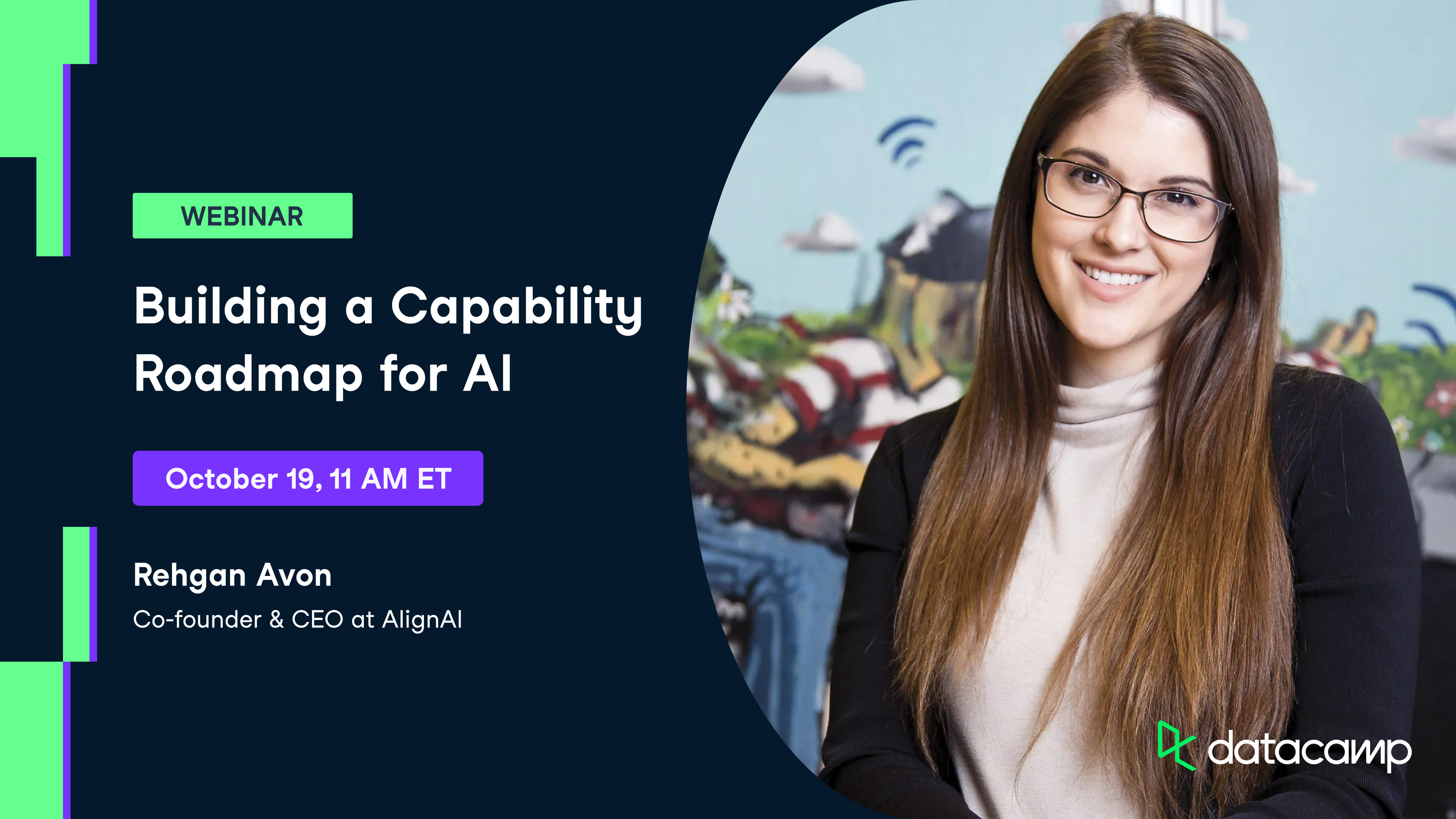
발표자

Rehgan Avon
Co-founder & CEO at AlignAI
Rehgan Avon is the co-founder & CEO of AlignAI, an AI Adoption Platform that is changing the way companies build, adopt, and govern policies and procedures for data & AI. She has worked on architecting solutions and products that operationalize machine learning models at scale within large enterprises for the last decade. Rehgan’s experience has been fueled by a passion for early-stage startups, AI, and product development.
Summary
Achieving AI success in organizations requires more than just mastering AI modeling; it includes data management, MLOps, AI product management, and effective communication. Regan Avon, co-founder and CEO of Align AI, emphasizes the need for a capability plan to boost AI adoption and governance. Key challenges include aligning the organization and the difficulty of balancing people and process, which often hinder AI implementation. Regan stresses aligning AI strategy with company goals and outlines a phased approach: from strategy alignment to operational integration. She also discusses the balance between visionary approaches and technical feasibility, highlighting the need to reconcile these methods to avoid overbuilding or creating custom solutions that lack sustainability. Moreover, the webinar explores the ROI of AI initiatives, emphasizing the need to demonstrate business value and secure continuous funding. Regan also touches on adjustments to agile methodology for AI projects, the importance of change management, and the evolving role of AI teams within organizational structures. By encouraging collaboration between technical and non-technical teams, and prioritizing scalable, sustainable AI systems, companies can better manage the complexities of AI implementation.
Key Takeaways:
- AI success depends on mastering multiple disciplines beyond modeling, including data management and AI product management.
- Aligning AI strategy with company goals is important for realizing ROI and operational integration.
- Balance visionary ideas with technical feasibility to avoid overbuilding or unsustainable solutions.
- Adjust agile methodology for AI projects to account for technical nuances and feasibility assessments.
- Encourage collaboration between technical and non-technical teams to ensure scalable and sustainable AI systems.
Deep Dives
Aligning AI Strategy with Company Goals
Regan Avon emphasizes the importance of aligning AI strategy with overall company objectives. This alignment ensures that AI initiatives contribute meaningfully to business goals such as increasing market share, launching new products, or enhancing customer service. Regan outlines a four-phase approach: starting with aligning AI strategies to company goals, prioritizing use cases, assessing AI and data feasibility, and finally operationalizing and integrating these solutions into the organization. This method not only clarifies the potential ROI but also ensures that AI initiatives are purposeful and impactful. As Regan points out, “If you can start to make business justifications on some of these use cases that are leveraging these core fundamental capabilities you’ve built, you can start to associate actual value back to the company.”
Reconciling Visionary Ideas and Technical Feasibility
One of the important discussions in the webinar revolves around the reconciliation of visionary ideas and technical feasibility in AI implementation. The visionary approach often involves innovative ideas from the business perspective without initial regard for feasibility, while the technical feasibility approach focuses on building technical capabilities. Regan emphasizes the need to balance these approaches to avoid overbuilding or creating custom solutions that are not sustainable. She suggests starting with use cases that align with company objectives and building necessary capabilities iteratively. Regan advises, “You really need to balance both... start tacking on, like, more and more of those foundational tasks and projects as you get more of these use cases pushed out.”
Adjusting Agile Methodology for AI
The webinar discusses the adjustment of agile methodologies for AI projects, acknowledging the unique challenges posed by AI’s technical nuances. Unlike traditional software development, AI projects require a significant feasibility assessment phase due to the complexity and variability of data-driven solutions. Regan discusses the difficulty of fitting data science feasibility work into typical agile sprints, highlighting, “We could spend a whole year researching to see if this problem is feasible... applying agile to that in a strict way can be really challenging.” Despite these challenges, agile principles can be adjusted to manage deployment and task solidification effectively, ensuring iterative progress and adaptation in AI projects.
Encouraging Collaboration between Technical and Non-Technical Teams
Regan Avon emphasizes the importance of encouraging collaboration between technical and non-technical teams to enhance AI adoption and effectiveness. She suggests educational initiatives and ‘roadshows’ to bridge the knowledge gap, enabling business teams to understand the potential of AI solutions and contribute valuable insights. Regan highlights a decision mapping approach to identify key decisions that can be supported by AI, encouraging a collaborative environment for idea generation and prioritization. “Have some sort of process for them to know who you are, understand how you can support them... having somebody who will spend some time with those folks to understand deeper,” she advises. This collaborative approach not only aids in identifying viable AI use cases but also ensures that AI solutions are aligned with business needs and objectives.


