본문으로 바로가기

세부 정보를 입력하여 웨비나에 참여하세요.

계속 진행하시면 당사의 이용약관, 개인정보처리방침 및 귀하의 데이터가 미국에 저장되는 것에 동의하시는 것입니다.

스피커

비즈니스용

2명 이상을 교육하시나요?

팀원들이 중앙 집중식 보고, 과제, 프로젝트 등을 포함한 DataCamp 라이브러리 전체에 액세스할 수 있도록 하세요.
DataCamp for Business를 사용해 보세요.맞춤형 솔루션을 원하시면 데모를 예약하세요.

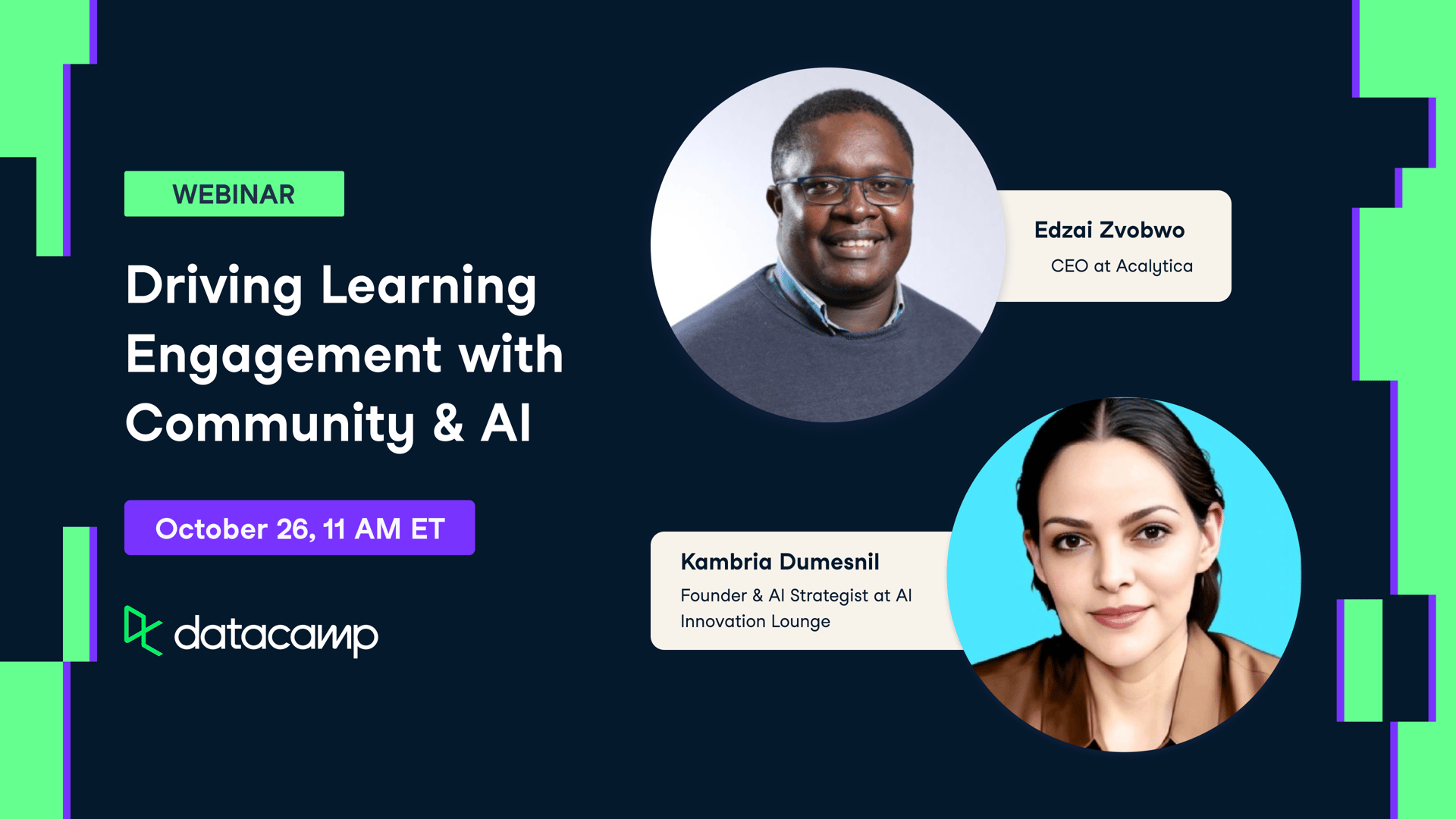
Driving Learning Engagement with Community and AI

November 2023
Webinar Preview

Summary

In the rapidly evolving field of corporate learning and development (L&D), staying relevant and effective brings about significant corporate training challenges. The focus often lies on maintaining employee engagement in training and adjusting programs to meet diverse needs. Strategies such as community and social learning, as well as artificial intelligence (AI), are becoming essential in enhancing the effectiveness of upskilling initiatives. Richie, the webinar host, and his guests, Edsai Tsvabwo and Cambria Dumeznil, explore these strategies, emphasizing the importance of aligning learning programs with corporate goals and leveraging AI to personalize and optimize learning experiences. They discuss the important role of needs analysis in creating impactful programs and the potential of AI and community learning to transform traditional L&D approaches.

Key Takeaways:

  • AI in learning and development can transform learning experiences by personalizing content and optimizing workflows.
  • Community and social learning enhance engagement and create a culture of continuous improvement.
  • Effective workplace learning strategies align with corporate goals and are adjusted to diverse employee needs.
  • Gamification in training and strategic communication can significantly improve training program adoption.
  • Evaluation and feedback are important in measuring the success and ROI of learning programs.

Deep Dives

Community and Social Learning

Community and social learning are powerful tools in the arsenal of learning and development teams seeking to enhance employee engagement. By creating a collaborati ...
더 읽어보기

ve environment, companies can encourage employees to share knowledge and learn from each other. Edsai Tsvabwo, CEO of Akalytica, highlighted the success of MathG, an online community platform that used peer-to-peer interaction to improve learning outcomes. Social learning complements formal education by incorporating informal learning experiences, which, as Edsai points out, often account for a significant portion of overall learning. This approach not only helps in skill acquisition but also builds a sense of community and belonging among employees, which can lead to higher engagement and retention rates.

Utilizing AI in Learning and Development

AI is revolutionizing the way learning and development programs are structured and delivered. Cambria Dumeznil, founder of AI Innovation Lounge, discussed how AI can be used to create personalized learning experiences that adapt to individual learner needs. The integration of AI in L&D allows for the automation of routine tasks, freeing up time for more strategic activities such as needs analysis and program evaluation. AI-powered learning solutions can also provide real-time feedback and support, enhancing the learning experience and making it more interactive. As Edsai noted, AI's potential to create a Socratic method of learning through interactive questioning can lead to deeper understanding and retention of knowledge.

Importance of Needs Analysis in Learning Programs

Conducting a thorough needs analysis is an important step in developing effective learning and development programs. It involves identifying the specific skills and knowledge gaps within an organization and aligning learning objectives with business goals. As highlighted by Cambria, understanding the unique needs of different employee groups ensures that the training is relevant and impactful. This alignment not only enhances the learning experience but also contributes to achieving measurable business outcomes. Needs analysis helps in prioritizing training efforts and resources, ensuring that they are directed towards areas that will have the most significant impact on performance and productivity.

Gamification and Workplace Learning Strategies

Gamification and strategic communication are effective strategies for increasing engagement and participation in learning programs. Edsai emphasized the importance of understanding what motivates employees and adjusting gamification elements to suit their preferences. Whether it's through rewards, recognition, or competitions, gamifying the learning process can make it more engaging and enjoyable for participants. Additionally, clear communication about the benefits and objectives of the training programs is essential to encourage participation. As Cambria pointed out, setting aside dedicated time for learning during work hours and using change management techniques can further support employee engagement and program adoption.


관련된

webinar

Scaling Data & AI Literacy with a Persona-Driven Framework

In this session, three experts walk you through the steps of creating a successful data training program.

webinar

Scaling Data & AI Literacy with a Persona-Driven Framework

In this session, three experts walk you through the steps of creating a successful data training program.

webinar

Revolutionizing Learning: Exploring the Future of Upskilling with AI

Join us as the panel of AI and education experts discuss how to work with generative AI to upskill employees and improve corporate training programs.

webinar

Driving AI Literacy in Organizations

Gain insight into the growing importance of AI literacy and its role in driving success for modern organizations.

webinar

Leading with AI: Leadership Insights on Driving Successful AI Transformation

C-level leaders from industry and government will explore how they're harnessing AI to propel their organizations forward.

webinar

Designing An Effective AI Literacy Strategy: A How-to Guide for Leaders

Alex Jaimes, CAIO at Dataminr, and Doug Laney, Innovation Fellow at West Monroe, teach you how to develop a strategy to enable all your employees to become AI literate.