Optimizing Your AI Maturity
आपके प्रस्तुतकर्ता(s)

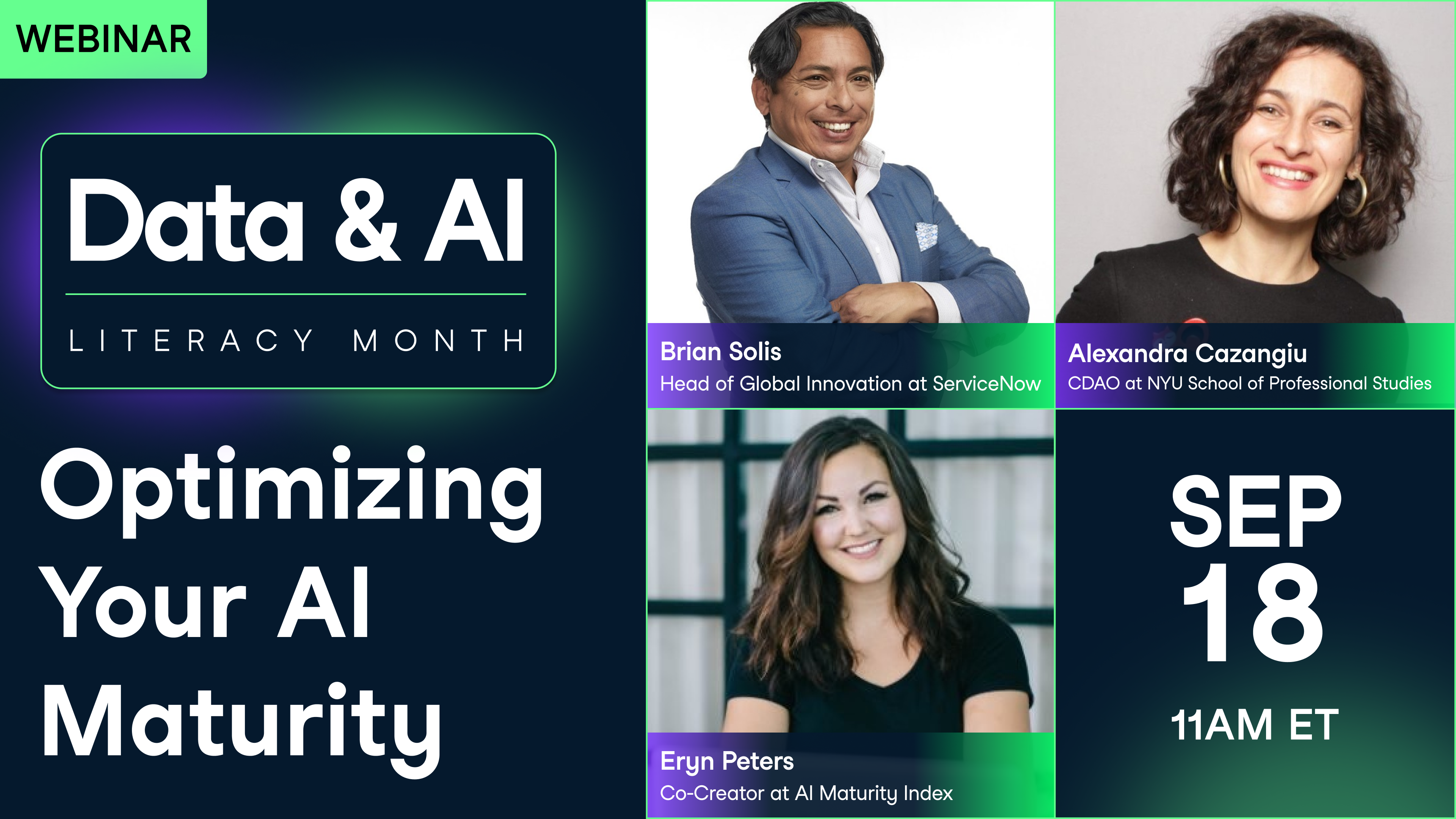
Brian Solis
Head of Global Innovation at ServiceNow
As the Head of Global Innovation at ServiceNow, Brian drives vision and strategy for future-focused innovation. He has three decades of experience as a technology leader, and Forbes called him "one of the more creative and brilliant business minds of our time". Previously, Brian was VP of Global Innovation at Salesforce. He has written nine books, including the best selling "Mindshift". Brian is an author of the ServiceNow Enterprise AI Maturity Index 2025 Report.

Alexandra Cazangiu
CDAO at NYU School of Professional Studies
Alexandra leads data strategy, governance, and analytics to enable data-driven decision‑making across academic and administrative functions. Her work focuses on data culture, AI literacy, and governance. Alexandra built her career at the intersection of analytics and strategy, shaping data governance and literacy programs in educational and professional settings before ascending to her current senior leadership role.

Eryn Peters
Co-Creator at AI Maturity Index
Eryn is a future of work evangelist. She is the co-creator of a tool for assessing AI maturity, and regularly advises companies on how to assess and improve their AI maturity. Eryn is also the Editor of the Weekly Workforce newsletter and the Principal at the Startup Consortium consultancy. Previously, she was the Global Director of the Association for the Future of Work, and VP of Marketing at Andela.
Summary
Links Mentioned by Speakers
- https://hbr.org/2024/11/train-your-brain-to-work-creatively-with-gen-ai
- https://www.servicenow.com/content/dam/servicenow-assets/public/en-us/doc-type/resource-center/white-paper/wp-enterprise-ai-maturity-index-2025.pdf
Optimizing AI maturity is essential for organizations aiming to maximize the potential of artificial intelligence. The session explores the concept of AI maturity, focusing on how organizations can assess and enhance their AI capabilities. It features insights from industry experts like Brian Solis, Eryn Peters, and Alexandra Cazangiu, who discuss the importance of self-reflection in AI development, the role of technology, talent, and processes in improving AI maturity, and the challenges faced by companies in this rapidly evolving field. The discussion highlights examples of AI maturity from companies like Deloitte, Microsoft, and Netflix, emphasizing the need for continuous learning and adaptation. The session also covers the significance of governance, the necessity of aligning AI initiatives with business goals, and the importance of creating a culture of innovation and critical thinking.
Key Takeaways:
- AI maturity involves continuous self-assessment and improvement across technology, talent, and processes.
- Successful AI integration requires alignment with business goals and a focus on solving specific problems.
- Governance and data quality are foundational to effective AI implementation.
- Change management should involve transparency, empathy, and active participation from all stakeholders.
- Organizations should aim for both automation and augmentation to unlock new value.
In-Depth Analysis
Understanding AI Maturity
AI maturity is a continuous process of improvement and adaptation. Organizations need to assess their current capabilities honestly, considering factors like strategy, workflow integration, talent, and governance. As Brian Solis noted, "No matter where you are, just having this conversation is important." The AI maturity index can serve as a benchmark, helping companies identify areas for growth. However, it's important to remember that AI maturity is a moving target, with technology and best practices evolving rapidly.
Technology and Tools
Updating the technology stack is often the first step in enhancing AI maturity. Organizations should start with generalist tools like chatbots and gradually move to specialized solutions designed for specific business needs. As Eryn Peters explained, "Take a look at where you are currently... then start trying to move your way up further in that pyramid structure for tools." It's essential to align technology choices with business objectives, ensuring that they address real problems and deliver tangible value.
Skills and Learning
The skills required for AI maturity extend beyond technical expertise to include critical thinking, curiosity, and continuous learning. Brian Solis emphasized the importance of asking, "What are we going to do with that free time?" freed up by automation. Organizations should focus on developing both hard and soft skills, encouraging employees to explore AI creatively and collaboratively. This approach encourages a culture of innovation and helps teams adapt to the ever-changing AI environment.
Change Management and Process Reengineering
Effective change management is vital for successful AI integration. It involves clear communication, empathy, and active involvement from all stakeholders. As Alexandra Cazangiu highlighted, "Involve the end users from the beginning." Organizations should aim to reengineer processes by identifying quick wins that demonstrate AI's value across different functions. This approach helps build momentum and support for broader AI initiatives, ensuring that changes are embraced and sustained over time.