Win a hand-signed Picasso
Prove your taste is worth something: Submit an AI-made video for a chance to win a hand-signed Picasso.
Ideas are everywhere. Taste isn't
AI made content abundant. Quality? Not so much.
Anyone can generate a video in seconds now, and that's created a problem. When production is free, output stops being a signal of anything. It doesn't tell you who's put in the work, or who has something worth saying.
It tells you someone had access to a tool and a half-baked idea.
And at this point, that's everyone. So the scarce resource moved. It's not the ability to make something anymore; it's the judgment to know whether what you made is any good.
That's taste, and it's the one thing AI can't do for you.
This competition is our way of testing for it, with a prize that makes the stakes hard to ignore.
Quality in the age of slop
Here's the distinction we care about: AI can amplify real creativity, or it can produce more of the same. Both count as "AI video." Only one is worth anyone's attention.
The lazy version of this competition would reward whoever generates the flashiest clip. That's not what we're judging. Our rubric scores clarity of explanation, creativity and originality, video quality, and specifically, whether the entry uses AI generation as a real creative tool rather than bolting it onto something that could've been a slideshow. A five-second prompt and a polished still image isn't an entry. An original way of explaining how a SQL GROUP BY works, or what harness engineering even is, is.
The piece itself
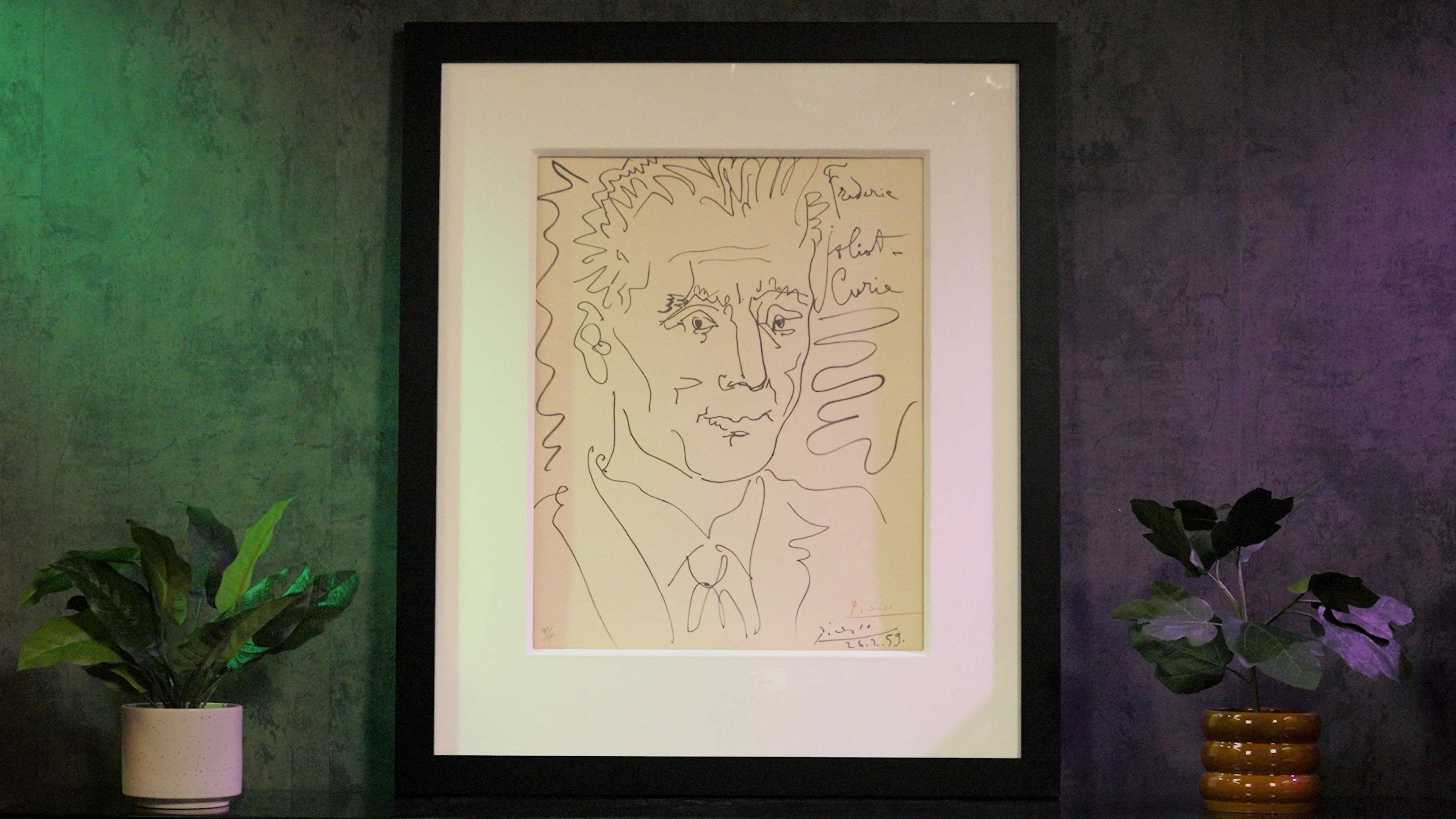
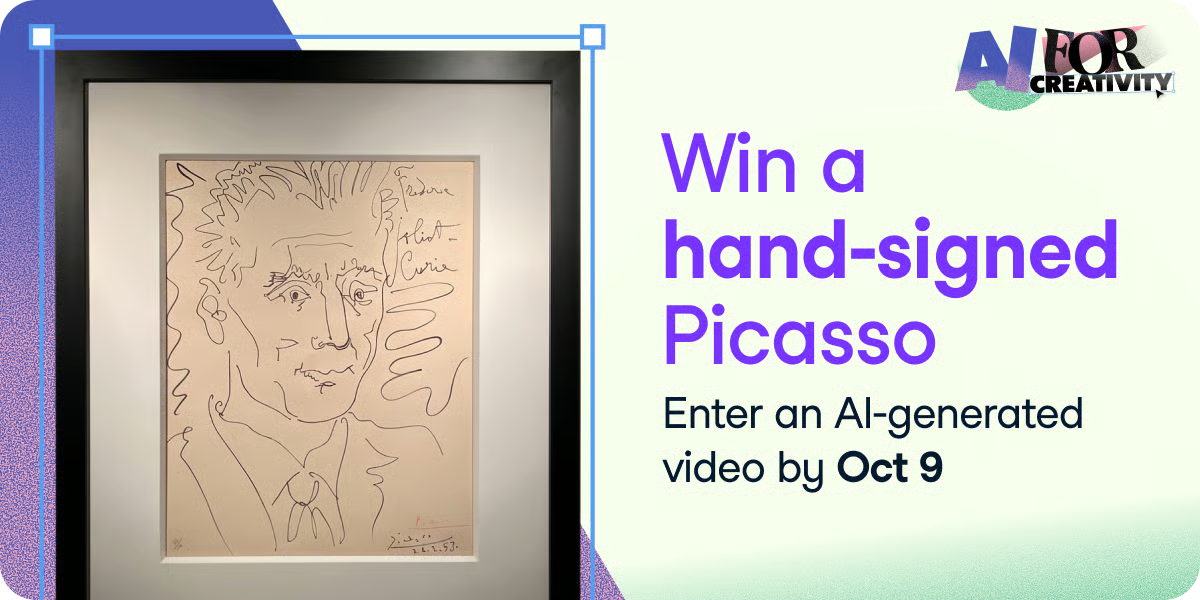
We're not being loose with the word "Picasso." The prize is a hand-signed, limited-edition after print, 110 of 200, purchased from American Fine Art Inc.
A printmaster made 200 copies of the original only; Picasso hand-signed this one.
Picasso drew it in February 1959, a tribute to Frédéric Joliot-Curie, a Nobel-winning physicist and a leading voice in the international peace movement, who'd died a few months earlier. He made it in the same period as his Dove of Peace, and it's a single, continuous line: Picasso captured the man's whole face without ever lifting the pen.
Best tips for entering, and what tools to use
A few things that separate a strong entry from a forgettable one.
Pick a topic you can explain, not just gesture at. "What is a forward-deployed engineer?" is a better topic than "the future of AI," because you can be specific about it in 60 seconds, and specificity is what makes something click for a viewer who didn't already get it.
Use AI generation for something it's good at, not as decoration. If your video could have been a voiceover over a stock photo, you're not using the medium, you're avoiding it.
Keep it tight. Ten seconds is a valid length. If your idea needs more than sixty to land, it isn't tight enough yet.
If you're looking for a place to start, DataCamp's theme week is running code-alongs in tools like Kling and Suno, both reasonable starting points for a first pass at AI video and AI audio.
AI for Creativity: The theme week built for exactly this
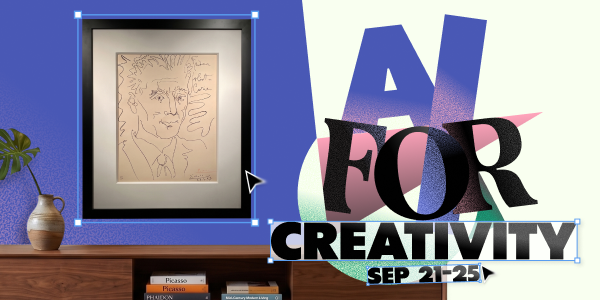
Win a Picasso runs alongside AI for Creativity, our theme week, Sept 21 to 24. That's not a coincidence.
Over the week, you'll hear from practitioners and leaders at Google, TIAA, and Cengage on how they're using generative AI in creative work, and get hands-on with the same AI video, audio, and design tools this competition is built around. One registration gets you every session.
If you're planning to enter, it's the fastest way to go from an idea to a submission.
Conclusion: Make something that stands out
AI should enhance creativity, not take away from it. This is a chance to showcase your vision—from start to finish—and win a piece of art history along the way.
All you need to get started is a free DataCamp account, which you can create in seconds. Head to the competition page for the full entry details.