
One week. 700+ courses for $0. No credit card needed.
Start Now

Practică și urmărește-ți progresul.
Continuă cu GoogleContinuând, accepți Termenii de utilizare, Politica de confidențialitate și faptul că datele tale sunt stocate în SUA.Large action models (LAMs) are AI models designed to understand human intentions and translate them into actions within a given environment or system. Unlike their predecessors, which primarily focused on language processing and generation, LAMs are built to take concrete actions based on their understanding of human input and the context of their operating environment.
Several key characteristics set LAMs apart from other AI models:
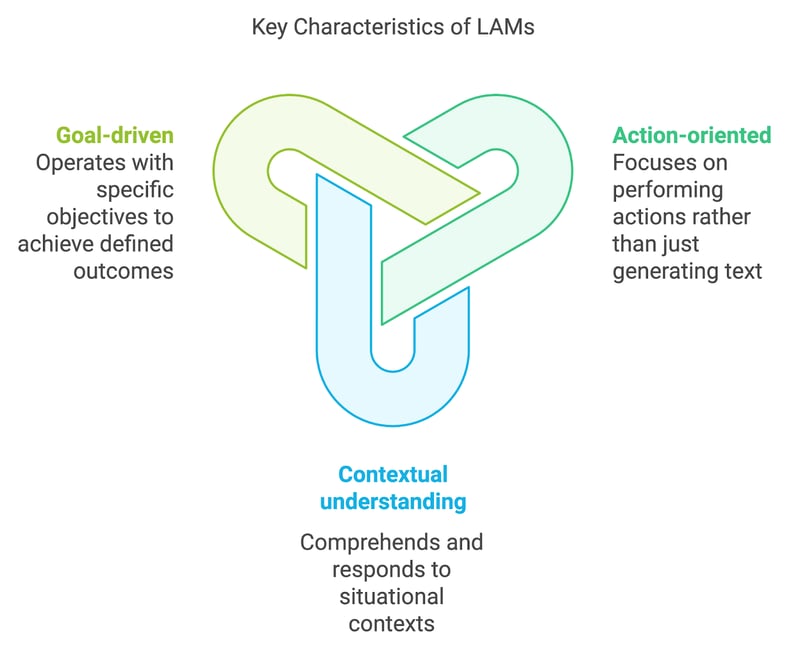
This combination of characteristics enables LAMs to bridge the gap between understanding and action, making them powerful tools for various applications. But how exactly do these sophisticated AI agents work? Let's take a closer look under the hood.
To truly appreciate the potential of LAMs, it's essential to understand the underlying mechanisms that power these sophisticated AI systems.
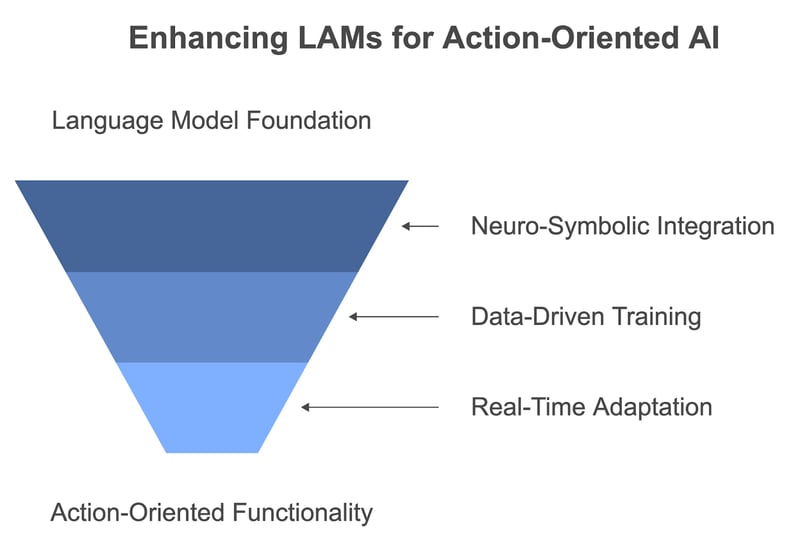
At their core, many LAMs build upon the foundation laid by large language models (LLMs). They leverage LLMs' advanced language understanding and generation capabilities, using this as a starting point for interpreting human intentions and formulating appropriate actions. However, LAMs go beyond mere language processing, incorporating additional layers of complexity to enable action-oriented functionalities.
One key aspect of LAMs is their incorporation of neuro-symbolic AI. This approach combines the strengths of neural networks with symbolic reasoning, creating a hybrid system that can handle both the nuanced understanding required for language processing and the logical decision-making needed for action planning. Neuro-symbolic AI allows LAMs to reason about abstract concepts, make inferences, and plan sequences of actions to achieve specific goals.
Training LAMs often involves exposing them to massive datasets of user action sequences. LAMs can learn to predict and generate optimal action sequences in response to different inputs and contexts by analyzing patterns in how humans interact with various systems and environments. This data-driven approach allows LAMs to capture the intricacies of human behavior and decision-making, enabling them to produce more natural and effective actions.
Another crucial feature of LAMs is their ability to operate in real-time, continuously taking action and adapting to changes in their environment. This real-time interaction capability is essential for applications that require dynamic responses, such as robotics or interactive gaming. LAMs can process incoming information, update their understanding of the situation, and adjust their actions accordingly, all in a matter of milliseconds.
With this understanding of how LAMs function, we can now explore the myriad ways in which they are poised to transform industries and everyday life.
The potential applications of LAMs are vast and varied, spanning multiple industries and aspects of daily life. By combining advanced language understanding with the ability to take concrete actions, LAMs are poised to transform how we interact with technology and automate complex tasks.
One of the most promising areas for LAM applications is task automation. Here are some key examples:
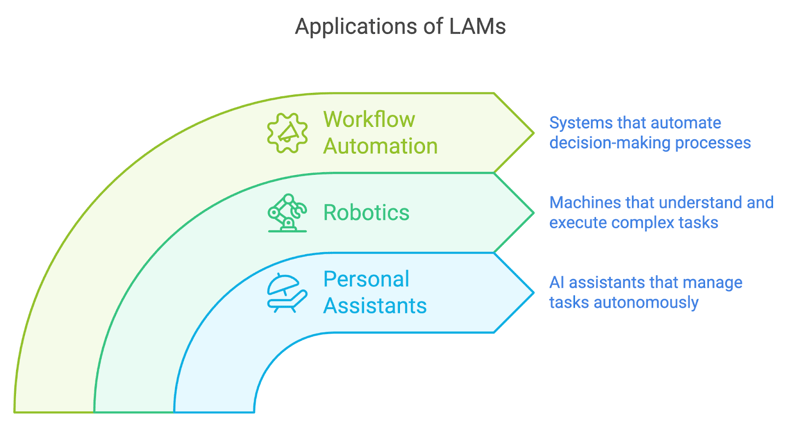
LAMs also have the potential to improve decision-making processes across various domains significantly:
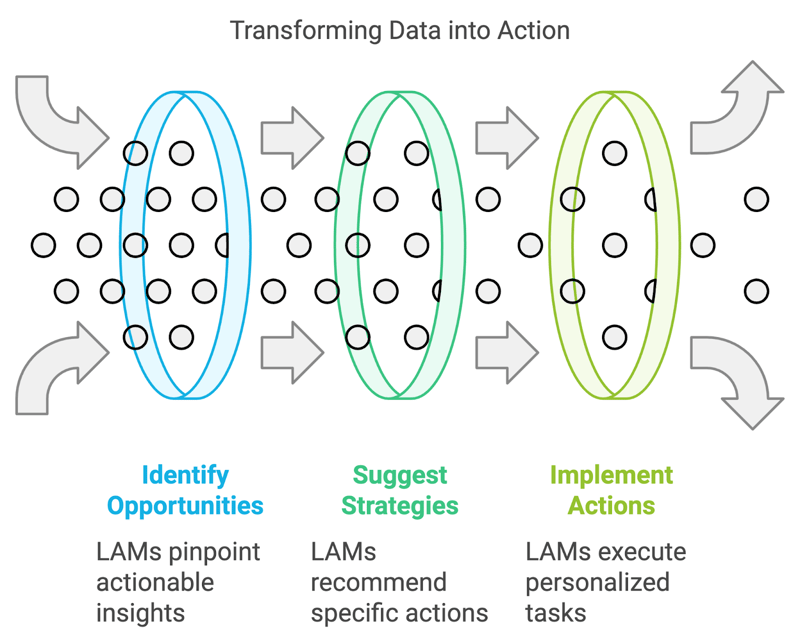
The action-oriented nature of LAMs opens up new possibilities for creating more engaging and interactive experiences:
As exciting as these potential applications are, it's important to note that LAMs are not just theoretical concepts. Let's look at some real-world examples of LAMs in action.
While large action models are still an emerging technology, there are already some promising applications that showcase their potential:
While the potential of LAMs is immense, their development and deployment also come with significant challenges that need to be addressed:
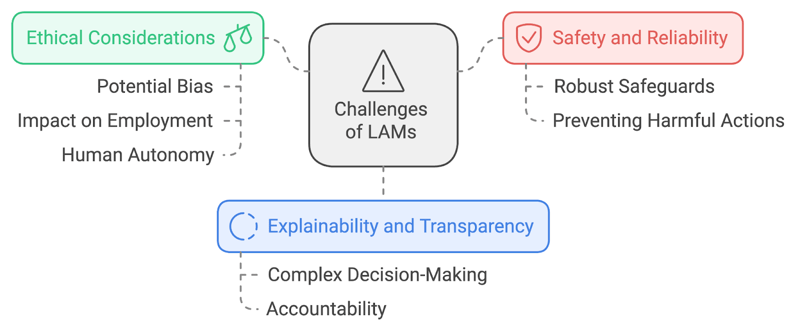
Large action models hold significant potential to reshape numerous industries and facets of our daily lives. However, it is important to approach their development and implementation with a balanced perspective, acknowledging both their capabilities and the inherent challenges they present.
Senior GenAI Engineer and Content Creator who has garnered 20 million views by sharing knowledge on GenAI and data science.

articol de blog
 Amberle McKee• 8 min.

articol de blog
 Dr Ana Rojo-Echeburúa• 8 min.

articol de blog
 Tim Lu• 15 min.
Learn AI with these courses!
Curs
Descoperă cum să construiești aplicații bazate pe AI folosind LLM-uri, prompturi, chain-uri și agenți în LangChain.
Curs
Descoperă cum să începi să folosești responsabil AI generativ. Află cum sunt dezvoltate modelele de AI generativ și cum vor influența societatea în continuare.
Practică și urmărește-ți progresul.
Continuă cu GoogleContinuând, accepți Termenii de utilizare, Politica de confidențialitate și faptul că datele tale sunt stocate în SUA.




Everybody keeps saying that AI agents are the next big thing in AI, and they’re probably right. Large action models (LAMs) are important to this discussion because they can understand human intentions and translate them into actions within a given environment or system.
In this blog post, we’ll learn about large action models, how they work, and their immense potential for transforming industries and everyday life.