

课程
Reporting in SQL
中级技能水平
更新时间 2025年11月
SQLReporting4小时15 视频54 道练习4,450 XP38,768成就证明
创建您的免费帐户
继续使用 Google显示更多选项或
继续操作即表示您接受我们的《使用条款》和《隐私政策》,并同意您的数据存储在美国。
深受数千家公司学习者的喜爱
需要团队培训?
企业版试用课程描述
Master SQL Reporting
Build clear and valuable SQL reports and dashboards, and hone your skills in data cleaning and validation.In this course, you will apply all the SQL concepts and functions you have learned in previous courses to build your very own dashboard. You will work on an Olympics database to learn about data exploration, data manipulation, data cleaning and validation, and performing complex calculations.
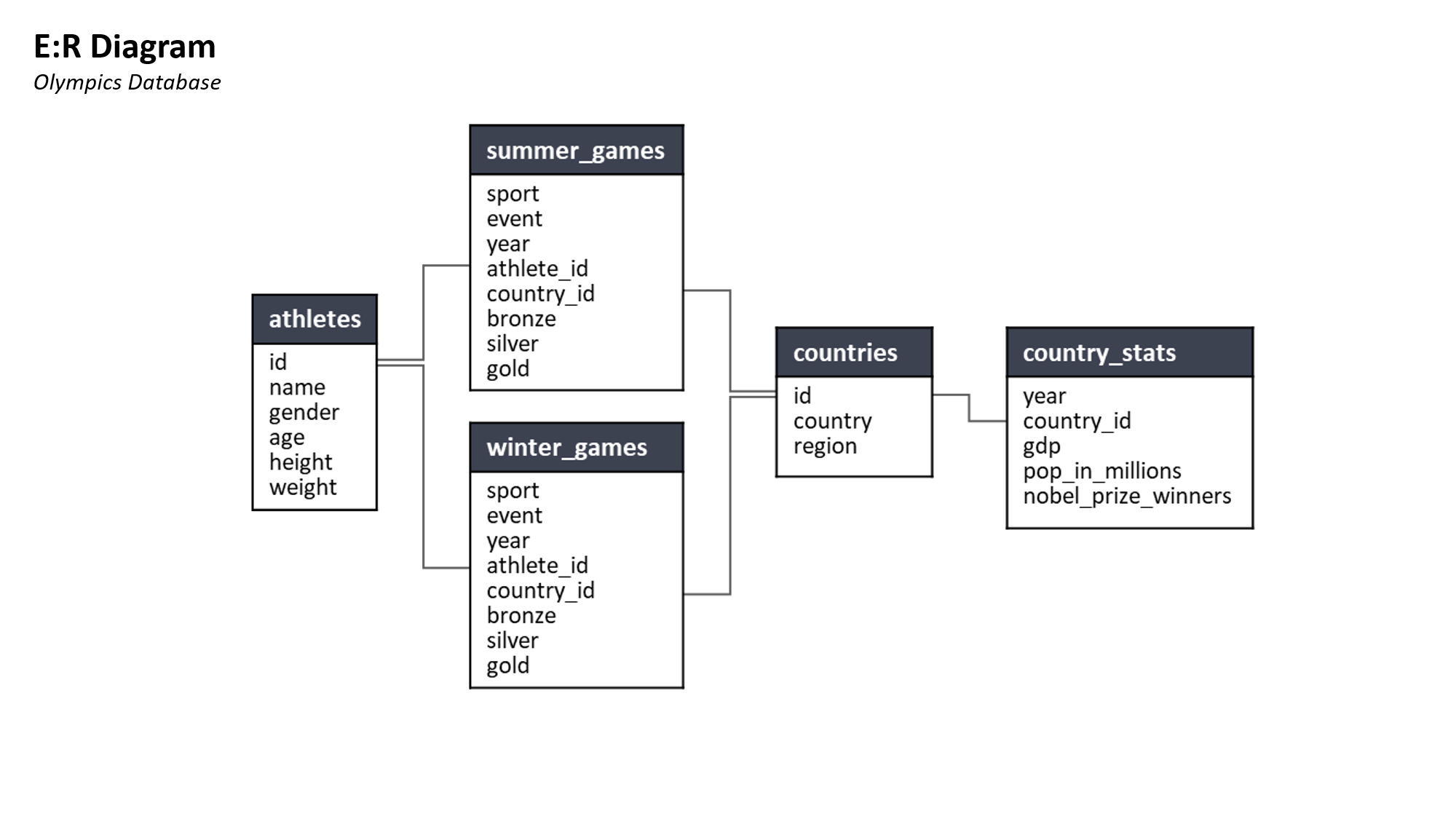
The first chapter aims to get you familiar with the dataset you’ll use, covering some of the essentials you'll need to explore the data properly. Here you will learn how to use ER diagrams and data exploration techniques to get a solid understanding of the data.
Practice Building SQL Reports Using Real Datasets
Next, you’ll learn to build more complex SQL queries to help you explore the data in more detail. The step-by-step approach helps you understand why complex queries require more thought and how they can help you build reports.Once you get a hang of reporting in SQL, you will learn how to clean and validate SQL data, ensuring our reports are accurate and interpretable.
Develop Your SQL Database Skills
Learn to perform complex calculations using window functions and layered calculations in the final chapter. You will gain hands-on experience building two advanced calculations in particular: the percent of a total calculation and the performance index calculation.This SQL course is perfect for anyone who will be commonly pulling data from databases and is a great complement for those who use R or Python for data science. This course is part of the SQL for Business Analysts Track and is essential for those who are planning to complete a Data Science or Data Analysis certification with DataCamp.
先决条件
Data Manipulation in SQL1
Exploring the Olympics Dataset
Before you can start building out reports to answer specific questions, you should get familiar with the data. In this chapter, you will learn how to use E:R diagrams and data exploration techniques to get a solid understanding of the data to better answer business-related questions.
2
Creating Reports
Queries can get large, fast. It's important to take a logical approach when building more complicated queries. In this chapter, you will take a step-by-step approach to plan and build a complex query that requires you to combine tables in multiple ways and create different types of fields.
3
Cleaning & Validation
Although it would be nice, data in the real-world is rarely stored in an ideal way. Simply put: data can get messy. In chapter 3, you will learn how to deal with this messy data by fixing data type issues, cleaning messy strings, handling nulls, and removing duplication.
4
Complex Calculations
The value of reporting really shows when presenting not-so-obvious insights through complex calculations. In this chapter, you will learn how to build more complicated fields by leveraging window functions and layered calculations. You will gain hands-on experience building two advanced calculations in particular: the percent of a total calculation and the performance index calculation.
Reporting in SQL
课程完成 加入超过19百万学习者,今天就开始Reporting in SQL!
创建您的免费帐户
继续使用 Google显示更多选项或
继续操作即表示您接受我们的《使用条款》和《隐私政策》,并同意您的数据存储在美国。
通过 DataCamp for Mobile 提升您的数据技能
随时随地通过我们的移动课程和每日 5 分钟编程挑战提升技能。