Nonostante gli investimenti massicci in strumenti, piattaforme e sperimentazioni di IA, la maggior parte delle aziende non sta ancora vedendo forti ritorni.
Nel nostro sondaggio 2026 su oltre 500 leader di aziende in USA e UK, condotto con YouGov:
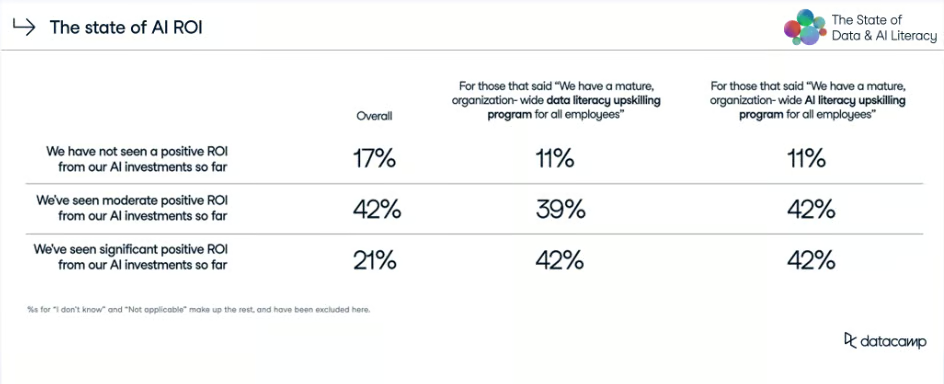
- Il 21% riporta un ROI positivo significativo dall’IA
- Il 42% riporta un ROI moderato
- Il 17% non riporta alcun ROI positivo
La domanda non è se le organizzazioni stiano investendo nell’IA, ma perché il ROI dell’IA varia così tanto tra le imprese. La risposta rimanda alle capacità della forza lavoro.
Il divario nel ROI dell’IA riflette differenze più profonde nella prontezza delle aziende. La nostra panoramica 2026 illustra come alfabetizzazione all’IA, alfabetizzazione ai dati e maturità dell’upskilling influenzino i risultati di performance nelle organizzazioni.
Il divario nel ROI dell’IA
Il dato più sorprendente è questo: tra le organizzazioni con un programma maturo e a livello aziendale di upskilling in alfabetizzazione ai dati o all’IA, le segnalazioni di ROI positivo significativo quasi raddoppiano.
- Il ROI significativo dell’IA passa dal 21% complessivo al 42%
- Le segnalazioni di assenza di ROI positivo scendono dal 17% all’11%
In altre parole, le aziende che affiancano l’investimento in IA a un percorso strutturato di sviluppo delle capacità della forza lavoro hanno quasi il doppio delle probabilità di ottenere forti ritorni.
Gli strumenti di IA, da soli, non creano ROI. Lo fanno le capacità della forza lavoro.
Perché gli strumenti di IA non generano automaticamente ROI
Il ROI dell’IA non è semplicemente funzione della sofisticazione degli strumenti. Dipende dal fatto che i dipendenti siano in grado di:
- Identificare casi d’uso appropriati
- Applicare gli strumenti di IA ai flussi di lavoro reali
- Valutare criticamente gli output
- Tradurre le insight in decisioni
- Misurare l’impatto sul business
Senza un’alfabetizzazione di base ai dati e all’IA in azienda, gli strumenti di IA possono aumentare la velocità, ma non necessariamente correttezza o chiarezza. E in alcuni casi amplificano il rischio. I leader individuano rischi chiave associati a competenze inadeguate sull’IA:
- Il 32% cita decisioni inaccurate
- Il 25% cita lentezza nel decision-making
- Il 27% cita l’incapacità di tenere il passo con i concorrenti
- Il 16% cita incidenti di sicurezza
In sintesi: quando le capacità della forza lavoro non tengono il passo con l’adozione degli strumenti, il ROI ne risente.
L’effetto moltiplicatore delle capacità
Quando l’alfabetizzazione ai dati e all’IA è solida, i benefici si moltiplicano. I leader associano le competenze in IA a:
- Decisioni più rapide (48%)
- Maggiore innovazione (46%)
- Decisioni più accurate (41%)
Quanto alle aspettative di produttività, l’incremento di efficienza più comune atteso dall’adozione dell’IA rientra nella fascia 10–20%, anche se molti prevedono guadagni superiori al 20%. Questi ritorni dipendono dal fatto che le persone sappiano usare l’IA in modo efficace—non solo che vi abbiano accesso.
In altre parole, l’IA è un moltiplicatore, ma moltiplica le capacità. Se le capacità sono basse, i ritorni restano bassi.
Perché la formazione sull’IA spesso non migliora il ROI
La maggior parte delle organizzazioni offre almeno un po’ di formazione sull’IA:
- Il 77% dichiara di fornire qualche forma di formazione sull’IA
- Il 68% afferma che i dipendenti hanno accesso a risorse di apprendimento sull’IA
Eppure solo il 35% dichiara di avere un programma di upskilling maturo e diffuso a tutta la forza lavoro.
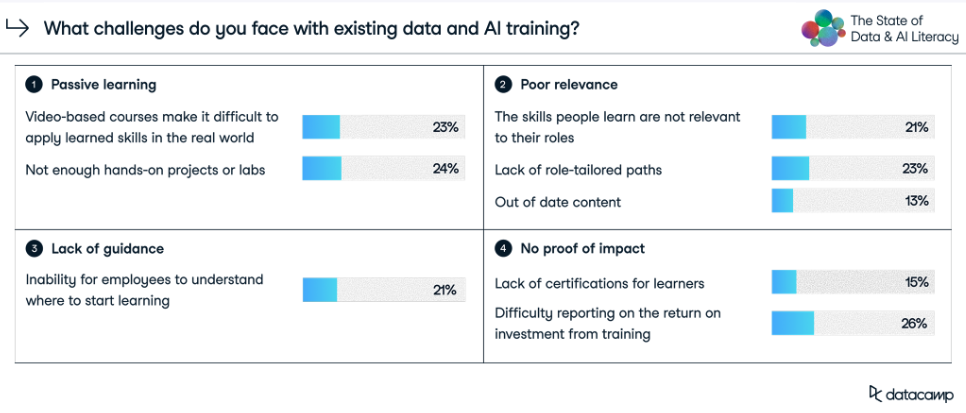
I leader che forniscono un po’ di formazione (specie online e in autoapprendimento) citano sfide comuni, tra cui:
- Il 24% afferma che non ci sono abbastanza progetti o laboratori pratici
- Il 23% afferma che i percorsi di apprendimento non sono calibrati sui ruoli
- Il 26% fatica a misurare il ROI della formazione
Se la formazione è passiva, frammentata o scollegata dai flussi di lavoro reali, non si tradurrà in un ROI misurabile sull’IA. La costruzione strutturata delle capacità è il fattore che fa la differenza.
Il quadro completo dei risultati su ROI e formazione è disponibile nel 2026 State of Data & AI Literacy Report.
Cosa fanno diversamente le organizzazioni ad alto ROI
Le organizzazioni che riportano un forte ROI dall’IA condividono diverse caratteristiche:
- Investono nell’alfabetizzazione ai dati e all’IA a livello aziendale, non solo nella formazione dei team tecnici
- Integrano l’apprendimento nei flussi di lavoro reali
- Rinforzano le competenze nel tempo
- Misurano la progressione delle capacità
- Allineano le iniziative di IA ai casi d’uso di business
Per chi è in testa, il ROI dell’IA non è casuale; è progettato attraverso la costruzione delle capacità necessarie.
Prove sul campo
Considera la Data Academy aziendale di Bayer, che ha strutturato l’alfabetizzazione di base a dati e IA attraverso i ruoli, dalla fluenza digitale generale ai professionisti avanzati. Oltre il 90% dei partecipanti ha dichiarato di aver sviluppato idee innovative o migliorato i processi dopo la formazione.
Allo stesso modo, Rolls-Royce ha implementato programmi di upskilling specifici per ruolo che hanno accelerato in modo significativo i processi di gestione dei dati, in alcuni casi aumentando la velocità di 100 volte.
In entrambi i casi, il ROI dell’IA è seguito alla costruzione strutturata delle capacità—non il contrario.
Dall’adozione dell’IA al ritorno dell’IA
La conversazione nelle aziende sta cambiando. Le prime strategie di IA erano incentrate sulla sperimentazione e il deployment; ora l’attenzione si sposta sul ritorno dell’investimento in IA.
I dati 2026 suggeriscono un pattern chiaro: le organizzazioni che trattano le capacità della forza lavoro come infrastruttura di base, non come ripensamento, hanno molte più probabilità di vedere un ROI significativo dall’IA.
Per i leader aziendali che valutano gli investimenti in IA, la domanda critica non è più “Quali strumenti di IA dovremmo adottare?” ma “La nostra forza lavoro è pronta a usarli in modo efficace?”
Come DataCamp supporta il ROI dell’IA
DataCamp for Business è progettato per sviluppare quel tipo di alfabetizzazione ai dati e all’IA strutturata e pertinente ai ruoli che genera ritorni misurabili.
Attraverso apprendimento pratico, personalizzazione potenziata dall’IA, assessment delle competenze e benchmarking a livello di forza lavoro, le organizzazioni possono passare da sperimentazioni frammentate sull’IA a una costruzione di capacità sostenuta.
Se stai valutando come migliorare il ROI degli investimenti in IA nella tua organizzazione, contattaci per vedere come DataCamp for Business supporta l’upskilling in IA a livello enterprise. Se vuoi vedere come l’apprendimento strutturato e applicato sostiene il ROI dell’IA, esplora alcuni dei nostri corsi più popolari di alfabetizzazione ai dati e all’IA: