
Last chance! 50% off DataCamp Premium
Sale ends in
Buy Now

실습 문제하고 트랙하세요.
Google로 계속하기계속 진행하시면 다음 사항에 동의하는 것으로 간주됩니다: 이용약관 및 개인정보 처리방침 그리고 귀하의 데이터가 미국에 저장된다는 점에 동의하는 것으로 간주됩니다.Edge AI is the practice of deploying AI models and algorithms directly on edge devices, which are devices located at the network's periphery, close to where data is generated and actions need to be taken.
These devices encompass a wide range, from powerful edge servers to resource-constrained IoT sensors, and include familiar examples like smartphones, smart home appliances, autonomous vehicles, and even industrial robots.
Recent advancements in AI, such as the development of smaller and more efficient language models like GPT-4o Mini, Llama 3.1 8B, and Gemma 2 2B, are further accelerating the adoption of edge AI.
This shift to edge AI offers several advantages:
To understand how edge AI works, we need to understand its main components and the processes involved.
Edge AI comprises three main components: edge devices, AI models, and communication.
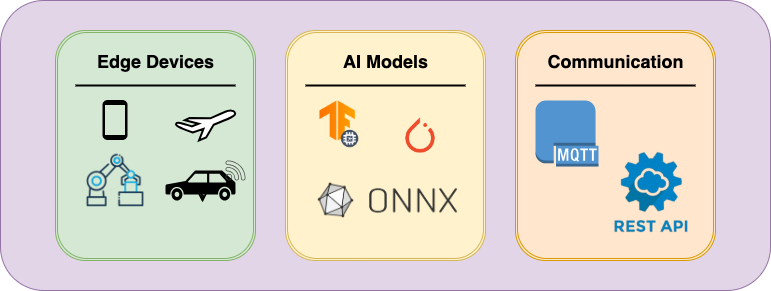
Edge devices encompass a wide range of hardware, from powerful edge servers capable of handling substantial computational loads to highly resource-constrained IoT sensors designed for specific tasks.
These devices include smartphones, drones, autonomous vehicles, industrial robots, and smart home devices, all of which can run AI models locally to process data in real time. Some hardware manufacturers, like NVIDIA and Intel, even provide hardware support for deploying ML models on the edge.
Edge AI employs various types of AI models, including machine learning, deep learning, and computer vision algorithms, optimized for efficient execution on edge devices.
These models are tailored to operate within the constraints of edge environments, ensuring that they can perform effectively despite limited processing power, memory, and storage.
For instance, models like GPT-4o Mini and Llama 3.1 8B are specifically designed to be lightweight and efficient, making them suitable for edge deployments.
Efficient data exchange between edge devices and the cloud is facilitated by communication protocols such as MQTT and REST APIs. These protocols enable seamless connectivity and data transfer, allowing synchronized operations between edge devices and central systems when necessary. These protocols allow the transfer of information in compressed form in an almost lossless fashion to keep the crucial information intact.
MQTT (Message Queuing Telemetry Transport) is a lightweight messaging protocol designed for constrained devices and low-bandwidth, high-latency, or unreliable networks. It uses a publish-subscribe model, allowing devices to send (publish) and receive (subscribe) messages without needing a direct connection. This makes MQTT ideal for IoT applications where devices need to communicate efficiently and reliably.
REST API (Representational State Transfer Application Programming Interface) is an architectural style for designing networked applications. It uses HTTP requests to access and use data. REST APIs are stateless, meaning each call from a client to a server must contain all the information the server needs to fulfill that request. This makes REST APIs scalable and suitable for various web services and applications, including those involving edge devices.
The workflow that powers edge AI involves three steps: data collection, data processing, and action.
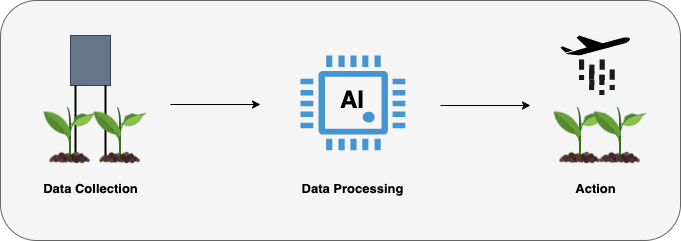
Edge devices continuously collect data from sensors, cameras, or other sources, providing a steady stream of information. This data can range from environmental metrics and health parameters to video feeds and audio recordings, forming the basis for real-time analysis.
A great example of data collection is how your smartwatch collects the number of steps you took today.
AI models deployed on edge devices process the collected data locally. This step involves analyzing the data to extract meaningful insights, detect patterns, and make predictions using AI models without relying on cloud resources.
Local processing ensures that decisions can be made quickly, such as a self-driving car determining which lane to choose in real-time.
Based on the AI model's output, edge devices can take immediate action. These actions might include triggering alarms, adjusting the path, or sending data to the cloud for further analysis. The ability to act in real-time is essential for scenarios requiring instant responses, such as security systems or medical devices.
Edge AI is transforming various industries by enabling real-time intelligence and decision-making. Let’s explore a few notable applications.
In manufacturing, equipment downtime can be costly. Edge AI addresses this by monitoring equipment health and predicting potential failures before they occur. By analyzing data from sensors in real time, AI models can detect anomalies and alert maintenance teams to take preventive actions. This not only reduces downtime but also extends the lifespan of machinery.
Ensuring product quality is paramount in manufacturing. AI-powered cameras equipped with edge AI can inspect products for defects in real time. These systems analyze visual data to identify flaws such as scratches, dents, or incorrect assembly. By automating the inspection process, manufacturers can achieve higher accuracy, consistency, and efficiency, ultimately enhancing product quality and customer satisfaction.
The healthcare industry is benefiting significantly from Edge AI. Portable devices equipped with edge AI can analyze medical images such as X-rays, MRIs, and CT scans, providing faster diagnoses. This capability is particularly valuable in remote or underserved areas where access to specialized radiologists may be limited. By processing images locally, edge AI reduces the time needed for diagnosis, enabling timely treatment and improving patient outcomes.
Wearable devices with edge AI are revolutionizing patient care by enabling continuous monitoring of health parameters. These devices collect data such as heart rate, blood pressure, and glucose levels, analyzing it in real-time to detect anomalies. If a critical condition is identified, the device can alert healthcare providers immediately. This proactive approach to patient monitoring helps manage chronic diseases, detect health issues early, and reduce hospital visits.
Efficient inventory management is crucial for retail businesses. AI-powered cameras and sensors can track inventory levels in real time, ensuring shelves are always stocked. By analyzing data from these devices, edge AI can optimize stock replenishment, reduce waste, and prevent stockouts. This leads to improved customer satisfaction and lower inventory costs.
Understanding customer behavior is key to delivering personalized shopping experiences. Edge AI analyzes data from in-store cameras and sensors to gain insights into customer preferences and behavior. Based on this analysis, it can deliver tailored recommendations and promotions to individual shoppers. Personalization enhances the shopping experience, increases customer loyalty, and boosts sales.
Managing urban traffic is a complex task that requires real-time data analysis. Edge AI can optimize traffic flow by analyzing data from traffic cameras, sensors, and GPS devices. By detecting congestion patterns and predicting traffic conditions, it can adjust traffic signals, reroute vehicles, and provide real-time traffic updates to drivers. This improves traffic efficiency, reduces travel time, and enhances road safety.
Ensuring public safety is a top priority for smart cities. AI-powered surveillance systems equipped with edge AI can monitor public spaces, detect anomalies, and identify potential threats. These systems analyze video feeds in real time, recognizing suspicious activities such as unauthorized access or unattended bags. By alerting authorities promptly, edge AI enhances security and enables rapid response to incidents.
Implementing Edge AI requires the right combination of hardware and software solutions. Here are some popular options:
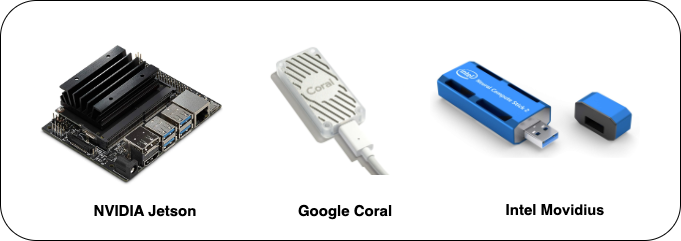
To successfully implement Edge AI, you'll need suitable hardware platforms capable of running AI models efficiently at the edge. Let’s explore a few options:
In addition to hardware, robust software frameworks are crucial for developing and deploying Edge AI applications. Let’s explore a few options:
While Edge AI offers numerous benefits, it also presents several challenges that need to be addressed:
Edge AI represents a significant shift in how we deploy and utilize artificial intelligence.
By bringing computation closer to data sources, Edge AI addresses the limitations of cloud-based AI, such as latency, privacy concerns, and bandwidth costs.
Advancements in hardware and software, including the development of smaller, more efficient AI models, are driving the growth of Edge AI across various industries.
Edge AI promises a future where intelligent devices and applications seamlessly integrate into our daily lives, making them faster, safer, and more responsive.
Senior GenAI Engineer and Content Creator who has garnered 20 million views by sharing knowledge on GenAI and data science.

블로그
 Bhavishya Pandit• 7분

블로그
 Alex Casalboni• 12분

블로그
 Dimitri Didmanidze• 6분
Learn AI with these courses!
트랙
최신 AI 개발자 도구인 OpenAI API, Hugging Face, LangChain을 포함해 AI 기반 애플리케이션을 만드는 방법을 배우세요.
실습 문제하고 트랙하세요.
Google로 계속하기계속 진행하시면 다음 사항에 동의하는 것으로 간주됩니다: 이용약관 및 개인정보 처리방침 그리고 귀하의 데이터가 미국에 저장된다는 점에 동의하는 것으로 간주됩니다.




Artificial Intelligence (AI) is so powerful, but it often relies on remote cloud servers for its heavy lifting. This approach can be problematic for applications needing quick responses or those on devices with limited resources.
Imagine a self-driving car waiting for a cloud server to decide which lane to switch into—not ideal!
Edge AI solves this by bringing the AI capabilities directly to the device itself.