As a beta feature, Claude now lets you connect your bank and credit card accounts and ask questions about your money. If this sounds familiar to you, you're probably thinking about OpenAI having launched a similar feature called ChatGPT Finances, back in May. Usually, OpenAI and Anthropic keep pace with each other, but for this idea, Anthropic has been behind.
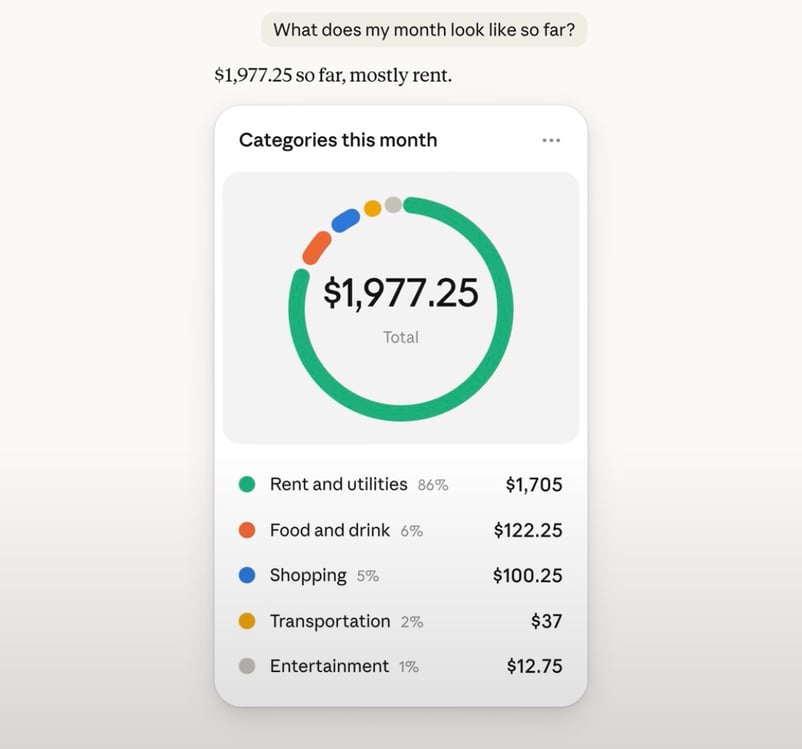
Here's the basic idea: Instead of exporting a CSV or pasting in a bank statement, you link your accounts once and ask questions, questions like, "Where did my money go this month?" and Claude will give you answers. It can see up to two years of transactions, but it can't move money around.
What Is Claude Personal Finance?
Personal Finance is a dedicated hub inside Claude where your connected financial accounts live. Once they're linked, Claude's answers are informed by your real numbers, so you get something more than generic budgeting advice.
A few things define it:
- Read-only access. Anthropic's words: "Personal Finance can't move, manage, or invest your money."
- Not investment advice. Anthropic says the tool isn't designed to recommend investments. It's for understanding where your money currently goes.
- No ads or products to sell. There are no sponsored recommendations, and Anthropic doesn't offer its own credit cards, loans, or savings accounts.
Another reason this idea might sound familiar to you: The feature has been a while in the making. App watchers at TestingCatalog spotted it in a test build of the Claude iOS app under the internal name "Claude Money" back in September, and then it was renamed.
How Claude Personal Finance Works
Claude connects to your accounts through Plaid, which is the same service many budgeting apps and payment apps like Venmo use. Plaid works with the big financial institutions like Chase and Citi.
The process looks like this:
- Open the Personal Finance hub in Claude and choose to connect an account.
- Sign in to your bank through Plaid's secure window.
- Claude pulls in your account details and transaction history.
- Ask questions and learn something.
Once connected, Claude can see:
- Each bank's name, plus account names and types
- The last four digits of each account number
- Balances and credit limits
- Up to two years of transaction history
What You Can Do With Claude Personal Finance
The most useful part is that you can have a back-and-forth conversation about your money, which a typical budgeting app can't do. Here's what Anthropic highlights:
- See where your money went. Ask "Where did my money go this month?" and Claude sorts spending across all your accounts into categories like rent and utilities, food and drink, and shopping.
- Catch problems. Claude looks for duplicate charges, unexpected fees, and bills that have crept up over the year.
- Check the big picture. Ask whether you're spending more than you earn.
- Visualize it. Generate weekly spending charts, expense calendars, and budget breakdowns.
- Learn the jargon. Ask what APR means, then have Claude work out how much interest you paid over the past year.

All in all, Claude Personal Finance promises to be considerably less labor-intensive than keeping track of spending in a Google spreadsheet.
Making the Most of Claude Personal Finance
So I haven't been able to try Personal Finance yet. It's rolling out gradually to individual Pro, Max, and Ultra accounts in the US. When I do get access, I'm interested in pushing the limits to see what insights there are to learn. Here are some basic ideas that someone might find useful:
1. Cash sitting in checking
Pretend I have $40,000 in a checking account earning almost nothing. What I want to know:
- Will Claude notice that idle cash on its own, or only if I ask?
- Can it work out a sensible emergency fund from my actual monthly spending?
- Will it suggest a high-yield savings account (or some other way to safely grow my money), and also - will it name specific banks? Earlier, I said Anthropic promised no sponsored recommendations, so I'm curious how it handles this without sounding like an ad. Because not all HYSA accounts offer the same rate, so recommending one over another could be good generic advice.
- Can it look up current savings rates from inside the Personal Finance hub, or does it stick to the data I've connected?
- Will it mention deposit insurance? Bank deposits are FDIC-insured up to $250,000 per depositor, per bank, per ownership category. And brokerage accounts have SIPC protection of $500,000.
2. Several credit cards with balances
This is the scenario I expect it to handle best, since Anthropic says Claude can already see balances and credit limits and calculate the interest I've paid. What I want to know:
- Will it compare paying off the highest-interest card first (the avalanche method) with the smallest balance first (the snowball method)?
- Will it show how my credit utilization changes as balances come down?
- If I give it a balance transfer offer, like 0% for 18 months with a 3% fee, can it tell me whether the move actually saves money?
- Will it recognize what it can't see, like my credit score or whether I'd qualify for the offer?
- Will it want to consolidate credit card debt?
3. A mortgage, other debt, and a possible refinance
This is the hardest case, and the one where I expect Claude to be most careful. What I want to know:
- If I type in my loan details, will it calculate the break-even point on refinancing, accounting for closing costs?
- Will it weigh refinancing against using spare cash to pay down higher-interest debt first?
- Where does it draw the line between running the numbers and giving advice? Anthropic has said the tool isn't built for investment advice, and that it's only exploring how Claude could work with licensed professionals.
What would count as a good answer: The bar isn't for Claude to tell me what to do. It's whether it can turn my real numbers into a clear picture of the trade-offs, flag what it can't see, and tell me when a question needs a professional. If it does that, it's a genuinely useful thinking partner for big money decisions. If it only works for categorizing last month's takeout, it's a nicer budgeting app. Although it could still be useful if it discovers duplicate subscriptions.
Is Claude Personal Finance Safe?
I'll bet this is the biggest question you have.
Anthropic says conversations are not used to train its models. That's the clearest difference from ChatGPT Finances (more on differences below). OpenAI applies your existing data settings to its finance tool, so unless you've opted out, those conversations can be used for training by default.
There's a catch worth knowing. The no-training promise covers the hub only. If you paste financial details into a regular Claude chat, your normal privacy settings apply.
The read-only design is the other big safeguard. Even if something went wrong, Claude has no way to move money. That contrasts with services like Coinbase for Agents, which give AI systems their own wallets to trade and pay.
Claude Personal Finance Availability
Personal Finance is rolling out in beta now to Claude Pro, Max and Ultra subscribers in the US only. There's no extra charge beyond your subscription. Free users and people outside the US can't use it yet.
Anthropic also says it's exploring how Claude could work with licensed professionals and regulated firms to offer actual financial advice, and it's inviting banks and wealth managers to get in touch.
Claude Personal Finance vs. ChatGPT Finances
On features, the two tools are close. Engadget calls them broadly the same. Both connect to your accounts through Plaid, both answer questions about your spending and neither is built to give investment advice. The real differences are in privacy defaults and business model.
| |
Claude Personal Finance
|
ChatGPT Finances
|
|---|
|
Launched
|
November 2026 (beta)
|
May 2026
|
|
Account connection
|
Plaid
|
Plaid
|
|
Account types
|
Bank and credit card accounts
|
Checking, credit card and investment accounts
|
|
Who can use it
|
Pro, Max and Ultra subscribers in the US
|
Plus and Pro subscribers in the US
|
|
Finance chats used for training
|
No
|
Yes by default, unless you opt out
|
|
Ads
|
None
|
OpenAI is bringing ads to ChatGPT
|
Privacy is the biggest difference
Anthropic keeps conversations in the Personal Finance hub out of model training, whatever your general settings are. OpenAI takes the opposite approach. ChatGPT Finances follows your existing data controls, so unless you've changed them, your finance chats can be used to train its models. We mentioned this earlier but it's worth saying again.
Business model matters too
Anthropic has no sponsored recommendations, and it doesn't offer its own cards or loans. OpenAI, meanwhile, is bringing ads to ChatGPT. When a tool can see every purchase you make, how the company behind it makes money is worth a thought.
ChatGPT has a head start
OpenAI launched about six months earlier, and its tool already covers investment accounts. Claude's version is still in beta and limited to the US.
Which should you use?
If you already pay for one of them, start there, since the core features overlap. If privacy is your main concern, Claude's defaults are stricter out of the box. If you want investment accounts in the mix today, ChatGPT is further along.
Banking Products, Partnerships and the Ethical Questions
An AI that can see every purchase you make sits in a powerful position. We should know who it partners with and how it makes money.
Is there a banking partnership?
The only confirmed partner is Plaid, which handles the connection to your bank. Anthropic hasn't announced a partnership with any bank, card issuer, or lender for Personal Finance.
This could change. Anthropic says it's exploring how Claude could work with licensed professionals and regulated firms to offer financial advice, and it's openly inviting banks and wealth managers to get in touch. It also already sells to the industry through Claude for Financial Services, its enterprise product for banks and financial firms. Before this launch, Claude users could also connect third-party finance tools such as PocketSmith and Era Context.
Where it overlaps with banking products
That matters because many free budgeting apps make money from referral fees when you sign up for a card or loan they suggest. A tool that steers you toward a product it gets paid for has a built-in conflict of interest. Anthropic's position is that Claude has nothing to sell you.
Ethical considerations
- Conflicts of interest: If Anthropic partners with financial firms, users will need to know whether a suggestion comes from neutral analysis or a commercial relationship.
- Advice without accountability: Claude isn't a licensed advisor. The line between explaining your options and nudging you toward one is thin, especially for a big decision like a refinance.
- Errors with real consequences: A miscategorized transaction or a bad interest calculation is more serious when someone acts on it. Double-check any number you plan to make a decision on.
- Concentration of data: Two years of transactions reveal a lot, including your health, relationships, and habits, not just your budget. I was thinking about this: two years might actually not be a long enough view in some cases. Things like a new roof, a car, or major dental work come around every five to ten years. If none happened in the last two years, Claude might call a budget comfortable when it isn’t.
What isn't disclosed (yet)
The launch coverage leaves several questions unanswered:
- How long Anthropic keeps your financial data after you unlink an account
- What security certifications or audits cover the Personal Finance hub
- Whether mortgages, loans, and investment accounts can be connected
- Whether "read-only" is a permanent design choice or a starting point
- How any future partnership with banks or advisors would be disclosed to users
Last thing I'll call out before wrapping up: Anthropic's expected IPO is weeks away. A new consumer product with a clear privacy story is good for users, but it's also good for a company preparing to go public. It does make me wonder a bit if the product is truly ready.
Final Thoughts
Anthropic gets this part right: Most people don't need more financial advice. They need to know what's actually happening in their accounts.
Whether you trust an AI with that view of your life is a personal call. Read-only access and a no-training policy make it an easier one, but they don't settle every question about where your data goes. There's a real trade-off between convenience and control.


 Abid Ali Awan · 9 min

 Tom Farnschläder · 11 min

 Laiba Siddiqui · 13 min



As a beta feature, Claude now lets you connect your bank and credit card accounts and ask questions about your money. If this sounds familiar to you, you're probably thinking about OpenAI having launched a similar feature called ChatGPT Finances, back in May. Usually, OpenAI and Anthropic keep pace with each other, but for this idea, Anthropic has been behind.
Here's the basic idea: Instead of exporting a CSV or pasting in a bank statement, you link your accounts once and ask questions, questions like, "Where did my money go this month?" and Claude will give you answers. It can see up to two years of transactions, but it can't move money around.
What Is Claude Personal Finance?
Personal Finance is a dedicated hub inside Claude where your connected financial accounts live. Once they're linked, Claude's answers are informed by your real numbers, so you get something more than generic budgeting advice.
A few things define it:
Another reason this idea might sound familiar to you: The feature has been a while in the making. App watchers at TestingCatalog spotted it in a test build of the Claude iOS app under the internal name "Claude Money" back in September, and then it was renamed.
How Claude Personal Finance Works
Claude connects to your accounts through Plaid, which is the same service many budgeting apps and payment apps like Venmo use. Plaid works with the big financial institutions like Chase and Citi.
The process looks like this:
Once connected, Claude can see:
What You Can Do With Claude Personal Finance
The most useful part is that you can have a back-and-forth conversation about your money, which a typical budgeting app can't do. Here's what Anthropic highlights:
All in all, Claude Personal Finance promises to be considerably less labor-intensive than keeping track of spending in a Google spreadsheet.
Making the Most of Claude Personal Finance
So I haven't been able to try Personal Finance yet. It's rolling out gradually to individual Pro, Max, and Ultra accounts in the US. When I do get access, I'm interested in pushing the limits to see what insights there are to learn. Here are some basic ideas that someone might find useful:
1. Cash sitting in checking
Pretend I have $40,000 in a checking account earning almost nothing. What I want to know:
2. Several credit cards with balances
This is the scenario I expect it to handle best, since Anthropic says Claude can already see balances and credit limits and calculate the interest I've paid. What I want to know:
3. A mortgage, other debt, and a possible refinance
This is the hardest case, and the one where I expect Claude to be most careful. What I want to know:
What would count as a good answer: The bar isn't for Claude to tell me what to do. It's whether it can turn my real numbers into a clear picture of the trade-offs, flag what it can't see, and tell me when a question needs a professional. If it does that, it's a genuinely useful thinking partner for big money decisions. If it only works for categorizing last month's takeout, it's a nicer budgeting app. Although it could still be useful if it discovers duplicate subscriptions.
Is Claude Personal Finance Safe?
I'll bet this is the biggest question you have.
Anthropic says conversations are not used to train its models. That's the clearest difference from ChatGPT Finances (more on differences below). OpenAI applies your existing data settings to its finance tool, so unless you've opted out, those conversations can be used for training by default.
There's a catch worth knowing. The no-training promise covers the hub only. If you paste financial details into a regular Claude chat, your normal privacy settings apply.
The read-only design is the other big safeguard. Even if something went wrong, Claude has no way to move money. That contrasts with services like Coinbase for Agents, which give AI systems their own wallets to trade and pay.
Claude Personal Finance Availability
Personal Finance is rolling out in beta now to Claude Pro, Max and Ultra subscribers in the US only. There's no extra charge beyond your subscription. Free users and people outside the US can't use it yet.
Anthropic also says it's exploring how Claude could work with licensed professionals and regulated firms to offer actual financial advice, and it's inviting banks and wealth managers to get in touch.
Claude Personal Finance vs. ChatGPT Finances
On features, the two tools are close. Engadget calls them broadly the same. Both connect to your accounts through Plaid, both answer questions about your spending and neither is built to give investment advice. The real differences are in privacy defaults and business model.
Claude Personal Finance
ChatGPT Finances
Launched
November 2026 (beta)
May 2026
Account connection
Plaid
Plaid
Account types
Bank and credit card accounts
Checking, credit card and investment accounts
Who can use it
Pro, Max and Ultra subscribers in the US
Plus and Pro subscribers in the US
Finance chats used for training
No
Yes by default, unless you opt out
Ads
None
OpenAI is bringing ads to ChatGPT
Privacy is the biggest difference
Anthropic keeps conversations in the Personal Finance hub out of model training, whatever your general settings are. OpenAI takes the opposite approach. ChatGPT Finances follows your existing data controls, so unless you've changed them, your finance chats can be used to train its models. We mentioned this earlier but it's worth saying again.
Business model matters too
Anthropic has no sponsored recommendations, and it doesn't offer its own cards or loans. OpenAI, meanwhile, is bringing ads to ChatGPT. When a tool can see every purchase you make, how the company behind it makes money is worth a thought.
ChatGPT has a head start
OpenAI launched about six months earlier, and its tool already covers investment accounts. Claude's version is still in beta and limited to the US.
Which should you use?
If you already pay for one of them, start there, since the core features overlap. If privacy is your main concern, Claude's defaults are stricter out of the box. If you want investment accounts in the mix today, ChatGPT is further along.
Banking Products, Partnerships and the Ethical Questions
An AI that can see every purchase you make sits in a powerful position. We should know who it partners with and how it makes money.
Is there a banking partnership?
The only confirmed partner is Plaid, which handles the connection to your bank. Anthropic hasn't announced a partnership with any bank, card issuer, or lender for Personal Finance.
This could change. Anthropic says it's exploring how Claude could work with licensed professionals and regulated firms to offer financial advice, and it's openly inviting banks and wealth managers to get in touch. It also already sells to the industry through Claude for Financial Services, its enterprise product for banks and financial firms. Before this launch, Claude users could also connect third-party finance tools such as PocketSmith and Era Context.
Where it overlaps with banking products
That matters because many free budgeting apps make money from referral fees when you sign up for a card or loan they suggest. A tool that steers you toward a product it gets paid for has a built-in conflict of interest. Anthropic's position is that Claude has nothing to sell you.
Ethical considerations
What isn't disclosed (yet)
The launch coverage leaves several questions unanswered:
Last thing I'll call out before wrapping up: Anthropic's expected IPO is weeks away. A new consumer product with a clear privacy story is good for users, but it's also good for a company preparing to go public. It does make me wonder a bit if the product is truly ready.
Final Thoughts
Anthropic gets this part right: Most people don't need more financial advice. They need to know what's actually happening in their accounts.
Whether you trust an AI with that view of your life is a personal call. Read-only access and a no-training policy make it an easier one, but they don't settle every question about where your data goes. There's a real trade-off between convenience and control.