
Leerpad
Medewerker data-analist in SQL
39 uur
Zoek op "best data analyst certification" en je vindt tientallen lijstjes met allerlei examengerichte certificeringen, begeleide certificaten en praktijkgerichte carrièretracks. Die brede keuze kan verwarrend zijn als je net begint.
Deze gids voor certificeringen voor data-analisten is voor iedereen die een data-analist-credential overweegt, of je nu nog nooit een regel SQL hebt geschreven of al met data werkt en een overdraagbare badge wilt om HR-filters te passeren. Ik heb de opties gescheiden op wat ze daadwerkelijk valideren, wat ze grofweg kosten en voor welk type lezer ze geschikt zijn. Zoals je zou verwachten, is er geen enkel certificaat dat voor iedereen de beste keuze is.
Ik heb geselecteerd op herkenning door recruiters, prijstransparantie en hoeveel hands-on oefening er in elk traject zit.
Voor we naar de lijst gaan, één onderscheid dat je even moet vastzetten: een certification betekent doorgaans dat je een examen haalt (CompTIA Data+, CAP), een certificate betekent dat je een begeleid programma afrondt (Google, IBM) en een career track betekent dat je skills en een portfolio opbouwt, met validatie erbovenop (DataCamp). Houd dat in gedachten tijdens het lezen.
| Certificering | Type | Niveau | Beste voor |
|---|---|---|---|
| DataCamp Data Analyst Certification | Carrièretrack + certificering | Instapniveau | Praktische codeeroefening plus een credential |
| Google Data Analytics Certificate | Certificaat | Beginner | Sterkste naamsbekendheid voor beginners |
| IBM Data Analyst Certificate | Certificaat | Beginner | Python-first instap in analytics |
| CompTIA Data+ | Examencertificering | Vroege carrière | Leverancier-neutrale, overdraagbare credential |
| Microsoft Power BI Data Analyst (DP-600) | Examencertificering | Gevorderd | Power BI- en Microsoft Fabric-functies |
| Meta Data Analyst | Certificaat | Beginner | Starters met focus op business analytics |
| CAP (INFORMS) | Examencertificering | Vroege carrière | Wie een leverancier-neutrale ervaring zoekt |
Hier is een korte referentietabel die de verschillen tussen deze credentials verduidelijkt.
| Categorie | Wat het valideert | Voorbeeld |
|---|---|---|
| Certification | Het halen van een examen | DataCamp, CompTIA Data+, CAP, DP-600 |
| Certificate | Het afronden van een begeleid programma | Google, IBM, Meta |
| Career track | Skills plus portfolio, met validatie | DataCamp Data Analyst |
Ik heb deze gerangschikt van meest beginnervriendelijk en hands-on naar meest senior en examengericht. Hoe verder je leest, hoe meer ervaring elke optie veronderstelt.
Dit is de juiste keuze als je de skills echt wilt leren terwijl je een credential verdient, in plaats van één examen te halen voor een cv-logo. Er zijn binnen deze certificering ook een paar opties.
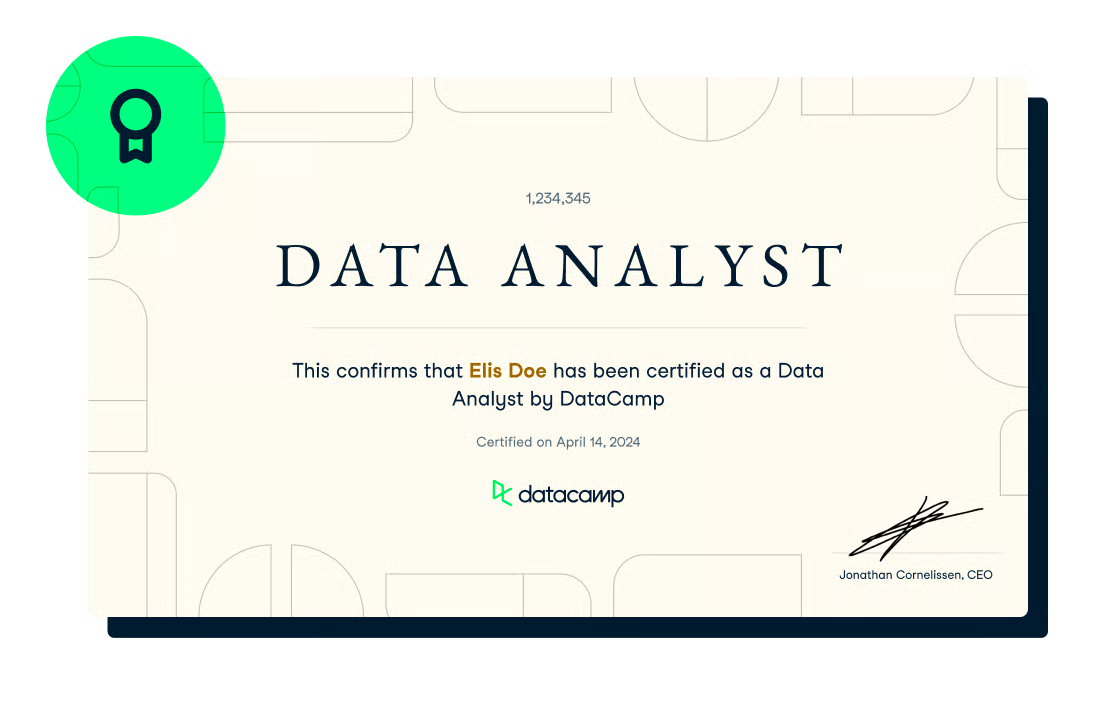
Wat het onderscheidt van puur examenopties is de opzet. Het combineert codeeroefeningen, projecten en casestudy’s in plaats van één zittend examen, zodat je eindigt met praktijkervaring in plaats van alleen een voldoende.
De erkenning zit in skillsvalidatie, zodat je aan recruiters kunt laten zien dat je werkende kennis hebt.
Begin met de track: Associate Data Analyst in SQL, Data Analyst with Python, of Data Analyst with R.
Dit heeft mogelijk de sterkste naamsbekendheid voor beginners en de breedste bekendheid bij recruiters van alles op deze lijst, wat verklaart waarom het in veel overzichten voor 2026 staat. Op de officiële pagina van Google staat dat er geen diploma of ervaring vereist is en dat er nu AI-training van Google-experts is inbegrepen.
De structuur bestaat uit 8 cursussen, in totaal circa 240 uur. Google schat 3 maanden bij 20 uur per week, of 6 maanden bij 10 uur per week, volledig online via Google Career Skills en Coursera.
Qua kosten: de inhoud is gratis te volgen, het certificaat zelf kost ongeveer $35 per maand. De belangrijkste beperking is dat het sterk leunt op Google’s eigen tooling en spreadsheet-plus-SQL-workflows, waardoor de Python-diepte waar analisten tegenwoordig op rekenen, beperkter is.
Lees de officiële Google-pagina: Google Data Analytics Certificate.
Dit is een Python-first pad in plaats van een spreadsheet-first pad. Het is beginnervriendelijk, met een sterkere focus op coderen dan Google’s certificaat.
De prijs ligt rond $35 per maand, hetzelfde maandmodel als het certificaat van Google. Daardoor draait de keuze vooral om tooling: IBM leunt op Python en data-analysebibliotheken, Google op spreadsheets en zijn eigen stack.
De kanttekening is dat IBM’s naamsbekendheid bij niet-technische recruiters voor dit specifieke credential net iets lager is dan die van Google. Als je puur optimaliseert voor HR-zoekwoorden, wint Google het nipt; als je inzet op codeergereedheid, is IBM sterker.
Lees meer over deze certificering voor data-analisten.
Dit is een leverancier-neutraal, examengericht credential dat niet aan de tooling van één bedrijf hangt. Geen slechte keuze voor professionals in een vroege carrièrefase die iets overdraagbaars willen tussen werkgevers en techstacks.
De kosten zijn helder en vooraf: het examen kost $225, met voorbereidingbundels van $100 tot $500. Die eenmalige betaling contrasteert met het maandabonnement van DataCamp, Google en IBM, maar wordt vrij prijzig zodra je de extra’s meerekent.
De trade-off is dat Data+ kennis valideert via een toets in plaats van via portfolio-opbouw. Slagen bewijst dat je vragen kunt beantwoorden, maar niet dat je analyses hebt opgeleverd. Combineer het met projectwerk als data-analist als je naast de badge ook iets wilt laten zien.
Lees de officiële pagina: CompTIA Data+.
Dit is een goede keuze als je beoogde functies draaien op Power BI en Microsoft Fabric, wat een groot deel van BI-rollen in enterprises afdekt. Het richt zich duidelijk op BI-zware stacks in plaats van algemene Python-analytics.
Het DP-600-examen kost $165, goedkoper dan CompTIA Data+ en flink onder het senior CAP-credential. Tableau’s vergelijkbare Data Analyst-certificering werkt daarentegen met een 2-jaarlijkse verlenging en $250 herexamenkosten.
De beperking is de scope: dit credential is bewust tool-specifiek. Werk je niet in een Microsoft-omgeving, dan is de focus op Power BI en Fabric minder overdraagbaar dan een leverancier-neutrale optie zoals CompTIA Data+.
Lees de officiële pagina: Microsoft Power BI Data Analyst.
Dit certificaat is een op business analytics gerichte beginnersoptie, vergelijkbaar met de certificaten van Google en IBM in de beginnerstier. De nadruk ligt op business- en marketinganalytics in plaats van zware statistiek of engineering.
Net als de andere big-brand certificaten zit de aantrekkingskracht in de bekendheid bij recruiters plus een gestructureerd pad voor beginners. Het is een redelijk alternatief als de trajecten van Google en IBM minder goed aansluiten op je sectorfocus.
Lees de gids: hoe je data-analist wordt.
Er zijn meerdere CAP-credentials, van beginnerniveau tot meer senior. De Essentials-kwalificatie is gericht op professionals in een vroege carrièrefase die hun fundamentele analyticskennis opbouwen of formaliseren.

De prijs ligt behoorlijk hoog, variërend van $195 tot $275, afhankelijk van of je lid bent, wat $190 per jaar kost ($46 als je student of gepensioneerd bent).
Hoewel de kosten vrij hoog zijn, is deze certificering leverancier-neutraal, wat betekent dat je een bredere kennisbasis opdoet dan bij sommige beperktere opties.
Lees de officiële pagina: Certified Analytics Professional (CAP).
Zo zou ik dit inrichten afhankelijk van je startpunt, in plaats van te proberen ze allemaal te halen. Bekijk ook ons volledige data-analist-roadmap om goed te begrijpen wat er nodig is om de vereiste skills te leren.
Als je nieuw bent met datawerk, geef dan prioriteit aan hands-on oefening boven multiplechoice-theorie. Fundamentele leerpaden, zoals DataCamp’s Data Analyst Associate met SQL-track, geven je de nodige codeerrepetities.
Omdat een certificaat dat alleen bewijst dat je een toets hebt gehaald niet laat zien dat je het werk kunt doen, is de DataCamp Associate Data Analyst Certification een zeer effectief startpunt. Je moet hiervoor tijdgebonden examens en een praktische codeertoets afronden. Als je beoogde functies strikt spreadsheet-gericht zijn, blijft het Google Data Analytics Certificate in deze fase een redelijke, maar minder technische, toevoeging.
Zodra je met vertrouwen een analyse kunt draaien, voeg dan een credential toe die aan recruiters bewijst dat je klaar bent voor de praktijk. Hoewel CompTIA Data+ je voor een eenmalige $225 een overdraagbare, leverancier-neutrale credential geeft, is de DataCamp Data Analyst Certification vaak de sterkere keuze voor moderne datastacks.
Deze valt op omdat hij verder gaat dan standaard technische toetsen; je moet een opgenomen presentatie van je bevindingen geven, precies de communicatieskills waar hiring managers naar zoeken. Het bewijst voor werkgevers dat je niet alleen syntax uit je hoofd leert, maar data echt kunt vertalen naar businesswaarde.
Als je je techstack kent of richting senior werk gaat, verschuif dan de focus naar tool-specifieke of lifecycle-gerichte certificeringen. Microsoft’s DP-600 (ongeveer $165) is ideaal als je werkt met Power BI- en Fabric-teams. Alternatief biedt de Certified Analytics Professional (CAP) opties voor meer ervaren analisten die richting strategie op hoog niveau of management gaan.
Eén ding om te onthouden: de grootste verwarring in dit domein is om een certificate, een certification en een career track als inwisselbaar te zien. Een carrièretrack zoals die van DataCamp bouwt skills en een portfolio op, een examencertificering zoals CompTIA Data+ of CAP bewijst toetskennis, en een certificaat zoals dat van Google of IBM zit daar tussenin. Hiring managers waarderen voor HR-filtering vaak nog steeds vendor-gecertificeerde merken, dus als dat je doel is, vertrouw dan niet alleen op skillsvalidatie.
Voor de meeste starters zou ik beginnen met een hands-on track zoals onze DataCamp Data Analyst-certificering, omdat die je dwingt echte analyses te bouwen in plaats van examenvragen te memoriseren. Vanaf daar hangt de vertakking af van je doel: een carrièreswitcher die optimaliseert voor recruiter-zoekwoorden kan het Google- of IBM-certificaat toevoegen, terwijl een professional in een vroege carrièrefase die een overdraagbare badge wil, voor CompTIA Data+ moet gaan.
Wil je een bredere basis voordat je een credential kiest, dan raad ik aan te beginnen met onze Data Analyst with Python-track.
Topcursussen bij DataCamp
Leerpad
Leerpad
Leerpad
blog
Adel Nehme
15 min