Reengineering Your Business Using AI
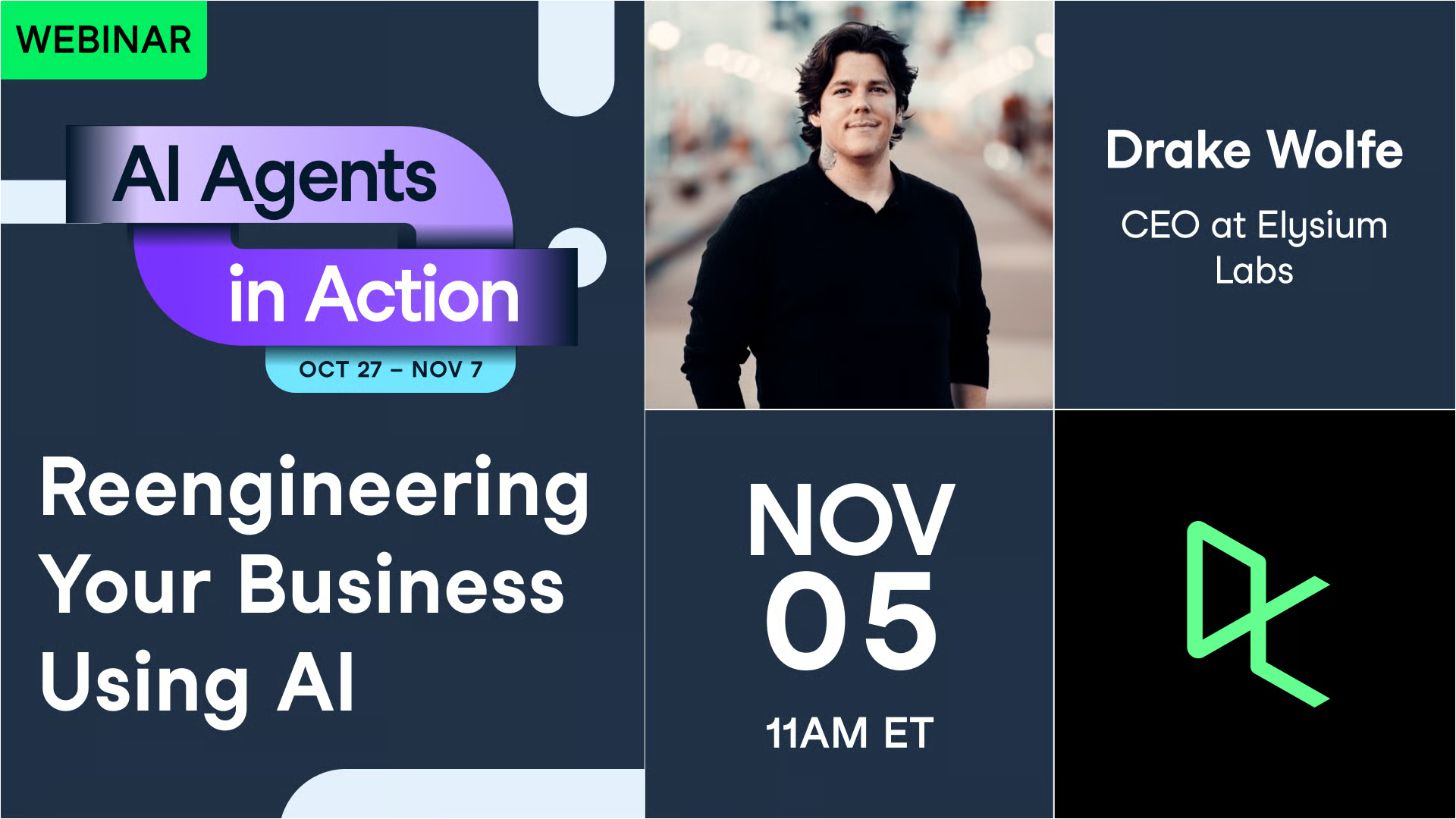
Your Presenter(s)

Drake Wolfe
CEO at Elysium Labs
Drake Atlas Wolfe is the founder and CEO of Elysium Labs, architect of the Auto-Generative Agentic Ecosystems Framework, and a 3-time #1 bestselling author of The Final Business Model. A serial entrepreneur and the mind behind the AI automation agency Agentix and the AI-powered coding platform F1ow, Drake has pioneered recursive, self-replicating AI systems that overhaul how businesses scale, operate, and evolve. He also serves as an advisor on AI and emerging technology at the Nashville Entrepreneur Center, where he guides founders and executives on building AI-native organizations.
Session Resources + Slides
Summary
Reengineering Your Business Using AI is an informative session for business leaders and entrepreneurs looking to integrate AI into their operations.
AI is often seen as a transformative force in business, but the path to integration can be challenging. Drake Wolfe, CEO of Elysium Labs, outlines a practical approach to implementing AI, focusing on developing actionable strategies that deliver measurable results within 90 days. Key themes include understanding the distinction between tools, agents, and ecosystems, and how agentic AI can transform business processes and team structures. Wolfe emphasizes the importance of starting with clear business goals and iterating through small, impactful wins. He also discusses the significance of systems thinking for building scalable AI ecosystems and the necessity of safeguards to ensure safe and effective AI deployment. The session is rich with insights and real-world examples, offering a roadmap for businesses to utilize AI's potential without being confused by its complexities.
Key Takeaways:
- Develop a clear, actionable AI strategy with measurable outcomes in 90 days.
- Understand the difference between tools, agents, and ecosystems in AI integration.
- Focus on small, impactful wins to demonstrate AI's value quickly.
- Implement systems thinking for scalable, autonomous AI ecosystems.
- Ensure strong safeguards to maintain safety and transparency in AI systems.
Insights
Practical AI Agent Strategy
Drake Wolfe emphasizes the importance of starting with a clear business goal when integrating AI into your operations. The focus should be on identifying areas where AI can deliver measurable results within 90 days. This involves understanding the recurring workflows in your business and pinpointing where delays and inefficiencies occur. "What outcome would a board member care about in ninety days?" Wolfe asks, urging businesses to align AI initiatives with strategic objectives. By targeting low-hanging fruit and automating repetitive tasks, businesses can quickly see a return on investment. Wolfe also highlights the need to answer critical questions about workflows, handoffs, and potential delays to identify where AI can add the most value.
Agentic Transformation
Wolfe introduces the concept of agentic AI, which goes beyond simple automation by enabling AI agents to make decisions and collaborate with human teams. This transformation requires a shift in how teams operate, focusing on where AI can take over repetitive tasks, allowing humans to focus on creative and strategic work. "We're not talking about AI replacing humans," Wolfe clarifies, "but taking away the repetitive tasks." By redefining roles and workflows, businesses can enhance productivity and efficiency. Wolfe provides examples of how agentic AI has improved operations in various industries, from call centers to software development, demonstrating its potential to revolutionize business processes.
Systems Thinking for Scalable AI Ecosystems
Systems thinking is essential for building scalable AI ecosystems, according to Wolfe. This approach involves understanding the interconnectedness of different components within a business and how changes in one area can impact others. AI systems must be designed to adapt and evolve, with feedback loops and safeguards in place to ensure continuous improvement. Wolfe explains that successful AI integration requires a comprehensive view of the organization, where AI agents are part of a larger ecosystem that includes human oversight and governance. "Each output teaches the next run," he notes, emphasizing the importance of iterative development and learning from both successes and failures.
Safeguards and Safety in AI Deployment
Ensuring safety and transparency in AI systems is a critical concern addressed by Wolfe. He stresses the need for strong safeguards to prevent AI from making unauthorized decisions or accessing sensitive data. This involves setting clear policies and decision-making scopes for AI agents, as well as maintaining human oversight in critical areas. "Don't ever remove a human from the loop," Wolfe advises, highlighting the importance of human intervention in preventing AI from going astray. By implementing comprehensive logging and audit trails, businesses can track AI actions and ensure accountability, reducing the risk of errors and enhancing trust in AI systems.