Điều gì khiến Python phổ biến đến vậy?
Tính đến tháng 2 năm 2026, Python vẫn là ngôn ngữ lập trình phổ biến nhất theo chỉ số TIOBE, chiếm gần 20% thị phần — bỏ xa các ngôn ngữ khác. Điều này phần lớn nhờ sự đơn giản, linh hoạt và phạm vi ứng dụng rộng rãi của nó.

Độ phổ biến của Python
Những lý do này cũng khiến Python đặc biệt được ưa chuộng trong khoa học dữ liệu, vì nó cho phép các nhà khoa học dữ liệu tập trung nhiều hơn vào diễn giải dữ liệu thay vì sự phức tạp của ngôn ngữ.
Hãy cùng tìm hiểu chi tiết hơn các yếu tố này.
Các đặc điểm chính của Python
Hãy xem kỹ một số tính năng của Python khiến nó trở thành ngôn ngữ lập trình linh hoạt và được sử dụng rộng rãi:
- Dễ đọc. Python nổi tiếng với cú pháp rõ ràng, dễ đọc, phần nào giống tiếng Anh.
- Dễ học. Nhờ tính dễ đọc, Python tương đối dễ cho người mới bắt đầu tiếp cận và hiểu mã đang làm gì.
- Linh hoạt. Python không bị giới hạn cho một loại tác vụ; bạn có thể dùng trong nhiều lĩnh vực. Dù bạn quan tâm đến phát triển web, tự động hóa tác vụ hay khoa học dữ liệu, Python đều có công cụ hỗ trợ.
- Thư viện phong phú. Python có thư viện chuẩn lớn với mã viết sẵn cho nhiều tác vụ, giúp tiết kiệm thời gian và công sức. Ngoài ra, cộng đồng sôi động đã phát triển hàng nghìn gói bên thứ ba, mở rộng hơn nữa chức năng của Python.
- Đa nền tảng. Một điểm tuyệt vời là bạn có thể viết mã một lần và chạy trên bất kỳ hệ điều hành nào. Điều này rất hữu ích khi làm việc nhóm dùng nhiều hệ điều hành khác nhau.
- Ngôn ngữ thông dịch. Python là ngôn ngữ thông dịch, nghĩa là mã được thực thi từng dòng. Điều này giúp gỡ lỗi dễ hơn vì bạn có thể thử từng phần nhỏ mà không cần biên dịch cả chương trình.
- Mã nguồn mở và miễn phí. Python là ngôn ngữ mã nguồn mở, mã nguồn sẵn có, có thể phân phối và chỉnh sửa. Nhờ đó hình thành cộng đồng lớn đóng góp phát triển ngôn ngữ và hệ sinh thái thư viện phong phú.
- Kiểu động. Python dùng kiểu động, bạn không cần khai báo kiểu dữ liệu khi tạo biến. Trình thông dịch suy luận kiểu, giúp mã linh hoạt và dễ làm việc hơn.
Vì sao nên học Python?
Học Python mang lại nhiều lợi ích. Bên cạnh mức độ phổ biến rộng rãi, Python có ứng dụng trong vô số ngành, từ công nghệ đến tài chính, y tế và hơn thế nữa. Học Python mở ra nhiều cơ hội nghề nghiệp và giúp cải thiện triển vọng nghề nghiệp. Cụ thể:
Python có đa dạng ứng dụng
Chúng ta đã đề cập tính linh hoạt của Python, nhưng hãy xem vài ví dụ cụ thể về nơi bạn có thể sử dụng nó:
- Khoa học dữ liệu. Python được dùng rộng rãi trong phân tích và trực quan hóa dữ liệu, với các thư viện như Pandas, NumPy và Matplotlib.
- Phát triển web. Các framework như Django và Flask được dùng cho phát triển backend web.
- Phát triển phần mềm. Bạn có thể dùng Python cho scripting, tự động hóa và kiểm thử trong phát triển phần mềm.
- Phát triển game. Bạn thậm chí có thể dùng để phát triển game với các thư viện như PyGame và Ren'Py.
- Machine learning & AI. Các thư viện như TensorFlow, PyTorch và Scikit-learn khiến Python trở thành lựa chọn phổ biến trong lĩnh vực này. Xem thêm cách học AI từ con số 0 trong hướng dẫn toàn diện của chúng tôi.
Nhu cầu kỹ năng Python đang tăng
Cùng với sự phát triển của khoa học dữ liệu, machine learning và trí tuệ nhân tạo, nhu cầu kỹ năng Python rất cao. Theo báo cáo Octoverse 2025 của GitHub, Python vẫn là một trong các ngôn ngữ chủ đạo trên nền tảng — đặc biệt trong AI và khoa học dữ liệu — với khoảng 2,6 triệu người đóng góp và tăng trưởng 48% theo năm. Đây cũng là một trong những ngôn ngữ được khao khát nhất trong Khảo sát Nhà phát triển 2024 của Stack Overflow, nơi Python lần đầu tiên vươn lên dẫn đầu, vượt qua JavaScript.
Các công ty ở nhiều ngành đang tìm kiếm chuyên gia có thể dùng Python để khai thác insight từ dữ liệu, xây dựng mô hình machine learning và tự động hóa tác vụ. Chứng chỉ Python cũng rất được ưa chuộng.
Học Python có thể nâng cao đáng kể khả năng được tuyển dụng và mở ra nhiều cơ hội nghề nghiệp. Theo dữ liệu từ Glassdoor, lập trình viên Python tại Mỹ có thu nhập trung bình 129 nghìn USD/năm.
Python phù hợp cho AI
AI đã định hình lại cách phần mềm được xây dựng, và Python nằm ở trung tâm của sự chuyển dịch đó nhờ sự đơn giản, linh hoạt và hệ sinh thái thư viện mạnh. Cú pháp trong sáng giúp nhà phát triển tập trung giải quyết vấn đề phức tạp thay vì vật lộn với mã, khiến Python lý tưởng cho AI và machine learning (ML). Các thư viện như TensorFlow, PyTorch và Scikit-learn hỗ trợ phát triển mô hình tối tân, trong khi công cụ như Pandas và NumPy giúp tinh gọn khâu chuẩn bị dữ liệu. Dù là xây chatbot, hệ gợi ý hay ứng dụng thị giác máy tính, khả năng thích ứng của Python đảm bảo xử lý được đa dạng tác vụ AI.
Thêm vào đó, tính đa nền tảng và cộng đồng hỗ trợ của Python khiến nó dễ tiếp cận cho cả người mới bắt đầu và chuyên gia. Từ deep learning đến xử lý ngôn ngữ tự nhiên và robot, Python thúc đẩy đổi mới trên nhiều ngành, củng cố vai trò nền tảng của công nghệ dẫn dắt bởi AI. Học ngay bây giờ sẽ giúp bạn sẵn sàng cho tương lai ngày càng do AI dẫn dắt.
Python cho generative AI và LLM
Với sự trỗi dậy của generative AI và các mô hình ngôn ngữ lớn (LLM), Python lại càng trở nên thiết yếu. Hầu hết framework và API AI — bao gồm OpenAI, Anthropic, Hugging Face, LangChain và LlamaIndex — đều dùng Python làm giao diện chính. Dù bạn muốn xây chatbot, tạo agent AI hay tích hợp LLM vào ứng dụng, Python là ngôn ngữ bạn cần.
Để bắt đầu phát triển AI bằng Python, hãy xem khóa học Giới thiệu LLMs trong Python hoặc hướng dẫn về cách dùng ChatGPT API.
Học Python mất bao lâu?
Dù Python là một trong những ngôn ngữ dễ học hơn, bạn vẫn cần sự kiên trì và luyện tập. Thời gian học Python thay đổi rất lớn tùy kinh nghiệm lập trình trước đó, độ phức tạp của khái niệm bạn theo đuổi và thời lượng bạn có thể dành cho việc học.
Tuy nhiên, với kế hoạch học tập có cấu trúc và nỗ lực đều đặn, bạn thường có thể nắm cơ bản trong vài tuần và đạt mức tương đối thành thạo trong vài tháng.
Tài nguyên trực tuyến có thể tạo nền tảng vững chắc cho kỹ năng của bạn với thời lượng đa dạng. Ví dụ, lộ trình kỹ năng Python Programming của chúng tôi, bao phủ các kỹ năng cần thiết để lập trình thành thạo, mất khoảng 24 giờ học để hoàn thành, trong khi lộ trình nghề nghiệp Data Analyst with Python mất khoảng 36 giờ học. Tất nhiên, hành trình trở thành “Pythonista” đích thực là quá trình dài hạn, và phần lớn nỗ lực sẽ là tự học song song với các phương pháp có cấu trúc.
So sánh thời gian học Python với các ngôn ngữ khác. Đây là mốc thời gian để thành thạo ngôn ngữ, không phải để gia nhập nghề nghiệp. Ngoài ra, mỗi người có cách học và tốc độ khác nhau.
|
Ngôn ngữ |
Thời gian học |
|
Python |
1–3 tháng cho căn bản, 4–12 tháng cho chủ đề nâng cao |
|
SQL |
1–2 tháng cho căn bản, 1–3 tháng cho chủ đề nâng cao |
|
R |
1–3 tháng cho căn bản, 4–12 tháng cho chủ đề nâng cao |
|
Julia |
1–3 tháng cho căn bản, 4–12 tháng cho chủ đề nâng cao |
Bảng so sánh thời gian học các ngôn ngữ lập trình
Cách học Python năm 2026: 6 bước để thành công
Hãy cùng xem cách bạn có thể học Python. Hướng dẫn từng bước này giả định bạn học từ con số 0, nghĩa là bắt đầu với những điều cơ bản nhất và tiến dần lên.
1. Hiểu lý do bạn học Python
Trước hết, điều quan trọng là xác định động lực vì sao bạn muốn học Python. Đây là ngôn ngữ linh hoạt với vô vàn ứng dụng. Vì vậy, hiểu mục tiêu sẽ giúp bạn xây dựng kế hoạch học tập phù hợp.
Dù bạn muốn tự động hóa tác vụ, phân tích dữ liệu hay phát triển phần mềm, có mục tiêu rõ ràng sẽ giúp bạn duy trì động lực và tập trung trong suốt hành trình học. Một số câu hỏi tự đặt ra:
- Mục tiêu nghề nghiệp của tôi là gì? Bạn hướng tới nghề nghiệp nào: khoa học dữ liệu, phát triển web, kỹ sư phần mềm hay lĩnh vực khác nơi Python thường được dùng?
- Tôi đang cố giải quyết vấn đề gì? Bạn muốn tự động hóa tác vụ, phân tích dữ liệu, xây dựng trang web hay tạo mô hình machine learning? Python làm được tất cả và nhiều hơn nữa.
- Tôi quan tâm điều gì? Bạn thích làm việc với dữ liệu hay xây dựng ứng dụng? Hoặc bạn hứng thú với trí tuệ nhân tạo? Sở thích có thể định hướng hành trình học.
- Trình độ hiện tại của tôi? Nếu bạn là người mới, sự đơn giản và dễ đọc khiến Python là ngôn ngữ đầu tiên tuyệt vời. Nếu bạn đã có kinh nghiệm, bạn có thể chọn Python vì các thư viện và framework mạnh mẽ.
Câu trả lời cho các câu hỏi này sẽ quyết định cách cấu trúc lộ trình học, đặc biệt quan trọng cho các bước tiếp theo.
Python là một trong những ngôn ngữ lập trình dễ nắm bắt nhất. Điều tuyệt vời là học Python không bó buộc bạn vào một lĩnh vực duy nhất; Python rất linh hoạt, có ứng dụng trong phát triển phần mềm, khoa học dữ liệu, trí tuệ nhân tạo và hầu như mọi vai trò có liên quan đến lập trình!
Richie Cotton, Data Evangelist at DataCamp
Để biết hướng dẫn chi tiết cách thiết lập, hãy xem hướng dẫn cài đặt Python của chúng tôi.
Viết chương trình Python đầu tiên
Hãy bắt đầu bằng một chương trình đơn giản như "Hello, World!". Quá trình này sẽ giúp bạn hiểu cú pháp và cấu trúc mã Python. Hướng dẫn Python cho người mới bắt đầu của chúng tôi sẽ đưa bạn qua các phần cơ bản này.
Cấu trúc dữ liệu trong Python
Python cung cấp nhiều cấu trúc dữ liệu tích hợp như list, tuple, set và dictionary. Đây là các cấu trúc dùng để lưu trữ và thao tác dữ liệu trong chương trình. Chúng tôi có khóa học riêng về cấu trúc dữ liệu và thuật toán trong Python, bao quát nhiều khía cạnh này.
Luồng điều khiển trong Python
Các câu lệnh điều khiển như if, for và while cho phép chương trình ra quyết định và lặp lại hành động. Chúng tôi có hướng dẫn về if, cũng như while và for.
Hàm trong Python
Hàm là các khối mã có thể tái sử dụng để thực hiện một tác vụ cụ thể. Bạn có thể định nghĩa hàm riêng và dùng hàm tích hợp. Chúng tôi có khóa học writing functions in Python bao gồm thực hành tốt để viết hàm phức tạp, dễ bảo trì và tái sử dụng.
3. Làm chủ các khái niệm Python trung cấp
Khi đã quen với căn bản, bạn có thể chuyển sang các chủ đề nâng cao hơn. Đây là những phần thiết yếu để xây dựng hiểu biết vững chắc và giúp bạn xử lý nhiều vấn đề/thực tế khi dùng Python.
Xử lý lỗi và ngoại lệ
Python cung cấp công cụ xử lý lỗi và ngoại lệ. Hiểu cách dùng try/except và raise exceptions là tối quan trọng để viết chương trình vững chắc. Chúng tôi có hướng dẫn chuyên sâu về xử lý ngoại lệ và lỗi trong Python giúp bạn gỡ lỗi.
Làm việc với thư viện trong Python
Sức mạnh của Python đến từ hệ sinh thái thư viện đồ sộ. Hãy học cách import và dùng các thư viện như NumPy cho tính toán số, pandas cho xử lý dữ liệu, và matplotlib cho trực quan hóa. Ở một bài viết khác, chúng tôi tổng hợp các thư viện Python hàng đầu cho khoa học dữ liệu để bạn có thêm bối cảnh.
Lập trình hướng đối tượng (OOP) trong Python
Python hỗ trợ OOP, cho phép bạn cấu trúc mã xoay quanh đối tượng và lớp. Hiểu các khái niệm như lớp, đối tượng, kế thừa và đa hình giúp mã gọn gàng và hiệu quả hơn.
Để tìm hiểu thêm về lập trình hướng đối tượng trong Python, hãy xem khóa học trực tuyến của chúng tôi, bao gồm cách tạo lớp và vận dụng kỹ thuật như kế thừa, đa hình để tái sử dụng và tối ưu mã. Bạn cũng có thể xem các hướng dẫn về list comprehension và dictionary comprehension để viết “Pythonic” hơn.
4. Học qua thực hành
Một trong những cách hiệu quả nhất để học Python là chủ động sử dụng nó. Bạn nên giảm thời gian học cú pháp và chuyển sang làm dự án sớm nhất có thể. Cách học qua làm này yêu cầu áp dụng những gì đã học vào dự án và bài tập thực tế.
May mắn là nhiều tài nguyên của DataCamp áp dụng phương pháp này, nhưng dưới đây là vài cách khác để luyện kỹ năng:
- Nhận các dự án thử thách. Làm những dự án bạn hứng thú. Có thể là script tự động hóa đơn giản, dự án phân tích dữ liệu, hoặc ứng dụng web.
- Tham dự webinar và code-along. Bạn sẽ tìm thấy nhiều webinar của DataCamp và sự kiện trực tuyến để code cùng giảng viên. Cách này giúp học khái niệm mới và thấy cách áp dụng theo thời gian thực.
- Áp dụng vào ý tưởng/dự án của riêng bạn. Hãy thử tái tạo các dự án/công cụ hữu ích. Đây là trải nghiệm học tập tốt vì buộc bạn hiểu cách hoạt động và tự triển khai.
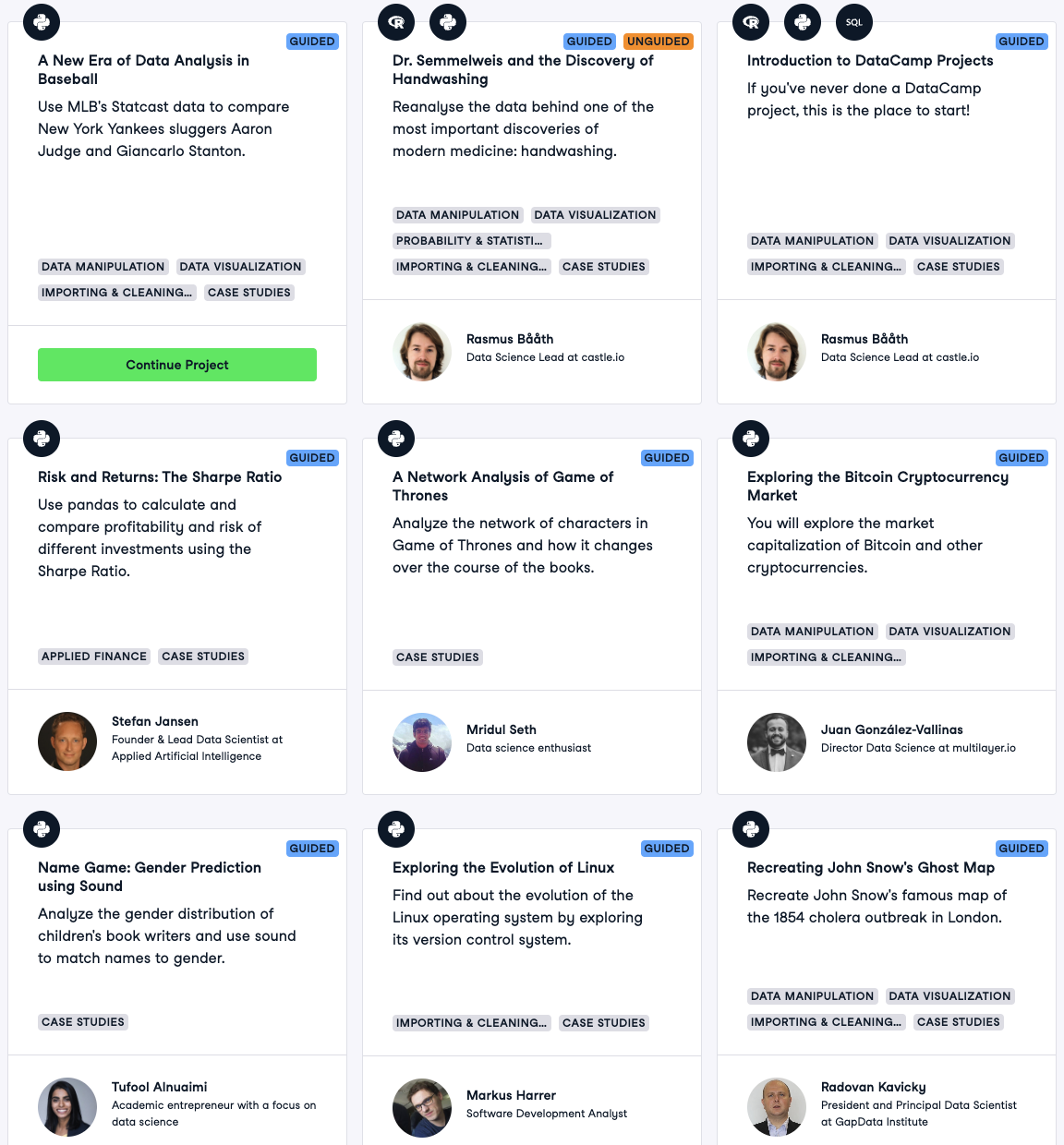
Một loạt dự án Python trên DataCamp Projects
5. Xây dựng portfolio dự án
Khi hoàn thành dự án, hãy tập hợp vào một portfolio. Portfolio nên phản ánh kỹ năng và mối quan tâm của bạn, phù hợp với ngành hoặc nghề bạn hướng tới. Cố gắng làm dự án có dấu ấn riêng và thể hiện kỹ năng giải quyết vấn đề.
Chúng tôi có danh sách 60+ dự án Python cho mọi cấp độ trong một bài viết riêng. Dưới đây là vài ý tưởng theo cấp độ:
- Mới bắt đầu. Trò chơi đoán số, ứng dụng to-do, hoặc phân tích dữ liệu cơ bản với bộ dữ liệu bạn quan tâm.
- Trung cấp. Dự án phức tạp hơn như web scraper, website blog bằng Django, hoặc mô hình machine learning dùng Scikit-learn.
- Nâng cao. Ứng dụng web full-stack, dự án phân tích dữ liệu quy mô lớn, hoặc mô hình deep learning với TensorFlow hoặc PyTorch.
Xem hướng dẫn đầy đủ về cách xây dựng portfolio khoa học dữ liệu xuất sắc với nhiều ví dụ. Và đừng quên; bạn có thể xây portfolio trên DataCamp để phô diễn kỹ năng.
6. Luôn thử thách bản thân
Đừng ngừng học. Khi đã làm chủ căn bản, hãy tìm các nhiệm vụ và dự án thách thức hơn. Chuyên sâu vào các lĩnh vực phù hợp với mục tiêu nghề nghiệp hoặc sở thích. Dù là khoa học dữ liệu, phát triển web hay machine learning, luôn có điều mới để học trong thế giới Python. Hãy nhớ, học Python là đường dài chứ không phải chạy nước rút. Kiên trì luyện tập, giữ tinh thần tò mò và đừng ngại mắc lỗi.
Ví dụ kế hoạch học Python
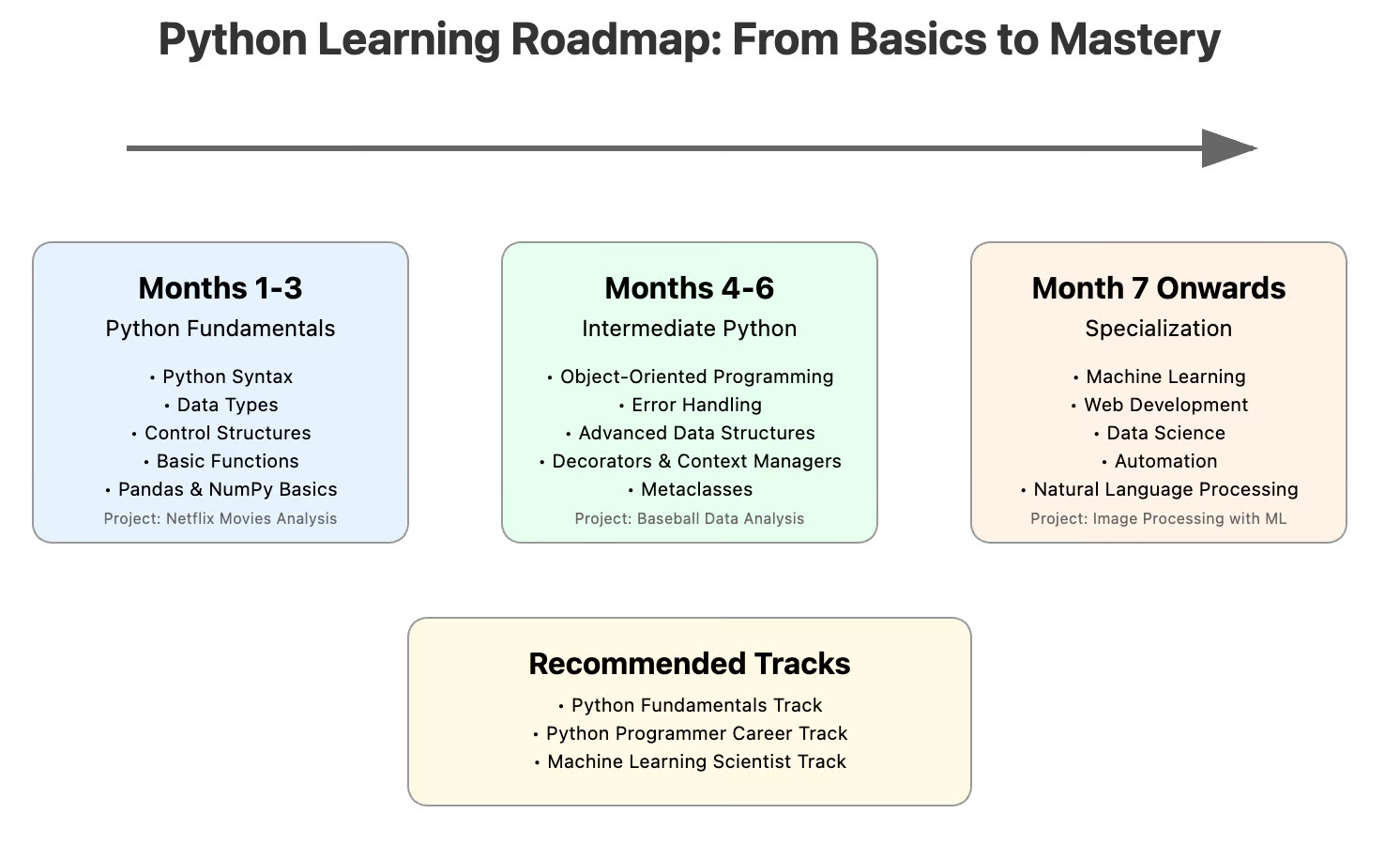
Dưới đây là kế hoạch tham khảo về trọng tâm thời gian và công sức nếu bạn mới bắt đầu học Python. Hãy nhớ, mốc thời gian, chủ đề và tiến độ phụ thuộc vào nhiều yếu tố. Chúng tôi muốn kế hoạch này thực tế và thiên về thực hành, nên có gợi ý dự án theo từng giai đoạn.
Tháng 1–3: Cơ bản Python và thao tác dữ liệu
Làm chủ các khái niệm lập trình cơ bản đến trung cấp. Bắt đầu dự án đơn giản trong lĩnh vực chuyên sâu của bạn. Ví dụ, nếu bạn quan tâm khoa học dữ liệu, hãy thử phân tích một bộ dữ liệu bằng pandas và trực quan hóa với matplotlib.
- Python cơ bản. Bắt đầu với cú pháp, kiểu dữ liệu, cấu trúc điều khiển, hàm, và hơn thế nữa.
- Thao tác dữ liệu. Học xử lý dữ liệu bằng pandas và NumPy. Đây là kỹ năng then chốt cho các công việc dùng Python, đặc biệt trong khoa học dữ liệu và machine learning.
Tài nguyên & dự án khuyến nghị
- Python Fundamentals
- Dự án khoa học dữ liệu: Khám phá phim Netflix và khách mời trong The Office
- Python Cheat Sheet cho người mới
Tháng 4–6: Python trung cấp
Khi đã có nền tảng vững, bạn có thể học các chủ đề nâng cao hơn.
- Python trung cấp. Khi thoải mái với căn bản, chuyển sang chủ đề nâng cao hơn: OOP, xử lý lỗi, cấu trúc dữ liệu phức tạp. Khám phá decorator, context manager, metaclass, v.v.
- Chủ đề cụ thể. Nếu quan tâm machine learning, bạn có thể bắt đầu lộ trình Machine Learning Fundamentals with Python. Tiếp tục làm dự án, nhưng phức tạp hơn, như xây mô hình dự đoán giá nhà hoặc phân loại ảnh.
Tài nguyên & dự án khuyến nghị
- Lộ trình nghề nghiệp Python Programmer
- Dự án: Kỷ nguyên mới của phân tích dữ liệu trong bóng chày
- Hướng dẫn OOP trong Python
Từ tháng 7 trở đi: Python nâng cao và chuyên sâu
Đến lúc này, bạn nên có hiểu biết tốt về Python và ứng dụng trong lĩnh vực quan tâm. Giờ là lúc chuyên sâu.
- Chuyên sâu. Dựa trên sở thích và mục tiêu nghề nghiệp, hãy chọn một mảng: khoa học dữ liệu, machine learning, phát triển web, tự động hóa, v.v. Chẳng hạn, nếu bạn quan tâm xử lý ngôn ngữ tự nhiên, hãy học thư viện như NLTK và SpaCy. Tiếp tục làm dự án và cập nhật xu hướng trong lĩnh vực.
Tài nguyên & dự án khuyến nghị
- Lộ trình nghề nghiệp Machine Learning Scientist with Python
- Dự án Naïve Bees: Nạp và xử lý ảnh
- Hướng dẫn toàn diện NLP với PyTorch
Lộ trình học Python
Bên dưới là sơ đồ lộ trình cơ bản dựa trên đường học Python. Nó giúp bạn hình dung tiến độ khi hướng tới làm chủ Python:
6 mẹo hàng đầu để học Python
Nếu bạn háo hức bắt đầu, hãy ghi nhớ những mẹo này; chúng sẽ giúp tối đa hóa tiến bộ và giữ bạn tập trung.
1. Chọn trọng tâm
Tính linh hoạt của Python trải rộng từ phát triển web, phân tích dữ liệu đến machine learning. Để tinh gọn việc học, hãy chọn một mảng phù hợp mục tiêu hoặc sở thích. Ví dụ, người hướng tới khoa học dữ liệu ưu tiên thư viện như pandas và NumPy, còn phát triển web nên khám phá Django hoặc Flask.
Tập trung không giới hạn bạn; kỹ năng Python có thể chuyển đổi giữa các lĩnh vực. Khi đã vững, bạn có thể mở rộng sang mảng khác.
2. Luyện tập đều đặn
Sự nhất quán là chìa khóa để học Python — hay bất cứ ngôn ngữ nào. Cố gắng viết mã mỗi ngày, dù chỉ vài phút, để củng cố kiến thức và tăng khả năng ghi nhớ.
Luyện hằng ngày không nhất thiết phải là dự án phức tạp. Có thể là ôn lại khái niệm, cải tiến mã cũ, hoặc giải thử thách đơn giản để xây dựng tự tin và duy trì đà học.
3. Làm dự án thực tế
Cách tốt nhất để học Python là dùng nó. Làm dự án thực tế cho bạn cơ hội áp dụng kiến thức và tích lũy kinh nghiệm. Bắt đầu với dự án đơn giản để củng cố căn bản, rồi tăng dần độ phức tạp khi kỹ năng tiến bộ. Có thể là tự động hóa tác vụ, xây game nhỏ, hoặc dự án phân tích dữ liệu.
4. Tham gia cộng đồng
Học Python dễ hơn và bổ ích hơn khi có đồng hành. Cộng đồng mang lại hỗ trợ, động lực và cơ hội học hỏi từ bạn bè.
Cân nhắc tham gia meetup Python địa phương hoặc diễn đàn trực tuyến để đặt câu hỏi, chia sẻ kiến thức và học từ trải nghiệm của người khác.
5. Đừng vội vàng
Học lập trình cần thời gian, và Python cũng vậy. Đừng lướt nhanh nội dung để “học cho xong”. Hãy dành thời gian hiểu chắc mỗi khái niệm trước khi sang phần tiếp theo. Quan trọng là hiểu sâu, không phải đi nhanh.
6. Luôn cải tiến
Học Python là quá trình lặp. Khi có thêm kinh nghiệm, hãy quay lại dự án/bài tập cũ để cải thiện hoặc làm theo cách khác: tối ưu mã, thêm tính năng, hay đơn giản là viết dễ đọc hơn. Quá trình này giúp củng cố kiến thức và cho thấy bạn đã tiến bộ thế nào theo thời gian.
Cách tốt nhất để học Python năm 2026
Có nhiều cách để học Python và cách phù hợp nhất phụ thuộc phong cách học và lịch trình của bạn. Dưới đây là một số cách tốt để bắt đầu từ con số 0:
Khóa học trực tuyến
Khóa học trực tuyến giúp bạn học theo nhịp độ riêng. Chúng tôi cung cấp hơn 150 khóa Python cho mọi cấp, từ nhập môn đến nâng cao. Thường có video, bài kiểm tra, và dự án thực hành, mang lại trải nghiệm học toàn diện.
Nếu hoàn toàn mới, bạn có thể bắt đầu với Introduction to Python. Với người muốn nắm trọn các yếu tố thiết yếu, lộ trình Python Fundamentals bao quát mọi thứ để bạn bắt đầu lập trình. Khi đã vững căn bản, khóa Intermediate Python sẽ giúp bạn nâng cấp kỹ năng.
Khóa Python hàng đầu cho người mới
- Python Fundamentals Skill Track
- Python Programmer Career Track
- Introduction to Python
- Python Data Science Toolbox
- Writing Efficient Python Code
Hướng dẫn (tutorial)
Tutorial là cách tuyệt vời để học Python, nhất là cho người mới. Chúng cung cấp hướng dẫn từng bước để thực hiện tác vụ cụ thể hoặc hiểu khái niệm trong Python.
Chúng tôi có nhiều tutorial về Python và thư viện liên quan. Dù bạn mới bắt đầu hay muốn nâng cao, chắc chắn sẽ có chủ đề bạn quan tâm.
Tutorial Python hàng đầu
- Python Tutorial for Beginners
- How to install Python
- 30 mẹo hay để viết mã Python tốt hơn
- 21 công cụ Python thiết yếu
Cheat sheet
Nếu bạn muốn ôn nhanh những nguyên tắc cụ thể, cheat sheet là tài liệu tiện lợi tập trung nhiều kiến thức. Ví dụ, Python Cheat Sheet cho người mới bao quát các khái niệm cốt lõi để bắt đầu.
Chúng tôi cũng có cheat sheet cho thư viện cụ thể như Seaborn và SciPy, kèm ví dụ mã và mẹo dùng hiệu quả.
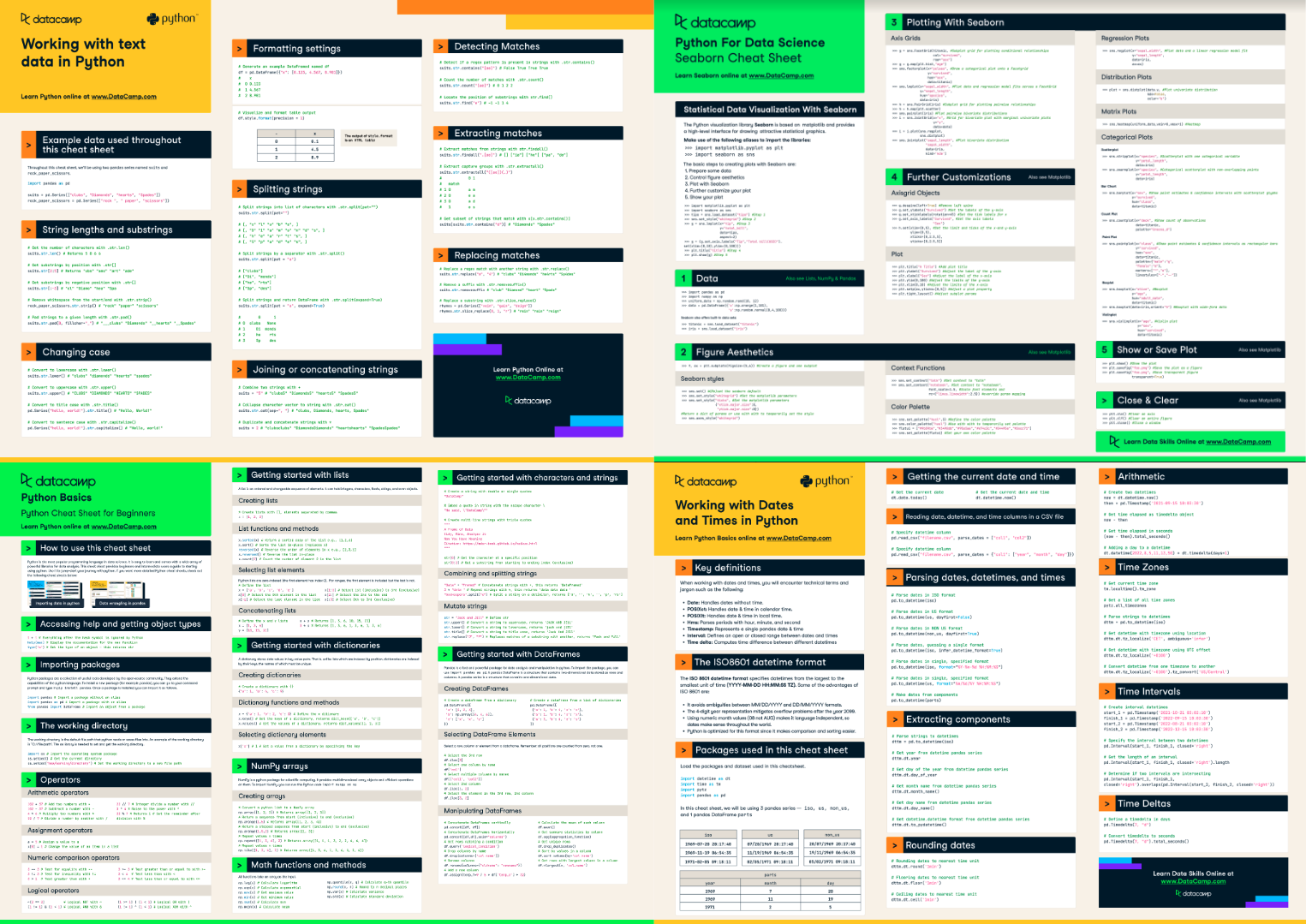
Một số cheat sheet tiêu biểu
Cheat sheet Python hàng đầu
- Python Cheat Sheet for Beginners
- Working with Dates and Times in Python Cheat Sheet
- Python Data Visualization: Bokeh Cheat Sheet
- Importing Data in Python Cheat Sheet
Dự án
Làm dự án giúp bạn vận dụng kỹ năng hiện có để đối mặt thử thách mới. Khi tiến hành, bạn sẽ cần điều chỉnh cách tiếp cận và nghiên cứu phương pháp mới để đạt kết quả, qua đó làm chủ kỹ thuật Python mới.
Bạn có thể tìm thấy rất nhiều dự án khoa học dữ liệu trên DataCamp. Chúng cho phép bạn áp dụng kỹ năng lập trình trên nhiều bộ dữ liệu để giải quyết vấn đề thực tế ngay trên trình duyệt, và bạn có thể lọc các dự án yêu cầu Python.
Dự án Python hàng đầu
- 60+ dự án Python cho mọi cấp độ
- Khám phá lịch sử Lego
- Khám phá phim Netflix và khách mời trong The Office
- Phân tích dữ liệu Airbnb New York
Sách
Sách là nguồn tài nguyên tuyệt vời để học Python, đặc biệt với người thích tự học. Learn Python the Hard Way của Zed Shaw và Python Crash Course của Eric Matthes là hai cuốn được khuyến nghị cho người mới. Chúng cung cấp giải thích chuyên sâu cùng nhiều bài tập và dự án giúp củng cố kiến thức.
Sách Python hàng đầu
- Learning Python, 5th Edition: Lutz, Mark
- Head First Python: A Brain-Friendly Guide: Barry, Paul
- Python Distilled (Developer's Library): Beazley, David
- Python 3: The Comprehensive Guide to Hands-On Python Programming
Python cho người dùng doanh nghiệp
Không chỉ cá nhân muốn nâng cấp kỹ năng Python. Khi doanh nghiệp ngày càng dựa vào quyết định dựa trên dữ liệu, nhu cầu thành thạo Python trong đội ngũ chuyên môn tăng mạnh. Với những tổ chức muốn nâng cao năng lực đội ngũ, DataCamp for Business là giải pháp toàn diện.
Vì sao chọn DataCamp for Business?
DataCamp for Business mang đến mọi lợi ích của thuê bao DataCamp thông thường nhưng theo cách có thể mở rộng tùy nhu cầu tổ chức. Một vài lợi ích:
- Lộ trình học phù hợp: Lộ trình học có cấu trúc cho từng vai trò, đảm bảo đào tạo phù hợp cho mỗi thành viên.
- Thực hành trực tiếp: Bài tập tương tác và dự án thực tế giúp áp dụng kiến thức.
- Khả năng mở rộng và linh hoạt: Phù hợp cho đội nhỏ hoặc cả phòng ban, học theo nhịp độ cá nhân.
- Giảng viên chuyên gia: Khóa học được thiết kế bởi chuyên gia trong ngành, đảm bảo nội dung thực tiễn, cập nhật.
- Thư viện nội dung toàn diện: Tài nguyên phong phú bao phủ Python cho phân tích dữ liệu, machine learning, và hơn thế nữa.
Yếu tố giúp bạn nổi bật là chứng minh dự án tạo ra tác động và được người khác quan tâm. Tại sao chúng ta làm dữ liệu? Chúng ta cố gắng tìm insight thực sự tác động tới doanh nghiệp, định hình xã hội hoặc tạo ra điều mới mẻ. Chúng ta muốn cải thiện lợi nhuận hoặc đời sống con người bằng việc sử dụng và phân tích dữ liệu, nên nếu bạn không lượng hóa được tác động, bạn đang thiếu đi phần giá trị cốt lõi.
Nick Singh, Author of Ace the Data Science Interview
60% đến 70% hồ sơ bị loại trước khi con người thực sự xem xét.
Jen Bricker, Former Head of Career Services at DataCamp