Kursus
Claude Code 101
3 jam
27.6K
Catatan: Meta merilis Muse Spark 1.3 pada 2 September 2026.
Meta merilis Muse Spark 1.1 pada 9 Juli 2026, model kedua dari Meta Superintelligence Labs dan peningkatan dari Muse Spark versi asli yang diluncurkan pada April. Rilis ini juga membuka Meta Model API untuk pengembang dalam pratinjau publik, menempatkan Meta pada model bisnis API berbayar yang sama seperti Anthropic dan OpenAI.
Peluncuran ini terjadi hanya dua hari setelah Meta meluncurkan Muse Image, model generasi gambar pertama dari Superintelligence Labs.
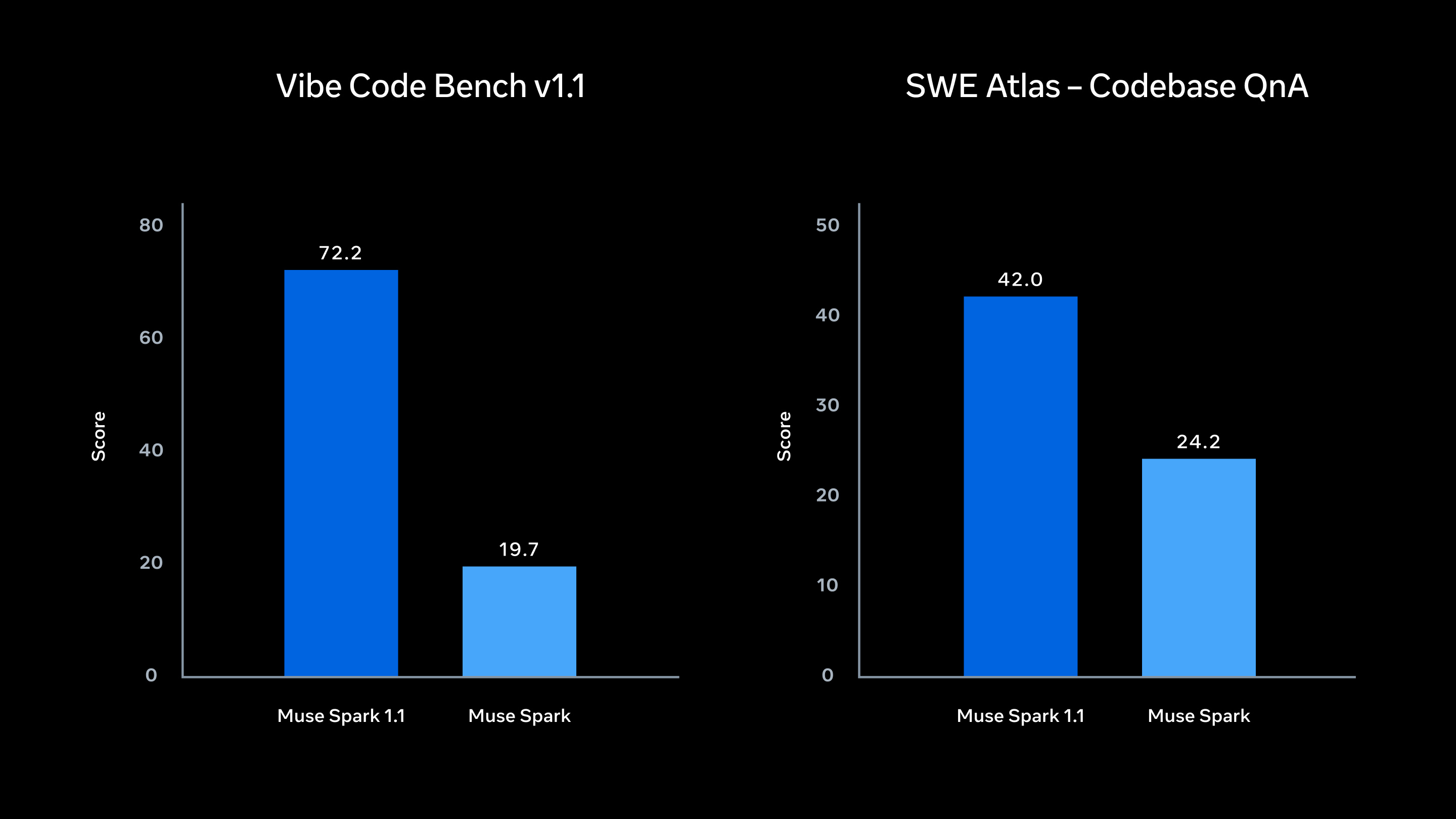
Muse Spark 1.1 adalah model penalaran multimodal yang dibangun untuk tugas-tugas agen, dengan jendela konteks 1 juta token dan peningkatan dalam penggunaan alat, penggunaan komputer, pengodean, dan pemahaman multimodal.
Model ini berjalan dalam mode "Thinking" di aplikasi Meta AI dan di meta.ai, dan Meta memposisikannya sebagai penantang kelas terdepan untuk GPT-5.5, Claude Opus 4.8, dan Gemini 3.1 Pro. Harga API sebesar $1,25 per satu juta token input dan $4,25 per satu juta token output, dengan kredit gratis $20 untuk memulai.
Dalam artikel ini, saya akan membahas semua hal baru pada Muse Spark 1.1, melihat fitur-fitur agen baru, mengeksplorasi tolok ukur, dan mengusulkan pengujian langsung untuk evaluasi Anda sendiri. Untuk liputan terkait, lihat ulasan kami tentang Muse Glimmer, Sakana Fugu vs. Claude Fable 5 dan tutorial kami tentang menjalankan MiniMax M3 secara lokal.
Muse Spark 1.1 adalah model penalaran multimodal terbaru dari Meta, dirancang untuk merencanakan dan mengorkestrasi pekerjaan di berbagai aplikasi dan layanan eksternal, bukan sekadar menjawab pertanyaan satu giliran. Model ini berada di atas keluarga Llama berbobot terbuka, lini utama Meta sebelumnya sebelum hadirnya model Muse Spark.
Berbeda dengan Llama, Muse Spark bersifat proprietari dan berbobot tertutup, tanpa penerapan lokal atau fine-tuning komunitas.
Perubahan utama dari Muse Spark versi asli adalah kapabilitas agen.
Meta mengatakan 1.1 menangani proyek kompleks lebih cepat karena dilatih untuk mengorkestrasi sistem multi-agen, bertindak sebagai agen utama yang merencanakan dan mendelegasikan, atau sebagai subagen yang fokus pada tugasnya dan melakukan eskalasi saat diperlukan.
Model ini juga secara aktif mengelola jendela konteks 1 juta token, memadatkan pekerjaan sebelumnya sambil mempertahankan langkah-langkah yang dibutuhkan nanti.
Dalam pengodean, Meta melaporkan bahwa 1.1 secara signifikan lebih baik dari model pertama pada Meta Internal Coding Bench internal dan kompetitif dengan alternatif terkemuka. Kerangka itu penting karena tolok ukur independen menunjukkan hasil yang lebih beragam, yang akan saya bahas di bagian tolok ukur.
Peningkatan berfokus pada melakukan sesuatu di berbagai aplikasi dan antarmuka, bukan hanya menghasilkan teks. Berikut adalah kapabilitas yang ditekankan Meta untuk rilis ini.
Muse Spark 1.1 dapat berjalan sebagai agen utama yang mengumpulkan konteks, membuat rencana, dan mendelegasikan eksekusi ke subagen paralel.
Sebagai subagen, model ini memahami alat yang tersedia dan tahu kapan harus mengembalikan kendali ke agen utama.
Meta mengatakan struktur paralel inilah yang memungkinkannya menyelesaikan proyek kompleks lebih cepat daripada Muse Spark versi asli dengan mengurangi latensi end-to-end.
Bagi praktisi, ini berarti Anda dapat mengarahkannya ke proyek seperti "ambil tiket dukungan kuartal lalu, kategorikan, dan buat draf dek ringkasan" dan membiarkannya membagi pengambilan, penandaan, dan penyusunan draf di antara subagen.
Meta juga mengklaim model ini melakukan generalisasi zero-shot ke alat native baru, server MCP, dan keterampilan kustom, sehingga Anda tidak perlu melakukan fine-tuning untuk setiap integrasi.
Muse Spark 1.1 menangani alur kerja penggunaan komputer yang membentang di beberapa aplikasi di mana informasi berubah di tengah tugas.
Meta melatihnya untuk memutuskan kapan menulis skrip untuk kecepatan, kapan menavigasi antarmuka secara langsung, dan untuk menghasilkan serangkaian tindakan per langkah alih-alih menalar satu klik demi satu klik.
Contoh dari perusahaan adalah agen yang melakukan pemesanan pesta makan malam, lalu menyadari konteks baru dan memperbarui pesanan tanpa intervensi pengguna.
Contoh yang lebih dekat untuk tim data mungkin agen yang mengikis halaman harga vendor, menyadari perubahan harga di tengah sesi, dan merevisi spreadsheet perbandingan sebelum mengekspornya.
Klaimnya adalah model ini mempertahankan konteks selama sesi yang diperpanjang dan beradaptasi dengan kebutuhan yang berubah dengan masukan manusia minimal.
Pengodean adalah area yang banyak disorot Meta dalam pemasaran, dengan menyebutkan peningkatan pada tugas dunia nyata seperti mendiagnosis bug kompleks, mengimplementasikan fitur di sistem enterprise, dan menjalankan migrasi kode besar.
Muse Spark 1.1 mendukung fitur pengodean agen umum, termasuk mode perencanaan, goal conditioning, delegasi subagen, dan pemadatan konteks, dan Meta mengatakan model ini beradaptasi dengan beragam harness seperti OpenCode.
Mitra awal mendukung hal ini. Saoud Rizwan, CEO Cline, mengatakan Meta "jelas membangun untuk pengodean agen yang serius, penggunaan alat yang kuat dengan titik harga yang membuatnya layak untuk menjalankan beban kerja pengodean nyata dalam skala besar." Amjad Masad, CEO Replit, memuji "kemampuan pengodean kelas atas (terutama frontend dan desain)" serta kemasannya yang kompatibel dengan OpenAI.
Kekuatan multimodal Muse Spark 1.1 mencakup persepsi, generasi visual-ke-kode, penulisan keterangan gambar dan video yang sangat deskriptif, serta eksekusi agen multimodal. Yang ditekankan Meta di sini adalah melakukan persepsi dan aksi secara bersamaan: memeriksa input visual atau audio, menyimpan detail tersebut sepanjang alur kerja panjang, dan menggunakannya saat mengoperasikan komputer untuk Anda.
Demonstrasi Meta menggunakan video ponsel untuk mengekstrak foto produk dan menalar tentang suatu barang, lalu mengoperasikan peramban untuk membuat listing Facebook Marketplace atas nama pengguna. Perhatikan batasan modalitas yang disorot beberapa panduan pihak ketiga: input mencakup teks, gambar, dan audio, tetapi output saat ini hanya teks, tanpa generasi gambar atau video langsung dari model ini.
Posting resmi Meta mengandalkan evaluasi internal seperti Meta Internal Coding Bench, yang tidak dapat direplikasi secara independen.
Angka publik paling berguna berasal dari perbandingan pihak ketiga, dan menunjukkan Muse Spark 1.1 menukar efisiensi token yang kuat dengan celah pada tugas pengodean paling sulit.
| Tolok ukur | Muse Spark 1.1 Meta |
Muse Spark Meta |
Gemini 3.1 Pro (tinggi) |
Opus 4.8 (maks) Anthropic |
GPT 5.5 (sangat tinggi) OpenAI |
|
|---|---|---|---|---|---|---|
| Agen | MCP Atlas Penggunaan alat berskala |
88,1 | 82,2 | 78,2 | 82,2 | 75,3 |
| JobBench Penggunaan alat profesional |
54,7 | 17,0 | 15,9 | 48,4 | 38,3 | |
| Toolathlon-Terverifikasi Penggunaan alat personal |
75,6 | 49,4 | 61,1 | 76,2 | 73,5 | |
| OSWorld-Terverifikasi Penggunaan komputer agen |
80,8 | 53,3 | 76,2 | 83,4 | 78,7 | |
| Humanity's Last Exam Penalaran multidisiplin (dengan alat) |
62,1 | 50,4 | 51,4 | 57,9 | 52,2 | |
| Finance Agent v2 Analisis keuangan agen |
57,2 | - | 43,0 | 53,9 | 51,8 | |
| Pengodean | Terminal-Bench 2.1 Pengodean terminal agen |
80,0 | 67,3 | 70,3 | 82,7 | 83,4 |
| SWE-Bench Pro Rekayasa perangkat lunak yang beragam |
61,5 | 55,0 | 54,2 | 69,2 | 58,6 | |
| DeepSWE 1.1 Pengodean agen berjangka panjang |
53,3 | 10,0 | 12,0 | 59,0 | 67,0 | |
| Multimodal | CharXiv Reasoning Tanya jawab bagan |
88,4 | 88,9 | 81,6 | 89,9 | 84,8 |
| BabyVision Penalaran visual |
76,3 | 39,9 | 51,5 | 81,2 | 83,6 | |
Terminal-Bench 2.1 mengukur seberapa baik sebuah model menangani pengodean multi-langkah dan tugas agen di terminal.
Meta mencatat skor 80,0 untuk Muse Spark 1.1, sedikit di belakang 82,7 untuk Claude Opus 4.8 dan 83,4 untuk GPT-5.5 yang memimpin.
Indeks ini mengukur penggunaan alat berskala yang memerlukan perencanaan dan orkestrasi di berbagai aplikasi dan layanan eksternal.
Muse Spark 1.1 memimpin di sini, dengan skor 88,1 vs 82,2 untuk Opus 4.8 dan 75,3 untuk GPT-5.5. Model baru Meta ini juga berada di puncak tolok ukur JobBench, yang berfokus pada penggunaan alat profesional, menunjukkan bahwa penggunaan alat agen jelas menjadi prioritas untuk Muse Spark 1.1
Metrik kewaspadaan evaluasi dari Apollo Research mengukur apakah sebuah model tampak menyadari bahwa ia sedang diuji. Ringkasan pihak ketiga mengulang klaim bahwa Muse Spark menunjukkan tingkat kewaspadaan evaluasi tertinggi di antara model yang dievaluasi. Ambil ini dengan hati-hati: belum banyak direplikasi secara independen, dan beberapa komentator khawatir hal ini bisa dibesar-besarkan tanpa lebih banyak replikasi.
Akses konsumen gratis. Muse Spark 1.1 berjalan dalam mode Thinking di aplikasi Meta AI dan di meta.ai, dengan login Meta diperlukan dan kemungkinan batas laju di sisi server untuk penggunaan berat. Ia menerima input teks, gambar, dan audio tetapi mengembalikan output hanya teks.
Bagi pengembang, Meta Model API baru tersedia dalam pratinjau publik. Pengembang di AS kini dapat mengaksesnya untuk menguji prompt, membandingkan output, dan membuat prototipe integrasi, dengan harga sebagai berikut:
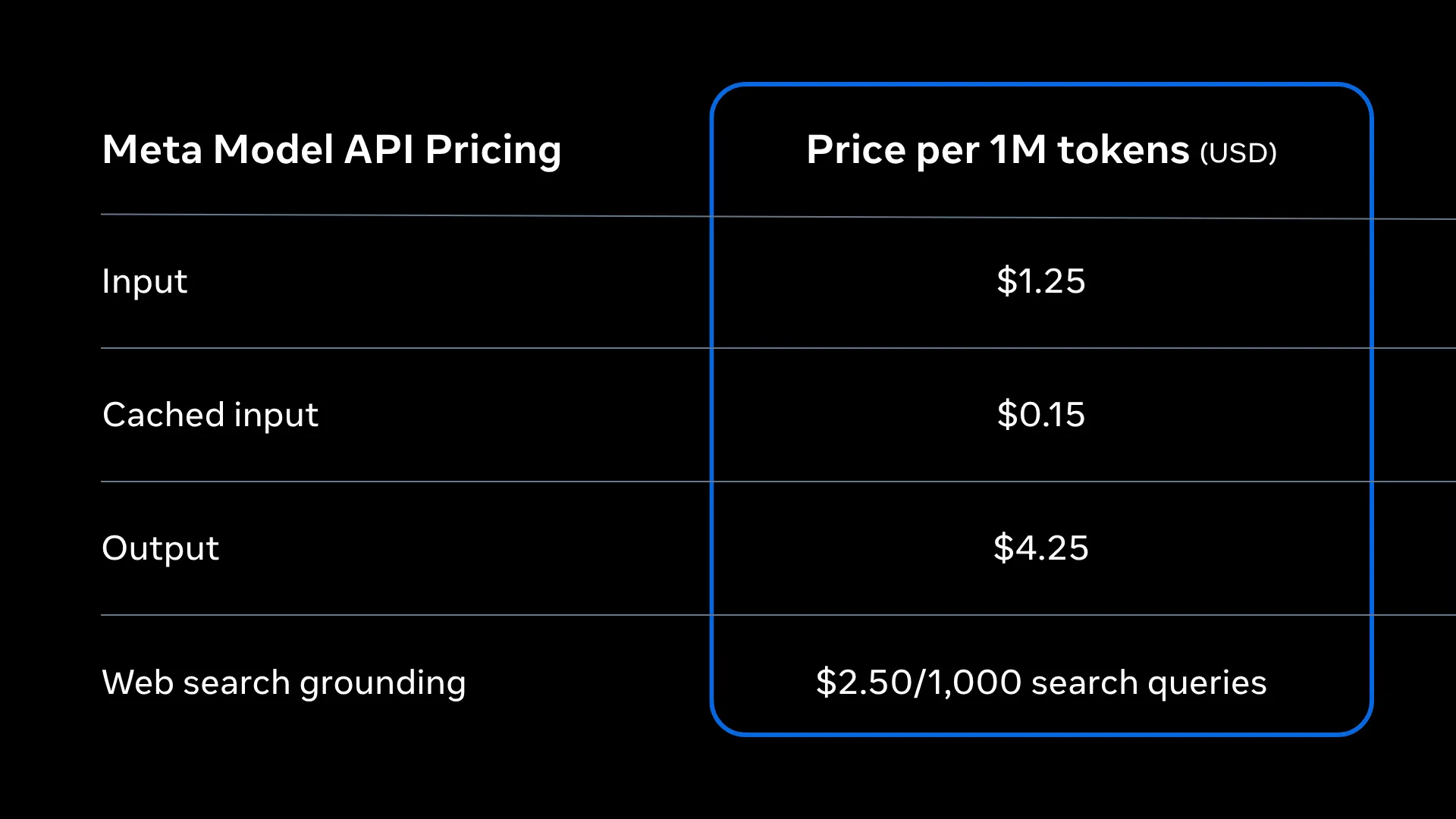
Reuters menempatkan harga tersebut di atas GPT-5 mini tingkat awal dari OpenAI dan Claude Haiku 4.5 dari Anthropic, tetapi di bawah Claude Sonnet 4.8 dari Anthropic yang lebih tinggi.
Model ini diperkirakan akan menggantikan model Llama yang ada yang menggerakkan chatbot di WhatsApp, Instagram, Facebook, dan kacamata pintar Meta. Perlu dicatat bahwa beberapa panduan independen menyebut dokumentasi API masih minim, tanpa kartu model terperinci dan tanpa konfirmasi resmi yang presisi untuk beberapa spesifikasi inti.
Sinyal paling jelas dari peluncuran ini adalah Meta telah beralih model bisnis. Dengan menagih per token melalui Meta Model API, Meta kini bersaing di wilayah Anthropic dan OpenAI, tidak lagi sekadar merilis bobot terbuka seperti yang dilakukan dengan Llama.
Itu adalah pergeseran besar bagi perusahaan yang reputasinya di AI dibangun di atas keterbukaan.
Menurut saya, Muse Spark 1.1 benar-benar menarik karena dua alasan: akses konsumen tingkat terdepan yang gratis di meta.ai, dan efisiensi token yang kuat.
Peringatan yang lebih besar bagi praktisi adalah transparansi. Tidak ada rilis bobot terbuka, jadi jika alur kerja Anda memerlukan penerapan lokal atau fine-tuning, Muse Spark bukan model untuk Anda, dan lini Llama yang terbuka atau alternatif berbobot terbuka seperti MiniMax M3 tetap lebih cocok.
Jika Anda ingin membangun alur kerja agen dan multi-alat yang dirancang untuk Muse Spark 1.1, saya merekomendasikan kursus Developing AI Systems with the OpenAI API kami, karena Meta Model API kompatibel dengan OpenAI.
Kursus Teratas DataCamp
Kursus
Kursus
Kursus
blogs
Javier Canales Luna
14 mnt
blogs
Dario Radečić
15 mnt
blogs
Hugo Bowne-Anderson
13 mnt
blogs
David Woods
13 mnt