Przejdź do treści głównej

How to Write a Data Engineer Resume (With Examples)

Create a standout data engineer resume with our expert tips and templates. Learn to highlight skills and optimize for ATS to land your dream data engineer role.
31 mar 2026  · 14 min Czytać

A strong data engineer resume does more than list tools like Python, SQL, Spark, or Airflow. It shows employers that you can build, maintain, and improve the systems that move data reliably across an organization.

That matters because hiring teams are evaluating more than technical familiarity. They want evidence that you can design pipelines, work with cloud platforms, support analytics or machine learning use cases, and deliver measurable business impact. Your resume has to be easy for both Applicant Tracking Systems (ATS) and human reviewers to understand quickly.

In this guide, I’ll walk through how to write a data engineer resume that is clear, credible, and tailored to modern hiring expectations in 2026. We’ll cover the core sections you should include, the technical skills that matter most, and how to adapt your resume for roles ranging from entry-level to senior data engineer. 

Whether you’re an entry-level candidate, mid-level engineer, senior candidate, or changing your career towards data engineering, this guide is for you.

What Is A Data Engineer Resume?

A data engineer resume is a document that shows your ability to build and support the infrastructure that powers data use across an organization. Unlike a more general technical resume, a data engineer resume should emphasize data pipelines, storage systems, orchestration, transformation workflows, reliability, and scale.

Its goal is not simply to prove that you know certain tools. Its goal is to show that you can use those tools to move data efficiently, maintain quality, reduce failures, and support downstream users such as analysts, data scientists, machine learning teams, and business stakeholders.

A strong data engineer resume should make it easy for an employer to answer a few key questions:

  • Can this person build and maintain reliable data systems?
  • Do they understand modern data platforms and workflows?
  • Can they work across teams and support real business needs?
  • Have they delivered results at the right level of complexity for this role?

For entry-level candidates, that proof may come from projects, internships, coursework, or adjacent experience. For more experienced candidates, it should come from production systems, technical ownership, scale, and measurable outcomes.

For more information on getting your career journey started, I recommend reading our guide on becoming a data engineer and learning data engineering from scratch.

Become a Data Engineer

Prove your skills as a job-ready data engineer.
Fast-Track My Data Career

Key Components of a Data Engineer Resume

A strong data engineer resume is usually built from the same core sections, but the emphasis changes with seniority. Early-career candidates may lean more heavily on projects and education, while experienced engineers should center production impact, ownership, and architectural scope.

Build a strong header and online presence

Your header should be simple and professional. Include your full name, location, email, phone number, LinkedIn, and GitHub or portfolio if relevant.

For data engineering roles, your online presence matters more when it adds credibility. A GitHub profile is useful if it includes clean, documented projects. A LinkedIn profile is useful if it matches your resume and clearly reflects your recent experience, skills, and job titles.

Keep this section clean. Avoid adding photos, full mailing addresses, or decorative elements that can distract from the content or create parsing issues for ATS systems.

A strong header might include:

  • Name
  • City and state or country
  • Email address
  • Phone number
  • LinkedIn URL
  • GitHub or portfolio URL (optional)

Write a compelling professional summary

Your professional summary sits near the top of the resume and should quickly communicate who you are, what you specialize in, and the kind of impact you’ve had.

For junior candidates, this can help connect education, projects, and early experience into a coherent story. For seasoned candidates, it should emphasize scope, specialties, and business outcomes rather than reading like a list of tools.

A strong summary usually includes:

  • Years of experience or career stage
  • Primary technical focus
  • Relevant platforms or domains
  • One or two measurable outcomes or strengths

Example for a junior candidate:

Data engineering graduate with hands-on experience building ETL pipelines in Python and SQL through academic and personal projects. Familiar with Airflow, dbt, and cloud data warehouses, with a strong foundation in data modeling, transformation, and analytics engineering workflows. Seeking an entry-level data engineering role where I can help build reliable data systems and grow in a production environment.

Example for an experienced candidate:

Data Engineer with 6+ years of experience building and optimizing batch and streaming data pipelines on AWS and Snowflake. Improved pipeline reliability, reduced processing costs, and supported analytics and machine learning use cases across cross-functional teams. Strong background in orchestration, data modeling, and platform scalability.

Create a skills section

Your skills section should be concise, organized, and easy to scan. Avoid long, unstructured lists. Group skills into categories so both recruiters and ATS tools can understand them quickly.

For example:

  • Languages: Python, SQL, Scala
  • Data processing: Spark, pandas, dbt
  • Orchestration: Airflow, Dagster
  • Cloud and storage: AWS, S3, Redshift, Snowflake
  • Streaming and messaging: Kafka, Kinesis
  • Databases: PostgreSQL, MySQL, MongoDB
  • DevOps and monitoring: Docker, Terraform, GitHub Actions, Datadog

Only include tools you can discuss confidently in an interview. A short, credible skills section is stronger than an inflated one.

Turn work experience into proof of impact

This is the most important section of your resume. It should show not just what you were responsible for, but what changed because of your work.

For each role, include:

  • Job title
  • Company name
  • Dates
  • 3 to 6 bullets focused on impact

Strong bullets usually follow a clear pattern: action + context + result

Weak bullets:

  • Responsible for maintaining ETL pipelines
  • Worked on Snowflake migration

Stronger bullets:

  • Maintained and improved 20+ ETL pipelines in Airflow and Python, reducing daily pipeline failures by 35% and improving data freshness for the analytics team
  • Supported migration from on-prem SQL Server to Snowflake by rebuilding transformation workflows and validating outputs, reducing report query times by 40%

Good metrics for data engineering bullets include:

  • Pipeline runtime improvements
  • Cost savings
  • Data freshness
  • Uptime or reliability
  • Reduction in failures or incidents
  • Query performance
  • Time saved for analysts or other teams
  • Size or scale of systems supported

Even when exact numbers are unavailable, you can still show impact with scope:

  • Supported 15+ downstream dashboards
  • Managed pipelines processing millions of records daily
  • Built reusable dbt models across 6 business domains

Add projects that strengthen credibility

Projects are especially important for entry-level candidates, career switchers, and anyone without deep production experience.

A strong data engineering project should show more than code. It should show that you understand how data moves through a system. Good projects often include ingestion, transformation, storage, orchestration, and some business-facing output.

For each project, include:

  • Project name
  • A single GitHub/portfolio link (hyperlinked in PDF)
  • Goal or business use case
  • Tools used
  • Your contributions
  • Outcome

Example:

Retail Sales Pipeline ProjectBuilt an end-to-end batch pipeline using Python, Airflow, dbt, and BigQuery to ingest raw sales data, clean and transform it, and produce analytics-ready tables. Added data quality checks and documentation, reducing failed runs during testing and making the workflow easier to maintain.

Projects become much stronger when their GitHub repo or portfolio page includes:

  • A README with architecture and setup steps
  • Clear folder structure
  • Screenshots or diagrams (when helpful)
  • Tests, validation, or data quality checks

If you’re searching for inspiration, make sure to check out our top data engineering projects.

Present education and certifications well

Your education section should be straightforward. Include your degree, institution, graduation year, and, optionally, relevant coursework if you are early in your career.

Recent graduates may include:

  • Relevant coursework
  • Capstone projects
  • Academic honors
  • GPA, if strong and early-career

Experienced candidates should keep this section shorter unless the degree is especially relevant.

Certifications add value when they support your target role, as our Data Engineer Career Certification does. Cloud, warehouse, and platform certifications, such as the AWS Cloud Practitioner Certification (CLF-C02), are helpful, but they are not substitutes for real experience. Use them to reinforce your profile, not carry it.

Essential Technical Skills to Highlight on a Data Engineer Resume

The best data engineer resumes do not list every tool the candidate has seen. They highlight the skills that matter most for the role and present them credibly.

Highlight core data engineer foundations

Most data engineering jobs are built on a few core foundations:

These are the skills that appear across job descriptions, regardless of whether the stack is modern or legacy, cloud-first or hybrid.

Make sure your resume shows not just tool familiarity, but applied understanding. For example, instead of only listing SQL, show that you used it for data transformation, modeling, optimization, or validation.

If you’re still acquiring those skills, our Associate Data Engineer in SQL skill track is a great place to start.

Show platform, cloud, and processing experience

Modern data engineering roles often expect experience with cloud platforms, data warehouses, and large-scale processing tools. Our guide to essential data engineering tools provides a great overview of what’s most relevant.

Examples include:

List the platforms most relevant to the jobs you want. Then reinforce them in your experience section through actual use cases.

For example, “AWS” is not very persuasive on its own. “Built S3-to-Redshift ingestion workflows on AWS using Airflow and Lambda” is much stronger.

Include reliability, quality, and operational skills

Strong data engineers do not just move data. They build systems that can be trusted.

That means your resume should also reflect operational depth, such as:

  • Data quality checks
  • Monitoring and alerting
  • Testing
  • Logging and observability
  • CI/CD
  • Version control
  • Incident response
  • Backfills and recovery workflows
  • Access controls or governance practices

These skills often separate average resumes from stronger ones because they show production maturity.

Reference emerging capabilities without using buzzwords

Some data engineer roles now touch areas like real-time analytics, feature pipelines, semantic modeling, data products, or AI support systems. These can be worth mentioning, but only when you have real experience.

Avoid vague claims like:

  • Expert in next-generation data systems
  • Built cutting-edge AI-ready infrastructure
  • Specialized in modern data innovation

Instead, stay concrete:

  • Built feature tables used by machine learning models
  • Supported near-real-time event pipelines using Kafka and Spark Streaming
  • Created reusable semantic models for BI reporting

Specific language builds trust. Buzzwords weaken it.

Tips for Writing a Data Engineer Resume 

A good data engineer resume is not just technically strong. It is also easy to read, aligned to the target role, and optimized for both ATS systems and human review.

Choose the right format and layout

For most candidates, the best format is simple and reverse chronological. Use a clean single-column layout, standard headings, and readable spacing.

Avoid:

  • Heavy graphics
  • Multiple columns
  • Icons that replace text
  • Decorative skill bars
  • Dense paragraphs

These may look polished, but they often reduce readability and can create ATS issues. Clear formatting is a competitive advantage.

Tailor for ATS keywords and job description

Before applying, study the job description and look for repeated keywords, tools, and responsibilities. Then reflect that language naturally in your summary, skills, and experience sections.

For example, imagine a role that emphasizes:

  • Airflow
  • dbt
  • Snowflake
  • data modeling
  • stakeholder collaboration

In this case, your resume should reflect those exact terms where they honestly apply.

Do not keyword-stuff. The goal is alignment, not repetition. A tailored resume should still read naturally to a human.

Show soft skills through evidence, not adjectives

Many resumes say things like:

  • strong communicator
  • team player
  • excellent leadership skills

Those phrases are weak on their own. 

Instead, show soft skills through what you did:

  • Partnered with analysts to redesign models for reporting use cases
  • Documented pipeline logic and onboarding steps for new team members
  • Led incident reviews after recurring failures and introduced monitoring improvements
  • Worked with product and engineering teams to define data requirements

This approach is more credible and more persuasive.

Align the resume with LinkedIn

Your resume and LinkedIn should tell the same story. Titles do not need to match word for word, but the general chronology, experience, and skills should be consistent.

Hiring managers often compare both. If your resume emphasizes data engineering but your LinkedIn still reads like a general analyst or software profile, that can create doubt.

Make sure both reflect:

  • Your current positioning
  • Your key tools
  • Your project or production experience
  • Your scope and progression

Use tools and resources selectively

Resume tools, templates, and AI writing tools can help, but they should not replace your judgment.

Use them for:

  • Grammar cleanup
  • Bullet rewrites
  • ATS checks
  • Formatting help

Do not rely on them to invent impact or generate vague, over-polished content. The best resumes sound specific, grounded, and interview-defensible.

Data Engineer Resume Examples by Seniority

The right resume structure depends partly on your level of experience. The sections may stay similar, but the emphasis should change as your career progresses.

Entry-level data engineer resume

For entry-level candidates, the challenge is usually not formatting. It is proving readiness without much production experience.

Focus on:

  • Education
  • Relevant coursework
  • Internships
  • Projects
  • Technical skills
  • Certifications, if relevant

At this stage, projects matter a lot. A strong entry-level resume can absolutely earn interviews when it shows real pipeline thinking, clean documentation, and good fundamentals.

Suggested sections:
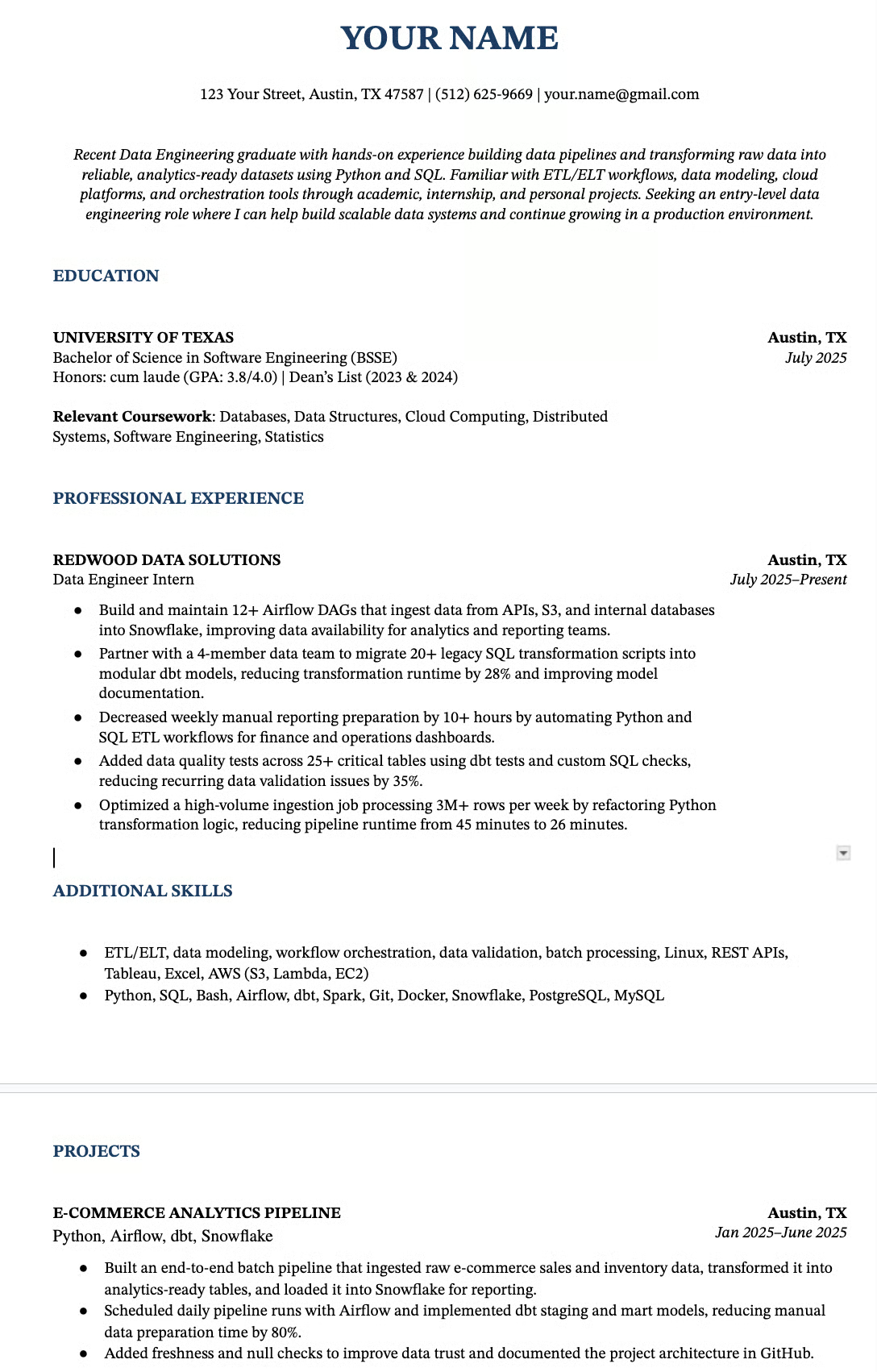
  • Header
  • Summary
  • Skills
  • Projects
  • Internship or related experience
  • Education
  • Certifications

Entry-level data engineer resume

Download the template

Mid-level data engineer resume

Mid-level candidates should shift the center of gravity toward professional impact. Hiring teams want to see that you can contribute independently, work within production systems, and own pieces of the data stack.

Focus on:

  • Recent work experience
  • Measurable outcomes
  • Platform fluency
  • Data modeling and workflow ownership
  • Collaboration with downstream users

Suggested sections:

  • Header
  • Summary
  • Skills
  • Professional experience
  • Projects, if especially strong
  • Education and certifications

Mid-level data engineer resume

Download the template

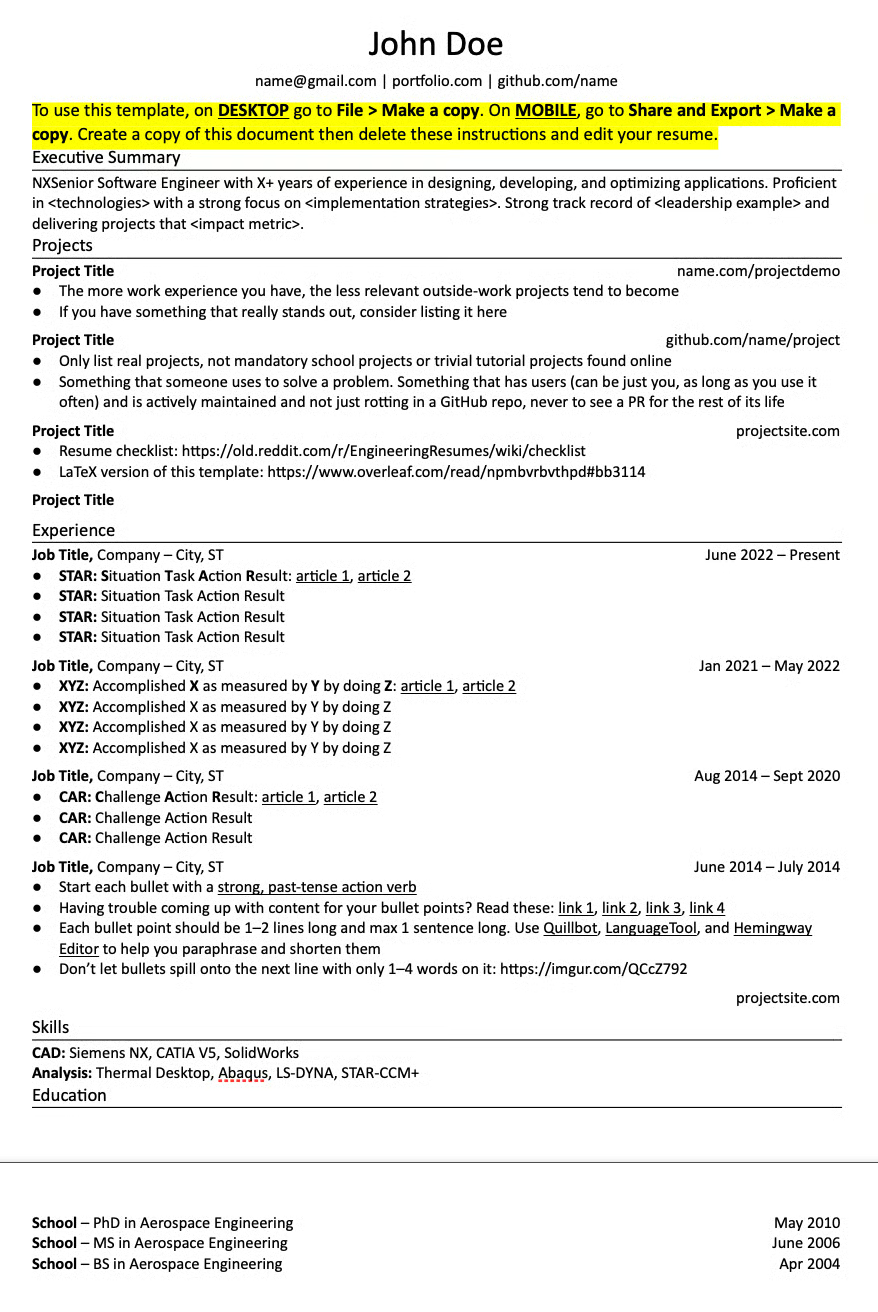
Senior data engineer resume

Senior and lead data engineer resumes should show technical depth and broader ownership. Employers want to see not just execution, but judgment, architecture, mentoring, and influence.

Focus on:

  • System design
  • Reliability improvements
  • Cross-team collaboration
  • Mentorship
  • Standard-setting
  • Strategic initiatives

Suggested sections:

  • Header
  • Executive summary
  • Core technical skills
  • Professional experience
  • Architecture or leadership highlights
  • Education and certifications

Senior data engineer resume

Download the template. Original template from portfolio.com.

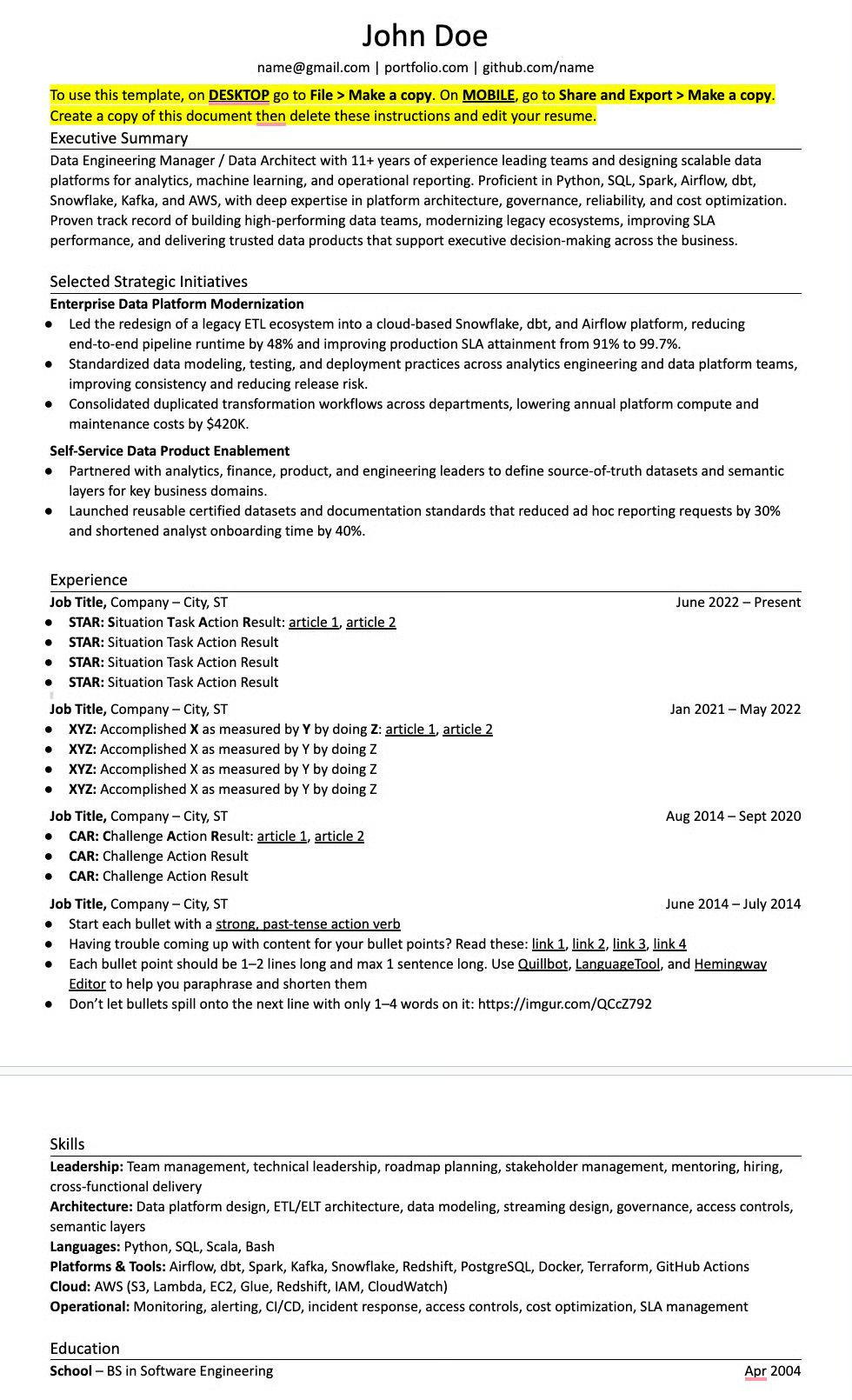
Data architect resume

For manager or architect roles, the resume should show a broad scope and organizational impact. Technical knowledge still matters, but it must be paired with planning, governance, prioritization, and leadership.

Focus on:

  • Team leadership
  • Platform strategy
  • Roadmap ownership
  • Data governance
  • Architectural decision-making
  • Enablement of other teams
  • Budget, scale, or platform consolidation when relevant

Suggested sections:

  • Header
  • Executive summary
  • Leadership and technical competencies
  • Experience
  • Selected strategic initiatives
  • Education and certifications

data architect resume

Download the template. Original template from portfolio.com.

Common Data Engineer Resume Mistakes to Avoid

Even technically strong candidates weaken their resumes with avoidable mistakes.

ATS and formatting mistakes

Common formatting mistakes include:

  • Using tables or graphics that break ATS parsing
  • Hiding important keywords in sidebars
  • Using nonstandard section titles
  • Making the layout overly dense or hard to scan

A clean, single-column resume with standard headings is usually the safest choice.

Content and credibility mistakes

Another common issue is overclaiming. Listing every trendy tool or using vague language can make a resume feel inflated.

Examples:

  • Claiming expertise in tools you barely used
  • Using generic summaries with no proof
  • Listing technologies without showing where you used them
  • Writing bullets that only describe duties, not results

A narrower but more credible resume is almost always stronger.

Missing metrics and weak impact

One of the biggest missed opportunities is failing to quantify impact.

Weak:

  • Built data pipelines for reporting

Stronger:

  • Built and maintained Airflow pipelines powering 12 executive dashboards, reducing reporting delays by 30%

Metrics do not need to be dramatic. They just need to help the reader understand scale, performance, reliability, or business value.

Resume and LinkedIn inconsistencies

If your resume says one thing and your LinkedIn says another, hiring teams may question your positioning.

Common mismatches include:

  • Different job titles for the same role
  • Missing projects on one profile
  • Different technology emphasis
  • Outdated summaries or headlines

Consistency builds trust.

Conclusion

A strong data engineer resume is clear, specific, and built around evidence. It should show that you understand the foundations of data engineering, know how to work with modern platforms, and can contribute measurable value through reliable data systems.

Whether you are applying for your first data engineering job or targeting a senior, lead, manager, or architect role, the same principle applies: focus on relevance, credibility, and impact. Tailor the resume to the role, quantify your achievements where possible, and make it easy for both ATS systems and human reviewers to understand your strengths quickly.

The best resumes are not static. They grow with your skills, projects, and responsibilities. Treat your resume like a living document, update it regularly, and refine it with the same care you would bring to a production system.

For your next applications, pair what you’ve learned with the insight from our data engineering cover letter guide to land your dream role!

Data Engineer Resume FAQs

What should I put at the top of my data engineer resume?

Start with a clean header (name, location, email, phone, LinkedIn, GitHub/portfolio) and a short professional summary that highlights your focus, key platforms, and 1–2 measurable outcomes.

How can I make my data engineer resume stand out with limited experience?

Emphasize projects, internships, and coursework that show end‑to‑end pipelines, data modeling, and cloud tools, and write impact‑focused bullets (action + context + result) instead of simple task lists.

How do I optimize my data engineer resume for ATS?

Use a simple single‑column layout with standard section headings, mirror relevant keywords from the job description in your skills and experience, and avoid graphics, tables, or sidebars that might break parsing.

How long should a data engineer resume be?

Aim for 1 page if you have under about 8–10 years of experience, and use 2 pages only when you need the space to show substantial, relevant impact in senior or leadership roles.

What file format is best for submitting my data engineer resume?

PDF is usually safest because it preserves layout while staying ATS‑friendly, but always check the application instructions. Some systems explicitly prefer Word (DOCX) for parsing.


Warren Wales's photo
Author
Warren Wales
LinkedIn

Business-minded data analyst and technical writer specializing in SQL, Python, and AI. I write practical, decision-driven tutorials grounded in real analytics work.

Tematy

Data Engineering Courses

Track

Data Engineer in Python

40 godz.
Gain in-demand skills to efficiently ingest, clean, manage data, and schedule and monitor pipelines, setting you apart in the data engineering field.
Zobacz szczegółyRight Arrow
Rozpocznij kurs
Zobacz więcejRight Arrow
Powiązany

blog

How to Write a Software Engineer Resume (With Examples)

Create a standout software engineer resume with our expert tips. Learn to highlight skills and experience, and optimize for Applicant Tracking Systems (ATS).
Tim Lu's photo

Tim Lu

10 min

blog

How to Create a Data Analyst Resume (with Templates and Examples)

Craft a standout data analyst resume with our expert tips and templates. Learn to highlight skills, experience, and achievements to land your dream job in data analysis.
Matt Crabtree's photo

Matt Crabtree

7 min

blog

How to Craft an Impactful Data Engineer Cover Letter (With Examples)

Learn how to write an effective data engineering cover letter for any experience level using our step-by-step guide and examples.

Eva Chan

14 min

blog

How to Write A Data Engineer Job Description

Discover how to create a compelling data engineer job description and learn about the key roles and responsibilities of this in-demand profession.
Javier Canales Luna's photo

Javier Canales Luna

13 min

blog

Building a Stand-out Data Scientist Resume [Ultimate Guide For 2026]

Learn how to stand out with your resume and the dos and don'ts for an impressive resume. How to clear the ATS systems and get to interview. Learn how best to present your resume as a fresher, as an associate or a senior.
Elena Kosourova's photo

Elena Kosourova

15 min

blog

How to Craft an Impactful Data Analyst Cover Letter (With Examples)

Learn how to craft an outstanding data analyst cover letter.
Austin Chia's photo

Austin Chia

10 min

Zobacz więcejZobacz więcej