
Cours
Introduction au data engineering
4 h
130.1K
Un CV de data engineer solide s’articule souvent autour des mêmes sections, avec un accent qui évolue selon la séniorité. En début de carrière, privilégiez les projets et la formation. Avec l’expérience, mettez au centre l’impact en production, la prise d’ownership et l’envergure architecturale.
Votre en-tête doit être simple et professionnel. Indiquez vos nom et prénom, localisation, e-mail, numéro de téléphone, LinkedIn, et GitHub ou portfolio si pertinent.
Pour un poste en data engineering, votre présence en ligne renforce votre crédibilité si elle apporte de la substance. Un profil GitHub est utile s’il contient des projets propres et documentés. Un profil LinkedIn est utile s’il reflète fidèlement votre CV et vos expériences, compétences et intitulés récents.
Restez épuré. Évitez les photos, adresses postales complètes ou éléments décoratifs qui détournent l’attention ou gênent l’analyse par les ATS.
Un bon en-tête peut inclure :
Placée en haut du CV, cette section présente rapidement qui vous êtes, votre spécialité et l’impact que vous avez eu.
Pour un profil junior, elle relie formation, projets et premières expériences en une histoire cohérente. Pour un profil confirmé, elle met l’accent sur l’envergure, les spécialités et les résultats business plutôt que sur une simple liste d’outils.
Un bon résumé inclut généralement :
Exemple pour un·e junior :
Diplômé·e en data engineering avec une expérience pratique de la création de pipelines ETL en Python et SQL à travers des projets académiques et personnels. Familiarisé·e avec Airflow, dbt et les data warehouses cloud, avec de solides fondamentaux en modélisation des données, transformation et workflows d’analytics engineering. À la recherche d’un premier poste où contribuer à des systèmes data fiables et évoluer en environnement de production.
Exemple pour un profil expérimenté :
Data Engineer avec plus de 6 ans d’expérience dans la construction et l’optimisation de pipelines batch et streaming sur AWS et Snowflake. Amélioration de la fiabilité, réduction des coûts de traitement et soutien de cas d’usage analytics et machine learning en équipes transverses. Solide expertise en orchestration, modélisation des données et scalabilité des plateformes.
Votre section compétences doit être concise, structurée et facile à parcourir. Évitez les listes longues et non organisées. Regroupez par catégories pour faciliter la lecture des recruteurs et des ATS.
Par exemple :
N’incluez que les outils que vous pouvez défendre en entretien. Une section compétences courte et crédible vaut mieux qu’une liste gonflée.
C’est la section la plus importante. Elle doit montrer non seulement vos responsabilités, mais surtout ce qui a changé grâce à votre travail.
Pour chaque poste, indiquez :
Des puces efficaces suivent un schéma clair : action + contexte + résultat
Exemples faibles :
Exemples plus forts :
Les bons indicateurs pour les puces d’un data engineer incluent :
Même sans chiffres exacts, vous pouvez démontrer l’impact par la portée :
Les projets sont particulièrement importants pour les juniors, les personnes en reconversion et celles qui manquent d’expérience de production.
Un projet de data engineering solide montre plus que du code. Il prouve que vous comprenez le parcours des données dans un système. Les bons projets couvrent souvent l’ingestion, la transformation, le stockage, l’orchestration et une sortie orientée métier.
Pour chaque projet, indiquez :
Exemple :
Retail Sales Pipeline Project : conception d’un pipeline batch de bout en bout avec Python, Airflow, dbt et BigQuery pour ingérer des ventes brutes, les nettoyer et les transformer afin de produire des tables prêtes pour l’analyse. Ajout de contrôles qualité et de documentation, réduisant les échecs en test et facilitant la maintenance.
Les projets gagnent en force si le repo GitHub ou la page portfolio inclut :
En quête d’inspiration ? Consultez nos meilleurs projets de data engineering.
La section formation doit être directe. Indiquez votre diplôme, l’établissement, l’année d’obtention et, si vous débutez, les cours pertinents.
Les jeunes diplômés peuvent inclure :
Pour les profils expérimentés, cette section doit rester concise, sauf diplôme particulièrement pertinent.
Les certifications apportent de la valeur lorsqu’elles soutiennent votre cible, comme notre Data Engineer Career Certification. Les certifications cloud, data warehouse et plateformes, telles que l’AWS Cloud Practitioner Certification (CLF-C02), sont utiles, mais ne remplacent pas l’expérience. Utilisez-les pour renforcer votre profil, pas pour le porter à elles seules.
Les meilleurs CV de data engineer n’énumèrent pas tous les outils croisés. Ils mettent en lumière les compétences qui comptent pour le poste et les présentent avec crédibilité.
La plupart des postes reposent sur quelques bases :
Ces compétences reviennent dans les offres, quel que soit le stack : moderne ou legacy, cloud-first ou hybride.
Assurez-vous de montrer une compréhension appliquée, pas seulement la familiarité avec les outils. Par exemple, au lieu de lister « SQL », précisez comment vous l’avez utilisé pour transformer, modéliser, optimiser ou valider les données.
Si vous êtes encore en phase d’acquisition, notre Associate Data Engineer in SQL skill track est un excellent point de départ.
Les postes modernes attendent souvent une expérience des plateformes cloud, des data warehouses et d’outils de traitement à grande échelle. Notre guide des outils essentiels du data engineer propose une bonne vue d’ensemble.
Exemples :
Listez les plateformes les plus pertinentes pour les postes visés. Renforcez-les ensuite dans votre expérience via des cas d’usage concrets.
Par exemple, « AWS » seul convainc peu. « Conception de workflows d’ingestion S3‑vers‑Redshift sur AWS avec Airflow et Lambda » est bien plus parlant.
Les bons data engineers ne se contentent pas de déplacer des données. Ils bâtissent des systèmes dignes de confiance.
Votre CV doit donc refléter une maturité opérationnelle, par exemple :
Ces compétences distinguent souvent les CV moyens des meilleurs en montrant une vraie expérience de production.
Certains rôles touchent désormais au temps réel, aux feature stores, à la modélisation sémantique, aux data products ou aux systèmes de support IA. Cela vaut la peine de les mentionner, uniquement si vous avez une expérience réelle.
Évitez les formulations vagues :
Restez concret :
Le concret inspire confiance. Les buzzwords la fragilisent.
Un bon CV de data engineer n’est pas seulement solide techniquement. Il est lisible, aligné sur le poste cible et optimisé à la fois pour les ATS et pour une lecture humaine.
Pour la plupart, optez pour un format simple, antéchronologique. Une colonne, des titres standards et des espacements lisibles.
À éviter :
Cela peut sembler soigné, mais nuit souvent à la lisibilité et au parsing ATS. Une mise en forme claire est un avantage compétitif.
Avant de postuler, étudiez l’annonce et repérez les mots-clés, outils et responsabilités qui reviennent. Reprenez ce vocabulaire, naturellement, dans le résumé, les compétences et l’expérience.
Par exemple, si le poste insiste sur :
Votre CV doit refléter ces termes, là où c’est honnête.
N’empilez pas les mots-clés. L’objectif est l’alignement, pas la répétition. Le CV doit rester naturel à la lecture.
Beaucoup de CV affirment :
Pris isolément, ces termes sont faibles.
Préférez montrer ces compétences par des actions :
Cette approche est plus crédible et plus convaincante.
Votre CV et votre LinkedIn doivent raconter la même histoire. Les titres n’ont pas besoin d’être identiques mot pour mot, mais la chronologie, l’expérience et les compétences doivent rester cohérentes.
Les responsables de recrutement comparent souvent les deux. Si votre CV met l’accent sur la data engineering mais que votre LinkedIn ressemble encore à un profil d’analyst ou de développeur généraliste, cela peut semer le doute.
Assurez-vous que les deux reflètent :
Les outils de CV, modèles et solutions d’IA peuvent aider, sans remplacer votre jugement.
Utilisez-les pour :
N’en attendez pas qu’ils inventent un impact ni qu’ils génèrent du contenu flou et trop léché. Les meilleurs CV sont précis, concrets et défendables en entretien.
La bonne structure dépend aussi de votre niveau d’expérience. Les sections restent proches, mais l’accent évolue au fil de la carrière.
Pour les profils débutants, le défi n’est pas la mise en page, mais de prouver votre préparation malgré peu d’expérience en production.
Concentrez-vous sur :
À ce stade, les projets sont décisifs. Un bon CV junior peut obtenir des entretiens s’il démontre une vraie logique de pipeline, une documentation soignée et de solides fondamentaux.
Sections suggestées :
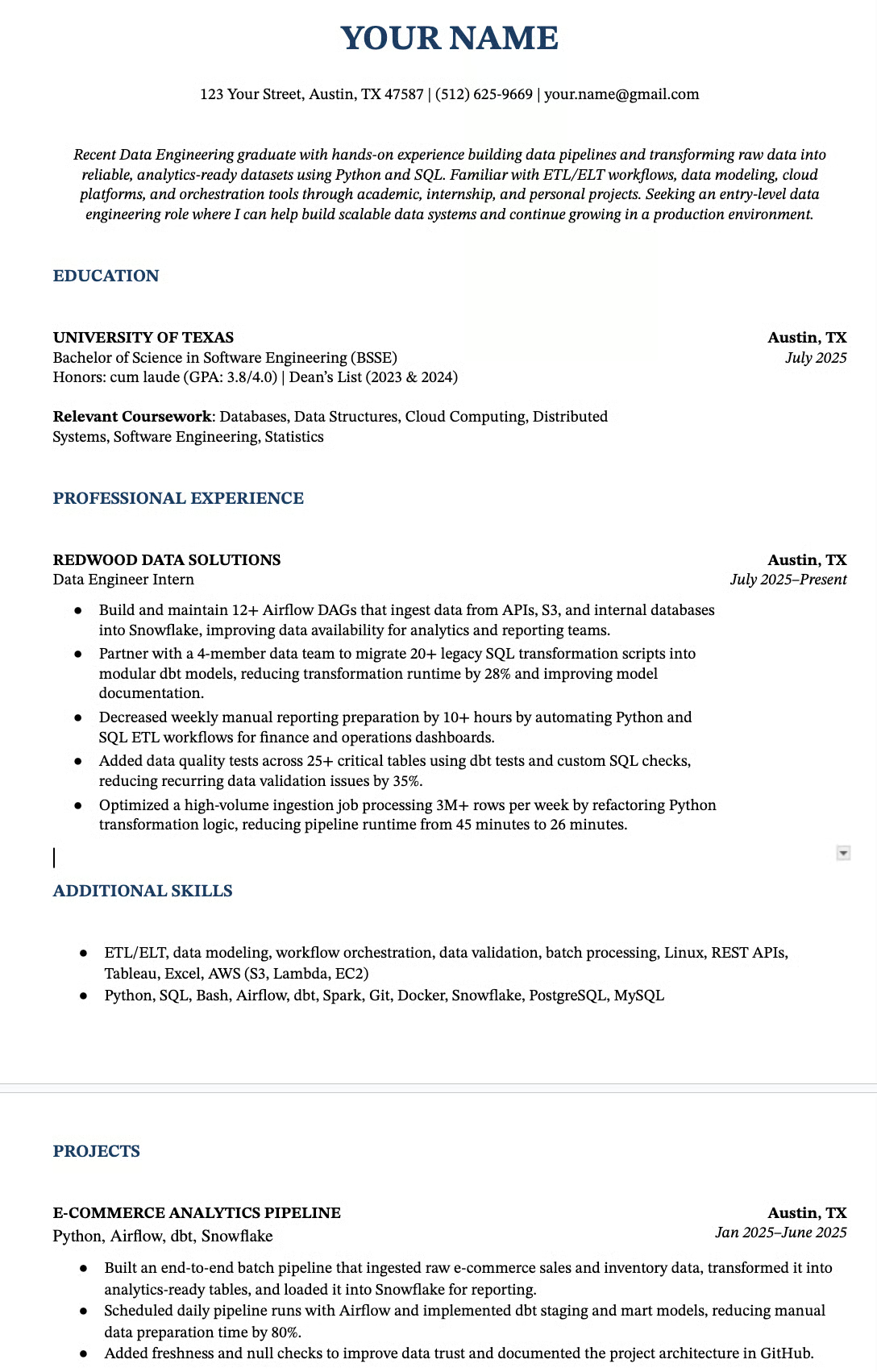
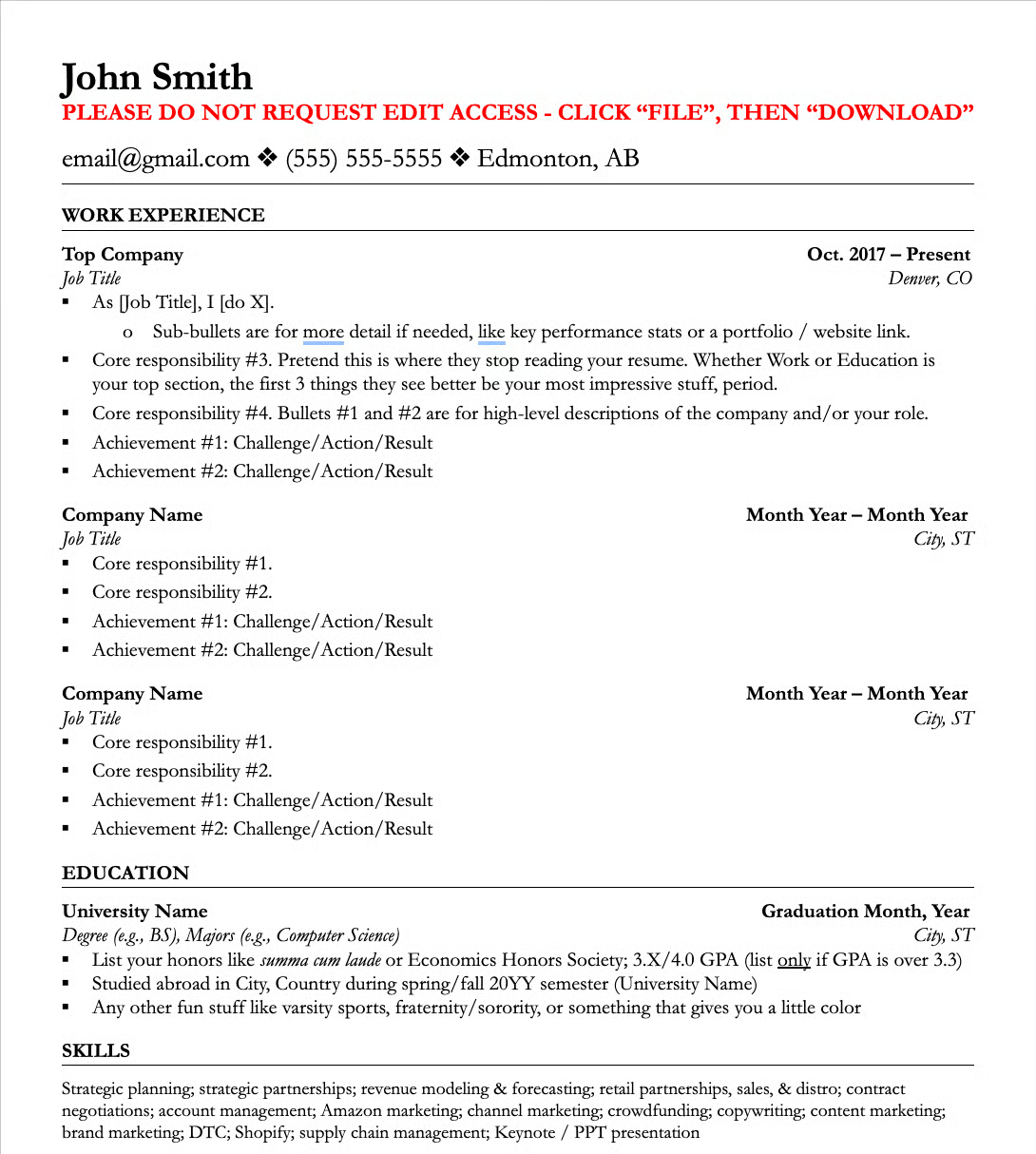
À ce niveau, mettez l’accent sur l’impact professionnel. Les recruteurs veulent voir que vous contribuez en autonomie, travaillez sur des systèmes en production et possédez des briques du stack data.
Concentrez-vous sur :
Sections suggérées :
Les CV de seniors/lead doivent montrer une profondeur technique et une responsabilité élargie. Il s’agit de démontrer l’exécution, mais aussi le jugement, l’architecture, le mentorat et l’influence.
Concentrez-vous sur :
Sections suggérées :
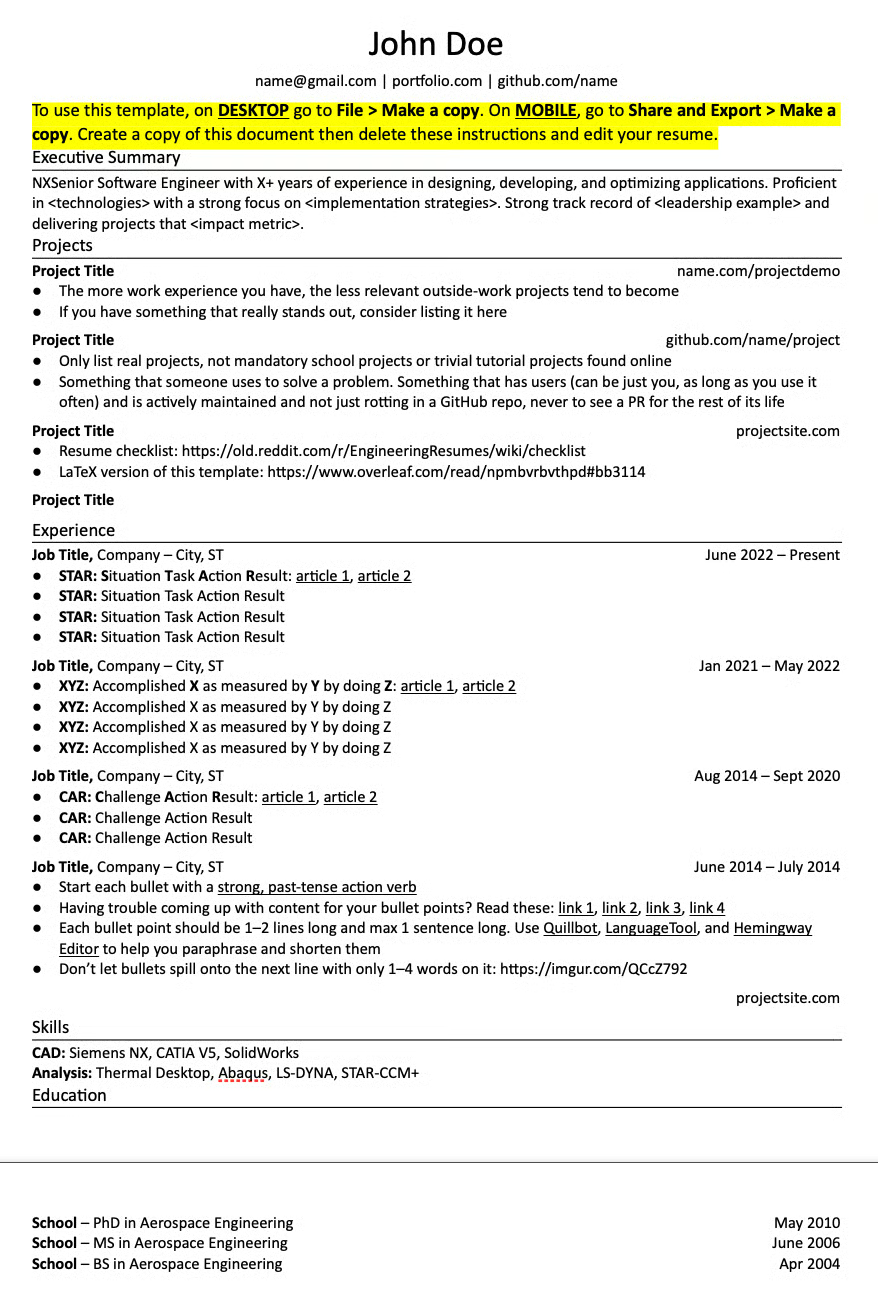
Télécharger le modèle. Modèle original de portfolio.com.
Pour les rôles manager ou architecte, le CV doit refléter une large portée et un impact organisationnel. La technique reste clé, mais doit s’accompagner de planification, gouvernance, priorisation et leadership.
Concentrez-vous sur :
Sections suggérées :
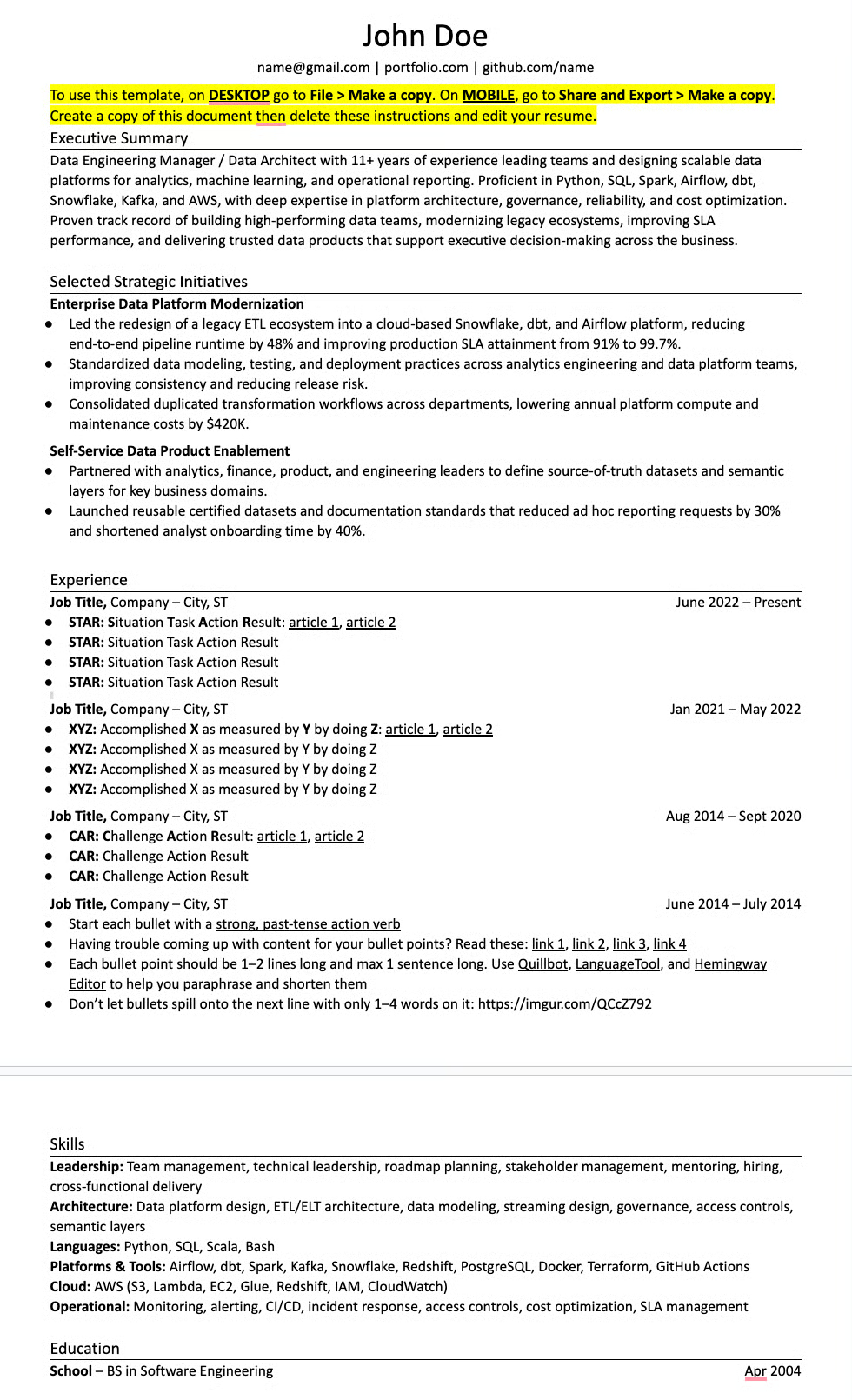
Télécharger le modèle. Modèle original de portfolio.com.
Même des profils techniquement solides affaiblissent leur CV avec des erreurs évitables.
Erreurs courantes :
Un CV propre, une colonne et des titres standards est généralement le choix le plus sûr.
Autre piège fréquent : la surestimation. Empiler les outils à la mode ou employer un langage flou peut donner une impression gonflée.
Exemples :
Un CV plus étroit mais crédible est presque toujours plus fort.
L’une des plus grandes occasions manquées est l’absence de quantification.
Faible :
Plus fort :
Les métriques n’ont pas besoin d’être spectaculaires. Elles doivent aider à comprendre l’échelle, la performance, la fiabilité ou la valeur business.
Si votre CV dit une chose et LinkedIn une autre, votre positionnement peut être remis en question.
Incohérences fréquentes :
La cohérence inspire confiance.
Un bon CV de data engineer est clair, précis et fondé sur des preuves. Il montre que vous maîtrisez les fondamentaux, savez travailler avec des plateformes modernes et apportez une valeur mesurable via des systèmes de données fiables.
Que vous visiez un premier poste ou un rôle senior, lead, manager ou architecte, la même règle s’applique : privilégiez la pertinence, la crédibilité et l’impact. Adaptez le CV au poste, quantifiez vos réalisations quand c’est possible, et facilitez une lecture rapide par les ATS comme par les recruteurs.
Les meilleurs CV ne sont pas figés. Ils évoluent avec vos compétences, projets et responsabilités. Considérez votre CV comme un document vivant, mettez-le à jour régulièrement et peaufinez-le avec le même soin qu’un système de production.
Pour vos prochaines candidatures, combinez ces conseils avec notre guide sur la lettre de motivation en data engineering pour décrocher le poste de vos rêves !
Cours de data engineering
Cours
Cursus
Cursus
blog
Kurtis Pykes
15 min
blog
Nisha Arya Ahmed
15 min
blog
Zoumana Keita
15 min
Tutoriel
Tutoriel
Kurtis Pykes
15 min
Tutoriel
Laiba Siddiqui
14 min