
Programa
Engenheiro de dados Em Python
40 h
Software corporativo costuma falhar na última milha: o vão entre o que uma plataforma consegue fazer e o que um cliente específico realmente precisa que ela faça dentro da sua própria infraestrutura. Empresas de plataforma de IA — como Palantir, Ramp, Commure e outras — vêm contratando um papel criado para fechar esse vão: o Forward Deployed Engineer.
Neste artigo, eu explico o que é um Forward Deployed Engineer (FDE), o que esses profissionais fazem no dia a dia, por que empresas de IA e de software corporativo seguem contratando esse perfil e as habilidades que você precisa para se tornar um.
Se você quer construir os fundamentos de engenharia, nossas trilhas Python for Data Engineering, Professional Data Engineer in Python e nosso guia para se tornar um machine learning engineer são ótimos pontos de partida.
Também vou ser direto sobre as partes desse papel que ainda não foram padronizadas, porque o título FDE significa coisas diferentes na PostHog, na Palantir e em uma startup de IA com 20 pessoas.
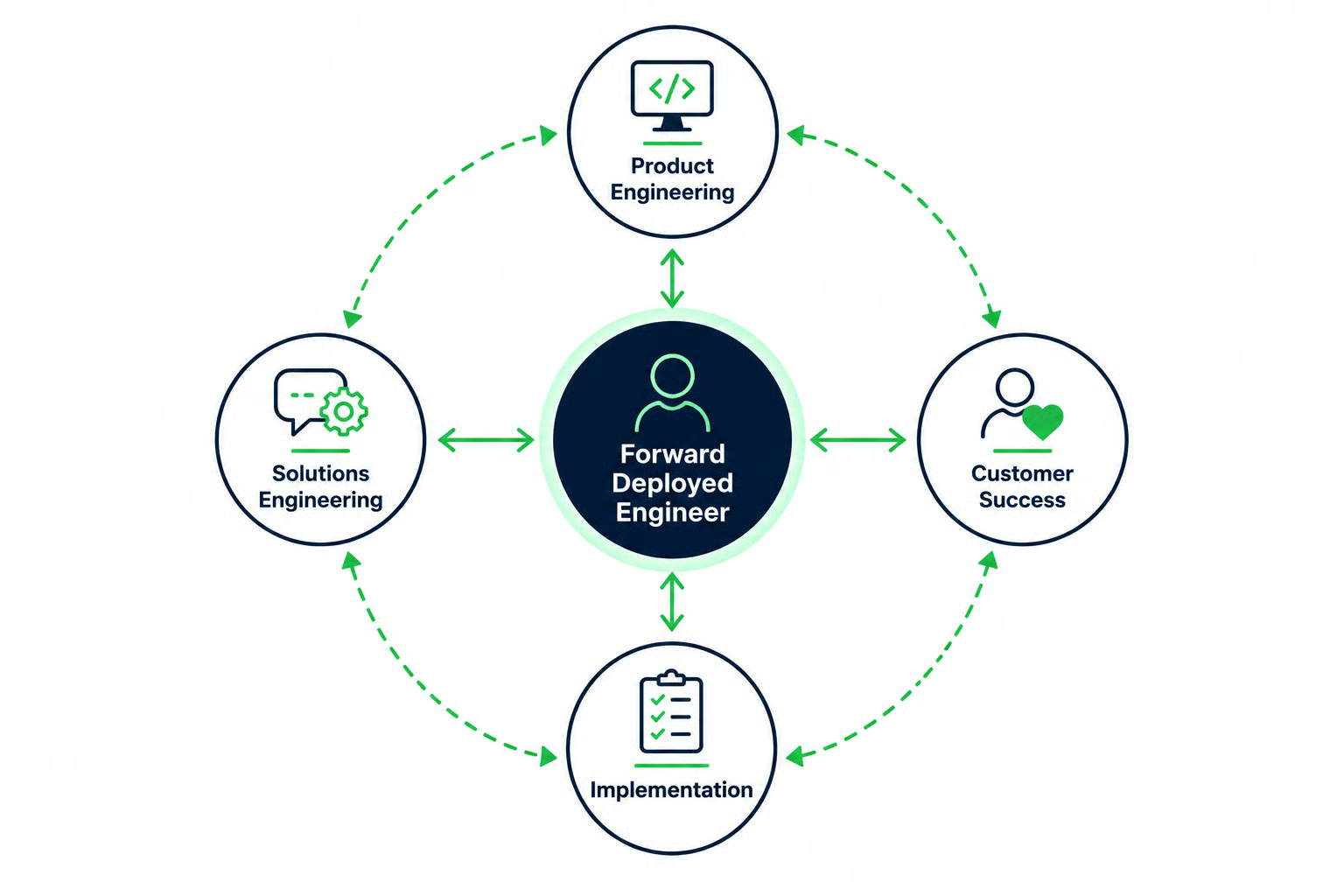
Um Forward Deployed Engineer é um engenheiro de software que atua diretamente com o cliente, se integra ao time dele e constrói, adapta, implanta e opera software no ambiente real desse cliente.
O papel às vezes aparece como Forward-Deployed Software Engineer (FDSE) ou engenheiro alocado no cliente, e fica entre engenharia de produto, soluções, implementação e sucesso do cliente.
O diferencial é onde o trabalho acontece.
Uma pessoa de produto na Anthropic cria capacidades genéricas para todos os usuários, enquanto um FDE trabalha com os dados, APIs e fluxos de um cliente específico para fazer essa capacidade funcionar nos sistemas de produção dele.
A PostHog descreve FDEs como engenheiros que vão a campo com os clientes para fechar o vão entre produto e necessidade. O Pragmatic Engineer relata que as expectativas de experiência variam bastante: algumas empresas querem vários anos de experiência em engenharia; outras estão dispostas a contratar recém-formados excepcionais.
Um solutions engineer apoia o pré-vendas com demos técnicas e provas de conceito, enquanto um FDE normalmente assume a entrega em produção após o fechamento do contrato. Em empresas menores a linha se confunde e uma pessoa pode fazer ambos, mas a marca do FDE é colocar software real em produção e operá-lo — não apenas mostrar o que ele poderia fazer.
Solutions engineers passam mais tempo no ciclo de vendas, enquanto um FDE passa mais tempo depurando uma integração ao vivo no setup de identidade e acesso do cliente.
Em algumas organizações, o papel de FDE inclui um ciclo de feedback de volta para o produto principal.
O engenheiro resolve um problema específico do cliente e, em seguida, leva os aprendizados de campo para o time de engenharia de produto, para melhorar a plataforma para todos.
É aqui que o FDE se sobrepõe à gestão de produto.
Se um FDE cuida apenas de uma implantação ou também influencia o roadmap mais amplo é uma das maiores fontes de ambiguidade do papel — e varia conforme a empresa.
Um Forward Deployed Engineer constrói e opera software de produção para um cliente ou um pequeno conjunto de clientes, trabalhando diretamente em campo — não só via documentos de requisitos e repasses por ticket. É um trabalho prático e iterativo, mais parecido com tocar um pequeno time de engenharia dentro da empresa do cliente do que com entregar features de um roadmap.
No dia a dia, isso geralmente envolve:
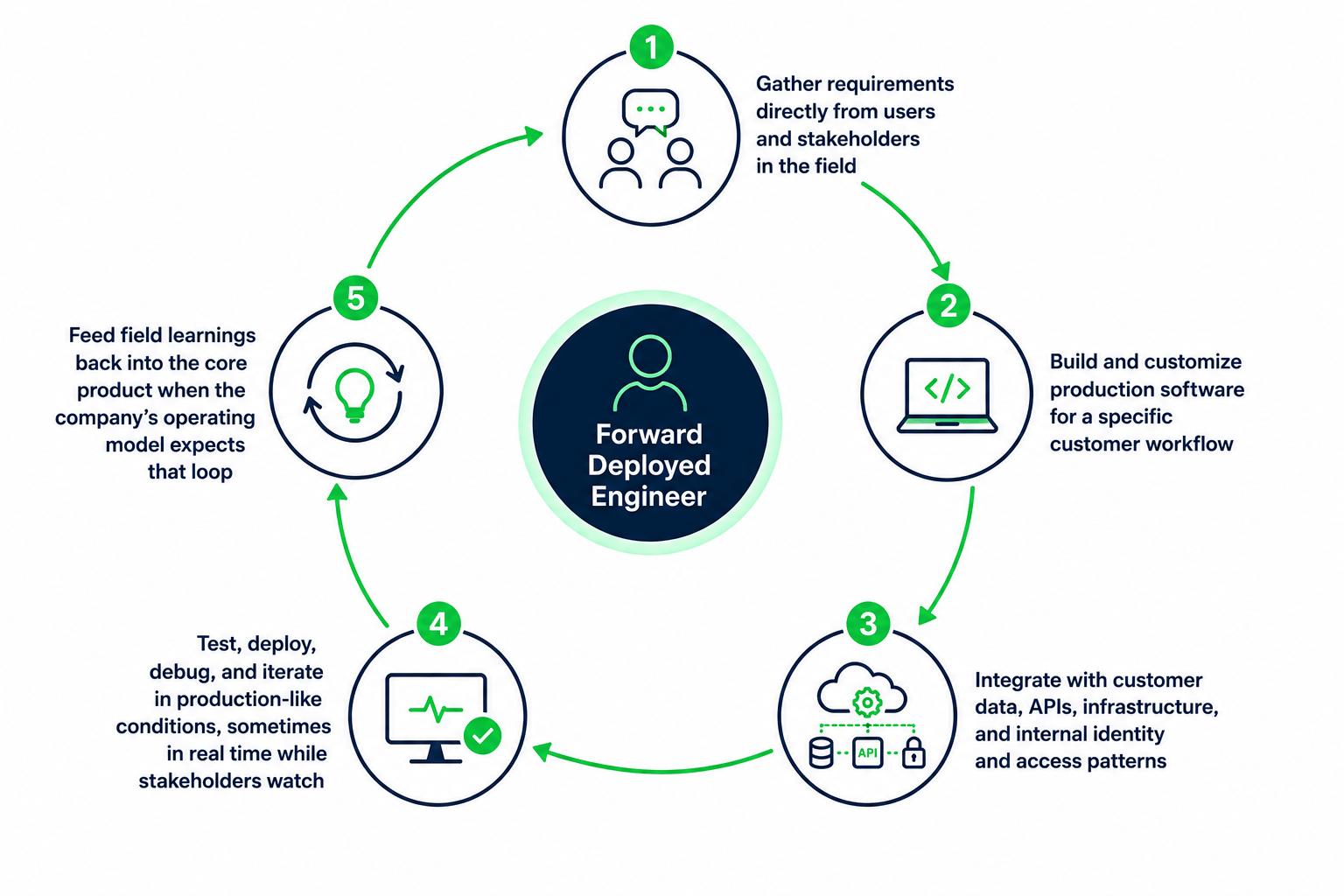
Exemplo prático: um FDE em uma empresa de plataforma de IA é alocado em uma rede de hospitais para implantar um agente de documentação clínica. Ele conecta o agente ao prontuário eletrônico, adapta-o às convenções de codificação da rede, depura o fluxo de identidade para que os clínicos consigam entrar de fato e itera nos prompts com base no que os médicos reportam nos dailies.
Perceba que nada disso é trabalho de demo. É software de produção rodando com dados reais em um ambiente regulado — exatamente o tipo de cenário em que o modelo FDE mostra seu valor.
O papel de Forward Deployed Engineer importa porque fecha a última milha entre uma plataforma genérica e a realidade específica do cliente. Um atalho útil é: plataforma genérica + realidade específica do cliente = valor do FDE.
Produtos complexos raramente se implantam sozinhos. Muitas implantações de alto valor em plataformas de IA exigem integração personalizada, adaptação de workflow e iteração rápida com clientes estratégicos — e um documento de requisitos abstrato não dá conta disso.
O papel é especialmente relevante para produtos com estas características:
Para empresas de IA, em especial, o FDE muitas vezes é a diferença entre uma API impressionante e uma implantação que sobrevive ao contato com uma grande empresa. Quando um cliente compra uma plataforma de LLM ou de agentes, o valor só aparece quando ela é conectada aos dados e fluxos do cliente — e essa conexão é o trabalho do FDE.
A demanda por FDEs se concentra em empresas que vendem APIs de IA complexas, plataformas corporativas e fluxos de trabalho críticos. Exemplos citados com frequência incluem OpenAI, Palantir, Anthropic, Ramp, Commure e Matta.
A Palantir popularizou boa parte do modelo de entrega embarcada, enquanto empresas mais novas de IA adotaram a variante Forward Deployed AI Engineer para implantações com LLMs e agentes.
Para ser um Forward Deployed Engineer, é preciso combinar profundidade em engenharia e bom julgamento em contextos com cliente — algo mais raro do que ter apenas uma dessas habilidades. Você precisa escrever código confiável de produção e também sentar com um stakeholder para traduzir um problema de negócio vago em algo que você consiga entregar.
As áreas centrais de habilidade se dividem assim:
| Área de habilidade | O que significa | Por que importa para FDEs |
|---|---|---|
| Fundamentos de engenharia de software | Código, depuração, pensamento sistêmico, confiabilidade em produção | O que o FDE entrega roda no ambiente de produção do cliente — precisa aguentar o tranco. |
| Integração de sistemas | APIs, pipelines de dados, padrões de identidade e acesso, depuração de infra | A maior parte do trabalho do FDE é conectar uma plataforma a sistemas bagunçados do cliente. |
| Comunicação com o cliente | Traduzir problemas de negócio ambíguos em soluções técnicas | Os requisitos vêm dos usuários em campo, não de um spec limpinho. |
| Senso de produto | Decidir o que customizar versus o que padronizar | Exagerar na customização cria builds únicos difíceis de manter. |
| Alta autonomia | Operar sem muita estrutura em problemas pouco definidos | FDEs muitas vezes trabalham sozinhos ou em times pequenos, longe da sede. |
Fundamentos sólidos de engenharia são a base inegociável do papel. Você precisa escrever, depurar e operar código de produção, porque o que o FDE entrega roda em sistemas vivos do cliente — não em um sandbox.
Se você está construindo essa base, nossa trilha Associate Data Engineer in Python cobre pipelines e trabalho de dados em produção, e nosso guia para se tornar um software engineer mostra o caminho mais amplo.
Integração de sistemas é a habilidade mais usada por FDEs, porque o trabalho normalmente é conectar uma plataforma aos dados, APIs e à infraestrutura existentes do cliente. Você vai gastar tempo real com pipelines de dados, fluxos de autenticação e depurando por que uma requisição funciona no staging mas falha no proxy do cliente.
Nosso curso Introduction to APIs in Python é uma forma prática de ganhar fluência nessa parte do trabalho.
A comunicação com o cliente é o que diferencia um FDE de um backend puro. Você pega um problema de negócio nebuloso de um stakeholder que não fala em termos técnicos e transforma em algo que você consegue construir — e depois explica os trade-offs de volta para ele.
Conhecimento de domínio também conta. Um FDE que implanta em um hospital ou mesa de operações e entende o contexto faz perguntas melhores do que quem só conhece o código.
Senso de produto é decidir o que customizar para um cliente e o que deve ir para o produto central. Se errar a mão, você cria um monte de código único e impossível de manter — um risco real do papel.
Autonomia é a outra metade. FDEs frequentemente operam com pouca estrutura em problemas pouco definidos, então estar confortável com ambiguidade é tão importante quanto qualquer skill técnica.
A maioria dos FDEs vem de backend ou full stack, e migra para o papel depois de mostrar que domina tanto o código quanto a conversa com o cliente. Algumas empresas, segundo o Pragmatic Engineer, contratam recém-formados excepcionais diretamente; outras pedem vários anos de experiência em produção.
A partir do papel de FDE, os próximos passos comuns são migrar para engenharia de produto core, tornar-se solutions architect ou ir para gestão de engenharia em um time com foco no cliente.
O FDE se sobrepõe a vários papéis já estabelecidos, e os limites mudam conforme a empresa. Entender as distinções ajuda na hora de decidir qual função combina com o que você quer fazer.
Veja como o FDE se compara aos papéis com os quais ele mais é confundido:
| Papel | Foco principal | Como difere de um FDE |
|---|---|---|
| Solutions engineer/sales engineer | Suporte técnico no pré-vendas e demos | Atua antes do fechamento; raramente assume entrega em produção. |
| Implementation engineer/customer success engineer | Onboarding e implantação | Foca no rollout do produto padrão, com menos construção sob medida. |
| Consulting engineer / professional services | Entrega sob medida | Entrega resultados customizados, mas muitas vezes fora do ciclo do produto. |
| Product engineer | Construir o produto central para todos os usuários | Cria capacidades genéricas, não implantações específicas de cliente. |
Títulos relacionados como AI solutions architect e technical account manager cobrem parte do mesmo terreno. Uma variante mais recente, o Forward Deployed AI Engineer, aplica o mesmo modelo embarcado especificamente a implantações com LLMs, agentes e automação de workflows.
Um alerta sincero: como o papel não é padronizado, dois cargos com o título FDE em empresas diferentes podem ser quase nada parecidos. Algumas descrições vendem FDEs como os melhores engenheiros, mas isso é linguagem de marketing — não uma definição formal da indústria. Leia as responsabilidades reais antes de avaliar uma vaga.
Outro ponto sobre benchmark: os resultados costumam ser específicos do cliente e difíceis de comparar entre organizações, então não há uma forma padronizada de medir a performance de FDE como você faria com um time de produto puro. O sucesso geralmente é julgado por ter feito uma implantação funcionar e por ter renovação do cliente.
Um Forward Deployed Engineer é um engenheiro alocado no cliente que constrói e opera software de produção dentro do ambiente real dele, fechando o vão entre uma plataforma genérica e uma necessidade específica. É um dos papéis de engenharia mais interessantes que surgiram com o boom das plataformas de IA, justamente porque valoriza quem consegue programar e conversar com o cliente ao mesmo tempo.
Minha visão é que a demanda por esse papel deve continuar crescendo à medida que mais empresas vendem APIs e agentes de IA complexos para ambientes regulados e de alto risco — já que essas implantações não acontecem sozinhas. O principal cuidado é a falta de padronização: sempre verifique se uma vaga de FDE pende mais para engenharia de produto, consultoria ou sucesso do cliente antes de entrar de cabeça.
Se você quer se preparar para esse papel, estes recursos são um bom começo:
Se você quer desenvolver, de forma estruturada, os fundamentos de engenharia que um papel de FDE exige, recomendo começar pela nossa trilha Python for Data Engineering.
Principais cursos da DataCamp
Programa
Programa
Curso
blog
Austin Chia
10 min
blog
Srujana Maddula
9 min
blog
Matt Crabtree
15 min
blog
Joleen Bothma
11 min
blog
Joleen Bothma
9 min
blog
Matt Crabtree
8 min