Vibe-code a Fitness Tracker with Cursor & Oracle
Rick Houlihan, Field CTO at Oracle, will guide you through building a fitness tracker application using Cursor, and an Oracle database as your memory layer.

Rick Houlihan
Create Your Free Account
Practice and track your progress.
Continue with GoogleBy continuing, you accept our Terms of Use, our Privacy Policy and that your data is stored in the USA.Related

Tutorial
Cursor 2.0: A Complete Guide With Python Project
Learn Cursor 2 by building a currency converter web app using Python and Streamlit.
 François Aubry · 11 min

Tutorial
Cursor AI: A Guide With 10 Practical Examples
Learn how to install Cursor AI on Windows, macOS, and Linux, and discover how to use it through 10 different use cases.
François Aubry · 10 min
Tutorial
DeepSeek R1 Demo Project With Gradio and EasyOCR
In this DeepSeek-R1 tutorial, you'll learn how to build a math puzzle solver app by integrating DeepSeek-R1 with EasyOCR and Gradio.
 Aashi Dutt · 12 min
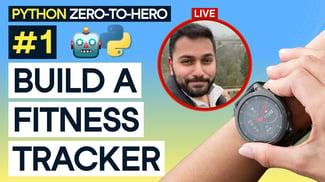



Vibe-coding is changing how people build projects—letting you create useful applications quickly by collaborating with AI tools while keeping full control over quality. In this hands-on session, you’ll vibe-code your own fitness tracker to help monitor New Year’s resolutions, combining analytics with AI-assisted development and a real database backend.
In this code-along webinar, Rick Houlihan, Field CTO at Oracle, will guide you through building a fitness tracker application using Cursor, and an Oracle database as your memory layer. You’ll learn how to structure your app for time series tracking, use AI to accelerate development, and apply testing and quality control practices to ensure your vibe-coded project performs reliably.
Key Takeaways:
Session Resources (Including GitHub Repo)