We live in a time of revolutionary technological progress, with many companies now beginning to integrate new generative AI technologies into the workplace. Data scientists and analysts have been using these technologies to improve productivity and the quality of their work.
Before ChatGPT, data scientists and analysts used GitHub Copilot to assist with coding tasks like optimization, formatting, debugging, and writing test units. However, ChatGPT has changed the game, enabling users to apply generative AI to almost every data science task, from data cleaning to model development and monitoring.
Expand your knowledge of GPT models, specifically GPT-4, by reading our article What is GPT-4 and Why Does it Matter?
Since the release of ChatGPT and Claude, we've witnessed rapid advancements in open-source and commercial AI systems. This article compares Claude—a state-of-the-art model from Anthropic—and OpenAI’s ChatGPT, focusing on their use in data science tasks.
If you're interested, there are open-source alternatives to ChatGPT and free AI tools that you can explore to build your very own AI chatbot. You can also find out how the new DataCamp AI assistant works in a separate article.
Image by Author
What Is Claude?
Claude, developed by Anthropic, is a large language model (LLM) AI designed to generate text, write code, and function as an intelligent automated assistant, much like ChatGPT.
Anthropic’s unique “Constitutional AI” technique ensures Claude is aligned with human values and goals from its inception.
One of Claude’s standout features for developers is Claude Code, an agentic coding tool included with the Claude Pro subscription. For hands-on guides, see our various articles: on Claude Opus 4.6, Claude Sonnet 4.6, Claude Opus 4.5, and Claude Sonnet 4.
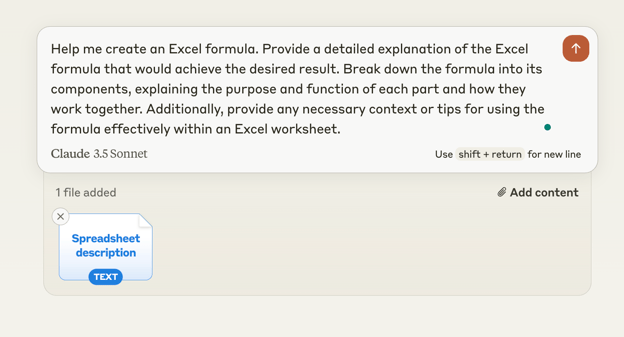
Claude user interface. Image by author (screenshot may reflect an earlier version of the interface)
How to access Claude in 2026?
Claude's availability has expanded significantly since its initial launch, and you can now access Claude through multiple interfaces:
- Claude.ai: Log in directly at Claude.ai to chat with Claude.
- Claude App for iOS and Android: Download the Claude app for iOS or Android to interact with Claude on your mobile device.
- Claude App for Slack: Add the Claude app to your Slack workspace to integrate Claude into your team’s communication and collaboration.
- Anthropic Console & API: Developers and businesses can access Claude through the Anthropic Console or via API, allowing for deeper integration and customization in various applications.
Please note that currently, you must be in one of Claude’s supported locations to access these services. For the latest information on supported locations and access details, visit Claude.ai.
What Is ChatGPT?
ChatGPT is an AI-powered conversational platform developed by OpenAI. It utilizes large language models like GPT-5.4, GPT-4o, and o3 reasoning models to enable human-like conversations through natural language prompts. For more information, read our full guide, What is ChatGPT?
The chatbot is capable of generating code, translating text from one language to another, summarizing lengthy passages, correctly understanding the context within conversations, and performing various complex tasks.
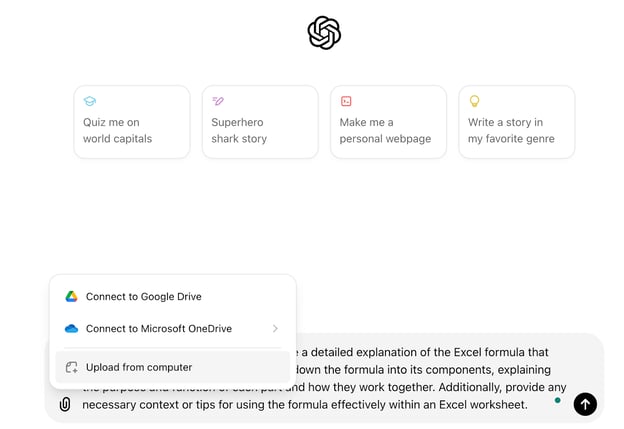
ChatGPT user interface. Image by author (screenshot may reflect an earlier version of the interface)
How to access ChatGPT in 2026?
Access ChatGPT by creating a free account at OpenAI.com. The free account should provide access to the latest models with certain limits. For an enhanced experience, consider subscribing to ChatGPT Plus, which unlocks early access to new features, data analysis, file uploads, vision and web browsing, DALL·E image generation, and more. They also offer Team and Enterprise plans with even more capabilities.
You can also access OpenAI's models through the API.
Pricing Comparison
Both Claude and ChatGPT offer competitive pricing with free and premium tiers as of 2026:
| Plan | ChatGPT | Claude |
|---|
| Free | GPT-4o mini with usage limits | Claude Sonnet with usage limits |
| Plus/Pro ($20/month) | GPT-5.4, GPT-4o, o3, DALL·E, voice, code interpreter | Claude Sonnet 4.6, Claude Code, extended context |
| Team ($25–30/month) | Higher limits, admin controls, workspace features | Higher limits, team management, priority access |
| Enterprise | Custom pricing, SSO, advanced security | Custom pricing, SSO, advanced security |
At the $20/month tier, ChatGPT Plus offers more multimodal features (image generation, voice, video). Claude Pro is more focused but includes Claude Code, which is a significant advantage for developers. Neither company has raised premium pricing despite releasing substantially upgraded models.
Comparing the Capabilities of Claude and ChatGPT
Let’s compare the two AI chatbots, Claude and ChatGPT, based on example prompts for data science tasks, including project planning, programming, data analysis, machine learning, time series, and natural language processing.
Note: it is not a comprehensive evaluation, as we use a single prompt example to determine which AI model provides better output for the specific tasks.
Before comparing the results in detail, let's review the comparison table to identify the key differences between Claude and ChatGPT.
| |
ChatGPT
|
Claude
|
|
Parent Company
|
OpenAI
|
Anthropic
|
|
Backed by
|
Microsoft
|
Google
|
|
Launched on
|
30th November 2022
|
14th March 2023
|
|
Number of users
|
800 million+ weekly active
|
Millions of users across web, mobile, and API
|
|
Technology used
|
GPT-5.4, GPT-4o, o3 reasoning models (2026)
|
Claude Sonnet 4.6, Opus 4.6 (2026)
|
|
Calculations
|
Advanced
|
Good
|
|
Mathematical reasoning
|
Strong (o3 models)
|
Good
|
|
Writing ability
|
Creative
|
Natural
|
|
Code generation
|
Strong
|
Optimized
|
|
Text summarization
|
Good
|
Superior
|
|
Data analysis
|
Comprehensive
|
Optimized
|
|
Machine learning
|
Strong
|
Strong
|
|
Time series
|
Good
|
Excellent
|
|
Natural language processing
|
Improved
|
Highly accurate
|
Table by Author
Planning
Problem: In the prompt, we included a dataset description and project goal for building a loan classifier model. Those interested in accessing the dataset and project planning can find them in A Guide to Using ChatGPT for Data Science Projects.
Verdict: Both are great at project planning, but ChatGPT is slightly better at presenting the information and additional steps.
Programming
Problem: We asked both models to optimize a nested Python loop example.
Verdict: While ChatGPT attempted to optimize the code by storing values in a list, Claude could convert the nested loops into list comprehension, resulting in faster execution. Therefore, Claude emerged as the winner.
Data analysis
Problem: We tasked both models with conducting exploratory data analysis on a loan classification dataset.
Verdict: Although ChatGPT demonstrated strong skills in data analysis, Claude's proficiency in writing efficient Python code ultimately gave it the edge. While ChatGPT employed a variety of libraries for data analysis, Claude relied solely on the pandas library for data visualization, processing, and analysis, showcasing their mastery of this tool. As a result, Claude emerged as the clear winner.
Machine learning
Problem: We asked both models to perform detailed model evaluations using cross-validation and assess performance metrics such as accuracy, precision, recall, and F1 score.
Verdict: Claude outperformed ChatGPT in this regard by employing cross-validation for label prediction and subsequently utilizing various metrics to gauge model performance. In contrast, ChatGPT relied on cv_scores and a separate model to determine classification metrics.
Time series
Problem: We presented a data description and tasked both models with building a machine learning model for predicting stock prices.
Verdict: Claude demonstrated a better understanding of the task while ChatGPT continuously asked follow-up questions. However, both models excelled at generating code, with ChatGPT resorting to an outdated method using from statsmodels.tsa.arima.model import ARIMA, while Claude implemented a more advanced approach using GradientBoostingRegressor. Claude was a winner in this case.
Natural language processing
Problem: We asked both models to write a Python code for fine-tuning the GPT-2 model on a new dataset.
Verdict: ChatGPT seemed to have hallucinated and created a new library for fine-tuning the model that didn't exist. On the other hand, Claude used a transformer library and successfully fine-tuned the model. Therefore, Claude wins this round.
For a broader comparison, check out Gemini vs. ChatGPT and Claude vs. Gemini to see how all three major AI assistants compare across different tasks.
Claude vs ChatGPT: The final verdict
Claude remains the stronger choice for data-related tasks that require deep technical context, precise code generation, and processing long documents. ChatGPT is the preferred option for multimodal tasks, creative work, and general-purpose assistance with its GPT-5.4 reasoning model. Many data scientists use both tools strategically—Claude for code optimization and analysis, ChatGPT for project planning and creative solutions.
Context Windows, Multimodal, and Agentic Capabilities
Since our original comparison, both platforms have gained major new capabilities that are especially relevant for data science workflows:
Context window
Claude supports approximately 200,000 tokens (expandable to 1 million for Opus models via API), making it ideal for analyzing entire codebases, lengthy research papers, or large datasets. ChatGPT supports around 128,000 tokens but responds faster for general requests.
Multimodal features
ChatGPT leads in multimodal capabilities with built-in image generation (DALL·E), voice conversation, video understanding, and vision. Claude focuses on text and code but can analyze uploaded images and documents with high accuracy.
Claude’s Claude Code is a full coding agent that handles multi-step programming tasks autonomously, included with the $20/month Pro plan. ChatGPT offers a code interpreter for running Python directly in the chat, which is valuable for quick data analysis and visualization.
Safety and accuracy
Claude is generally noted for more conservative, less hallucination-prone responses. ChatGPT has improved accuracy significantly but can occasionally produce confident-sounding mistakes. For critical data science work, both tools benefit from human verification of outputs.
Practical Applications of Claude and ChatGPT in Data Science
Claude and ChatGPT can provide valuable assistance in various data science tasks. For a broader overview, explore our guide to the best AI tools for data science. Here are some key use cases:
Extensive project planning
Both tools can assist you in developing a comprehensive project plan. They can also provide insights, methodologies, and tools to help you prepare for the data science project.
Research
You can learn new concepts, languages, and frameworks with generative AI. Moreover, they can help you gather information, summarize research papers, and generate content.
Code generation
Both Claude and ChatGPT can generate code snippets for data preprocessing, feature engineering, model training, and evaluation, saving data scientists time and effort. For more options, explore our list of the best AI coding assistants.
Unit testing
You can also automatically generate test cases based on the code and specifications provided.
Debugging
Each tool can provide suggestions and insights into potential errors or issues in code or data pipelines, allowing you to spot mistakes and learn how and why they’re impacting your code.
Reporting
ChatGPT and Claude can understand data analysis results and help you generate analytical data reports demonstrating your findings.
Optimization
You can optimize Python, SQL, and R code using these tools and also use them to recommend efficient algorithms or techniques to improve your code.
You can generate statistical tests, such as hypothesis testing, ANOVA, t-tests, and regression analysis, based on the provided data and research questions.
Understanding data analysis results
Both AI tools can interpret your results, providing explanations, insights, and recommendations based on statistical findings and visualizations. This can help you understand your findings better and also help explain them to others.
Automating data science tasks
With the help of plugins, you can automate data analysis and various other tasks in data science workflow.
To learn how to use ChatGPT for building end-to-end machine learning projects, check out the Guide to Using ChatGPT For Data Science Projects.
Conclusion
ChatGPT and Claude both excel at solving problems and generating high-quality code for data science projects. With the release of GPT-5.4 model, and Claude Sonnet 4.6/Opus 4.6, both platforms have significantly expanded their capabilities since our original comparison. Claude continues to shine in precision coding and long-document analysis, while ChatGPT leads in multimodal features and ecosystem breadth.
If you want to enhance your AI skills, take our Introduction to ChatGPT course, learn about prompt engineering, or explore the Working with the OpenAI API course for hands-on development experience.









We live in a time of revolutionary technological progress, with many companies now beginning to integrate new generative AI technologies into the workplace. Data scientists and analysts have been using these technologies to improve productivity and the quality of their work.
Before ChatGPT, data scientists and analysts used GitHub Copilot to assist with coding tasks like optimization, formatting, debugging, and writing test units. However, ChatGPT has changed the game, enabling users to apply generative AI to almost every data science task, from data cleaning to model development and monitoring.
Expand your knowledge of GPT models, specifically GPT-4, by reading our article What is GPT-4 and Why Does it Matter?
Since the release of ChatGPT and Claude, we've witnessed rapid advancements in open-source and commercial AI systems. This article compares Claude—a state-of-the-art model from Anthropic—and OpenAI’s ChatGPT, focusing on their use in data science tasks.
If you're interested, there are open-source alternatives to ChatGPT and free AI tools that you can explore to build your very own AI chatbot. You can also find out how the new DataCamp AI assistant works in a separate article.
Image by Author
What Is Claude?
Claude, developed by Anthropic, is a large language model (LLM) AI designed to generate text, write code, and function as an intelligent automated assistant, much like ChatGPT.
Anthropic’s unique “Constitutional AI” technique ensures Claude is aligned with human values and goals from its inception.
One of Claude’s standout features for developers is Claude Code, an agentic coding tool included with the Claude Pro subscription. For hands-on guides, see our various articles: on Claude Opus 4.6, Claude Sonnet 4.6, Claude Opus 4.5, and Claude Sonnet 4.
Claude user interface. Image by author (screenshot may reflect an earlier version of the interface)
How to access Claude in 2026?
Claude's availability has expanded significantly since its initial launch, and you can now access Claude through multiple interfaces:
Please note that currently, you must be in one of Claude’s supported locations to access these services. For the latest information on supported locations and access details, visit Claude.ai.
What Is ChatGPT?
ChatGPT is an AI-powered conversational platform developed by OpenAI. It utilizes large language models like GPT-5.4, GPT-4o, and o3 reasoning models to enable human-like conversations through natural language prompts. For more information, read our full guide, What is ChatGPT?
The chatbot is capable of generating code, translating text from one language to another, summarizing lengthy passages, correctly understanding the context within conversations, and performing various complex tasks.
ChatGPT user interface. Image by author (screenshot may reflect an earlier version of the interface)
How to access ChatGPT in 2026?
Access ChatGPT by creating a free account at OpenAI.com. The free account should provide access to the latest models with certain limits. For an enhanced experience, consider subscribing to ChatGPT Plus, which unlocks early access to new features, data analysis, file uploads, vision and web browsing, DALL·E image generation, and more. They also offer Team and Enterprise plans with even more capabilities.
You can also access OpenAI's models through the API.
Pricing Comparison
Both Claude and ChatGPT offer competitive pricing with free and premium tiers as of 2026:
At the $20/month tier, ChatGPT Plus offers more multimodal features (image generation, voice, video). Claude Pro is more focused but includes Claude Code, which is a significant advantage for developers. Neither company has raised premium pricing despite releasing substantially upgraded models.
Comparing the Capabilities of Claude and ChatGPT
Let’s compare the two AI chatbots, Claude and ChatGPT, based on example prompts for data science tasks, including project planning, programming, data analysis, machine learning, time series, and natural language processing.
Note: it is not a comprehensive evaluation, as we use a single prompt example to determine which AI model provides better output for the specific tasks.
Before comparing the results in detail, let's review the comparison table to identify the key differences between Claude and ChatGPT.
ChatGPT
Claude
Parent Company
OpenAI
Anthropic
Backed by
Microsoft
Google
Launched on
30th November 2022
14th March 2023
Number of users
800 million+ weekly active
Millions of users across web, mobile, and API
Technology used
GPT-5.4, GPT-4o, o3 reasoning models (2026)
Claude Sonnet 4.6, Opus 4.6 (2026)
Calculations
Advanced
Good
Mathematical reasoning
Strong (o3 models)
Good
Writing ability
Creative
Natural
Code generation
Strong
Optimized
Text summarization
Good
Superior
Data analysis
Comprehensive
Optimized
Machine learning
Strong
Strong
Time series
Good
Excellent
Natural language processing
Improved
Highly accurate
Table by Author
Planning
Problem: In the prompt, we included a dataset description and project goal for building a loan classifier model. Those interested in accessing the dataset and project planning can find them in A Guide to Using ChatGPT for Data Science Projects.
Verdict: Both are great at project planning, but ChatGPT is slightly better at presenting the information and additional steps.
Programming
Problem: We asked both models to optimize a nested Python loop example.
Verdict: While ChatGPT attempted to optimize the code by storing values in a list, Claude could convert the nested loops into list comprehension, resulting in faster execution. Therefore, Claude emerged as the winner.
Data analysis
Problem: We tasked both models with conducting exploratory data analysis on a loan classification dataset.
Verdict: Although ChatGPT demonstrated strong skills in data analysis, Claude's proficiency in writing efficient Python code ultimately gave it the edge. While ChatGPT employed a variety of libraries for data analysis, Claude relied solely on the pandas library for data visualization, processing, and analysis, showcasing their mastery of this tool. As a result, Claude emerged as the clear winner.
Machine learning
Problem: We asked both models to perform detailed model evaluations using cross-validation and assess performance metrics such as accuracy, precision, recall, and F1 score.
Verdict: Claude outperformed ChatGPT in this regard by employing cross-validation for label prediction and subsequently utilizing various metrics to gauge model performance. In contrast, ChatGPT relied on
cv_scoresand a separate model to determine classification metrics.Time series
Problem: We presented a data description and tasked both models with building a machine learning model for predicting stock prices.
Verdict: Claude demonstrated a better understanding of the task while ChatGPT continuously asked follow-up questions. However, both models excelled at generating code, with ChatGPT resorting to an outdated method using from
statsmodels.tsa.arima.model import ARIMA, while Claude implemented a more advanced approach usingGradientBoostingRegressor. Claude was a winner in this case.Natural language processing
Problem: We asked both models to write a Python code for fine-tuning the GPT-2 model on a new dataset.
Verdict: ChatGPT seemed to have hallucinated and created a new library for fine-tuning the model that didn't exist. On the other hand, Claude used a transformer library and successfully fine-tuned the model. Therefore, Claude wins this round.
For a broader comparison, check out Gemini vs. ChatGPT and Claude vs. Gemini to see how all three major AI assistants compare across different tasks.
Claude vs ChatGPT: The final verdict
Claude remains the stronger choice for data-related tasks that require deep technical context, precise code generation, and processing long documents. ChatGPT is the preferred option for multimodal tasks, creative work, and general-purpose assistance with its GPT-5.4 reasoning model. Many data scientists use both tools strategically—Claude for code optimization and analysis, ChatGPT for project planning and creative solutions.
Context Windows, Multimodal, and Agentic Capabilities
Since our original comparison, both platforms have gained major new capabilities that are especially relevant for data science workflows:
Context window
Claude supports approximately 200,000 tokens (expandable to 1 million for Opus models via API), making it ideal for analyzing entire codebases, lengthy research papers, or large datasets. ChatGPT supports around 128,000 tokens but responds faster for general requests.
Multimodal features
ChatGPT leads in multimodal capabilities with built-in image generation (DALL·E), voice conversation, video understanding, and vision. Claude focuses on text and code but can analyze uploaded images and documents with high accuracy.
Agentic coding tools
Claude’s Claude Code is a full coding agent that handles multi-step programming tasks autonomously, included with the $20/month Pro plan. ChatGPT offers a code interpreter for running Python directly in the chat, which is valuable for quick data analysis and visualization.
Safety and accuracy
Claude is generally noted for more conservative, less hallucination-prone responses. ChatGPT has improved accuracy significantly but can occasionally produce confident-sounding mistakes. For critical data science work, both tools benefit from human verification of outputs.
Practical Applications of Claude and ChatGPT in Data Science
Claude and ChatGPT can provide valuable assistance in various data science tasks. For a broader overview, explore our guide to the best AI tools for data science. Here are some key use cases:
Extensive project planning
Both tools can assist you in developing a comprehensive project plan. They can also provide insights, methodologies, and tools to help you prepare for the data science project.
Research
You can learn new concepts, languages, and frameworks with generative AI. Moreover, they can help you gather information, summarize research papers, and generate content.
Code generation
Both Claude and ChatGPT can generate code snippets for data preprocessing, feature engineering, model training, and evaluation, saving data scientists time and effort. For more options, explore our list of the best AI coding assistants.
Unit testing
You can also automatically generate test cases based on the code and specifications provided.
Debugging
Each tool can provide suggestions and insights into potential errors or issues in code or data pipelines, allowing you to spot mistakes and learn how and why they’re impacting your code.
Reporting
ChatGPT and Claude can understand data analysis results and help you generate analytical data reports demonstrating your findings.
Optimization
You can optimize Python, SQL, and R code using these tools and also use them to recommend efficient algorithms or techniques to improve your code.
Performing statistical tests
You can generate statistical tests, such as hypothesis testing, ANOVA, t-tests, and regression analysis, based on the provided data and research questions.
Understanding data analysis results
Both AI tools can interpret your results, providing explanations, insights, and recommendations based on statistical findings and visualizations. This can help you understand your findings better and also help explain them to others.
Automating data science tasks
With the help of plugins, you can automate data analysis and various other tasks in data science workflow.
To learn how to use ChatGPT for building end-to-end machine learning projects, check out the Guide to Using ChatGPT For Data Science Projects.
Conclusion
ChatGPT and Claude both excel at solving problems and generating high-quality code for data science projects. With the release of GPT-5.4 model, and Claude Sonnet 4.6/Opus 4.6, both platforms have significantly expanded their capabilities since our original comparison. Claude continues to shine in precision coding and long-document analysis, while ChatGPT leads in multimodal features and ecosystem breadth.
If you want to enhance your AI skills, take our Introduction to ChatGPT course, learn about prompt engineering, or explore the Working with the OpenAI API course for hands-on development experience.