คอร์ส
Claude Models เบื้องต้น
3 ชม.
14.9K
GPT-6 Astra คือเรือธงแนวหน้าของ OpenAI ที่มาสานต่อ GPT-5.6 Sol ออกแบบโดยมีแกนกลางเป็นการปฏิบัติงานเชิงเอเจนต์ ไม่ใช่แชต OpenAI วางตำแหน่งสำหรับการใช้งานคอมพิวเตอร์ งานมืออาชีพ และวิศวกรรมซอฟต์แวร์ และเป็นโมเดลแรกของ OpenAI ที่ผ่านเกณฑ์ “Critical” ด้านความปลอดภัยไซเบอร์ตาม Preparedness Framework ของบริษัท ทำงานด้วยหน้าต่างบริบท 1,050,000 โทเค็น เอาต์พุตสูงสุด 128K และฐานความรู้ถึงวันที่ 30 เมษายน 2026
มีสองจุดที่โดดเด่นในประกาศ ใน Codex, Astra เก็บบันทึกข้ามหน้าต่างบริบทแทนที่จะบีบอัดเป็นสรุป ทำให้หน้าต่างก่อนหน้ายังค้นหาได้ และตัดสินใจเองว่าจะถามคำถามเพื่อความกระจ่างเมื่อใด แทนการเดาเสมอหรือถามเสมอ
สำหรับรายการคุณสมบัติเต็ม ตารางเกณฑ์วัดผล และรายละเอียดการเข้าถึง ดูได้ที่ คู่มือ GPT-6 Astra นอกจากนี้ควรอ่านเทียบกับบทความของรุ่นก่อนหน้าใน GPT-5.6 Sol, Terra, และ Luna
Claude Fable 5.1 คือโมเดลแนวหน้าที่พร้อมใช้งานทั่วไปของ Anthropic สำหรับงานให้เหตุผลที่ต้องการสูงและงานเอเจนต์ที่กินเวลา มาพร้อมหน้าต่างบริบท 1M โทเค็น เอาต์พุตสูงสุด 128K การคิดแบบปรับตัวที่เปิดใช้งานตลอดเวลา และฐานความรู้ถึงมิถุนายน 2026 เอกสารของ Anthropic ระบุว่าความหน่วงช้ากว่า Claude Opus 5 และ Claude Sonnet 5 ซึ่งมีราคาต่ำกว่า
Claude Mythos 5.1 คือโมเดลเดียวกันแต่มีการป้องกันต่างกัน เข้าถึงได้โดยคำเชิญผ่าน Project Glasswing ไฮไลต์สำคัญสำหรับผู้ใช้ทั่วไปคือการลดราคาการอ่านแคชลง 75% เหลือ $0.25 ต่อหนึ่งล้านโทเค็น ขณะที่ราคาเปิดตัวยังคงเดิม
คู่มือ Claude Fable 5.1 ของเรามีรายละเอียดเกณฑ์วัดผลครบถ้วน และ บทเรียน API ของ Claude Fable 5.1 สร้างเอเจนต์นักพัฒนาที่รับรู้รีโพสิทอรี พร้อมการแจกแจงต้นทุนจริงตามระดับความพยายาม
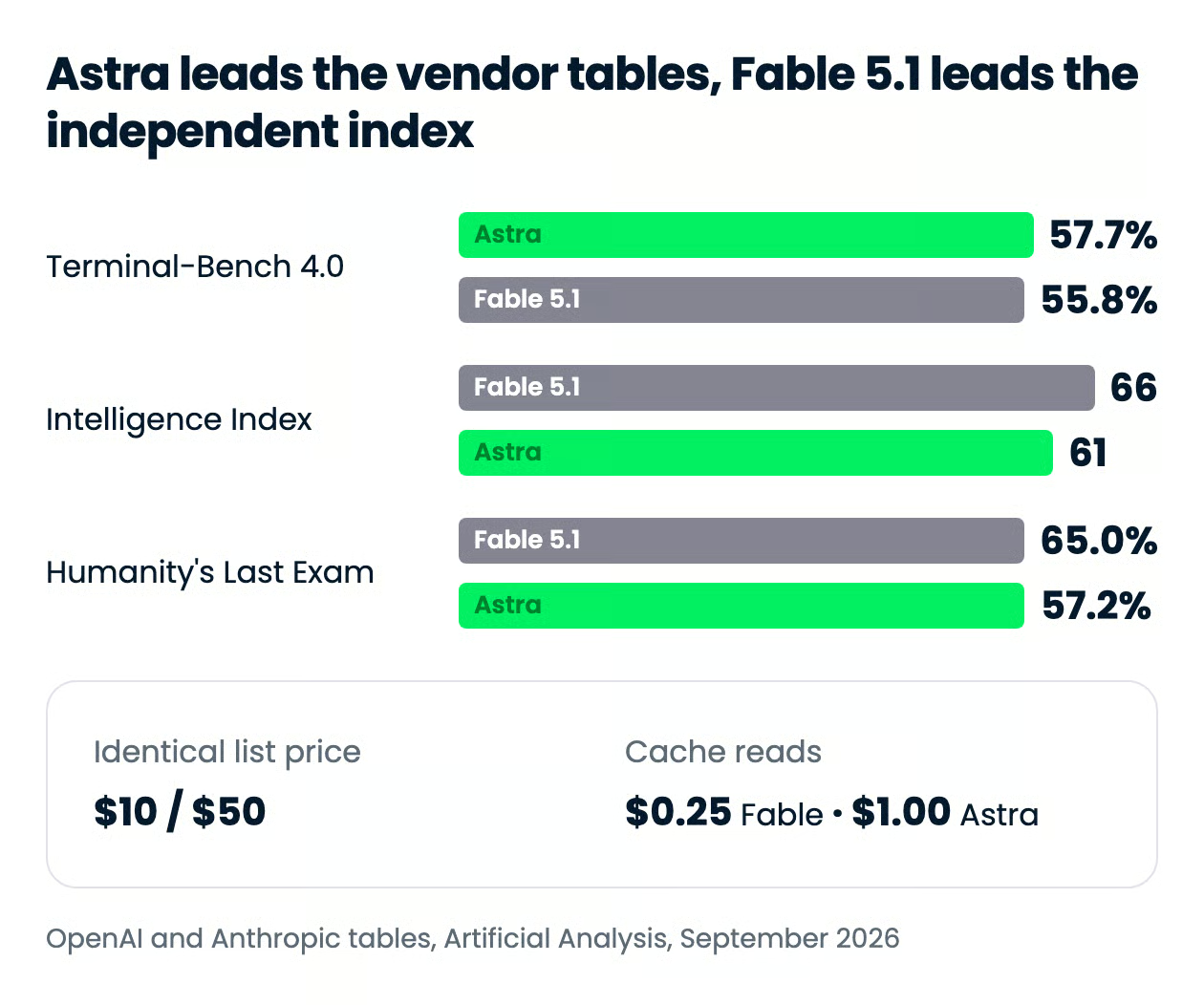
สั้นๆ: ตารางเปรียบเทียบของ OpenAI แสดงว่า Astra นำหน้า Fable 5.1 เกือบทุกรายการที่เผยแพร่ ขณะที่ Artificial Analysis แสดงผลตรงข้ามในดัชนีทั้งสองของตน เชื่อฝ่ายใดขึ้นกับน้ำหนักที่ให้กับผู้ผลิตที่ให้คะแนนคู่แข่งของตนเอง
| คุณสมบัติ | GPT-6 Astra | Claude Fable 5.1 |
|---|---|---|
| วันเปิดตัว | 3 กันยายน 2026 | 1 กันยายน 2026 |
| API model ID | gpt-6-astra |
claude-fable-5-1 |
| หน้าต่างบริบท | 1.05M โทเค็น | 1M โทเค็น |
| เอาต์พุตสูงสุด | 128K โทเค็น | 128K โทเค็น |
| ฐานความรู้ | 30 เมษายน 2026 | มิถุนายน 2026 |
| ราคาเปิดตัวต่อ 1M โทเค็น | $10 ขาเข้า / $50 ขาออก | $10 ขาเข้า / $50 ขาออก |
| อ่านอินพุตจากแคชต่อ 1M | $1.00 ($2.00 เหนือ 272K) | $0.25 |
| อัตราราคาเหนือ 272K โทเค็นขาเข้า | อินพุตและแคช 2 เท่า เอาต์พุต 1.5 เท่า | ไม่มีค่าบริการเพิ่ม |
| FrontierMath Tier 4 (v2) | 97.6% | 87.8% |
| Humanity's Last Exam พร้อมเครื่องมือ | 57.2% | 65.0% |
| ScreenSpot-Pro (ไม่มีเครื่องมือ) | 92.7% | 87.3% (Fable 5 จาก Mythos) |
| AutomationBench | 41.4% | 31.4% |
| ExploitBench | 100% | 70% |
| AA Intelligence Index (ความพยายามสูงสุด) | 61 | 66 |
| AA ต้นทุนต่อหนึ่งงาน Intelligence Index (สูงสุด) | $1.67 | $3.76 |
| จุดแข็งที่สุด | การใช้งานคอมพิวเตอร์ คณิตศาสตร์ ความปลอดภัยไซเบอร์ ต้นทุนต่อภารกิจ | ความลึกของการให้เหตุผล ลูปเอเจนต์ที่แคชครองบิล |
Astra นำหน้าบนเกณฑ์โค้ดที่ OpenAI เลือกเผยแพร่ แต่ช่องว่างบางและดัชนีอิสระไม่เห็นด้วย บน Terminal-Bench 4.0 ซึ่งทดสอบวิศวกรรมซอฟต์แวร์ การตั้งค่าระบบ และการวิเคราะห์ข้อมูลในเทอร์มินัล OpenAI รายงาน Astra ที่ 57.7% เทียบกับ Fable 5.1 ที่ 55.8% ตัวเลข 55.8% เดียวกันนี้ Anthropic ก็เผยแพร่ ดังนั้นอย่างน้อยแถวนี้ไม่มีข้อโต้แย้ง
ช่องว่างกว้างขึ้นใน DeepSWE v1.1 ที่ Astra ได้ 74.1% เทียบกับ 67.4% และแทบปิดช่องว่างใน FrontierCode 1.1 Main ที่ 53.3% เทียบกับ 50.9% อยู่ในช่วงเดียวกับ Claude Fable 5 (53.5%) และ Claude Opus 5 (53.4%)
| เกณฑ์วัดผล | GPT-6 Astra | Claude Fable 5.1 | หมายเหตุ |
|---|---|---|---|
| Terminal-Bench 4.0 | 57.7% | 55.8% | ตารางของ OpenAI บอก 57.7% แต่คำบรรยายกราฟของตนบอก 57.9% |
| DeepSWE v1.1 | 74.1% | 67.4% | OpenAI รายงาน |
| FrontierCode 1.1 Main | 53.3% | 50.9% | ผูกกับ Fable 5 ที่ 53.5% และ Opus 5 ที่ 53.4% โดยพฤตินัย |
| ย้ายฐานข้อมูลภายใน | 63.9% | 57.8% | การประเมินภายในของ OpenAI ไม่มีการทำซ้ำภายนอก |
| CursorBench 3.2.0 | ไม่เปิดเผย | 73.4% | Anthropic รายงาน; SpaceXAI ยืนยัน 73.4% ที่ความพยายามสูงสุด |
| AA Coding Agent Index | 67 ใน Codex | 70 ใน Claude Code | อิสระ แต่ฮาร์เนสต่างกัน |
แถวสุดท้ายนี่แหละที่วนกลับมาคิด Artificial Analysis ให้ Fable 5.1 ใน Claude Code ที่ 70 ซึ่งเป็นคะแนนสูงสุดบน Coding Agent Index ของตน และ Astra ใน Codex ที่ 67 ใกล้เคียงกับ Claude Opus 5 และ Claude Fable 5 มีข้อควรระวังสองข้อที่ควรใส่เกลือไว้:
Astra ชนะเกณฑ์โค้ดที่เผยแพร่แบบฉิวเฉียด และชนะประสิทธิภาพอย่างขาดลอย ขณะที่ Fable 5.1 ถือคะแนนโค้ดดิ้งเอเจนต์แบบอิสระเพียงรายการเดียวที่สูงกว่าทั้งคู่
ส่วนนี้แยกชัดเจนที่สุด และชี้ไปคนละทาง Astra ชนะด้านคณิตศาสตร์และวิทยาศาสตร์: 97.6% เทียบ 87.8% บน FrontierMath Tier 4 v2, 96.0% เทียบ 93.7% บน GPQA Diamond และ 64.6% เทียบ 52.6% บน Terminal-Bench Science 0.1 ซึ่งเป็นเกณฑ์วิจัยเชิงเอเจนต์ที่ Anthropic ใช้เป็นแกนเปิดตัวของตนเอง
Fable 5.1 ชนะ Humanity's Last Exam พร้อมเครื่องมือ 65.0% เทียบ 57.2% แบบทิ้งห่าง Artificial Analysis หนุนทิศทางนั้นอย่างอิสระ โดยให้ Fable 5.1 ได้ 66 บน Intelligence Index เทียบกับ Astra ที่ 61 ซึ่งเป็นคะแนนสูงสุดที่เคยวัดได้
มีข้อแม้หนึ่งข้อกับเลข 66 นั้น Artificial Analysis รัน Fable 5.1 ด้วยการ fallback ฝั่งเซิร์ฟเวอร์แบบดีฟอลต์ของ Anthropic ซึ่งจะส่งคำขอที่ติดธงความปลอดภัยไปที่ Claude Opus 4.8 หรือ Claude Opus 5 โดย fallback ให้เอาต์พุตประมาณ 4% ของโทเค็นทั้งหมดในดัชนี คะแนนจึงสะท้อน Fable 5.1 ตามที่ผู้ใช้ส่วนใหญ่จะใช้จริง ไม่ใช่โมเดลเปล่าๆ แยกเดี่ยว
หากงานเป็นคณิตศาสตร์หรือวิทยาศาสตร์ระดับบัณฑิตศึกษา ให้เลือก Astra หากเป็นการให้เหตุผลเชิงกว้างและยากแบบที่ Humanity's Last Exam ทดสอบ ให้เลือก Fable 5.1
Astra เด่นในมิตินี้ ส่วนหนึ่งเพราะ Anthropic ไม่ได้เผยแพร่ตัวเลขที่เทียบเคียงกัน OpenAI รายงาน Astra ได้ 72.6% บนชุดออฟไลน์ของ OSWorld 2.0 เทียบกับ Claude Opus 5 ที่ 70.2% และ 92.7% บน ScreenSpot-Pro เทียบกับ Claude Fable 5 ที่ 87.3% ตัวเลขของ Fable 5.1 จาก Anthropic เองที่ 77.9% แบบ partial และ 41.7% แบบ strict มาจากชุดงานและการให้คะแนนคนละแบบ
ตัวเลขด้านชิ้นงานชัดเจนกว่า: 95.9% บน BenchCAD เทียบ 84.3% และ 41.4% เทียบ 31.4% บน AutomationBench
สำหรับเอเจนต์ที่คลิกทำงานผ่านซอฟต์แวร์จริงและผลิตสไลด์หรือไฟล์ CAD Astra เป็นตัวเลือกที่แข็งกว่า
ตัวเลขการจัดแนวของ Astra เป็นส่วนที่ถูกพูดถึงน้อยที่สุดในการเปิดตัว บนเกณฑ์ความปลอดภัยการใช้งานคอมพิวเตอร์ภายในของ OpenAI ที่ยิ่งต่ำยิ่งดี Astra ได้ 2.4% เทียบ Fable 5.1 ที่ 9.5%
ด้านความมั่นคงไซเบอร์ Astra อยู่คนละชั้น: 100% บน ExploitBench และแก้โจทย์ FrontierCyber ได้ 86 จาก 226 ข้อ เทียบกับ GPT-5.6 Sol ที่ 34 ในการทดสอบอิสระของ Irregular Anthropic ผ่อน Fable 5.1 พอให้ค้นหาช่องโหว่ได้ แต่ไม่ถึงขั้นเอ็กซ์พลอยต์
มีสองข้อควรระวัง ซึ่งควรใส่เกลือไว้พอสมควร:
Astra เป็นทั้งเอเจนต์ที่ปลอดภัยกว่าและผู้โจมตีที่มีความสามารถมากกว่า จึงถูกกั้นการเข้าถึง
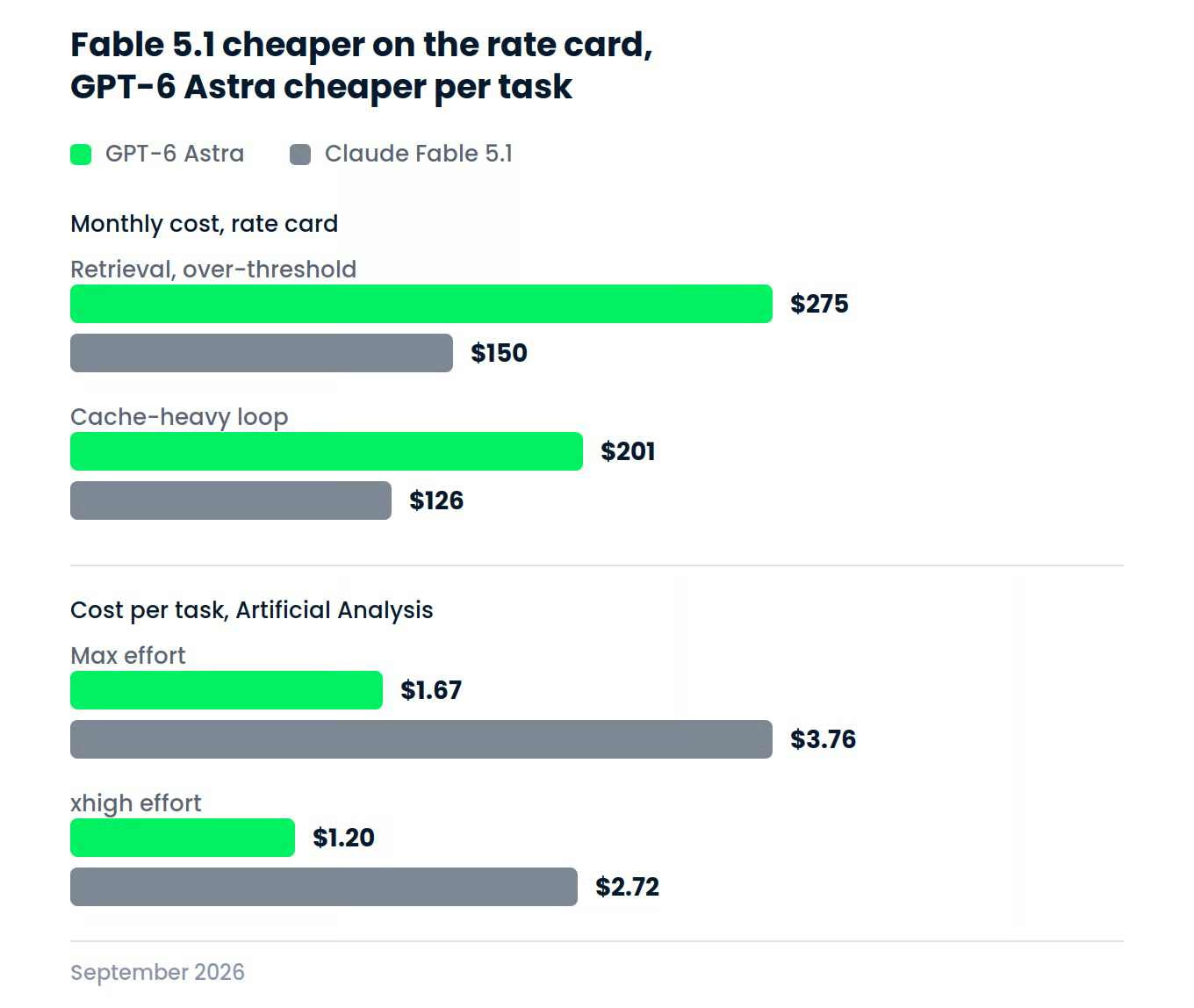
เรตราคาเท่ากัน ดังนั้นบนการ์ดราคา ความต่างระหว่างสองโมเดลนี้มาจากการแคชและบริบทยาวเท่านั้น กรอบนี้ใช้ได้ก็ต่อเมื่อสองโมเดลใช้โทเค็นจำนวนเท่ากันกับภารกิจเดียวกัน ซึ่งไม่เป็นจริง นี่จึงเป็นเหตุว่าทำไมตัวเลขต้นทุนต่อภารกิจที่วัดได้ด้านล่างถึงสำคัญกว่าการ์ดราคา
| อัตรา | GPT-6 Astra | Claude Fable 5.1 |
|---|---|---|
| อินพุต ต่อ 1M โทเค็น | $10.00 | $10.00 |
| เอาต์พุต ต่อ 1M โทเค็น | $50.00 | $50.00 |
| อ่านอินพุตจากแคช ต่อ 1M โทเค็น | $1.00 | $0.25 |
| เขียนแคช (5 นาที) ต่อ 1M โทเค็น | $12.50 | $12.50 |
| ส่วนลดแบบแบตช์ | 50% | 50% |
| อัตราราคาเหนือ 272K โทเค็นขาเข้า | $20.00 ขาเข้า / $2.00 แคช / $75.00 ขาออก | ไม่มีค่าบริการเพิ่ม |
อินพุต เอาต์พุต การเขียนแคช และส่วนลดแบบแบตช์ ตรงกันถึงเซนต์ บรรทัดที่ต่างคือการอ่านแคช ซึ่งห่างกัน 4 เท่า: Anthropic ลดราคาการอ่านแคชของ Fable 5.1 เหลือ $0.25 ขณะที่ OpenAI ตั้งของ Astra ไว้ $1.00 คิดเป็นส่วนลด 90% จากอัตราขาเข้า
เหนือ 272K โทเค็นขาเข้า ช่องว่างขยายเป็น 8 เท่า เพราะค่าบริการเพิ่มของ OpenAI ทำให้การอ่านแคชเป็น $2.00 ควบคู่กับอินพุต ขณะที่ เอกสารราคา ของ Anthropic ระบุว่าหน้าต่างบริบท 1M โทเค็นเต็ม คิดตามอัตรามาตรฐาน สังเกตว่าเกณฑ์ 272K นั้นต่ำเมื่อเทียบกับที่ Astra โฆษณา: 272K ประมาณหนึ่งในสี่ของหน้าต่าง 1.05M ของมันเอง ดังนั้นคำขอที่ใช้เกินหนึ่งในสี่ของบริบทจะถูกคิดในเรทที่สูงกว่า
การอ่านแคชคืออัตราที่ทบต้นในลูปยาวๆ เพราะเอเจนต์จะส่ง system prompt เดิม คำจำกัดความเครื่องมือ และคอนเทกซ์รีโพซิทอรี ซ้ำในทุกเทิร์น คู่มือการแคชพรอมต์ ของเราครอบคลุมกลไกระหว่างการเขียนแคชกับการอ่านแคช หากแนวคิดนี้ใหม่
ทุกอย่างในตารางนี้เป็นคณิตศาสตร์ตามเรตราคา บนรูปทรงโทเค็นที่กำหนด ไม่ใช่ผลวัดจริง มันตอบคำถามว่า “ถ้าสองโมเดลใช้โทเค็นเท่ากัน การ์ดราคาจะคิดเท่าไร” ส่วนถัดไปจะตอบว่าจริงๆ แล้วพวกมันใช้เท่าไร
| ภาระงาน | GPT-6 Astra | Claude Fable 5.1 | ความต่าง |
|---|---|---|---|
| ผู้ช่วยสมดุล: 1M ขาเข้า / 250K ขาออก | $22.50 | $22.50 | $0, 0% |
| การดึงค้น, ต่ำกว่าเกณฑ์: 10M ขาเข้า / 1M ขาออก | $150 | $150 | $0, 0% |
| การดึงค้น, เกินเกณฑ์: 10M ขาเข้า / 1M ขาออก | $275 | $150 | $125, Astra แพงกว่า 83% |
| ลูปหนักแคช: คำนำ 100K, อ่าน 1,000 ครั้ง | $201 | $126 | $75, Astra แพงกว่า 59% |
สูตรคงที่ทุกแถว: (ปริมาณ ÷ 1M) × อัตรา แล้วรวมอินพุตสด การอ่านแคช การเขียนแคช และเอาต์พุต แถวลูปหนักแคชสมมติคำนำ 100K เขียนครั้งเดียวแล้วอ่านกลับ 1,000 ครั้ง บวกอินพุตสด 5K และเอาต์พุต 1K ต่อคำขอ
แถวการดึงค้นเกินเกณฑ์คือไฮไลต์ หากจำกัดคำขอแต่ละครั้งไม่เกิน 272K โทเค็นขาเข้า สองโมเดลจะมีราคาเท่ากันที่ $150 แต่ถ้าดันโทเค็น 10M เท่าเดิมผ่านคำขอที่แต่ละคำเกิน 272K Astra จะพุ่งไป $275 ขณะที่ Fable 5.1 อยู่ที่ $150 เพราะ Anthropic คิดราคาหน้าต่างบริบท 1M โทเค็นเต็มตามอัตรามาตรฐาน
ลูปหนักแคชคือกรณีที่ผู้อ่านส่วนใหญ่จะเจอ ที่การอ่านแคช 1,000 ครั้งของคำนำ 100K ช่องว่าง $0.75 ต่อหนึ่งล้านโทเค็นในแคชกลายเป็น $75 บนภาระงานที่เหมือนกันทุกอย่าง สังเกตรูปทรงของงานนั้นด้วย: ตั้งใจให้ออกน้อย โดยมีเอาต์พุต 1K ต่อคำขอเทียบกับการอ่านแคช 100K นี่คือรูปทรงเดียวที่ข้อได้เปรียบด้านแคชของ Fable 5.1 ชี้ขาดบิล
เมื่อวัดการใช้โทเค็นจริงแทนการสมมติ ภาพจะกลับด้าน Artificial Analysis คิดราคาต่อหนึ่งงานของ Intelligence Index ให้ทุกรุ่น โดยวิธีการของเขารวมโทเค็นอินพุต การโดนแคช การเขียนแคช โทเค็นการคิด และคำตอบไว้แล้ว ดังนั้นแคชที่ถูกกว่าของ Fable 5.1 ก็ถูกรวมอยู่ในตัวเลขนี้
| ระดับความพยายาม | GPT-6 Astra: คะแนน/ต้นทุนต่อภารกิจ | Claude Fable 5.1: คะแนน/ต้นทุนต่อภารกิจ |
|---|---|---|
| สูงสุด | 61 / $1.67 | 66 / $3.76 |
| xhigh | 61 / $1.20 | 65 / $2.72 |
ที่ความพยายามสูงสุด Fable 5.1 มีต้นทุน 2.25 เท่าของ Astra สำหรับชุดงานเดียวกันที่ราคาเปิดตัวเท่ากัน Artificial Analysis สรุปแบบเดียวกันในดัชนีโค้ดดิ้งของเขา ที่ Astra ทำได้ทัดเทียม Fable 5 “ด้วยต้นทุนไม่ถึงครึ่ง ขับเคลื่อนโดยประสิทธิภาพโทเค็นที่ดีขึ้นมาก” ช่วงของ Astra ลงไปได้ถึง $0.46 ต่อภารกิจที่ความพยายามต่ำ
Fable 5.1 ไม่ได้แพ้เพราะการ์ดราคา แต่แพ้เพราะปริมาณเอาต์พุต Artificial Analysis วัดว่ามันใช้โทเค็นเอาต์พุตประมาณ 1.7 เท่าของ Fable 5 ที่ความพยายามสูงสุด จึงมีต้นทุนต่อภารกิจสูงกว่ารุ่นก่อนราว 20% แม้จะลดราคาแคชแล้ว หากตัดส่วนลดออก ตัวเลขจะอยู่ราว $5.16 แปลว่าส่วนลดช่วยจริง แต่ยังไม่พอ
ต้นทุนที่สูงขึ้นนั้นจ่ายเพื่อบางสิ่ง Fable 5.1 ได้คะแนนสูงกว่า 5 จุดบนดัชนีเดียวกัน และสูงกว่า 4 จุดที่ระดับ xhigh ว่า 5 คะแนนคุ้ม 2.25 เท่าหรือไม่ ขึ้นกับการตัดสินใจของคุณ แต่ภาพที่ราคาเปิดตัวเท่ากันแปลว่าบิลเท่ากันนั้น ไม่รอดเมื่อลงมือวัดจริง
คำบรรยายกราฟของ OpenAI เองก็ชี้ไปทางเดียวกัน เท่าที่จะให้ค่าน้ำหนักกับรายงานจากผู้ผลิตได้ โดยระบุว่าต้นทุน API ต่อภารกิจของ Astra ต่ำกว่า Fable 5.1 ราว 31% บน Terminal-Bench Science 0.1 ต่ำกว่าราว 63% บน Terminal-Bench 4.0 และต่ำกว่าราว 86% บน BenchCAD วัดที่ระดับความพยายามที่ OpenAI เลือกให้แต่ละโมเดล
Astra ชนะการทดสอบของเรานิดหน่อย โดยทั้งสองโมเดลส่งมอบซิมูเลชันที่ทำงานได้ตั้งแต่ความพยายามครั้งแรก
รันงานยากหนึ่งงานกับทั้งสองโมเดลภายใต้เงื่อนไขเดียวกัน แทนหลายงานตื้นๆ การทดสอบนี้คือสร้างซิมูเลชันฟิสิกส์จากศูนย์ เป็นไฟล์ HTML เดียว เลือกเช่นนี้เพราะเจาะตรงสิ่งที่ทั้งสองค่ายอ้างว่าพัฒนาดีขึ้น: ความถูกต้องที่ยืนระยะตลอดงานสร้างยาว โดยไม่พึ่งไลบรารี
รอบนี้เป็นเวอร์ชันปรับปรุงจากที่เผยแพร่ รุ่นนั้นใช้ภาชนะสี่เหลี่ยมหมุน รอบนี้สลับเป็นหกเหลี่ยมหมุน พร้อมสิ่งกีดขวางตรงกลางหมุนสวน และมวลแปรผันตามขนาด เพิ่มความยากขณะยังคงการกักกันให้ตัดสินผ่าน/ไม่ผ่านได้ชัดเจน นี่คือพรอมต์ ที่คัดลอกวางแบบคำต่อคำในแชตใหม่ของแต่ละโมเดล:
Build a single-file HTML page (inline CSS and JS, canvas, no build step, no external libraries, no network) that simulates a few dozen balls of varying sizes bouncing under gravity inside a **slowly rotating hexagonal container**, with a **smaller counter-rotating obstacle at the centre** that the balls also collide with.
Ball mass should scale with size, so larger balls shove smaller ones around.
The balls should collide with each other, with the hexagon's walls, and with the central obstacle, and lose a little energy on each collision so the system settles rather than gaining energy over time.
Both the hexagon and the inner obstacle keep rotating throughout, so the balls should slosh and re-pile as they turn.

Ship it as one working file named `index.html` that starts animating on load.
Do not install packages.
Do not open, screenshot, or headless-render the page (no Playwright, Puppeteer, or Chrome).
Do not ask me clarifying questions — make reasonable assumptions and note them briefly in a comment at the top of the file.
ทั้งสองโมเดลรันด้วยความพยายามด้านการให้เหตุผลสูง ความพยายามครั้งเดียวไม่แก้ตัว ใช้เอเจนต์โค้ดดิ้งเดียวกันและเครื่องมือชุดเดียวกัน เกณฑ์ให้คะแนนคือผ่าน/ไม่ผ่านการรันได้ก่อน แล้วตามด้วยรูบริก 1 ถึง 5 บนความถูกต้องทางฟิสิกส์ ความเสถียร 30 วินาที และคุณภาพภาพ
Astra ผ่านการรันได้ และได้ 5/5 บนรูบริกทั้งสาม มาถึงจุดนั้นใน 6 เทิร์นและ 9 การเรียกเครื่องมือ ส่วนผสมของเครื่องมือน่าสนใจ: เขียนไฟล์ อ่านกลับ 5 ครั้ง grep 2 ครั้ง และแพตช์ 2 ครั้งก่อนประกาศว่าเสร็จ
ซิมูเลชันถูกต้อง ลูกบอล 44 ลูก มวลแปรตามพื้นที่ การกักกันคงอยู่ครบ 30 วินาทีระหว่างที่หกเหลี่ยมหมุน Astra กำหนดสิ่งกีดขวางด้านในให้ใหญ่เมื่อเทียบกับห้อง ทำให้ลูกบอลชนกับมันต่อเนื่อง แทนที่จะไปนิ่งในที่ที่เอื้อมไม่ถึง
ยังสร้างหน้าเชิงบรรณาธิการเต็มรอบซิมูเลชัน ด้วยหัวเรื่องแบบเซอริฟ ฉลากโมโนสเปซเว้นตัวอักษร และแผงเทเลเมทรีรายงานอัตราการหมุนแบบสด ไม่มีใครร้องขอ แต่โดยส่วนตัวคิดว่าดูดี ส่งปุ่มหยุดชั่วคราวและเริ่มใหม่มาด้วย ซึ่งพรอมต์ไม่ได้ขอ แต่ทำให้ตรวจชิ้นงานง่ายขึ้น
Astra หมุนห้องที่ 0.09 rad/s และสิ่งกีดขวางที่ -0.16 rad/s ช้ากว่า Fable ประมาณ 3 เท่าบนผนังนอก และ 5 เท่าบนสิ่งกีดขวาง ดูง่ายกว่า และเป็นการทดสอบขอบเขตที่เคลื่อนที่ที่อ่อนกว่า ความเร็วนี้สอดคล้องกับคำขอให้ภาชนะหมุนช้า จึงถือว่าเหมาะสม
| ตัวชี้วัด | GPT-6 Astra | Claude Fable 5.1 |
|---|---|---|
| จำนวนเทิร์น | 6 | 2 |
| การเรียกเครื่องมือ | 9 | 1 |
| การรันได้ | ผ่าน | ผ่าน |
| ความถูกต้องทางฟิสิกส์ | 5 | 4 |
| ความเสถียรตามเวลา | 5 | 5 |
| คุณภาพภาพ | 5 | 4 |
| คะแนนรูบริก | 5.0 | 4.3 |
Astra ชนะรอบนี้ด้านคุณภาพ และช่องว่างกว้างขึ้นในงานนำเสนอมากกว่าฟิสิกส์ จุดที่ต่างคือแต่ละโมเดลนิยามงานว่าอะไร Astra อ่านพรอมต์เป็นบรีฟให้ตีความ เพิ่มคอนโทรล เลย์เอาต์เชิงบรรณาธิการเต็ม และความเร็วหมุนที่ช้าลงให้เหมาะกับการชม Fable อ่านเป็นสเปกให้ทำตาม ทำเสร็จในครั้งเดียว แล้วใส่แรงที่เหลือไปกับ HUD เพื่อการวินิจฉัย
นี่คือหนึ่งรันต่อหนึ่งโมเดล จึงควรมองเป็นหนึ่งจุดข้อมูล ไม่ใช่เกณฑ์วัดผล มันรายงานจำนวนเทิร์น ไม่ใช่โทเค็นหรือราคา และทดสอบเฉพาะโค้ดซิมูเลชันจากศูนย์ ไม่ครอบคลุมการใช้งานคอมพิวเตอร์หรือการให้เหตุผลที่กล่าวไปข้างต้น
เพราะเรตราคาเปิดตัวเท่ากัน การตัดสินใจจึงขึ้นกับรูปทรงภาระงาน ปริมาณโทเค็นที่วัดได้ และเอเจนต์โค้ดดิ้งที่ใช้อยู่ ตัวเลขสามตัวที่ควรขยับการตัดสินใจคือ ช่องว่างการอ่านแคช 4 เท่า เกณฑ์ค่าบริการเพิ่มที่ 272K และต้นทุนต่อภารกิจที่วัดได้ 2.25 เท่า
| ช่องทาง | GPT-6 Astra | Claude Fable 5.1 |
|---|---|---|
| แอปสำหรับผู้บริโภค | ChatGPT Plus, Pro, Business, Enterprise | Claude เว็บ มือถือ เดสก์ท็อป (Pro, Max, Team, Enterprise) |
| API ของผู้ผลิต | OpenAI API | Claude API |
| แพลตฟอร์มคลาวด์ | Amazon Bedrock, Microsoft Azure/Foundry | Amazon Bedrock, Google Cloud, Microsoft Azure/Foundry |
| เอเจนต์โค้ดดิ้ง | Codex | Claude Code, Cursor |
| ตัวกลางจากภายนอก | OpenRouter, Vercel AI Gateway | OpenRouter, Vercel AI Gateway |
| API model ID | gpt-6-astra |
claude-fable-5-1 |
รายละเอียดการเข้าถึงสองข้ออาจหยุดก่อนเรียกครั้งแรก Astra ถูกปิดโดยดีฟอลต์สำหรับพื้นที่ทำงานระดับองค์กรจนกว่าแอดมินจะเปิด และ Fable 5.1 ต้องการการเก็บข้อมูล 30 วัน และไม่รองรับบน Priority Tier การเข้าถึงคลาวด์ใกล้เคียงกัน โดย Google Cloud เป็นแพลตฟอร์มเดียวที่ Fable 5.1 มีแต่ GPT-6 Astra ยังไม่มี
แต่ละโมเดลเป็นเนทีฟกับฮาร์เนสของตน Astra ใน Codex และ Fable 5.1 ใน Claude Code โดยสลับด้วย /model claude-fable-5-1 หรือแฟลก --model ผ่าน API การสลับเป็นเพียงสตริงเดียว แม้ SDK จะแตกต่างกัน
from anthropic import Anthropic

client = Anthropic()
response = client.messages.create(
    model="claude-fable-5-1",  # OpenAI SDK equivalent: model="gpt-6-astra"
    max_tokens=16000,          # thinking plus response share this budget
    output_config={"effort": "high"},
    messages=[{"role": "user", "content": "Refactor this module..."}],
)
print(response.content[0].text)
มีการเปลี่ยนแปลงสามอย่างของ Fable 5.1 ที่จะทำให้โค้ดที่เขียนสำหรับ Fable 5 พัง: การบังคับเลือกเครื่องมือจะคืน 400 โมเดลก่อนหน้าอ่านบล็อกการคิดของมันไม่ได้ และบล็อกการคิดถูกผูกกับประวัติก่อนหน้าที่ตรงตัว บทเรียน Claude Fable 5.1 API ของเราแสดงวิธีจัดการทั้งสาม และ คู่มือพื้นฐาน OpenAI API ครอบคลุมการตั้งค่าที่เทียบเท่าอีกฝั่ง
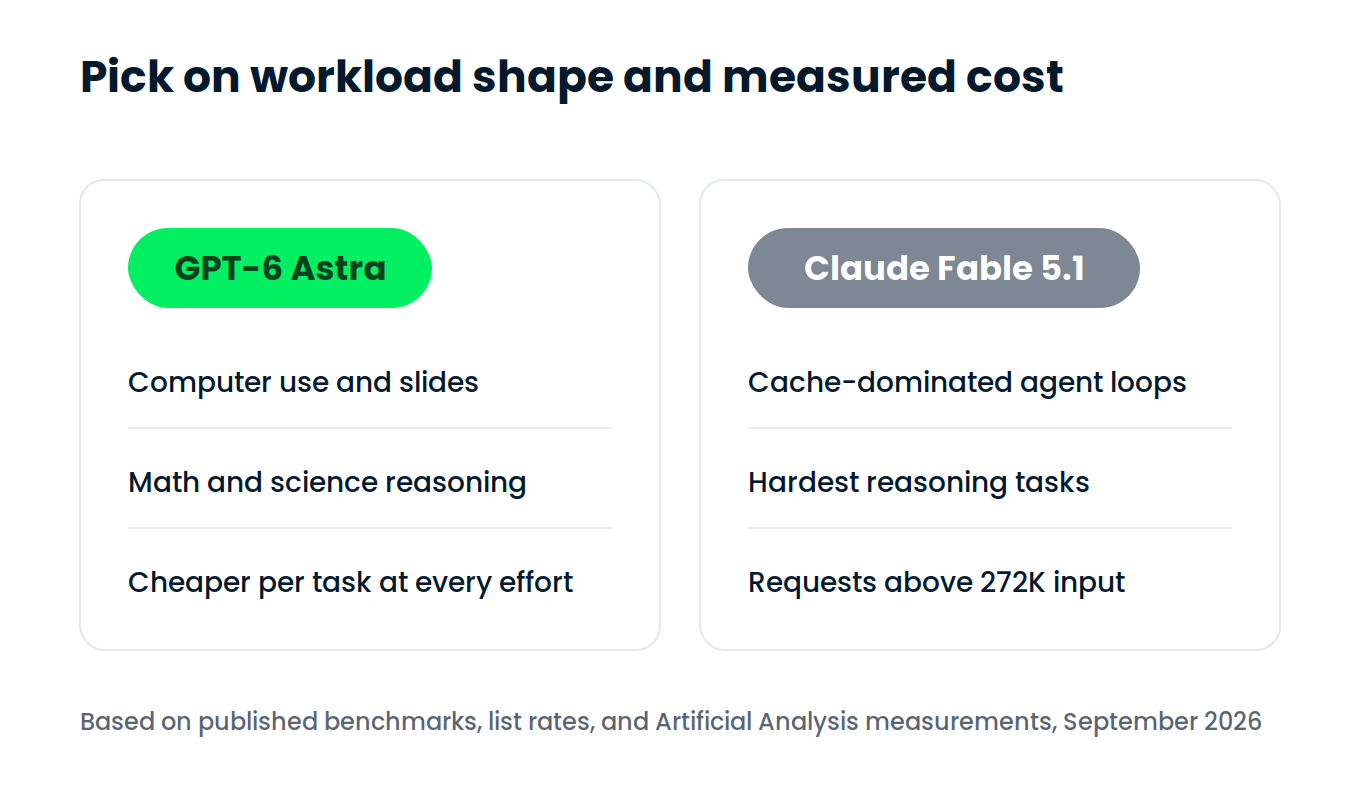
เลือกตามรูปทรงภาระงานและต้นทุนที่วัดได้ ไม่ใช่ตารางเกณฑ์วัดผล GPT-6 Astra แข็งแกร่งกว่าเมื่อเอเจนต์ต้องคลิกทำงานผ่านซอฟต์แวร์ ทำคณิตศาสตร์ หรือผลิตชิ้นงานพร้อมส่งให้ลูกค้า และดูเหมือนจะถูกกว่าต่อภารกิจ แม้การ์ดราคาจะเหมือนกัน Claude Fable 5.1 ให้คะแนนการให้เหตุผลอิสระสูงสุดที่หาได้ และมีต้นทุนต่ำกว่าสำหรับคำขนาดใหญ่มากและลูปที่แคชครองบิล
การ์ดราคาคือกับดักในการเปรียบเทียบนี้ โมเดลสองตัวที่ $10 และ $50 ดูเหมือนจะแทนกันได้ด้านราคา และช่องว่างเดียวที่เห็นคือการอ่านแคช ซึ่ง Anthropic ได้เปรียบ 4 เท่า แต่เมื่อวัดว่าตัวไหนใช้ไปเท่าไรเพื่อทำงานให้เสร็จ Astra กลายเป็น 44% ของต้นทุน Fable 5.1 ซึ่งคาดไม่ถึงจากหน้าราคา และเป็นสิ่งเดียวที่ควรเทียบกับทราฟฟิกของตัวเองก่อนตัดสินใจ
หากอยากลงมือทำงานกับสองโมเดลนี้แทนการอ่าน แนะนำคอร์ส Introduction to Claude Models สำหรับฝั่ง Anthropic และ Working with the OpenAI API สำหรับฝั่ง OpenAI
เรียน AI กับ DataCamp!
คอร์ส
คอร์ส
คอร์ส