
कोर्स
डेवलपर्स के लिए AI-असिस्टेड कोडिंग
1 घंटा 30 मिनट
11.1K
Google द्वारा Gemini 3.8 Flash का अनावरण करने के कुछ घंटों बाद ही, Meta ने Muse Spark 1.3 जारी किया है—अपनी फ़्लैगशिप मॉडल फैमिली का एक अपडेट, जो सीधे एजेंटिक वर्कफ़्लोज़ और कोडिंग को निशाना बनाता है।
रिलीज़ एक भीड़भाड़ वाले मैदान में आती है जहां OpenAI का GPT-5.6 Sol, Anthropic का Claude Opus 5, और xAI का Grok 4.6 एक ही डेवलपर माइंडशेयर के लिए प्रतिस्पर्धा कर रहे हैं।
Muse Spark 1.3, Muse Code और Meta Model API में रोलआउट हो रहा है, और 1M टोकन कॉन्टेक्स्ट विंडो बनाए रखता है।
Meta इंजीनियरों द्वारा की गई तुलना में, मॉडल ने Muse Spark 1.2 की तुलना में लगभग 20% कम टूल कॉल्स और 25% कम टोकन उपयोग किया, और Artificial Analysis ने xhigh वेरिएंट को Intelligence Index 61 तथा 182 टोकन/सेकंड आउटपुट स्पीड पर स्कोर किया।
इस लेख में, मैं Muse Spark 1.3 की नई बातों को कवर करूंगा—इसके एजेंटिक और कोडिंग फीचर्स, बेंचमार्क स्थिति, और प्राइसिंग पर नज़र डालते हुए
इसे प्रतिस्पर्धियों के साथ तुलना करने के लिए, हमारे गाइड देखें: GPT-5.6 Terra बनाम Claude Sonnet 5 और Claude Opus 5 बनाम Claude Sonnet 5। मैं हमारा Meta के Muse Agent का गाइड भी सुझाता हूं।
Muse Spark 1.3 Meta का मौजूदा फ़्लैगशिप मॉडल है, जिसे Muse Spark 1.2 पर एक क्रमिक अपडेट के रूप में रखा गया है, न कि पूरी तरह से नए निर्माण के रूप में।
यह दो वेरिएंट्स में शिप होता है जो अनुसंधान में दिखते हैं:
परिवर्तन दो मुख्य क्षेत्रों पर केंद्रित हैं: लंबी-अवधि के एजेंटिक कार्य को बनाए रखना और कोडिंग व्यवहार को साफ़ करना।
Meta ने मॉडल को विभिन्न हॉर्नेसेज़ पर ट्रेन किया ताकि यह अलग-अलग एजेंटिक वातावरणों में सामान्यीकृत हो सके, और अधिक लंबी-अवधि की कोडिंग टास्क्स पर प्रशिक्षण जोड़ा। वे इस रिलीज़ को व्यक्तिगत सुपरइंटेलिजेंस के अपने घोषित लक्ष्य की दिशा में एक कदम के रूप में पेश करते हैं।
इस लॉन्च से मेरी मुख्य सीख दक्षता के बारे में है; Muse Spark 1.3 ने 1.2 की तुलना में लगभग 20% कम टूल कॉल्स और 25% कम टोकन के साथ इंजीनियरिंग तुलना पूरी की।
जो कोई भी Meta Model API पर प्रति टोकन भुगतान करता है, उनके लिए यह समान वर्कलोड पर सीधे लागत में कमी है।
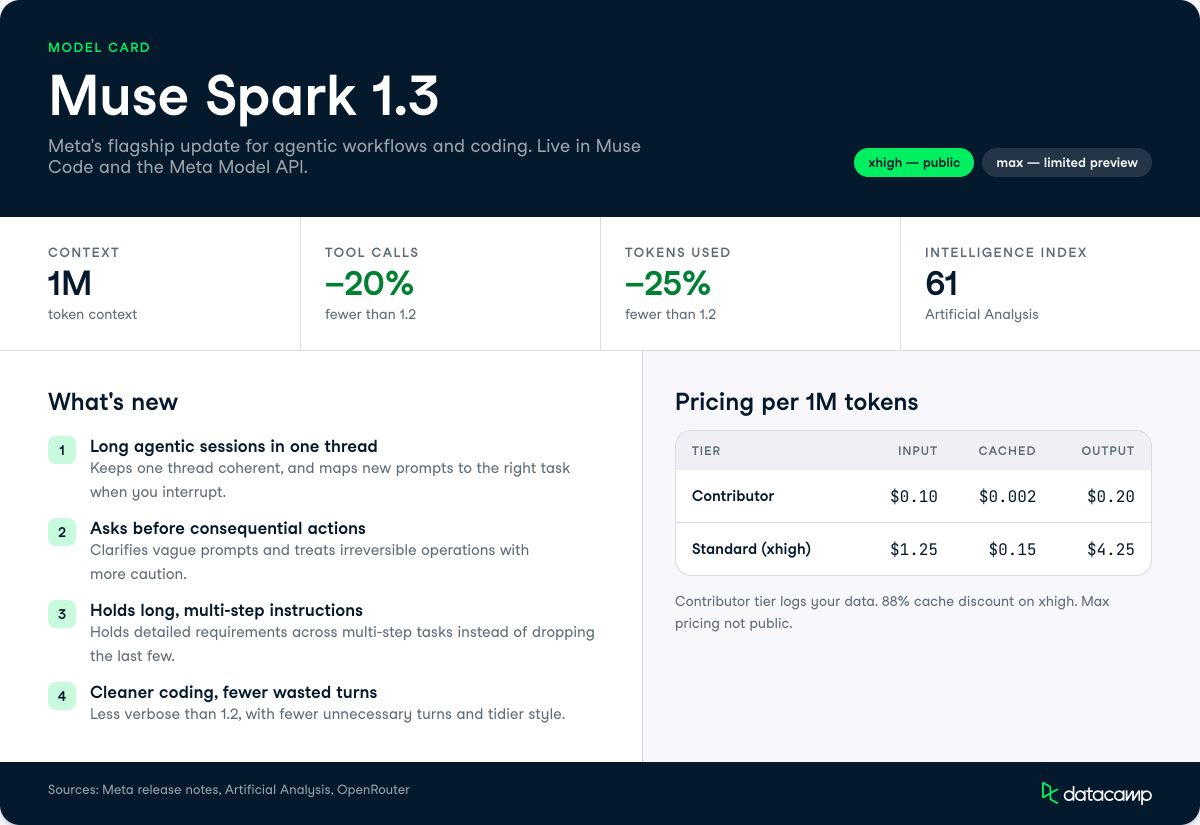
Muse Spark 1.3 के अपडेट इस पर केंद्रित हैं कि मॉडल लंबे एजेंटिक सत्रों के दौरान कैसे व्यवहार करता है और वह कोड कैसे लिखता और एडिट करता है।
यहाँ वे क्षमताएँ हैं जो मुझे सबसे अलग लगीं।
Muse Spark 1.3 को इस तरह बनाया गया है कि वह एक ही लंबे थ्रेड को कई वर्कफ़्लोज़ को एक साथ संभालते हुए भी सुसंगत रखे।
खुले-अंत उद्देश्य दिए जाने पर, यह टूल्स का उपयोग करके उलझे और परस्पर-विरोधी स्रोतों से अपना कॉन्टेक्स्ट बनाता है, चलते-चलते अपनी योजना की खामियों को ठीक करता है, और जो सीखा है उसे ट्रैक करके अंतिम डिलीवेरेबल तैयार करता है।
Meta ने एकल-थ्रेडेड कॉन्टेक्स्ट के भीतर मल्टीटास्किंग में भी सुधार किया।
मॉडल इनकमिंग प्रॉम्प्ट्स को सही टास्क से मैप करता है, भले ही आप किसी पहले के अनुरोध को मोड़ रहे हों या उसे बीच में ही बाधित कर रहे हों—जो आम तौर पर लंबे एजेंट सत्रों को पटरी से उतारने वाला फेल्योर मोड है।
जो लोग नियमित रूप से Muse Spark का उपयोग करते हैं, उनके लिए यह इसलिए महत्वपूर्ण है क्योंकि अधिकांश वास्तविक एजेंट कार्य एक साफ़ निर्देश नहीं होता। यह एक चलती बातचीत होती है, जहाँ आप अपना मन बदलते हैं, बाधाएँ जोड़ते हैं, और टास्क रोकते हैं—और कोई मॉडल जो यह खो देता है कि कोई संदेश किस टास्क से संबंधित है, तेजी से अनुपयोगी हो जाता है।
Meta का दावा है कि Muse Spark 1.3 को आपके साथ मिलकर काम करने के लिए ट्रेन किया गया है, न कि अस्पष्ट निर्देशों पर आगे बढ़ते जाने के लिए। यानी यह प्रॉम्प्ट अस्पष्ट होने पर स्पष्टीकरण मांगता है, अटकने पर आपको शामिल करता है, और निर्णायक कार्रवाई करने से पहले पुष्टि करता है।
लंबे टास्क्स पर, यह आपकी अपडेट प्राथमिकताओं के अनुसार ढलता है। आप चाहें तो इसे बार-बार रिपोर्ट करने को कह सकते हैं या तब तक पृष्ठभूमि में चुपचाप काम करने दे सकते हैं जब तक कि परिणाम न आ जाए—जो तब उपयोगी है जब आप कोई टास्क शुरू करके बाद में लौटना चाहते हैं।
Meta ने अपरिवर्तनीय कार्रवाइयों पर मॉडल की कैलिब्रेशन भी बेहतर की है, ताकि यह विध्वंसक ऑपरेशन को रिवर्सिबल ऑपरेशन की तुलना में अधिक सावधानी से ले।
यह उन एजेंट्स के लिए एक सार्थक सेफ़्टी वाल्व हो सकता है जो फाइलों को छूते हैं, संदेश भेजते हैं, या शेल कमांड्स चलाते हैं।
Muse Spark 1.3 जटिल, विस्तृत निर्देशों का पहले की Muse Spark वर्ज़न्स की तुलना में अधिक भरोसेमंद तरीके से पालन करता है।
बहु-चरण टास्क्स में, Meta रिपोर्ट करता है कि यह विस्तृत आवश्यकताओं को बेहतर तरीके से संरक्षित करता है—बाधाएँ छोड़े बिना या अनुरोधित वर्कफ़्लो से भटके बिना।
जैसे अनुरोध पर विचार करें: एक अनुपालन रिपोर्ट का ड्राफ्ट बनाएं, संलग्न स्प्रेडशीट से आंकड़े निकालें, संख्याओं को दो तालिकाओं में फ़ॉर्मेट करें, उसे PDF के रूप में एक्सपोर्ट करें, और इसे छह नामित हेडिंग्स के तहत व्यवस्थित करें। पहले के मॉडल आमतौर पर शुरुआती तीन आवश्यकताओं को सही से करते हैं और चुपचाप आखिरी दो भूल जाते हैं।
मॉडल को अपनी सीमाओं का भी बेहतर बोध है।
Meta ने इसे इस तरह ट्रेन किया है कि जब यह दीवार से टकराए तो इसे पहचानकर ऐसा बताये—न कि पूरा दिखने के लिए परिणाम गढ़ दे, हालांकि शोध यह मापता नहीं कि यह कितनी बार होता है।
Muse Spark 1.3 को अधिक लंबी-अवधि की कोडिंग टास्क्स पर ट्रेन किया गया है और यह सामान्य इंजीनियरिंग वर्कफ़्लोज़ में बेहतर व्यवहार करता है।
Muse Spark 1.2 की तुलना में, Meta कहता है कि यह जहाँ ज़रूरत नहीं है वहाँ कम टर्न्स लेता है, कम वर्बोज़ है, और साफ़-सुथरी कोडिंग स्टाइल उत्पन्न करता है।
दक्षता में बढ़त ठोस है: Meta इंजीनियर तुलना में, Muse Spark 1.3 ने 1.2 की तुलना में लगभग 20% कम टूल कॉल्स और 25% कम टोकन उपयोग किए।
कम टूल कॉल्स का मतलब है कम राउंड ट्रिप्स और एजेंटिक कोडिंग टास्क्स पर कम लेटेंसी, और कम टोकन का मतलब प्रति पूर्ण टास्क कम लागत।
एक सावधानी जो मैंने कम्युनिटी रिपोर्ट्स में उभरती देखी, वह यह है कि कुछ Reddit उपयोगकर्ताओं को मॉडल निराशाजनक लगा क्योंकि यह अपना सोचने का प्रोसेस एक्सपोज़ नहीं करता—जिससे उसके कोडिंग फैसलों को डिबग करना उन मॉडलों की तुलना में कठिन हो जाता है जो reasoning ट्रेसेज़ दिखाते हैं।
Meta ने Muse Spark 1.3 रिलीज़ में तीन श्रेणियों में बेंचमार्क स्कोर्स प्रकाशित किए: एजेंट टास्क्स, लॉन्ग-कॉन्टेक्स्ट रिट्रीवल, और कोडिंग।
नीचे दिए गए परिणाम max वेरिएंट की तुलना Muse Spark 1.2 xhigh, GPT-5.6 Sol (max), और Claude Opus 5 (max) से करते हैं।
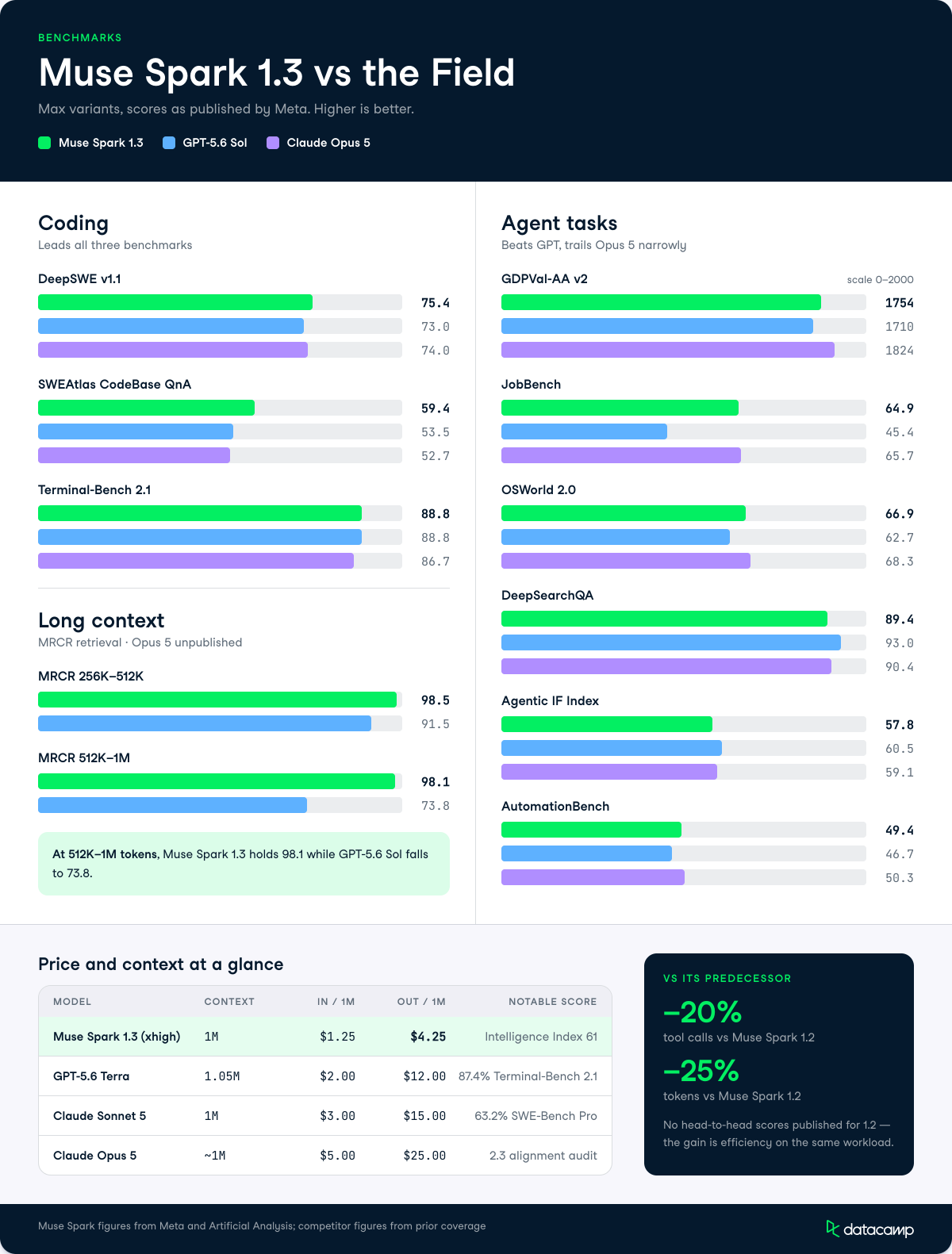
कोडिंग वह क्षेत्र है जहाँ Muse Spark 1.3 सबसे मजबूत दावा करता है। यह तीनों बेंचमार्क्स में आगे है, जिनमें Terminal-Bench 2.1 पर GPT-5.6 Sol के साथ टाई भी शामिल है।
| बेंचमार्क | Muse Spark 1.3 (max) | GPT-5.6 Sol (max) | Opus 5 (max) |
|---|---|---|---|
| DeepSWE v1.1 | 75.4 | 73.0 | 74.0 |
| SWEAtlas CodeBase QnA | 59.4 | 53.5 | 52.7 |
| Terminal-Bench 2.1 | 88.8 | 88.8 | 86.7 |
DeepSWE v1.1 का परिणाम (75.4) सबसे उल्लेखनीय है।
यह बेंचमार्क लंबी-अवधि के एजेंटिक कोडिंग को मापता है, जहाँ मॉडल को वास्तविक सॉफ्टवेयर इंजीनियरिंग टास्क्स को स्वायत्त रूप से पूरा करना होता है।
उस इवाल पर Opus 5 और GPT-5.6 Sol दोनों को पछाड़ना किसी भी व्यक्ति के लिए अर्थपूर्ण है जो कोडिंग एजेंट्स का मूल्यांकन करता है। T
SWEAtlas कोडबेस समझ स्कोर (59.4) भी यही कहानी बताता है: Muse Spark 1.3 यहाँ दोनों सीधे प्रतिद्वंद्वियों की तुलना में बड़े कोडबेस पढ़ने और उन पर तर्क करने में बेहतर है।
लॉन्ग-कॉन्टेक्स्ट रिट्रीवल पर Muse Spark 1.3 का महत्वपूर्ण लीड है, खासकर कॉन्टेक्स्ट विंडो के सुदूर छोर पर जहाँ अधिकांश मॉडल गिरावट दिखाते हैं।
| बेंचमार्क | Muse Spark 1.3 (max) | GPT-5.6 Sol (max) |
|---|---|---|
| MRCR 256K–512K | 98.5 | 91.5 |
| MRCR 512K–1M | 98.1 | 73.8 |
512K से 1M टोकन पर, GPT-5.6 Sol 73.8 तक गिरता है जबकि Muse Spark 1.3 98.1 पर टिका रहता है। यदि आपका काम पूरे कोडबेस, लंबे दस्तावेज़ श्रृंखलाओं, या विस्तृत एजेंट ट्रेसेज़ को एक ही कॉन्टेक्स्ट में फीड करना शामिल करता है, तो यही श्रेणी सबसे अधिक मायने रखती है। MRCR के लिए Opus 5 स्कोर्स प्रकाशित नहीं हैं, इसलिए यहाँ सीधी तीन-तरफ़ा तुलना संभव नहीं है।
एजेंट बेंचमार्क्स पर, Muse Spark 1.3 GPT-5.6 Sol और Opus 5 के बीच बैठता है।
यह अधिकांश श्रेणियों में GPT को हराता है लेकिन समग्र रूप से Opus 5 से थोड़ा पीछे रहता है।
| बेंचमार्क | Muse Spark 1.3 (max) | GPT-5.6 Sol (max) | Opus 5 (max) |
|---|---|---|---|
| GDPVal-AA v2 | 1754 | 1710 | 1824 |
| JobBench | 64.9 | 45.4 | 65.7 |
| OSWorld 2.0 | 66.9 | 62.7 | 68.3 |
| DeepSearchQA | 89.4 | 93.0 | 90.4 |
| Agentic IF Index | 57.8 | 60.5 | 59.1 |
| AutomationBench | 49.4 | 46.7 | 50.3 |
JobBench पर GPT-5.6 Sol के खिलाफ अंतर (64.9 बनाम 45.4) एजेंट श्रेणी में सबसे बड़ा मार्जिन है और उन सभी के लिए ध्यान देने योग्य है जो पेशेवर वर्कफ़्लोज़ में AI का उपयोग करते हैं।
DeepSearchQA वह एक क्षेत्र है जहाँ GPT-5.6 Sol आगे है (93.0 बनाम 89.4), और निर्देशों का पालन (Agentic IF Index) भी थोड़ा GPT के पक्ष में है।
कंप्यूटर उपयोग (OSWorld 2.0) पर, Muse Spark 1.3 Opus 5 के 68.3 के मुकाबले 66.9 पर प्रतिस्पर्धी है।
कुल मिलाकर तस्वीर यह है कि Muse Spark 1.3 कोडिंग और लॉन्ग-कॉन्टेक्स्ट रिट्रीवल में आगे है, एजेंट टास्क्स पर प्रतिस्पर्धी है, और ज्ञान-कार्य तथा सामान्य एजेंट ऑर्केस्ट्रेशन में Opus 5 से ज़रा पीछे बैठता है।
यहाँ एक त्वरित संदर्भ है जो Muse Spark 1.3 की तुलना उन मिड-टियर और फ़्लैगशिप मॉडलों से करता है जिनकी हमने समीक्षा की है।
Muse Spark के नंबर Artificial Analysis से हैं; प्रतिस्पर्धियों के आंकड़े हमारी पूर्व कवरेज से लिए गए हैं।
| मॉडल | कॉन्टेक्स्ट | इनपुट / 1M | आउटपुट / 1M | उल्लेखनीय स्कोर |
|---|---|---|---|---|
| Muse Spark 1.3 (xhigh) | 1M | $1.25 | $4.25 | Intelligence Index 61 |
| GPT-5.6 Terra | 1.05M | $2.00 | $12.00 | 87.4% Terminal-Bench 2.1 |
| Claude Sonnet 5 | 1M | $3.00 | $15.00 | 63.2% SWE-Bench Pro |
| Claude Opus 5 | ~1M | $5.00 | $25.00 | 2.3 alignment audit |
यहाँ प्राइसिंग का अंतर साफ़ है; Muse Spark 1.3 के आउटपुट टोकन Sonnet 5 की तुलना में लगभग एक-तिहाई और Opus 5 की तुलना में एक-छठे हैं।
Muse Spark 1.3 आज Muse Code और Meta Model API में उपलब्ध है।
Meta for Developers ने बताया कि मौजूदा उपयोगकर्ता मॉडल ID बदलकर वही एंडपॉइंट्स, SDKs, और प्राइसिंग रख सकते हैं—जो अपग्रेड पथ को कम-घर्षण बनाता है।
Meta Model API पर प्राइसिंग टियर पर निर्भर करती है—एक कंट्रीब्यूटर टियर जो आपके डेटा को Meta के उत्पादों को बेहतर बनाने के लिए लॉग करता है और कम दर पर आता है, और एक स्टैंडर्ड टियर जो ऐसा नहीं करता।
| टियर | कॉन्टेक्स्ट | इनपुट / 1M | कैश्ड इनपुट / 1M | आउटपुट / 1M |
|---|---|---|---|---|
| Contributor (प्रोडक्ट्स को बेहतर बनाने के लिए डेटा उपयोग) | 1M | $0.10 | $0.002 | $0.20 |
| Standard (xhigh) | 1M | $1.25 | $0.15 | $4.25 |
Artificial Analysis xhigh टियर पर 88% कैश डिस्काउंट की रिपोर्ट करता है, और OpenRouter $1.25 इनपुट / $4.25 आउटपुट दरों को मिरर करता है, साथ ही वेब सर्च जैसे ऐड-ऑन्स को $2.50 प्रति 1,000 कॉल्स पर लिस्ट करता है।
max वेरिएंट की प्राइसिंग रिलीज़ विश्लेषण के समय तक सार्वजनिक नहीं थी।
लिखते समय कम्युनिटी से दो उपलब्धता सावधानियाँ ध्यान देने योग्य हैं:
Muse Spark 1.3 एक लक्षित दक्षता और विश्वसनीयता अपडेट है, क्षमता में छलांग नहीं—और Meta इस फ़्रेमिंग के बारे में ईमानदार है।
1.2 की तुलना में 20% कम टूल कॉल्स और 25% कम टोकन वे नंबर हैं जो बड़े पैमाने पर एजेंट्स चलाने वालों के लिए सबसे ज़्यादा मायने रखते हैं, क्योंकि वे सीधे कम लागत और लेटेंसी में तब्दील होते हैं।
मेरा मानना है कि यदि आप पहले से Meta Model API या Muse Code में हैं, तो कम टोकन उपयोग के साथ ड्रॉप-इन अपग्रेड एक आसान हाँ है।
यदि आप प्रोडक्शन एजेंट्स के लिए नया मॉडल चुन रहे हैं, तो मैं कमिट करने से पहले यह देखना चाहूँगा कि मॉडल वास्तविक दुनिया में कैसा प्रदर्शन करता है और max वेरिएंट की प्राइसिंग क्या होती है—किसी अच्छे से प्रलेखित विकल्प की तुलना में।
यदि आप ऐसे मॉडलों का मूल्यांकन और उपयोग अपनी वर्कफ़्लोज़ में करने के लिए कौशल बनाना चाहते हैं, तो मैं हमारे AI Agent Fundamentals स्किल ट्रैक से शुरू करने की सलाह देता हूँ।
शीर्ष DataCamp कोर्सेज़
कोर्स
कोर्स
लर्निंग पाथ