
Programa
Associate AI Engineer para desenvolvedores
26 h
No mercado de trabalho de tecnologia cada vez mais competitivo, um currículo de engenheiro de software que se destaque é essencial. Com centenas de candidatos disputando uma única vaga, recrutadores e gestores se apoiam no currículo para avaliar rapidamente se você tem profundidade técnica, capacidade de resolver problemas e qualificações de negócio para ter sucesso.
Um bom currículo não é apenas uma lista de linguagens de programação ou cargos. Ele conta, com clareza, como você aplicou princípios de engenharia de software para resolver problemas relevantes, melhorar sistemas e gerar valor. Seja para sua primeira vaga na área ou para uma posição sênior, seu currículo é decisivo para você avançar no processo seletivo.
Neste artigo, vou apresentar um guia completo para criar um currículo de engenheiro de software de alto impacto. Vou mostrar o que incluir, como estruturar cada seção, como quantificar conquistas e como adaptar o currículo a diferentes níveis de experiência. Ao longo do caminho, vamos indicar recursos práticos de aprendizado e exemplos para ajudar você a fortalecer tanto o currículo quanto seu conjunto de habilidades.
O currículo de um engenheiro de software apresenta sua proficiência técnica, impacto em projetos, visão de negócio e resultados de engenharia. Diferente de outros currículos, ele enfatiza código, design de sistemas, solução de problemas e o impacto do seu trabalho nos usuários e no negócio.
O objetivo principal do currículo é demonstrar que você consegue:
Para quem está começando nessa carreira, nosso guia How to Become A Software Engineer traz um bom panorama sobre funções e expectativas em diferentes níveis e como adquirir as habilidades necessárias.
Veja a seguir as seções fundamentais que aparecem em todo currículo de engenharia de software.
Seu resumo aparece no topo do currículo e deve comunicar seu valor de imediato. Em 2 a 4 frases, apresente seus anos de experiência, seu foco técnico e o tipo de impacto que você já gerou.
Pense nesta seção como um trailer, não uma biografia. Para quem está no início, conecte experiências anteriores ou a formação com problemas de negócio e destaque as tecnologias com as quais você já trabalhou. Para quem tem mais estrada, foque em resultados, especialidades e conhecimento de mercado, em vez de listar todas as tecnologias usadas.
Um bom resumo:
Exemplo:
Software Engineer com mais de 5 anos de experiência construindo serviços backend escaláveis com Python, Django e AWS para ferramentas de otimização de rede. Liderou otimizações que reduziram a latência de APIs em 35% e suportou aplicações com mais de 500 mil usuários mensais. Apaixonado por design de sistemas, clean code e mentoria de engenheiros juniores.
A seção de habilidades técnicas deve ser concisa, fácil de escanear e alinhada à descrição da vaga. Evite uma lista única e extensa de ferramentas: agrupe por categorias para facilitar a leitura.
Use a terminologia que aparece nas vagas para melhorar o desempenho no ATS. Se você estiver de olho em vagas com foco em dados ou plataforma, trilhas como Software Engineering Principles in Python ou Understanding Data Engineering ajudam a fortalecer suas habilidades e o alinhamento de palavras-chave.
Exemplo:
A experiência profissional é o coração do seu currículo. Cada cargo deve incluir:
Foque em conquistas, não apenas em responsabilidades: comece com um verbo de ação forte e siga as estruturas STAR (Situação, Tarefa, Ação, Resultado) ou PAR (Problema, Ação, Resultado). Traga um problema de negócio específico, o que você fez para resolvê-lo e o resultado.
Sempre que possível, use resultados mensuráveis, como “reduzi o tempo de processamento do pipeline em 50%”, em vez de algo vago como “melhorei a execução dos pipelines”.
Exemplo:
Backend Software Engineer | Tech Company Name | 2020 – Presente
Projetos são especialmente importantes para iniciantes, pessoas em transição de carreira e candidatos sem muita experiência profissional. Inclua projetos pessoais, acadêmicos, freelance ou de código aberto que demonstrem habilidades aplicadas.
Para cada projeto, liste:
Sempre inclua o link do seu perfil no GitHub ou do seu site de portfólio. Recrutadores costumam avaliar qualidade de código, documentação e histórico de commits. Trilhas estruturadas de aprendizado, como Associate AI Engineer for Developers ou a carreira de Machine Learning Engineer, também podem fornecer ideias de projetos alinhados às expectativas do mercado.
Na seção de educação, coloque graduações, bootcamps ou disciplinas relevantes. Recém-formados podem incluir CR, honras ou matérias avançadas.
Certificações validam habilidades especializadas, principalmente em nuvem e dados. Exemplos: CLF-C02 AWS Cloud Practitioner ou certificados do Datacamp por concluir nossas trilhas de carreira, como Professional Data Engineer in Python ou Data Engineer in Python.
Vamos falar das competências centrais que você deve garantir que apareçam no seu currículo. Para ideias gerais, confira estas habilidades essenciais de engenheiro de IA e de engenharia de dados.
A maioria das vagas espera proficiência em uma ou mais linguagens centrais como Python, JavaScript, Java, C++, Go ou Rust. Seja honesto sobre suas linguagens mais fortes e indique como você as utilizou em produção.
A experiência com frameworks deve acompanhar seu foco de atuação:
Times modernos esperam familiaridade com ferramentas profissionais que apoiam colaboração e controle de versão. Garanta que você conhece estas ferramentas. Vou linkar alguns cursos relevantes para cada uma, para você consolidar os fundamentos:
Experiência com fluxos colaborativos — code reviews, pull requests, testes automatizados — mostra preparo para desenvolvimento em equipe.
Plataformas de nuvem são centrais em sistemas modernos. Espera-se que todo engenheiro de software entenda pelo menos uma das três principais plataformas e os fundamentos de computação em nuvem. Destaque experiência prática com AWS, Azure ou Google Cloud, incluindo serviços como EC2, Lambda, S3 ou BigQuery.
Ferramentas de infraestrutura como código, como Terraform ou CloudFormation, demonstram sua capacidade de gerenciar ambientes escaláveis e reproduzíveis.
Para engenheiros backend, é crucial conhecer diferentes SGBDs. Você deve conseguir discutir trade-offs entre bancos relacionais e NoSQL. E, principalmente, saber como implementar a conexão entre suas ferramentas e o banco.
Mencione otimização de queries, estratégias de indexação ou abordagens de cache para mostrar profundidade além do básico de acesso a dados. Profissionais focados em dados também se beneficiam da trilha de carreira Associate Data Engineer in SQL.
Veja como tirar o máximo do seu currículo.
Revise cada vaga com atenção e identifique habilidades, ferramentas e responsabilidades exigidas. Reproduza essa linguagem de forma natural no currículo, especialmente no resumo e na experiência.
Reordenar bullets para priorizar as conquistas mais relevantes pode aumentar muito o engajamento dos recrutadores.
Métricas transformam afirmações vagas em evidências convincentes. Use números como:
Esses impactos quantificáveis mostram a escala do seu trabalho.
Comece os bullets com verbos fortes como desenvolvi, projetei, otimizei, escalei, reduzi, ou melhorei. Isso enfatiza o impacto. Procure não repetir sempre os mesmos verbos.
Use linguagem clara e voz ativa; em vez de “O banco de dados foi otimizado”, escreva “Otimizei o banco de dados”, o que demonstra protagonismo.
Use cabeçalhos padrão, formatação simples e palavras-chave alinhadas à vaga. Evite tabelas, colunas ou gráficos que possam causar problemas de leitura pelo ATS. Um currículo simples, em uma coluna e sem elementos gráficos é o ideal para candidaturas online.
Traga termos da descrição da vaga para o seu currículo exatamente como estão escritos, para casar o máximo possível de palavras-chave.
Use cabeçalhos claros, espaçamento consistente e bullets. Limite o currículo a uma página no início da carreira e até duas páginas para posições sênior.
Escolha fontes limpas, bom espaço em branco e ênfases sutis em negrito. Evite designs muito decorativos que distraiam do conteúdo. Evite gráficos, fotos e outros elementos que também podem dificultar a leitura pelo ATS.
Vamos analisar alguns modelos de currículo para ter uma ideia melhor do que construir.
Como você está começando, talvez ainda não tenha experiência suficiente para evidenciar suas habilidades técnicas. Foque em destacar sua formação e projetos, sempre linkando seu portfólio no GitHub.
Foco: educação, projetos, estágios
Seções:
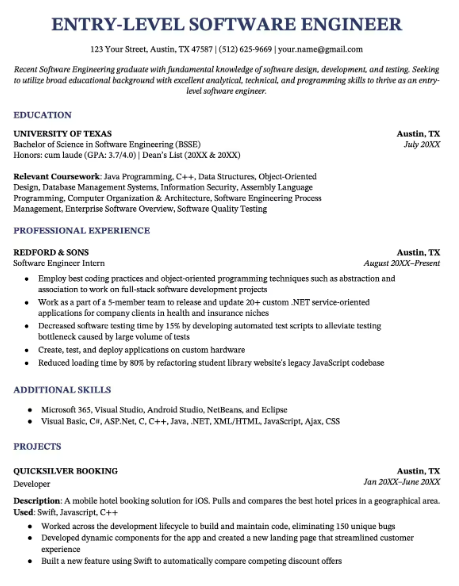
Baixe o modelo de currículo para engenheiro de software júnior
Ao migrar para o meio da carreira, com 3 a 5 anos de experiência, o resumo se torna menos necessário, já que você terá bastante vivência para comprovar suas competências. Considere remover o resumo para dar mais destaque às habilidades técnicas e contribuições de negócio. Procure evidenciar algumas iniciativas de liderança.
Foco: ownership, colaboração, design de sistemas
Seções:
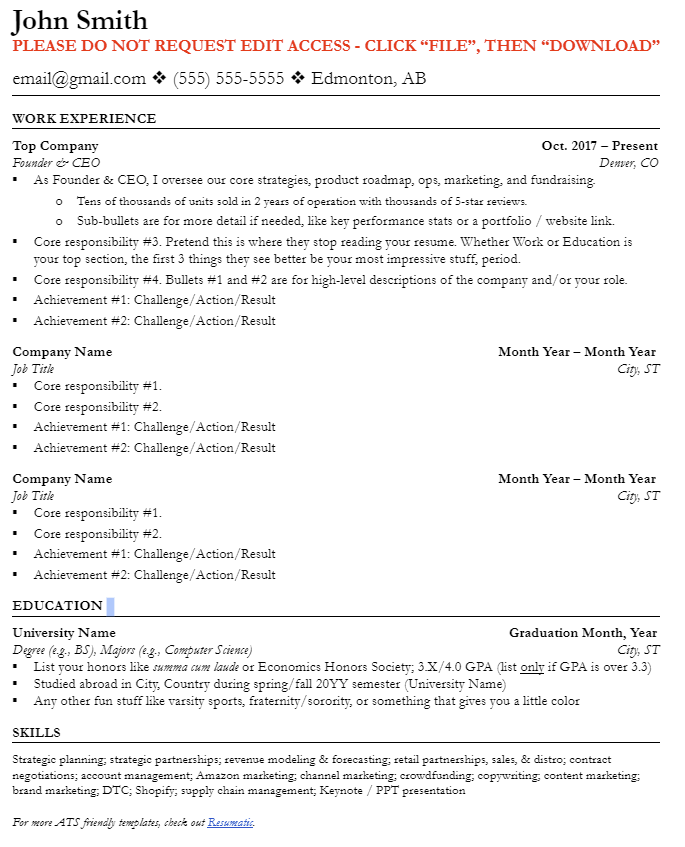
Baixe o modelo de currículo para engenheiro de software pleno
Candidatos nessa etapa costumam se preparar também com materiais de entrevista, como Top 40 Software Engineer Interview Questions in 2025.
Ao atingir o nível sênior (8+ anos), você pode considerar usar mais de uma página para contemplar sua experiência. Novamente, o resumo é opcional, mas pode ajudar a destacar seus anos de atuação e conhecimento setorial.
Aqui, o foco é mostrar como você construiu sistemas e projetos completos, mentorou outros desenvolvedores e impulsionou impacto estratégico. Demonstrar liderança de time e visão técnica é importante porque evidencia sua capacidade de atuar de forma ampla e holística.
Foco: liderança, arquitetura, impacto no negócio
Seções:
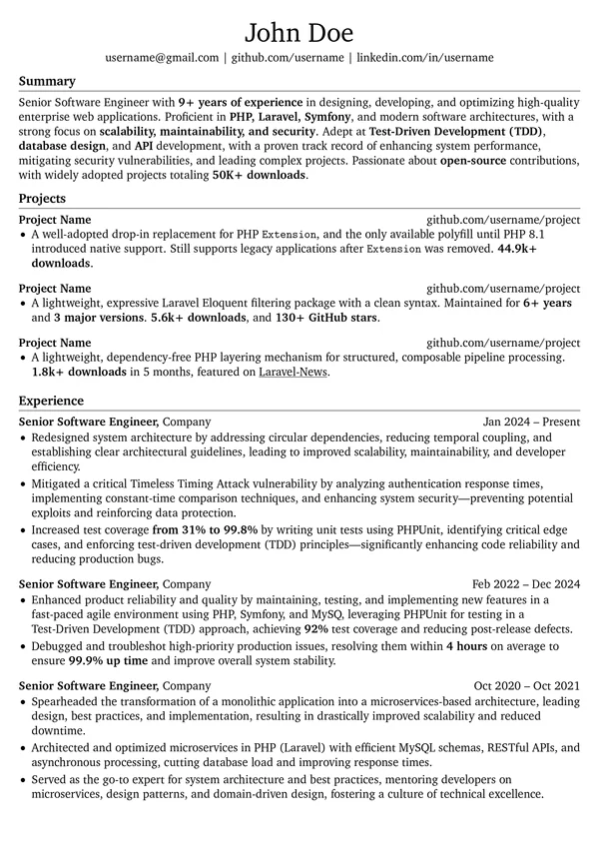
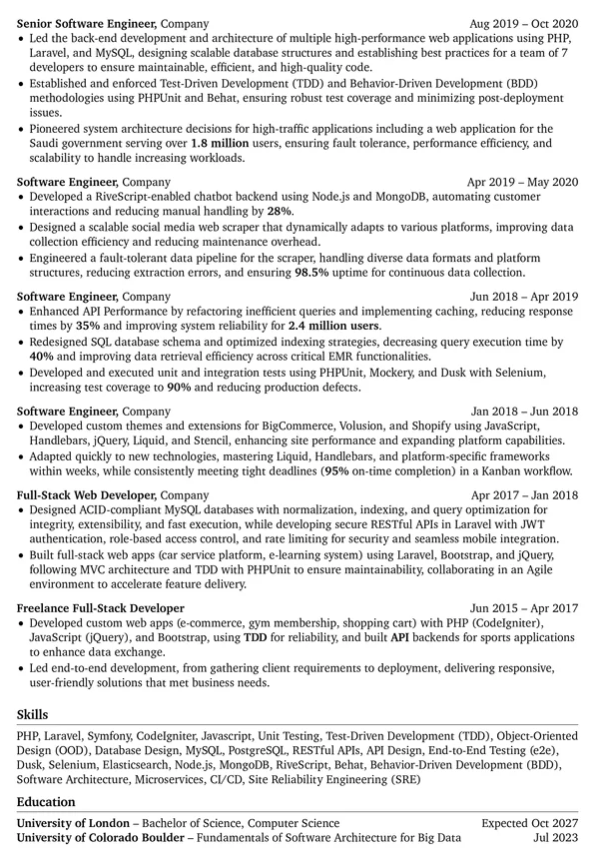
Baixe o modelo de currículo para engenheiro de software sênior
Evite alguns deslizes comuns para deixar seu currículo mais enxuto e marcante.
Remova tecnologias ultrapassadas e funções sem relação. Foque em impacto e relevância, não em listas exaustivas de tarefas.
Comunicação, colaboração e liderança importam. Mostre-as por meio de exemplos de trabalho com outras áreas, mentoria ou relacionamento com stakeholders. É tão importante mostrar que você dá conta do recado quanto que é bom trabalhar com você.
Erros de digitação e formatação prejudicam sua credibilidade. Use ferramentas de revisão e peça feedback para garantir clareza e precisão técnica.
Um bom currículo de engenheiro de software enfatiza impacto, clareza e relevância. Ao adaptar o documento a cada vaga, quantificar resultados e apresentar sua experiência de forma profissional, você aumenta muito suas chances de ser chamado para entrevistas.
Trate seu currículo como um documento vivo, que evolui junto com suas habilidades. Com atenção aos detalhes e refinamentos contínuos, seu currículo pode abrir portas para oportunidades empolgantes e recompensadoras em engenharia de software. Além disso, estude e pratique perguntas de entrevista para estar preparado quando chegar a hora.
Trilhas de engenharia de software
Programa
Programa
Programa
blog
Elena Kosourova
15 min
blog
Adel Nehme
13 min
blog
Joleen Bothma
11 min
blog
Srujana Maddula
9 min
blog
Javier Canales Luna
15 min