
Lernpfad
Associate Data Scientist in Python
90 Std.
Tech-Jobs stellen ganze Branchen auf den Kopf. Zwei Wege, über die gerade alle sprechen, sind AI Engineering und Data Science.
Beide versprechen echten Impact, gutes Gehalt, ständiges Lernen – und mehr, als man auf den ersten Blick sieht. Es gibt große Überschneidungen, trotzdem ziehen sie dich zu unterschiedlichen Problemtypen und Aufgaben im Arbeitsalltag.
In diesem Artikel schaue ich mir die wichtigsten Unterschiede entlang von drei Faktoren an: Jobchancen, Gehaltsaussichten und Lernpfade. Wenn du in einem der Felder neu bist, kannst du außerdem DataCamps AI-Engineering-und Data-Science-Kurse erkunden, um genau die Kompetenzen aufzubauen, nach denen Arbeitgeber suchen. Lies weiter, um herauszufinden, welcher Karriereweg besser zu dir passt.
AI Engineering und Data Science gehören zu den am schnellsten wachsenden Karrierepfaden in der Tech-Welt. Beide nutzen Daten und Machine Learning, dienen aber unterschiedlichen Zwecken – von produktionsreifen KI-Systemen bis hin zu Insights, die Entscheidungen vorantreiben.
Die folgende Tabelle vergleicht AI Engineering und Data Science anhand von Jobüberblick, Kernaufgaben und Schlüsselskills.
|
Karrierepfad |
Jobüberblick |
Rollen & Verantwortlichkeiten |
Schlüsselkompetenzen |
|
AI Engineering |
Entwickelt, rollt aus und betreibt produktionsreife KI-Systeme |
• KI/ML-Modelle entwerfen und trainieren • Modelle mit Domänendaten feinjustieren • KI-Systeme deployen und überwachen • Datenpipelines und ML-Infrastruktur aufbauen • Performance, Latenz und Kosten optimieren |
• Python-Programmierung • PyTorch & TensorFlow • MLOps & CI/CD • Cloud-Plattformen (AWS, Azure, GCP) • Deep Learning • Mathematik & Statistik |
|
Data Science |
Analysiert Daten, um Insights zu gewinnen und Geschäftsentscheidungen zu unterstützen |
• Daten bereinigen und analysieren • Prädiktive Modelle bauen • Forecasting und A/B-Tests durchführen • Insights visualisieren und kommunizieren • Datenbasierte Entscheidungen unterstützen |
• Python, R & SQL • Statistische Analyse • Machine Learning • Datenvisualisierung • Business Storytelling • Domänenexpertise |
Anschließend schauen wir uns beide Wege im Detail an – wo sie sich überschneiden und was sie unterscheidet.
Künstliche Intelligenz (KI) Engineering fokussiert den Aufbau und Betrieb von KI-Systemen im großen Maßstab. Produktionsreife Systeme laufen zuverlässig und decken Randfälle ab. Typische Rollen sind AI Engineer, Machine Learning (ML) Engineer, Applied Scientist und MLOps Engineer. Zunehmend drehen sich Rollen um Generative KI und LLMs.
Darum ist es am besten, KI von Grund auf zu lernen. Beherrschst du die Grundlagen, entwirfst und trainierst du Modelle, passt sie mit Domänendaten an und bindest sie in Anwendungen ein. Du überwachst Performance sowie Kosten und Latenz. Du baust Datenpipelines, wählst Infrastruktur und kümmerst dich um Deployment und Monitoring der Modelle.
Die Arbeit stützt sich auf ML-Verfahren wie überwachtes und unüberwachtes Lernen. Deep-Learning-Architekturen umfassen CNNs, RNNs, Transformer und mehr. Moderne Serving-Patterns reichen von Batch-Verarbeitung bis zu Online-Inferenz und A/B-Tests. Ziel ist nicht nur ein starkes Modell, sondern ein starkes System, dem echte Nutzer vertrauen.
AI Engineering verbindet Forschungswissen mit Software-Engineering-Disziplin. Wage den Schritt und bestehe AI-Engineering-Interviews und technische Screenings, um den Job zu bekommen.
Data Science verwandelt Rohdaten in Erkenntnisse und Entscheidungen. Data Scientists recherchieren, analysieren, modellieren und kommunizieren. Sie formulieren mit Stakeholdern die Fragen, explorieren Daten, bauen prädiktive oder deskriptive Modelle und übersetzen Ergebnisse in Aktionen – z. B. Preisinsights oder Forecasting.
Rollen sind u. a. Data Scientist, Decision Scientist, Research Scientist, Analytics Engineer und quantorientierte Finance-Positionen. Die Arbeit reicht von Experimenten wie A/B-Tests über Zeitreihenprognosen bis hin zu Feature Engineering und Modellinterpretation.
Data Science passt zu Menschen, die gern das „Warum“ stellen, Muster finden, mit Evidenz überzeugen und fundierte Entscheidungen treffen.
AI Engineering und Data Science teilen viele technische Grundlagen. Sie unterscheiden sich jedoch bei Karrierechancen, Verdienstpotenzial und den Skills, die du brauchst, um erfolgreich zu sein.
So schneiden beide in den wichtigsten Bereichen ab:
Die Nachfrage ist in beiden Feldern hoch. Die Wachstumsmuster unterscheiden sich jedoch.
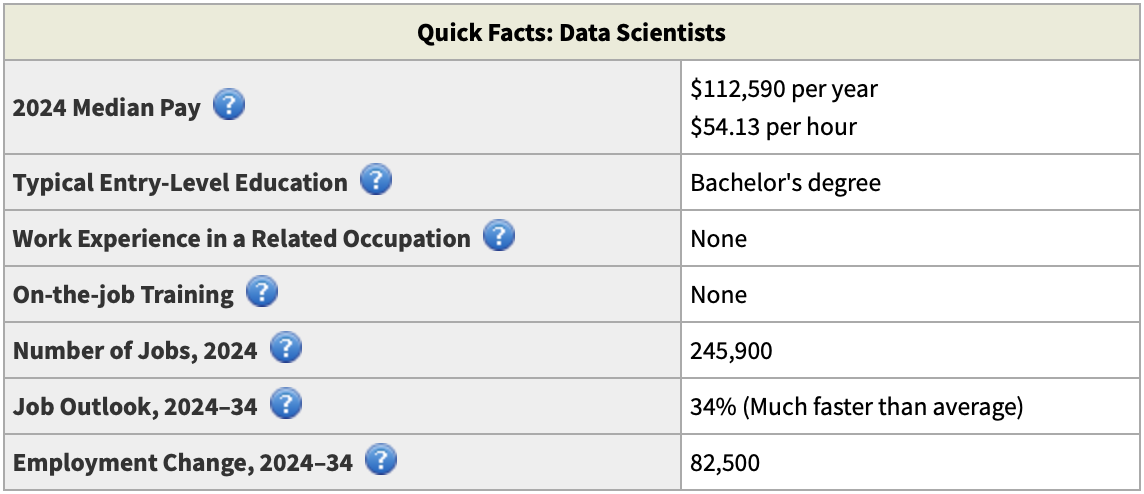
Das U.S. Bureau of Labor Statistics prognostiziert für Data Scientists sehr schnelles Wachstum. Rund 35% von 2022 bis 2032 (deutlich schneller als der Durchschnitt), getrieben durch datenbasierte Entscheidungen und Automatisierung quer durch Funktionen.
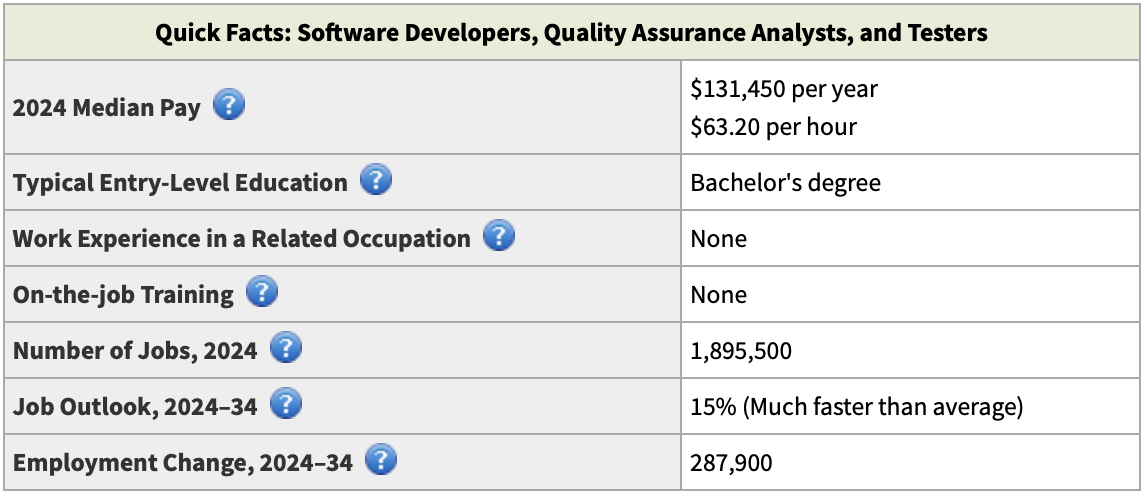
AI-Engineering-Rollen werden oft unter Softwareentwicklung und ML-fokussierten Titeln geführt. Softwareentwickler insgesamt sollen von 2022 bis 2032 um etwa 25% wachsen.
Breitere Signale deuten darauf hin, dass KI-spezifische Rollen noch schneller wachsen. Im Future of Jobs Report 2023 identifiziert das World Economic Forum (WEF) KI- und Machine-Learning-Spezialisten als einige der am schnellsten wachsenden Berufe und prognostiziert rund 40% Beschäftigungswachstum zwischen 2023 und 2027, da Unternehmen KI branchenübergreifend schneller einführen.
Data Science bleibt ein stabiler Markt. AI Engineering steigt steil an – getrieben von Generativer KI und dem Druck, Modelle in echte Produkte zu bringen.
Beide Felder sind branchenübergreifend im Einsatz:
Rawad Baroud, CEO von ZeroGPT, betont, wie wichtig es ist, vertrauenswürdige KI-Systeme zu bauen, auf die Unternehmen setzen können. Er ist überzeugt, dass mit der zunehmenden Einführung von Generativer KI die Nachfrage nach Fachkräften, die verlässliche KI-Lösungen entwickeln, deployen und betreiben können, weiter steigen wird.
Baroud sagt:
Wenn Unternehmen Generative KI in Kundenservice, Content-Erstellung und interne Abläufe integrieren, hängt der Erfolg von mehr ab als nur Modellgenauigkeit. Organisationen brauchen KI-Profis, die vertrauenswürdige Systeme bauen, Ausgaben validieren und die Performance kontinuierlich verbessern, wenn sich Anforderungen in der Praxis verändern.
Rawad Baroud, CEO of ZeroGPT
Mit der Reife von GenAI bauen mehr Teams natürlichsprachliche Interfaces über Daten, automatisieren Content-Workflows und unterstützen wissensintensive Aufgaben.
Data Science startet oft mit Fragen und Metriken. AI Engineering beginnt dagegen bei Systemen und Verlässlichkeit. In modernen Teams verschwimmen die Grenzen.
Die Vergütung hängt von Standort, Branche, Erfahrung und Unternehmensphase ab. Einige belastbare Anhaltspunkte:
Das BLS nennt für 2023 ein Medianjahresgehalt von 108.020 $ für Data Scientists. Softwareentwickler, oft als Proxy für AI/ML-Engineering-Rollen genutzt, liegen 2023 bei 132.930 $ Median.
Aggregierte Gehaltsseiten zeigen häufig höhere Durchschnittsgehälter für ML/AI-Engineering-Rollen als für generalistische Data-Science-Rollen – besonders auf Mid- bis Senior-Level und in großen Tech-Hubs. Für aktuelle Markteinblicke:
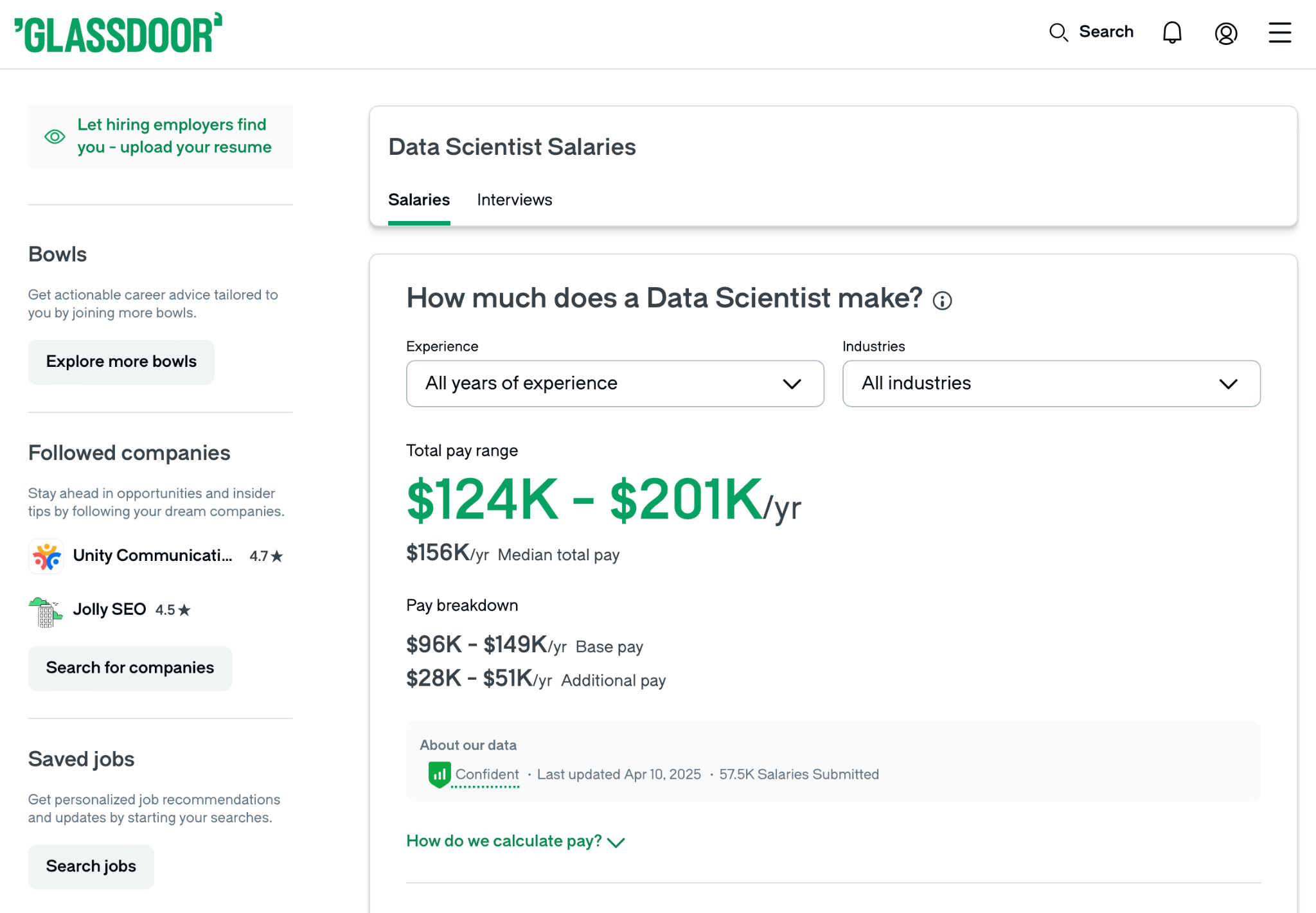
Zum Zeitpunkt der Erstellung zeigen Schätzungen:
Prämien gibt es für fortgeschrittenes ML (Deep Learning, LLMs) und starkes Software-Engineering. Regulierte Branchen wie Finanz und Gesundheit zahlen mehr, weil Risiko und Compliance zählen. Teure Hubs wie die San Francisco Bay Area und New York zahlen höher, Remote-Arbeit erweitert jedoch den Zugang. Viele KI-Profis vergleichen auch Länder mit niedrigen Lebenshaltungskosten, wenn sie eine langfristige Remote-Karriere aufbauen.
Beide Pfade bieten klare Entwicklungsmöglichkeiten.
Gregor Emmian, Deputy Chief Digital Growth Officer bei Rise, ist überzeugt, dass Wachstum in der KI davon abhängt, kontinuierlich sowohl technische Expertise als auch geschäftlichen Impact auszubauen.
Er beobachtet, dass Fachleute mit starken KI-Skills, die zugleich reale Businessprobleme lösen, am schnellsten aufsteigen.
Emmian sagt:
Die bestbezahlten KI-Rollen verlangen nicht nur Technik-Know-how. Gefragt ist die Fähigkeit, KI in messbaren Geschäftswert zu übersetzen. Wer sich neuen Technologien anpasst und versteht, wie KI Geschäftsziele unterstützt, hat langfristig die besten Karrierechancen.
Gregor Emmian, Deputy Chief Digital Growth Officer at Rise
Egal ob AI Engineering oder Data Science: Wer seine Skills stetig ausbaut und echte Businessherausforderungen löst, positioniert sich am besten für langfristiges Wachstum.
Der Einstieg ist auf mehreren Wegen möglich. Klassisch ist ein Bachelor in Informatik, Statistik, Mathematik, Ingenieurwesen oder einem verwandten Fach.
Viele ergänzen einen Master in Data Science, ML/AI oder Analytics – besonders für forschungsnahe Rollen. Viele Erfolgreiche sind auch autodidaktisch über Projekte und fokussiertes Üben eingestiegen.
Ich empfehle dir die folgenden DataCamp-Kurse und -Ressourcen:
Sinnvolle Zertifizierungen für AI Engineering:
Wenn du eine Karriere im AI Engineering aufbaust, starte mit DataCamps Associate AI Engineer for Developers-Zertifizierung, um praktische AI-Engineering-Skills aufzubauen. Außerdem lohnt sich der Lernpfad AI Engineering with LangChain, um LLM-gestützte Anwendungen zu bauen und zu deployen. Oder stöbere in DataCamps KI-Kursen, um deine Kompetenzen in Machine Learning, Deep Learning und MLOps zu stärken.
Steht das Fundament, kannst du anbieterbezogene Zertifizierungen angehen, z. B.:
Sinnvolle Zertifizierungen für Data Science:
Wenn du eine Data-Science-Karriere verfolgst, ist DataCamps Associate Data Scientist-Zertifizierung ideal, um deine praktischen Skills nachzuweisen. Du kannst auch dem Karrierepfad Data Scientist with Python folgen oder DataCamps Data-Science-Kurse nutzen, um starke Grundlagen in Datenanalyse, Machine Learning, Statistik und Visualisierung zu legen.
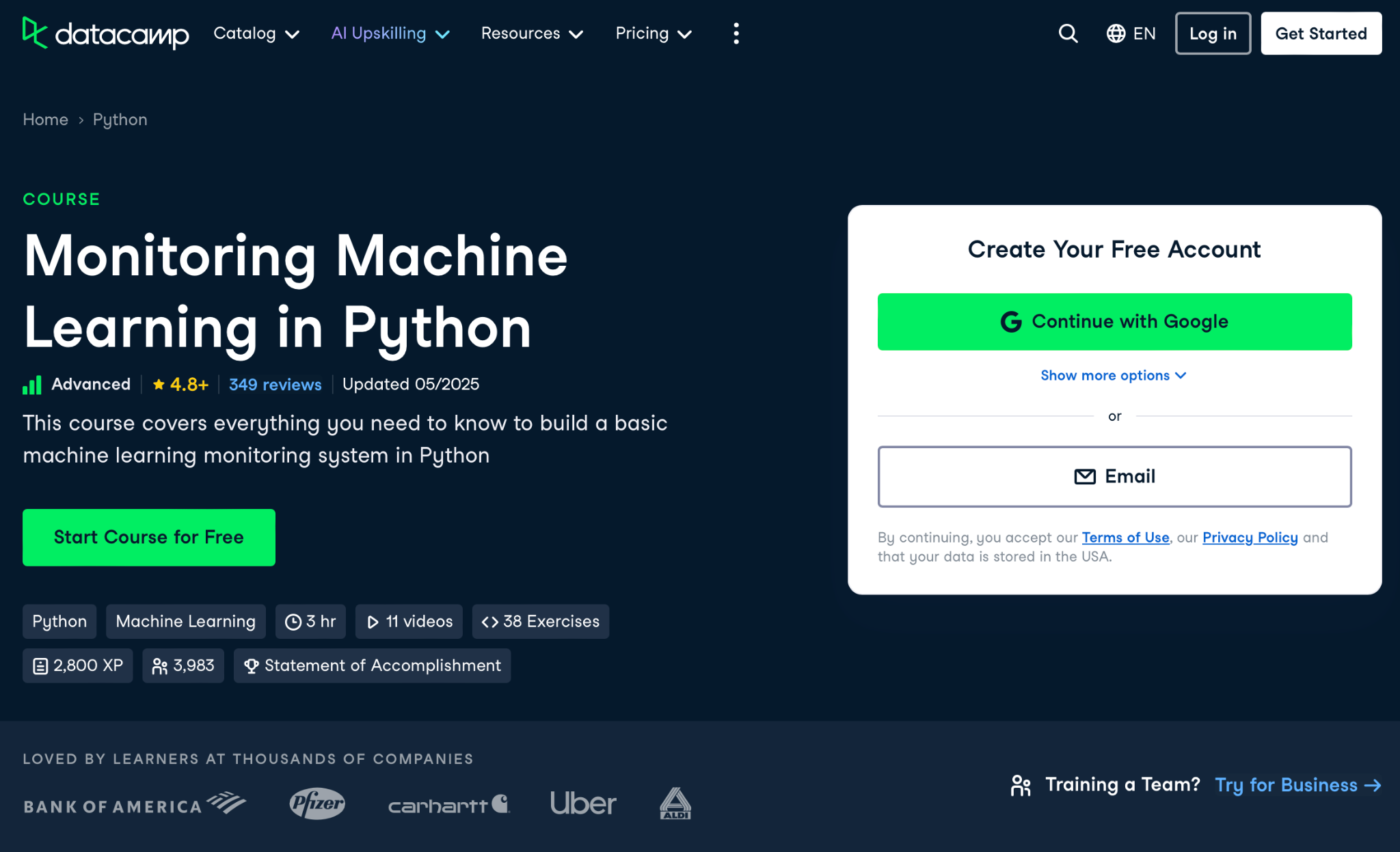
Du kannst deine Qualifikation zusätzlich mit Anbieterzertifikaten stärken, z. B.:
Hiring Manager gewichten Portfolio und tatsächlichen Impact jedoch höher als ein Badge.
Daniel Apke, Gründer von Land Portal, ermutigt angehende KI-Profis, neben der formalen Ausbildung vor allem praktische Skills aufzubauen.
Er ist überzeugt, dass Arbeitgeber Bewerbende schätzen, die über Projekte echte Problemlösungskompetenz zeigen – unabhängig davon, wie sie die Skills erworben haben.
Apke berichtet:
Ein Abschluss oder eine Zertifizierung öffnet Türen, aber ein starkes Portfolio bringt dich hindurch. Projekte zu bauen, die reale Probleme lösen, zeigt Arbeitgebern, dass du Gelerntes anwenden und vom ersten Tag an Wert schaffen kannst.
Daniel Apke, Founder of Land Portal
Top-DataCamp-Kurse
Lernpfad
Lernpfad
Lernpfad