
Kurs
İş Dünyası için AI'ya Giriş
2 sa
127.2K
OpenAI, dünyanın en zeki ve en uyumlu modeli olarak nitelendirdiği GPT-6 Astra'yı duyurdu.
Astra, Anthropic'in Claude Fable 5.1’inin (1 Eylül 2026'da yayımlandı) ve Claude Opus 5’in kodlama ve ajan temelli işler için referans noktaları olduğu kalabalık bir sınır segmentine iniyor.
Dikkat çeken iddialar iddialı.
Astra, FrontierMath Seviye 4'te %97,6 ile doygunluğa ulaşıyor, OpenAI'nin sağlayıcı adaptör kıskacı altında ARC-AGI-3'te %99,9 alıyor ve ExploitBench'te %100’e ulaşıyor. Ayrıca bilgisayar ve tarayıcı kullanımında yeni bir sınır çiziyor; OSWorld 2.0'da %72,6 skorla, selefi GPT-5.6 Sol’a kıyasla görev başına yaklaşık %47 daha az sürede tamamlıyor.
Hem ARC-AGI-3 hem de FrontierMath Seviye 4, yapay zekâ yeteneğinin önünde kalmak için özellikle tasarlandı; bu nedenle doygunluğa ulaşmak, standart bir lider tablosunu geçmekten niteliksel olarak farklı bir sinyal veriyor.
Bu yazıda, GPT-6 Astra'daki tüm yenilikleri ele alacak, yeni özelliklere bakacak, kıyaslamaları inceleyecek ve bazı kullanım örneklerine göz atacağım.
Modeli iş başında görmek istiyorsanız, GPT-6 Astra API eğitimimizi takip edin ve deneyebileceğiniz bazı GPT-6 Astra projelerine göz atın. Rakiplere karşı nasıl durduğunu görmek için de GPT-6 Astra ve Claude Fable 5.1 karşılaştırmamızı inceleyin. Ayrıca Claude öğrenme rehberimizi ve yeni Jev System One modeli hakkındaki haberimizi ile Jev vs GPT-6 Astra karşılaştırmamızı da okumanızı öneririm.
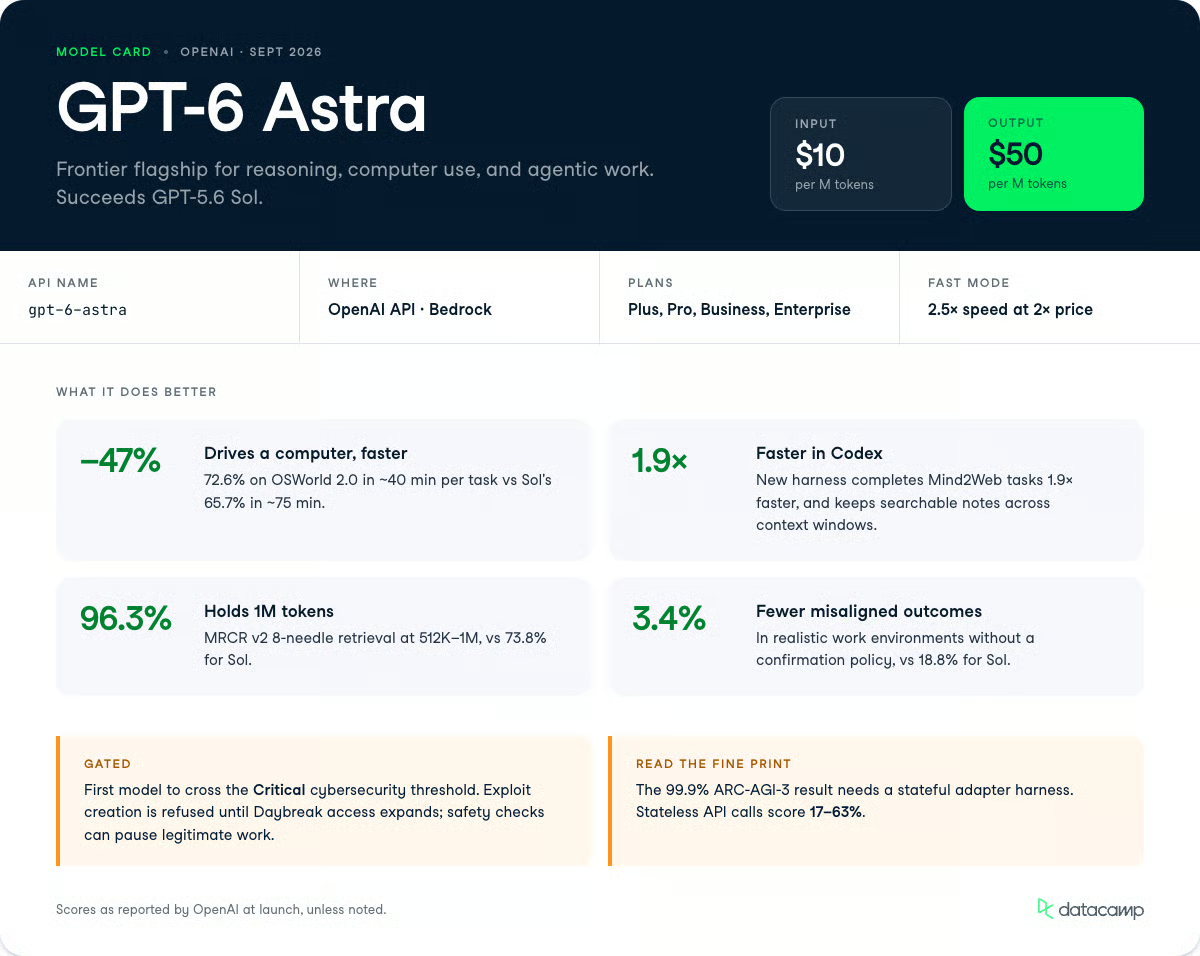
GPT-6 Astra, GPT-5.6 Sol’un yerini alan, akıl yürütme, bilgisayar kullanımı ve ajan temelli işler için OpenAI’nin yeni sınır amiral gemisi. GPT-6.1 Sol artık fiyat/çıktı açısından onunla rekabet ediyor.
OpenAI, modeli üç alan etrafında konumlandırıyor:
Uygulayıcılar için en kullanışlı kıyas başlığı OSWorld 2.0; burada Astra, GPT-5.6 Sol’un yaklaşık 75 dakikasına karşılık görev başına yaklaşık 40 dakikada %72,6 alıyor.
Daha yüksek doğruluk ile daha düşük takvim süresi birleşimi, bir ajanın başında beklemek zorunda kalmanız ile ona bir işi gönül rahatlığıyla devredebilmeniz arasındaki farktır.
Astra, OpenAI'nin Mind2Web kıyasında mevcut GPT-5.6 Sol deneyimine göre 1,9 kat daha hızlı görev tamamlama sağladığını belirttiği güncellenmiş bir Codex kıskacıyla birlikte geliyor.
OpenAI API’sinde ve Amazon Bedrock üzerinden gpt-6-astra olarak mevcut; ayrıca Pro, Business ve Enterprise planları için GPT-6 Astra Pro katmanı bulunuyor.
OpenAI’nin en yeni alt seviye modelleriyle de ilgileniyorsanız, GPT-6 Sol ve Luna rehberimize göz atın.
Astra’daki değişiklikler, ajansal yürütme etrafında toplanıyor: bilgisayar kullanımı, bitmiş profesyonel çıktılar üretme, uzun kodlama oturumları boyunca bağlamı koruma ve yetkili sınırlar içinde kalma.
Öne çıkan kabiliyetler şunlar.
Astra bir bilgisayarı doğrudan çalıştırabiliyor; genellikle bir öğleden sonrayı yiyip bitiren o sıkıcı çok adımlı işleri üstleniyor.
İyi örneklerden bazıları şunlardır:
OSWorld 2.0 gecikme simülasyonlarında, Astra yaklaşık görev başına 40 dakikada %72,6’ya ulaşıyor; GPT-5.6 Sol ise yaklaşık 75 dakikada %65,7; bu da görev başına sürede %47’lik bir azalma.
OSWorld 2.0, bir modelin gerçekten bir bilgisayarı çalıştırıp çalıştıramadığını ölçer; örneğin gerçek arayüzlerde gezinme, tıklama, yazma ve bir insan gibi çok adımlı görevleri tamamlama.
Görev başına sürede %47’lik azalma, doğruluk artışı kadar önemlidir; çünkü ajan maliyeti gerçek zamanla ölçeklenir. 75 yerine 40 dakikada bitiren bir model, yalnızca daha hızlı değil, aynı iş yükünde yaklaşık yarı fiyatına çalışır.
Öyle olmakla birlikte, bağımsız ARC Prize testleri, Astra'nın öne çıkan bilgisayar kullanımı ve akıl yürütme rakamlarının kıskaca yüksek derecede bağımlı olduğunu gösteriyor.
ARC-AGI-3’te, standart durumsuz kıskacın skorları akıl yürütme seviyesine bağlı olarak yaklaşık %17 ile %63 arasında değişirken, akıl yürütme durumunu koruyan sağlayıcı adaptör kıskacı pazarlanan ~%99,9’a ulaştı.
Modeli durumsuz çağırırsanız, lansman grafiklerindekinden daha düşük skorlar bekleyin.
Astra, genel ilk taslaklar yerine sizin şablonlarınızı takip eden, cilalı profesyonel çıktılar vermek üzere eğitildi.
Sizin yazı ve görsel stilinize uyan dokümanlar, sunumlar, e-tablolar ve analizler oluşturur; çıktıya yalnızca gerekli bağlamı taşır, bildiği her şeyi doldurmaz.
OpenAI’nin kendi demosunda Astra, birkaç şablon slayttan kurgusal bir model hakkında bir slayt destesi oluşturuyor; ton ve yerleşimi tutarlı tutuyor.
Bir kurumsal şablona uydurmak için bir LLM’in markdown dökümünü bir saat boyunca yeniden biçimlendirmiş herkes için, o şablona bağlılık test etmek isteyeceğim ilk şey olurdu.
ChatGPT’deki Sites ile Astra, doğrudan bir istemden web siteleri, web uygulamaları ve oyunlar oluşturup barındırıp paylaşabilir; önceki modellere göre görsel yargıyı daha güçlü uygular.
Astra, ne zaman size soru soracağına ve ne zaman makul varsayımlarla ilerleyeceğine kendisi karar verir.
Yönergeler yorum payı bıraktığında, rutin boşlukları kendi başına doldurur ve yalnızca cevabın sonucu değiştirebileceği durumlarda odaklı sorular sorar.
OpenAI’nin yan yana karşılaştırmasında, GPT-5.6 Sol 13 dakika 15 saniyede otonom şekilde kişisel bir kariyer web sitesi kurarken, Astra 20 saniye sonra kullanıcının hangi kariyere geçtiğini sormak için durakladı.
Codex’te Astra, yanıtınızdan bağımsız olarak çalışmayı sürdürebilir; yalnızca sonuç açısından belirleyici kararlar için bekleyerek asenkron soru sorabilir.
Astra ayrıca görev değiştikçe yönünü korur.
Önceki modeller bazen görev ortasında gelen yönlendirme mesajını yepyeni bir hedef gibi ele alır ve orijinal kısıtları kaybederdi; Astra yeni gereksinimleri içselleştirir ve daha geniş işi bırakmadan yan soruları yanıtlar.
GPT-6 Astra, bağlam penceresi dolduğunda Codex’in bağlamı koruyup almasına yönelik yeni bir yol getiriyor; tekrar tekrar özetleme yerine aranabilir notlar kullanıyor.
Tarihsel olarak, modeller uzun hata ayıklama oturumlarını veya büyük yeniden düzenlemeleri tek bir özete sıkıştırmak için sıkıştırma kullanırdı; bu da bir düzeltmenin neden başarısız olduğuna veya bir bileşenin nasıl davrandığına dair ayrıntıları düşürebilirdi.
Astra ile Codex, pencereler arasında not tutar ve önceki pencereleri aranabilir bırakır; böylece notta yakalanmasa bile önceki bir mesajdan bir gereksinimi veya test sonucunu bulabilir.
Bu deneysel özelliği Codex config.toml’unuzda etkinleştirirsiniz; OpenAI bunun önümüzdeki haftalarda Astra için varsayılan olacağını söylüyor.
Astra, OpenAI’nin Hazırlıklılık Çerçevesi altında siber güvenlikte Kritik eşiğe ulaşıyor; bu hem en güçlü yeni kabiliyeti hem de en çok kısıtlananı.
Başlangıçta, güvenli kod inceleme ve yamalamada yardımcı olacak; ancak kavram kanıtı istismarları oluşturma gibi daha ileri görevleri reddedecek.
OpenAI, daha az kısıtlayıcı korumalarla Daybreak programı aracılığıyla erişimi genişletmeyi planlıyor; zafiyet ve kavram kanıtı doğrulaması, kötü amaçlı yazılım analizi ve tespit mühendisliğini etkinleştiriyor.
Artan risk nedeniyle, ek güvenlik kontrolleri meşru çalışmayı duraklatabilir veya durdurabilir: ChatGPT veya Codex’te bir eylemi gözden geçirmeniz istenebilir; API’de ise görev doğrudan durabilir.
Astra, OpenAI'nin bildirdiği değerlendirmelerde bilgisayar kullanımı, matematik, kodlama ve siber güvenlikte yeni zirveler belirliyor; çoğu zaman GPT-5.6 Sol veya Claude modellere göre daha az çıkış belirteci kullanırken.
Aşağıdaki skorlar OpenAI’nin lansman tablolarından geliyor; bu nedenle tedarikçi bildirimi olarak değerlendirin ve geçerli olduğu yerlerde kıskaca ilişkin çekinceleri not edin.
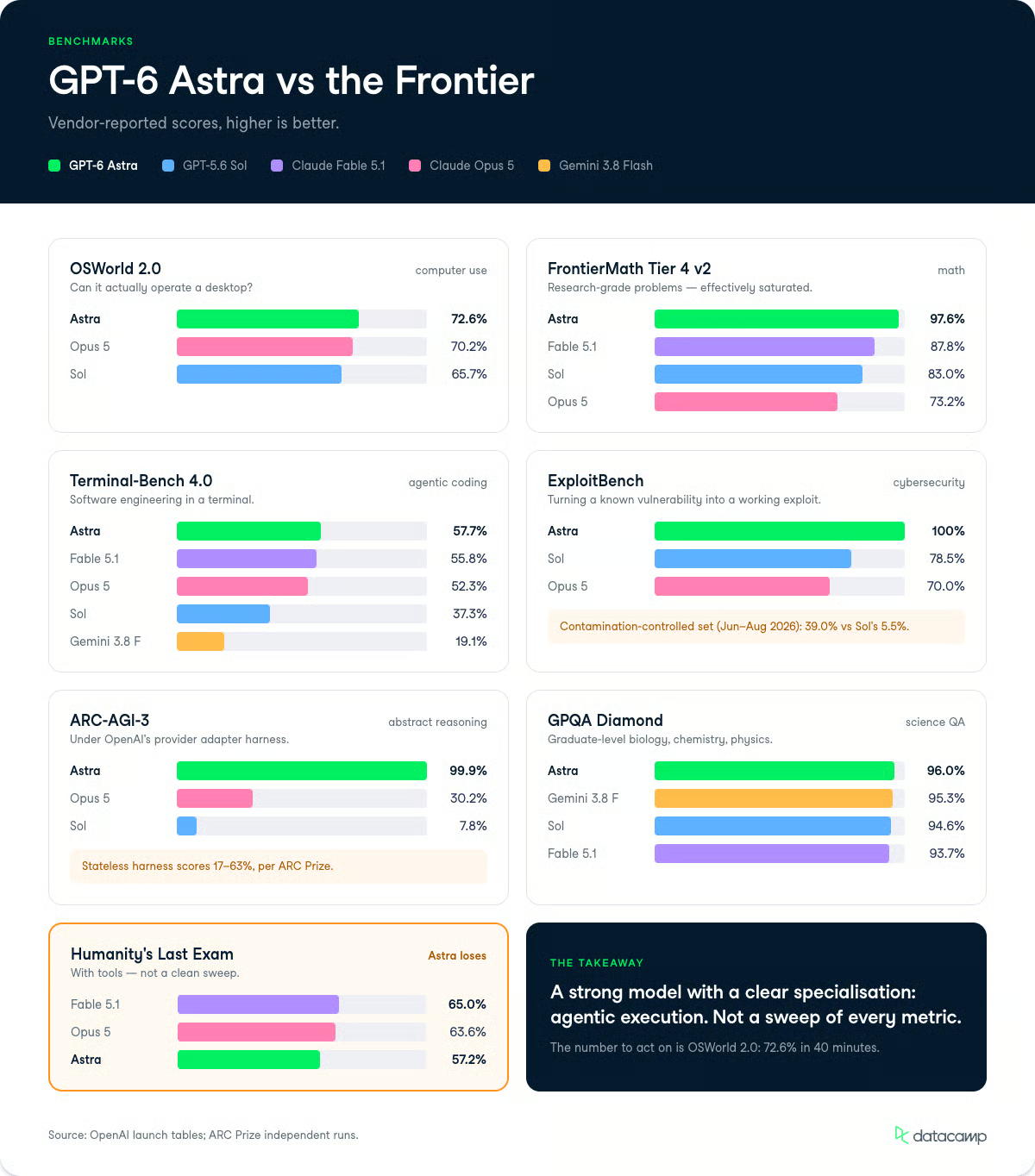
Astra, OSWorld 2.0 çevrimdışı setinde %72,6 alıyor; GPT-5.6 Sol %65,7 ve Claude Opus 5 %70,2.
OSWorld, bir ajanın uygulamalarda gezinme ve dosyaları yönetme gibi gerçek masaüstü görevlerini tamamlayıp tamamlayamayacağını ölçer; bu nedenle "bu şey gerçekten benim için bilgisayar kullanabilir mi" sorusuna en yakın vekildir.
Araçsız olarak bir ekrandaki UI öğelerini temellendirmeyi test eden ScreenSpot-Pro’da Astra, GPT-5.6 Sol’un %76,9’una ve Claude Fable 5’in %87,3’üne karşı %92,7’ye ulaşıyor.
Agents' Last Exam’de %59,3’e ulaşıyor; Claude Opus 5’in %55,5’inin ve GPT-5.6 Sol’un %53,6’sının önünde; üstelik Opus 5’e kıyasla yaklaşık %65 daha az çıkış belirteci kullanarak.
Astra, araştırma düzeyi bir matematik kıyasının en zorlu seviyesi olan FrontierMath Seviye 4 v2’de %97,6 alıyor; Claude Fable 5.1 ve Fable 5’in her biri %87,8, Claude Opus 5 ise %73,2.
OpenAI bunu doygunluk olarak tanımlıyor ve tavan göz önüne alındığında bu makul bir yorum.
GPQA Diamond’da, biyoloji, kimya ve fizikte lisansüstü düzeyde sorulardan oluşan bir sette Astra, Gemini 3.8 Flash’ın %95,3’üne ve GPT-5.6 Sol’un %94,6’sına karşı %96,0’a ulaşıyor.
Yine de tüm metriklerde zirvede değil. Araçlarla Humanity's Last Exam’de Astra %57,2 alıyor; Claude Fable 5.1’in %65,0’ının ve Opus 5’in %63,6’sının gerisinde; yani her akıl yürütme değerlendirmesinde üstün değil.
Terminal-Bench 4.0’da, yazılım mühendisliği, sistem yapılandırması ve terminalde veri analizini test eden bu kıyasta Astra %57,7 alıyor; GPT-5.6 Sol %37,3, Claude Fable 5.1 %55,8 ve Gemini 3.8 Flash %19,1.
Bu, Gemini Flash’a karşı geniş bir fark ve Fable 5.1’e karşı mütevazı bir üstünlük.
Kodlama tablosu başka yerlerde daha yakın.
FrontierCode 1.1 Main’de Astra %53,3 alıyor; Fable 5 %53,5 ve Opus 5 %53,4; fiilen beraberlik. DeepSWE v1.1’de %74,1’e ulaşıyor; Gemini 3.8 Flash %73,8 ve Fable 5 %69,9.
Terra vs Claude Sonnet 5 karşılaştırmamızda GPT-5.6 Terra’nın Terminal-Bench 2.1’de %87,4 aldığına bakmıştık; bu farklı bir sürüm, dolayısıyla sürümler arası kıyaslar bire bir karşılaştırma değil.
Astra, ExploitBench’te %100 alıyor; GPT-5.6 Sol %78,5 ve Claude Opus 5 %70; ExploitGym’de ise %42,4; Sol %30,3.
ExploitBench, bir modelin bilinen bir zafiyeti çalışan bir istismara dönüştürüp dönüştüremediğini ölçer; bu nedenle kusursuz skor, OpenAI’nin bu kabiliyeti lansmanda kısıtlamasının tam sebebidir.
Bulaşmanın kontrol edildiği ExploitBench’te (Haziran-Ağustos 2026), önceki üç aydaki zafiyetlerden derlenen sette Astra %39,0 alırken Sol %5,5’te kalıyor.
Kaynak kodu olmadan ikili dosyaları tersine mühendisliği ölçen SRE-Bench’te Astra, Sol’un %55,9’una karşı tek denemede %88,0 çözüyor.
Bağımsız laboratuvar Irregular, Astra’nın FrontierCyber zorluklarının 226’sından 86’sını, Sol’un ise 34’ünü çözdüğünü; bunlar arasında tarayıcılarda ve bir bulut veritabanında sıfır gün bulguları bulunduğunu bildirdi.
Astra, OpenAI’nin sağlayıcı adaptör kıskacı altında ARC-AGI-3’te %99,9 alıyor; GPT-5.6 Sol %7,8 ve Claude Opus 5 %30,2.
Bu rakamı dikkatle okumak gerekir: ARC Prize’ın bağımsız çalıştırmalarında, standart durumsuz kıskacın skorları akıl yürütme seviyesine göre yaklaşık %17 ila %63; ~%99,9 için durum bilgili adaptör kıskacı ve on binlerce dolara mal olan kapsamlı bir çalıştırma gerekiyor.
Uzun bağlamda, Astra OpenAI MRCR v2 8-needle’da 256K-512K bandında %100, 512K-1M bandında %96,3 alıyor; GPT-5.6 Sol ise sırasıyla %91,5 ve %73,8.
1M belirteçte bu alma güvenilirliği, belge ağırlıklı boru hatları için Sol’a kıyasla gerçek bir sıçrama.
Astra, OpenAI’nin dahili bilgisayar kullanımı güvenlik kıyasında (düşük daha iyi) %2,4 alıyor; GPT-5.6 Sol %22,0, Fable 5.1 %9,5 ve Opus 5 %11,5.
Gerçekçi iş ortamlarında, onay politikası olmadan genel uyumsuz-sonuç oranı %3,4; Sol %18,8 ve GPT-5.6 Terra %13,5.
OpenAI’nin işaret ettiği tek gerileme, düşünce zinciri izlenebilirliği.
Astra, Sol’a kıyasla daha kısa, daha az gevezelik eden akıl yürütme üretir ve CoT’unu çok daha iyi kontrol eder; 750 ile 1.250 belirteç arasında CoT-Control’de kısıtlamalara %60,9 uydu; Sol %16,1.
Birleşik Krallık AISI, düşmanca istemler altında Astra’nın izlemeyi atlatabildiğini buldu; OpenAI bu düşüşü yeterince ciddiye alıyor ve bir araştırma önceliği olarak belirtiyor.
İşte Astra'nın bildirilen skorlarının hedeflediği rakiplerle bazı kilit kıyaslarda nasıl hizalandığı.
| Kıyas | GPT-6 Astra | GPT-5.6 Sol | Claude Fable 5.1 | Claude Opus 5 | Gemini 3.8 Flash |
|---|---|---|---|---|---|
| OSWorld 2.0 | %72,6 | %65,7 | - | %70,2 | - |
| FrontierMath Seviye 4 v2 | %97,6 | %83,0 | %87,8 | %73,2 | - |
| GPQA Diamond | %96,0 | %94,6 | %93,7 | %93,7 | %95,3 |
| Terminal-Bench 4.0 | %57,7 | %37,3 | %55,8 | %52,3 | %19,1 |
| ExploitBench | %100,0 | %78,5 | - | %70,0 | - |
| ARC-AGI-3 (adaptör kıskacı) | %99,9 | %7,8 | - | %30,2 | - |
GPT-6 Astra önce sınırlı sayıdaki kuruluşa sunuluyor; ardından önümüzdeki günlerde tüm ChatGPT Plus, Pro, Business ve Enterprise kullanıcılarına; ayrıca OpenAI API’si ve AWS üzerinden geliyor.
Kurumsal yöneticiler bunu çalışma alanı bazında etkinleştirebilir; lansmanda varsayılan olarak kapalıdır. Pro, Business ve Enterprise planları GPT-6 Astra Pro’ya da erişir.
Geliştiriciler için model, OpenAI API’sinde ve Amazon Bedrock’ta gpt-6-astra olarak mevcuttur.
Standart API fiyatlandırması şöyledir:
Bağlam için, bu fiyatlar önceki haberimizdeki GPT-5.6 Terra’nın 2$/12$ oranlarının ve Claude Opus 5’in 5$/25$ oranlarının üzerindedir.
Astra, toplu metin işçisi değil; sınır düzeyi akıl yürütme ve otomasyon modeli olarak fiyatlandırılmıştır.
Uygun API müşterileri için Sıfır Veri Saklama desteği sunar; kullanım mevcut abonelik haklarına dahildir ve ek kredi satın alma seçeneği mevcuttur.
Sosyal medya akışlarım GPT-6 Astra kullanım örnekleriyle kaynıyor. Henüz bizzat deneyememiş olsam da burada vurgulamaya değer ilginç örnekler var:
Birçok kişinin Blender’da GPT-6 Astra’yı kullanarak son derece ayrıntılı ve gerçekçi 3B modeller oluşturduğunu gördüm.
Aşağıdaki klipte, X kullanıcısı Tom Krcha, GPT-6’ya ‘bir ev görüntüsü verip tüm ayrıntılarıyla—oyuncaklar, cihazlar ve mobilyalar dahil—3B olarak oluşturmasını istedi. Bu, Blender’da geometrisi manuel olarak ayarlanabilir ve cihazda yerel olarak render edilen bir “oyun” olarak 60fps çalıştırılabilir tam bir 3B model rekonstrüksiyonudur.
Öne Çıkan DataCamp Kursları
Kurs
Kurs
Program
blog
Abid Ali Awan
14 dk.
blog
Dario Radečić
15 dk.
Eğitim
Kurtis Pykes
8 dk.
Eğitim
Adel Nehme