

{count, plural, other {学习路径}}
软件工程中的 AI
{hours} 小时
Anthropic 发布了 Claude Opus 4.7,这是其旗舰模型序列的最新迭代。最大亮点是自主性:Anthropic 将其定位为一款可在无需密切监督的情况下,处理最难、持续时间最长的编码与智能体工作负载的模型。
本次发布也让我们看到 Opus 4.7 之上还有天花板。Anthropic 的内部模型 Mythos Preview 在多个基准上分数更高,但在 Anthropic 测试网络安全防护期间,尚未面向大众开放。对非 Anthropic 内部研究人员而言,Opus 4.7 目前就是可用性能的上限。
本文将带您了解 Opus 4.7 的实际新变化,深入解读基准测试结果,并分享可自行上手的测试。您也可以查看我们针对近期竞品模型的指南,例如 Meta 的 Muse Spark、OpenAI 的 GPT-5.5,以及 Google 的 Gemini 3.1。
更新:2026 年 5 月 28 日,Anthropic 发布了后续模型。请在我们的 Claude Opus 4.8 指南中了解详情。
Claude Opus 4.7 是 Anthropic 最新的旗舰大语言模型,位于 Claude 家族中 Sonnet 与 Haiku 之上。它承接Claude Opus 4.6,面向最严苛的任务场景,如复杂的智能体工作流与需要在长会话中保持稳定发挥的多步推理任务。
与 Opus 4.6 相比,4.7 版本重点在三个方面:
我们前文提到并另有常见问题解答的 Anthropic 内部模型 Mythos Preview 在多个基准上领先,但并未广泛开放。Opus 4.7 本质上是其“兄弟模型”,在训练时有意降低了网络安全相关能力。
Anthropic 表示,Opus 4.7 在多个能力领域有显著提升。
与早期模型相比,Opus 4.7 更严格地遵循指令。这对依赖可靠性的各类工作流程当然有益,但也可能带来意想不到的结果:Anthropic 提醒用户需要重新调整提示与控制逻辑,因为过去模型会跳过或宽松理解的指令,现在将被更为字面地执行。
高分辨率视觉能力得到提升,现在可支持最高 3.75 百万像素的图像,较旧版模型提升三倍以上。依赖可读性与精确度(有时精确到像素级)的电脑操作智能体与数据抽取流程,将可从更细腻的细节中大幅获益。
Opus 4.7 更擅长基于文件系统的记忆模式,也就是模型在工作时将笔记写入文件,并在未来的运行中回读这些内容。
Claude Code 是最典型的场景:在项目根目录放置一份CLAUDE.md 文件,Claude 会在会话开始时读取、在决策发生时更新,并在您回到工作时引用。
这里的“更好”是指更懂得哪些内容值得写下,以及在后续轮次中更可靠地回忆。Anthropic 表示,这使新任务“需要更少的前置上下文”——如果您曾像我们一样第五次向模型重新解释项目约定,您会深有体会。
因此,真正的要点是:如果您使用 Opus 4.7 进行多会话工作,请让它做笔记。它在这方面会比 Opus 4.6 做得更好,尽管我们也认为 4.6 的笔记已经相当不错。
Anthropic 告诉我们,Claude Opus 4.7 在以下领域有显著提升。
我们据此设计了一些测试,来检验这些说法。
为测试 Opus 4.7 的指令遵循能力,我们使用了以下详细提示进行压力测试。它包含 12 条可在末尾核查的明确约束。
You are writing a short briefing document for a new employee at a mid-sized accounting firm. Follow every instruction below.
Write a briefing about the firm's approach to client onboarding. The briefing must meet all of the following requirements:

The briefing must be exactly 4 paragraphs long.
-The second paragraph must begin with the word "Historically".
-Each paragraph must contain between 3 and 5 sentences. No paragraph may have fewer than 3 or more than 5.
-Do not use the words "streamline", "leverage", "robust", or "synergy" anywhere in the document.
-Include exactly two direct quotes from fictional senior partners. Attribute each quote to a named partner. Do not include any other quoted material.
-One of the partners quoted must have a surname that starts with the letter M.
-End the document with a single-sentence closing line on its own, separated from the fourth paragraph by a blank line. This closing line does not count toward the 4-paragraph requirement.
-The closing line must be a question.
-Use British English spelling throughout (e.g., "organisation", "colour", "realise").
-Do not use any bullet points, numbered lists, or headings.
-Mention a specific fictional client name exactly once, and italicise it using markdown asterisks.
-The total word count of the briefing, including the closing line, must be between 280 and 320 words. Do not include any preamble, explanation, or commentary before or after the briefing. Output only the briefing itself.
以下为结果:
Welcome to Harding & Whitcombe, where client onboarding is treated as the foundation of every successful long-term engagement. Our approach centres on understanding the organisation behind the numbers before any technical work begins, which means the first two weeks are devoted almost entirely to listening. New clients are assigned a dedicated onboarding lead who coordinates introductions across tax, audit, and advisory teams. This structure ensures that every colleague touching the account shares a consistent understanding of the client's priorities and sensitivities.

Historically, the firm operated a more transactional model, with onboarding handled piecemeal by whichever partner had signed the engagement letter. That changed in 2014, when senior leadership recognised that our competitors were winning work on relationships rather than fees alone. As Helena Marchbanks, our managing partner, often reminds new hires, "A client who feels understood in week one rarely questions the invoice in month six." The revised approach has measurably improved retention and referral rates across every service line.

In practical terms, you will be expected to attend the initial discovery meeting for any client you support, even in a purely observational capacity. You should familiarise yourself with the client's sector, recent filings, and any public commentary from their leadership before that first conversation. When we onboarded Thornbury Mills Ltd last spring, the junior associate who had read three years of their annual reports was the one who spotted the inventory anomaly that shaped our entire advisory brief. Preparation of that depth is the standard we expect, not the exception.

You will also notice that we emphasise candour from the outset, particularly around scope and realistic timelines. "We would rather lose a pitch than promise something we cannot deliver," says Rupert Castellane, head of our advisory practice, and that philosophy colours every onboarding conversation. Take the time to ask questions, observe the senior partners in action, and recognise that trust accumulates slowly but pays compounding dividends.

Are you ready to meet your first client?
现在到评分环节。以下是我们的量表:
|
# |
约束 |
检查方式 |
|
1 |
恰好 4 个段落(另加收尾一行) |
统计段落分隔 |
|
2 |
第 2 段以 "Historically" 开头 |
查看首词 |
|
3 |
每段 3–5 句 |
统计每段句子数 |
|
4 |
无禁用词 |
逐一 Ctrl+F |
|
5 |
恰好 2 条引语,均注明来源,无其他引述 |
统计引号 |
|
6 |
有一位合伙人的姓以 M 开头 |
检查署名 |
|
7 |
收尾行以空行与第 4 段分隔 |
视觉检查 |
|
8 |
收尾行为问句 |
以 "?" 结尾 |
|
9 |
英式拼写 |
Ctrl+F 搜 "organization"、"color"、"realize" 等 |
|
10 |
无项目符号、编号、标题 |
视觉检查 |
|
11 |
虚构客户名仅出现一次,并使用斜体 |
Ctrl+F 搜星号 |
|
12 |
字数 280–320 |
粘贴至字数统计工具 |
我们为您省去逐项核查的功夫。该模型的得分为 11/12。
它几乎完美,但最终在字数上略微超限(325 词,上限为 320 词)。
我们用相同测试检验了 Claude Sonnet 4.6,也同样达成 11/12,且失误点相同(字数)。不过我们仍认为 Opus 4.7 是改进,因为 Sonnet 4.6 超限幅度很大(达 400 词)。
第二个测试中,我们给 Opus 4.7 输入了一张难以辨认的图像:
You are analysing a degraded image that may be blurry, low-resolution,
or otherwise difficult to read. Your job is to extract as much accurate
information as possible.

Complete all of the following tasks. Do not include any preamble,
explanation, or commentary. Output only the requested deliverable.

1. Describe what type of document or visualisation this appears to be
   (e.g. bar chart, dashboard, table, report page). State your confidence
   as High, Medium, or Low.

2. List every number you can make out, however partial. For each one,
   state what you believe it refers to and your confidence (High, Medium,
   or Low). If a number is ambiguous between two readings (e.g. could be
   138 or 188), state both possibilities.

3. List every piece of text you can make out — titles, labels, legends,
   footnotes — quoted as precisely as possible. Where a word or character
   is unclear, use [?] to mark the uncertain character, e.g. "Re[?]enue".

4. Describe the layout: how many distinct sections or panels are visible,
   and what does each appear to contain?

5. State what you believe the overall subject or story of the image is,
   in one sentence of no more than 25 words. Flag if your confidence is
   Low.

6. List anything you attempted to read but could not make out at all.
配合上述指令,我们向 Opus 4.7 提供了 Playfair 1786 年苏格兰贸易图的一张劣化截图,来源于我们关于数据可视化示例的文章。
我们之所以能验证输出,是因为我们有一份更高分辨率的维基百科版本。以下是 Opus 4.7 所看到的图像:
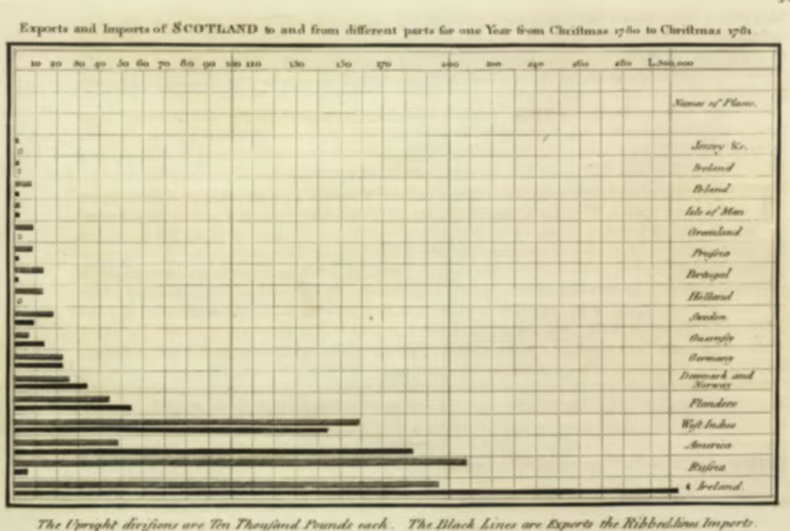
以下为 Opus 4.7 的读图结果:
Type: Horizontal bar chart, antique engraving. Confidence: High.

Numbers: X-axis ticks: 10, 20, 30…110, 130, 150, 170, 200, 220, 240, 260, 280, L.300,000 (High, but 130/220 uncertain).

Years "1780" and "1781" in title (High). "Ten Thousand Pounds" per division (High).

Title: "Exports and Imports of SCOTLAND to and from different parts for one Year from Christmas 1780 to Christmas 1781"

Header: "Names of Places"

Places: Jersey &c., Ireland, [?]oland, Isle of Man, Gr[oe]nland, Prussia, Portugal, Holland, Sweden, Guernsey, Germany, Denmark and Norway, Flanders, West Indies, America, Russia, Ireland (duplicate?)

Footnote: "The Upright divisions are Ten Thousand Pounds each. The Black Lines are Exports the Ribbed lines Imports."

Layout: Single panel — title, plot area with ~16 paired bars, right-hand place-name column, footnote below.

Subject: A 1780–81 trade chart showing Scotland's exports and imports by partner. Confidence: High.

Couldn't read: Top-right corner mark; exact bar values; first letter of "[?]oland"; whether bottom "Ireland" is a duplicate.
我们知道这个测试确实棘手,因为 Playfair 图的 x 轴确实在中途改变了计数方式(到 110 每 10 递增,之后是奇数十 130/150/170,再之后是偶数十 200/220/240/260/280)。但 Opus 4.7 在第一次就正确读取了这个“反常”的坐标轴。
有一点仍让我们觉得有趣:我们赞同 AI 展示不确定性,但“[?]oland”其实应该自信地读为“Poland”,而“Gr[oe]nland”应为“Greenland”。尽管这项测试没有正式评分标准,我们可以公允地给它 9/10。
Opus 4.7 在涵盖编码、推理、工具使用、电脑操作与视觉推理的 14 个基准上接受了评估。下表展示了与 Opus 4.6、GPT 5.4、Gemini 3.1 Pro,以及尚未公开发布的 Mythos Preview 的完整对比。
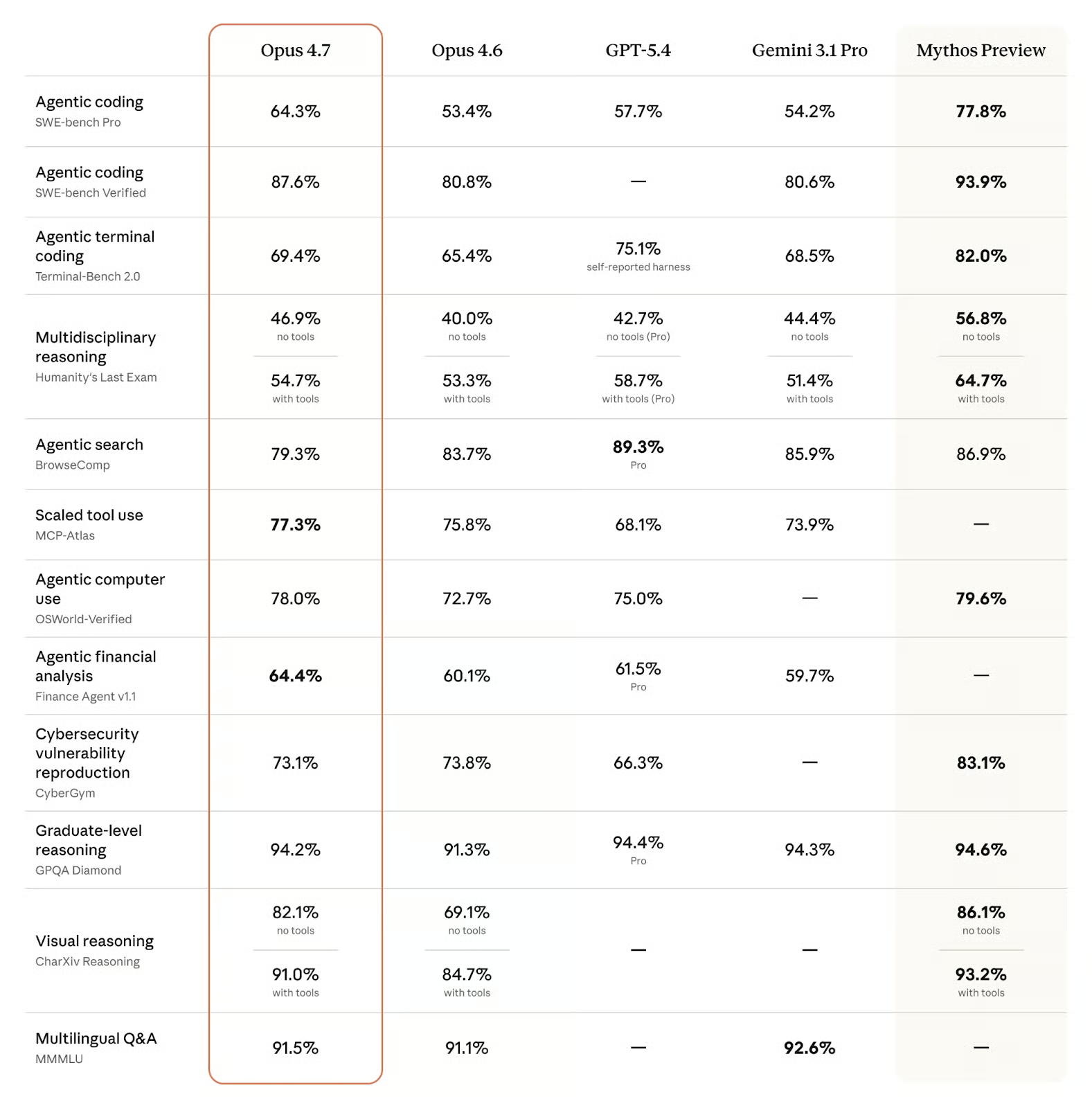
在 SWE-bench Pro 上,Opus 4.7 得分 64.3%,领先于 GPT-5.4 的 57.7%、Gemini 3.1 Pro 的 54.2%,以及 Opus 4.6 的 53.4%。在 SWE-bench Verified 上,Opus 4.7 达到 87.6%,高于 Gemini 3.1 Pro 的 80.6% 与 Opus 4.6 的 80.8%。在此次对比中,GPT-5.4 未公布 SWE-bench Verified 分数。
SWE-bench 测试模型在开源 Python 仓库中解决真实 GitHub 问题的能力。Pro 是更难的变体,包含更复杂的问题。Opus 4.7 在 SWE-bench Pro 上较 4.6 提升 10.9 个百分点,是本次发布中(就百分点而言)最大的单项进步,使其在该任务上明显领先两大竞品。
仅有 Anthropic 内部的 Mythos Preview 得分更高:SWE-bench Pro 77.8%、SWE-bench Verified 93.9%,说明在 Opus 4.7 之上仍有空间。不过,Mythos 尚未广泛可用,因此在生产使用上,Opus 4.7 仍是当前上限。
在终端智能体编码首选基准 Terminal-Bench 2.0 上,结果颇为有趣。Opus 4.7 小幅领先其前代(69.4% vs. 65.4%),并超越得分 68.5% 的 Gemini 3.1 Pro。
不过,在这一项上它仍不及 GPT-5.4(75.1%)。比较时应注意 GPT-5.4 的自报注释,但对 Anthropic 而言,最新(已发布)的旗舰未能在智能体软件开发的核心基准上登顶,可能多少有些遗憾。
Humanity's Last Exam 汇集了覆盖理科、数学与人文学科的研究生级问题,旨在对当前前沿模型构成挑战。Opus 4.7 在无工具版本(仅测试原生推理,不使用外部检索)上领先。在使用工具的版本中,GPT-5.4(58.7%)领先于 Opus 4.7(54.7%),这是 Opus 4.7 未能领先的最明显领域。
研究生级推理通常以 GPQA-Diamond 衡量,如今该基准基本“卷满”:与其他前沿模型一样,此次对比的四个模型分数均超过 90%,几乎打成平手。
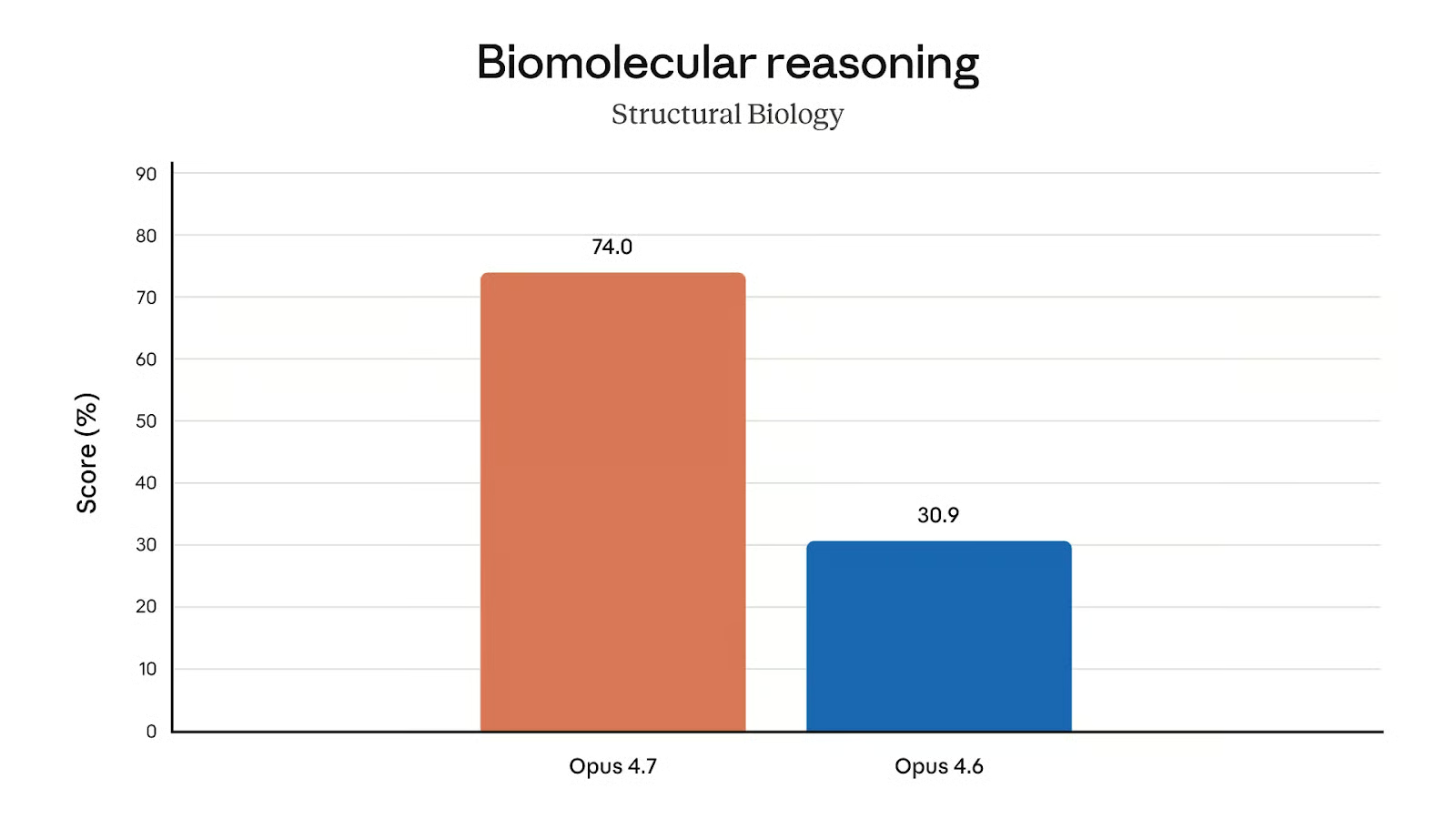
更有意思的是面向生物学的基准(GPQA-Diamond 也包含该领域)。虽然无法与竞品直接对比,但 Opus 4.6(30.9%)到 Opus 4.7(74.0%)的跃升确实值得关注!
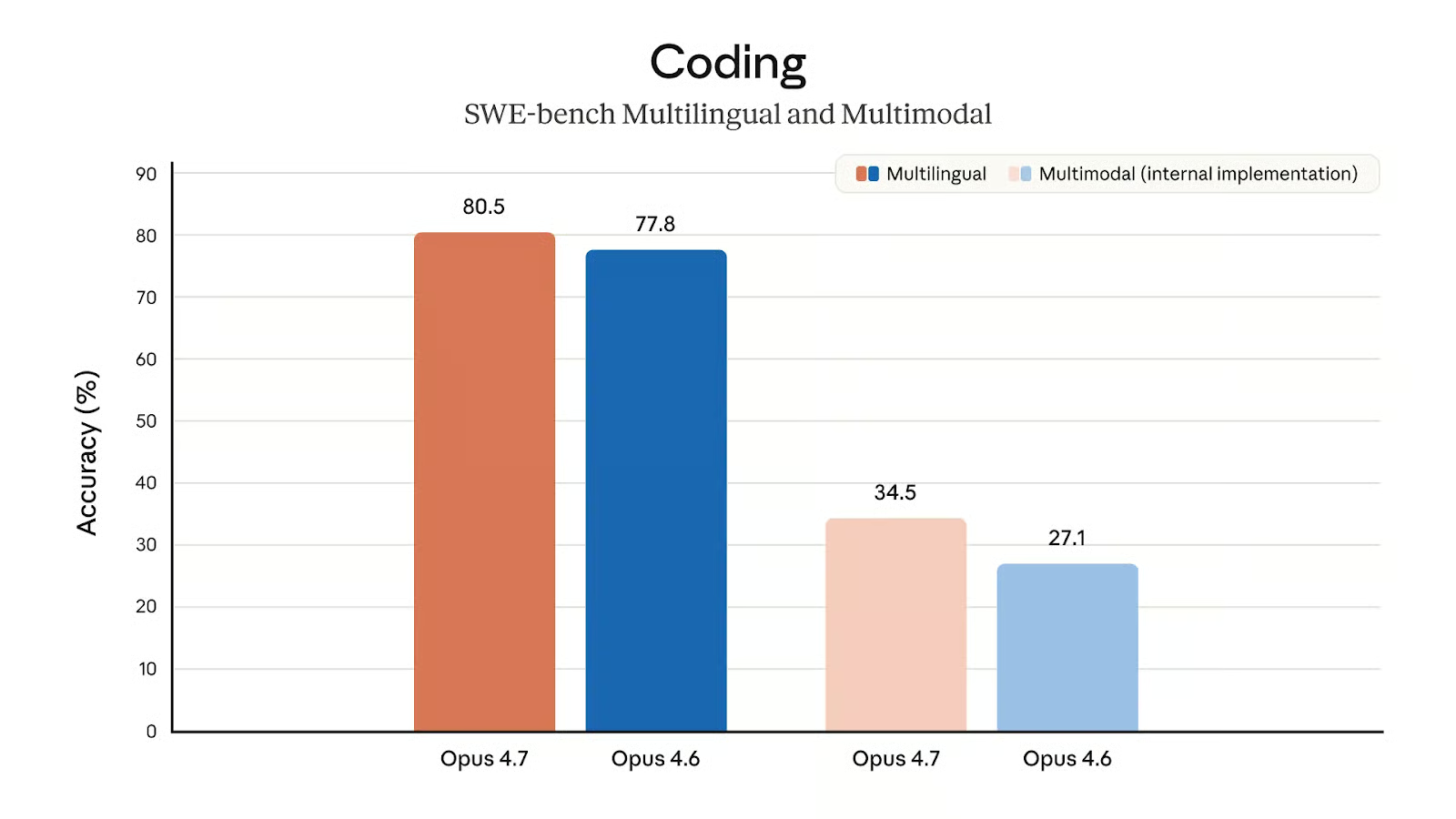
CharXiv 基准衡量模型对科研图表与图形的视觉推理能力,其结果呼应了 Opus 4.7 在研发中对该领域的重点投入。
无工具情境下提升 13 个百分点,是本次发布中相对增幅最大的单项。由于缺少竞品可比数据,难以判断 Opus 4.7 在更广泛领域的相对位置,但其相较 Opus 4.6 的进步相当可观。
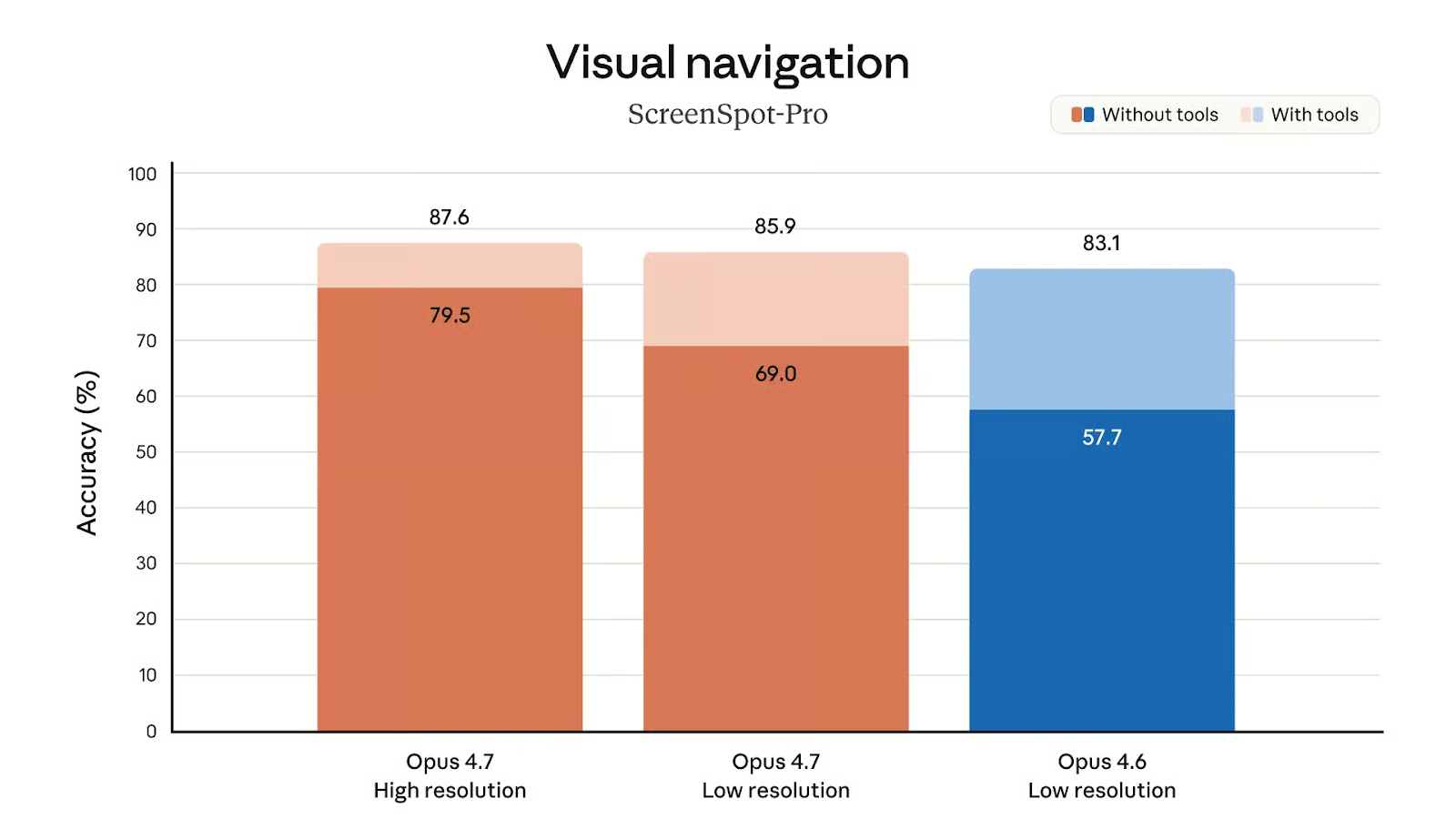
对更高分辨率图像的支持,很可能是视觉推理提升的原因之一。Screenspot-Pro 在不同分辨率下的得分图显示,较高分辨率可为 Opus 4.7 带来巨大准确度提升,尤其在无工具使用下(79.5% vs. 69.0%)。
MCP-Atlas 测试模型在复杂的多工具工作流中的表现。Opus 4.7 在此得分 77.3%,是对比模型中最高的。唯一略高于 Opus 4.7 的是Muse Spark,其报告分数为 78.3%。
OSWorld 测试模型通过控制电脑界面(点击、输入、在应用间导航)完成任务的能力。Opus 4.7 得分 78.0%,较 Opus 4.6 的 72.7% 有所提升。GPT-5.4 得分 75.0%,Gemini 3.1 Pro 在该基准暂无公开分数。Mythos Preview 得分 79.6%,略高于 Opus 4.7。
这无疑是 Opus 4.7 的强项之一:它在 MCP-Atlas 与 OSWorld-Verified 上均领先于 Google 与 OpenAI 的旗舰竞品,这对依赖工具编排与电脑操作智能体的生产级系统来说,是强有力的信号。
该模型在财务分析方面也值得一提:Opus 4.7 以 64.4% 登顶 Finance Agent v1.1 排行,明显领先 GPT-5.4(61.5%)与 Gemini 3.1 Pro(59.7%)。
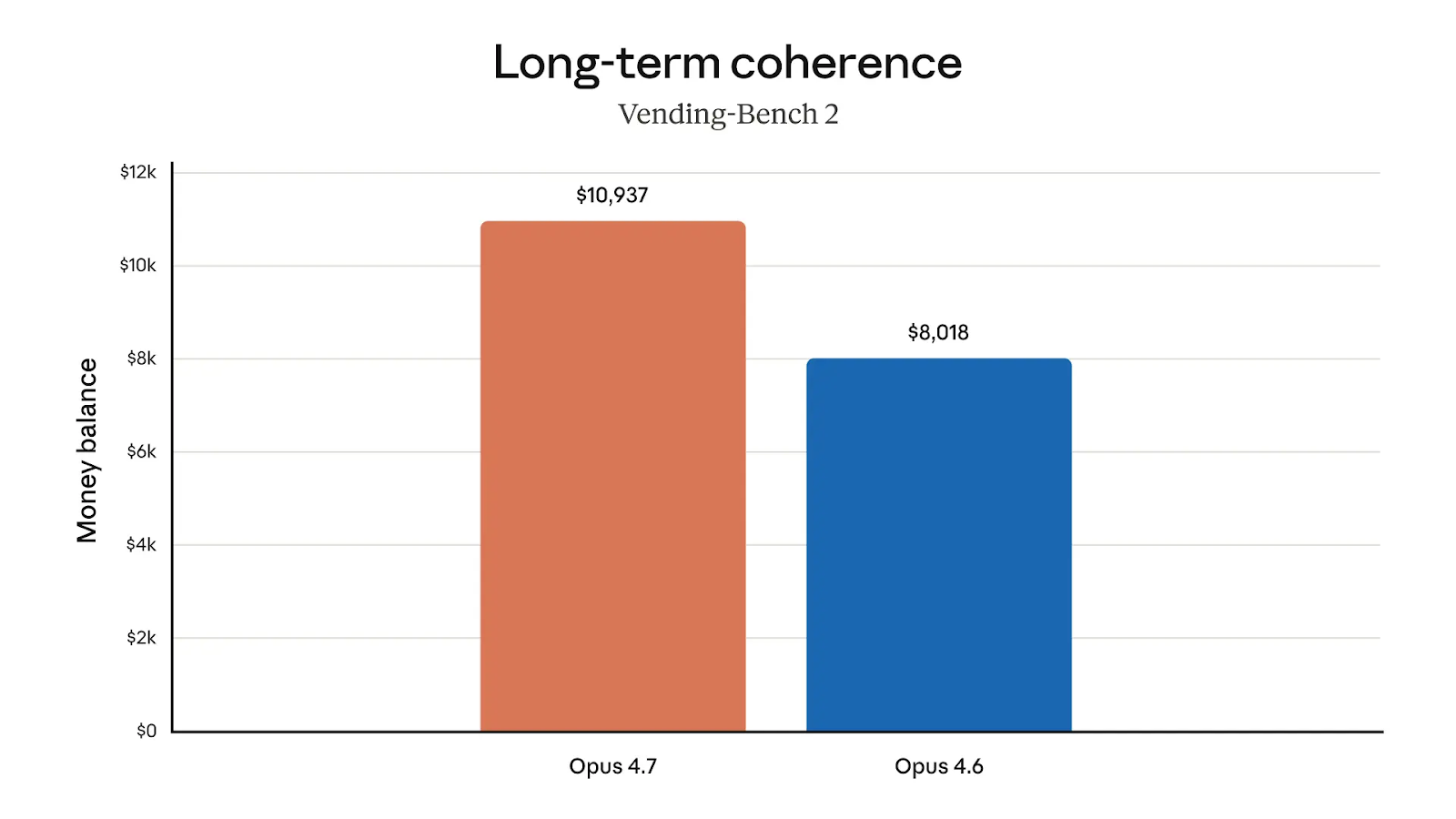
在更贴近实务的 Vending-Bench 2 中,我们也看到 Opus 4.7 的“理财”更佳。平均而言,模型最终获得的金额为 10,937 美元,而 Opus 4.6 为 8,018 美元。
Anthropic 并未让我们等待。Opus 4.7 现已可用于:
所有 Claude 产品中
Claude API(claude-opus-4-7)
Vertex AI,以及
Microsoft Foundry
当前尤其担心通胀,但好消息是价格与 Opus 4.6 相同:输入 100 万 token 收费 5 美元、输出 100 万 token 收费 25 美元。(Opus 4.6 与 Opus 4.7 之间也未涨价。)
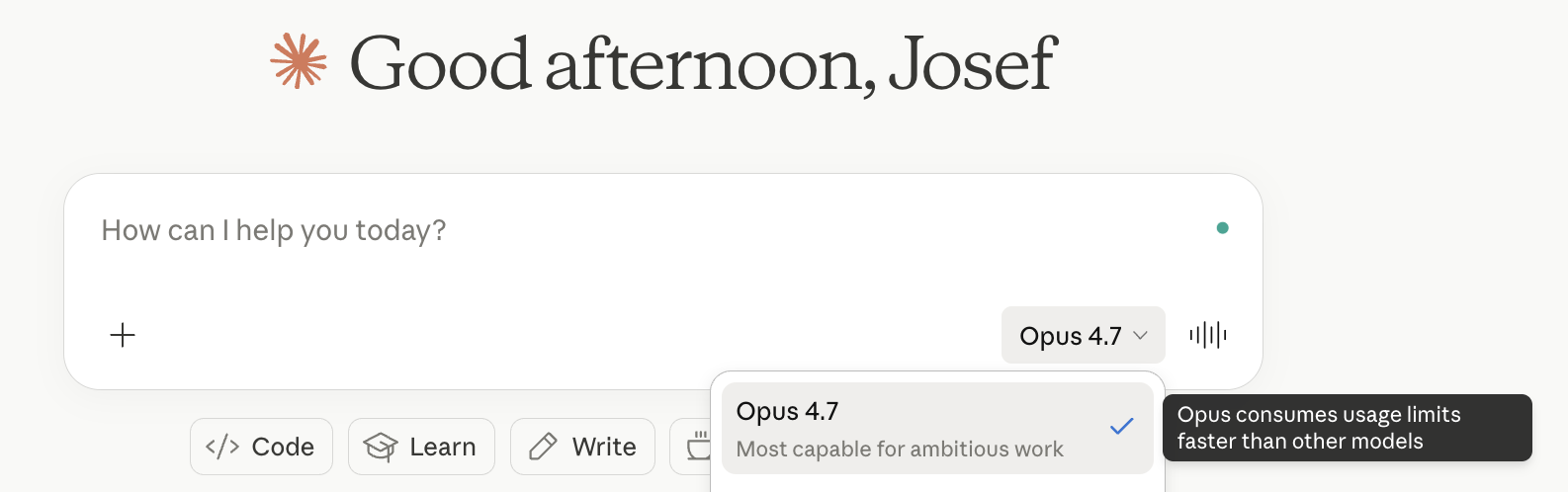
一般提醒:如果您在 Claude.ai 使用 Opus,您发送的每条消息都包含至今的整段对话(您的新问题 + 之前的所有往来)以及模型的回复。上述全部内容都会计入 token。您的套餐(无论是哪种)都采用滚动窗口的 token 额度。
不同模型对该额度的消耗速率不同。Opus 因为更强大而最昂贵。一个粗略的已公布比例:Opus 的单位 token 成本约为 Sonnet 的 5 倍。
Anthropic 随模型一并发布了若干值得了解的更新,尤其适用于使用 Claude Code 或基于 API 构建的用户。
新增 xhigh(“超高”)努力度级别,位于 high 与 max 之间。它为在推理深度与延迟之间取舍提供了更多选项。在 Claude Code 中,所有套餐的默认努力度均已提升至 xhigh,Anthropic 建议在测试 Opus 4.7 的编码与智能体任务时,从 high 或 xhigh 开始。
Claude Code 新增 /ultrareview 斜杠命令,可对您的变更进行专门的审查轮次,标注谨慎的人类审阅者会注意到的缺陷或设计问题。Pro 与 Max 用户可获赠三次免费 ultrareview 试用。
Max 用户现在可以使用自动模式,这是一种权限设置,可让 Claude 代表您作出决策。它介于每步都需批准与完全跳过权限之间。
任务预算现已在 Claude API 上开启公开测试。它允许开发者为一次运行设定 Claude 的 token 总消耗上限,特别适用于更长的智能体工作流,帮助模型合理分配预算而非快速耗尽。
我们仔细查看了基准结果,其中也包含了与其他模型的对比。总体来看,让我们直接比较一下 Opus 4.7 与 GPT-5.4。
核心结论是:Opus 4.7 优化于长周期自主性。GPT-5.4 则是通用统一模型,具备更广的工具支持与更低的短上下文定价。
| Claude Opus 4.7 | GPT-5.4 | |
|---|---|---|
| 最擅长 | 长时间编码运行, 桌面电脑操作, 高密度视觉 |
浏览器研究, 短上下文任务, 中途响应引导 |
| SWE-bench Pro | 64.3% | 57.7% |
| BrowseComp | 79.3% | 89.3% |
| 定价 | 在 1M 上下文内统一费率 | 272K 以下更便宜,以上按全会话重定价 |
| 上下文窗口 | 约 100 万 token | 约 100 万 token |
欲查看与 OpenAI 后续模型 GPT-5.5 的完整对比,请参阅我们的博文 Claude Opus 4.7 vs. GPT-5.5。
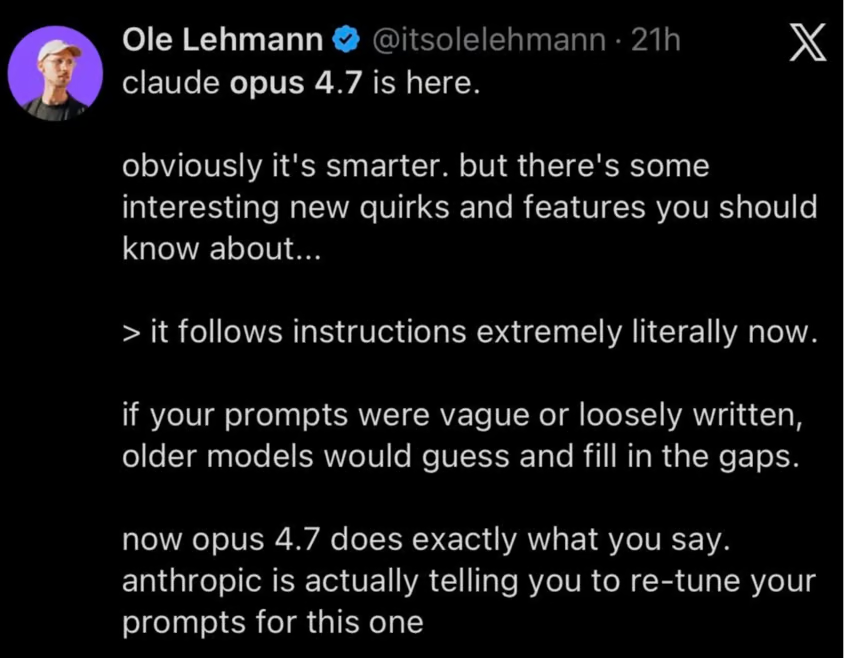
有些用户反馈其流水线出现异常,因为 Opus 4.7 相较从前更字面地遵循指令。Anthropic 事先已提醒需要重新微调提示。
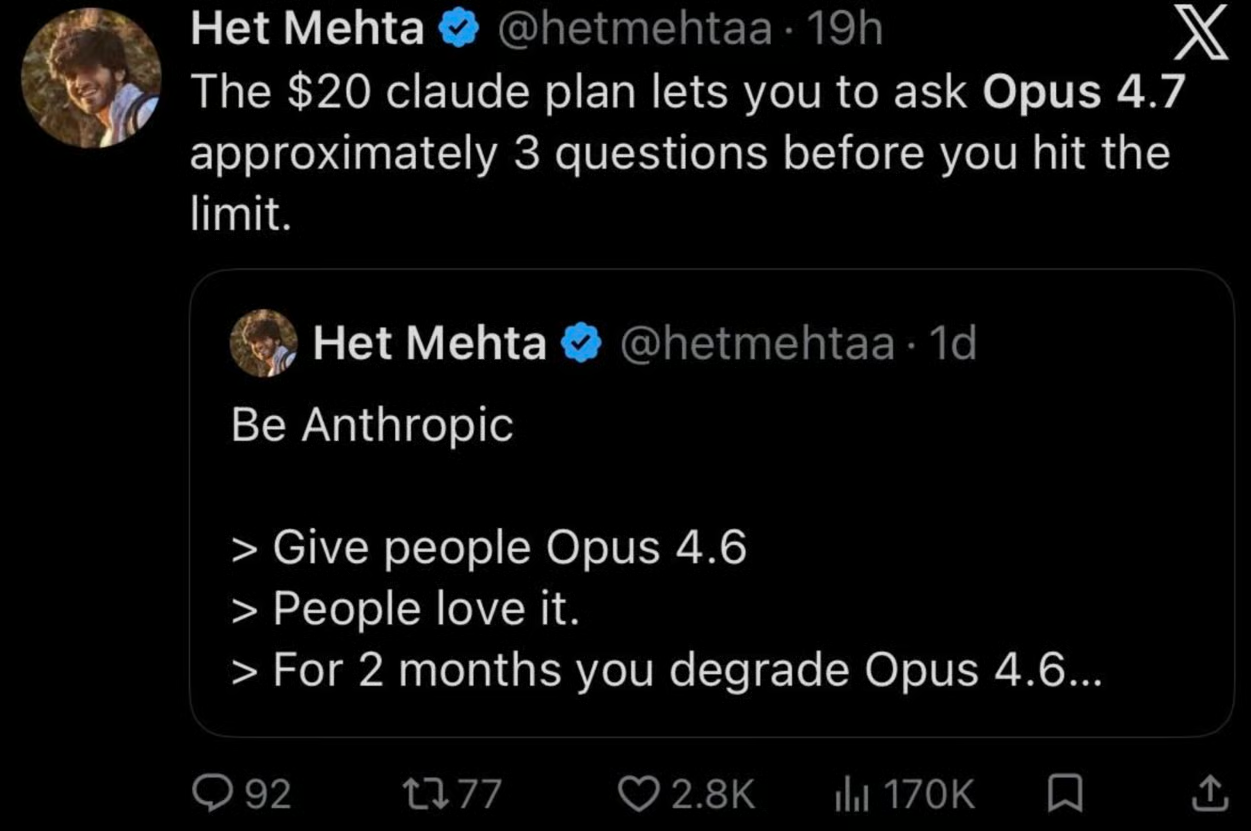
也有用户担心 token 用量。作为发布的一部分,Anthropic 提高了所有用户的速率限制以应对更高用量,但现在仍不清楚这是否能完全对冲。
Claude Opus 4.7 是大多数人当前实际可用的最强模型。所有改进均指向同一个方向:更长时段、较少监督的智能体工作,并以更强的编码能力、更锐利的视觉与更好的跨会话记忆作为支撑。
这次发布有趣之处在于 Mythos 的定位。Opus 4.7 是通往更大范围 Mythos 级发布过程中的“网络安全受限测试载体”,这意味着它之上有一个您暂不可及的明确天花板——但也意味着 4.7 随附的安全防护,预示了 Anthropic 未来处理前沿发布的方式。
与 DataCamp 一起学习
{count, plural, other {学习路径}}
{count, plural, other {课程}}
{count, plural, other {课程}}