

Curso
Creación de sistemas agentic escalables
1 h 30 min
20.2K
Las últimas noticias de OpenAI son especialmente interesantes para quienes usan GPT-5 mini: el nuevo modelo GPT-5.4 mini es el doble de rápido y mejora el rendimiento en todas las áreas. Además, OpenAI ha lanzado la versión más reciente de su clase de modelos más eficiente, GPT-5.4 nano.
En este artículo, veremos qué son GPT-5.4 mini y nano, cómo rinden en comparación con GPT-5.4 y quién puede beneficiarse de los nuevos modelos de «vía rápida» de OpenAI.
No te pierdas también nuestra comparativa de GPT-5.4 vs Claude Opus y nuestra guía de OpenAI Frontier.
GPT-5.4 mini es el nuevo LLM pequeño de OpenAI, que sustituye a GPT-5 mini. Aporta varias mejoras importantes respecto al rendimiento de su predecesor y, además, es el doble de rápido, uno de sus principales atractivos.
En la API admite un amplio abanico de funciones:
GPT-5.4 nano es la versión más pequeña de la nueva línea de modelos de OpenAI y sustituye a GPT-5 nano. Como sugiere el nombre, es aún más eficiente que el modelo mini, a costa de un menor rendimiento. Aun así, GPT-5.4 nano supera al antiguo modelo mini, GPT-5 mini, en muchos benchmarks.
No admite tantas funciones como el modelo mini, pero ofrece las capacidades estándar actuales de la API, como entrada de imágenes, uso de herramientas, function calling y salidas estructuradas.
Esta versión ofrece flexibilidad para elegir el modelo adecuado, teniendo en cuenta el clásico equilibrio entre rendimiento por un lado, y latencia y precio por el otro.
OpenAI recomienda mini y nano para desarrolladores que trabajan en aplicaciones donde no quieres latencia. En esencia, casos que deben sentirse ágiles, en los que los usuarios toleran muy poco cualquier retraso.
Para tareas con mucha carga de razonamiento y poco margen de error, multimodalidad y tareas agentic, GPT-5.4 sigue siendo la primera opción.
Echemos un vistazo a los benchmarks de LLM. Algunos resultados destacables:
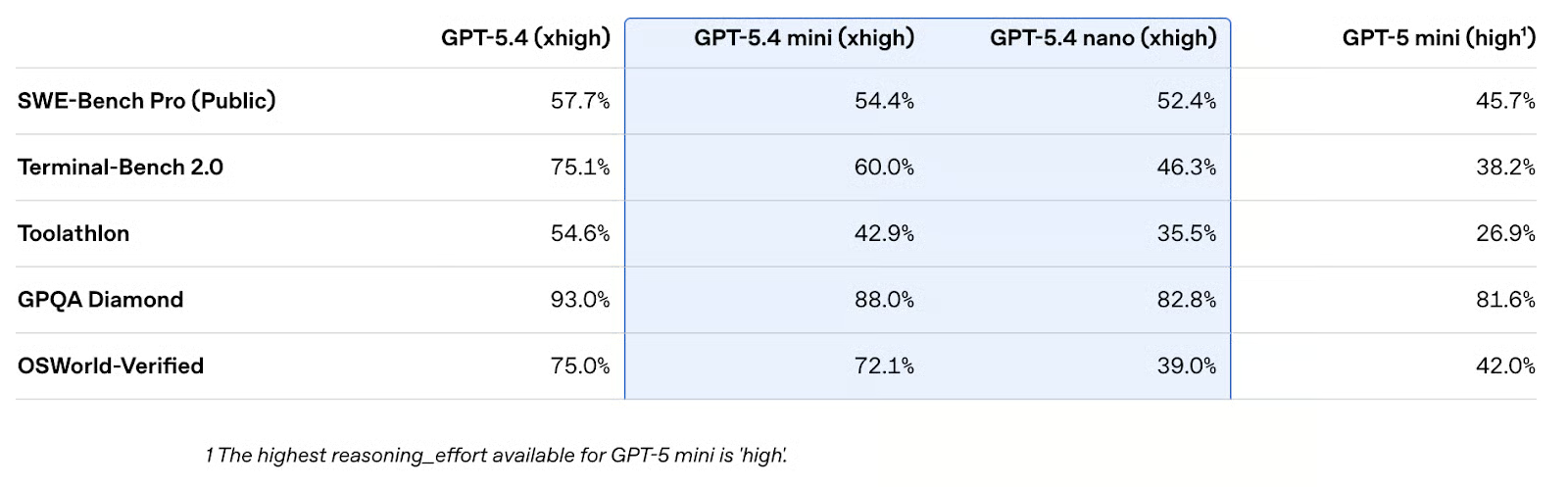
Otra cosa que nos llamó la atención enseguida fue que el orden de las puntuaciones se mantenía (casi) en todas las categorías: GPT-5.4 > GPT-5.4 mini > GPT-5.4 nano > GPT-5 mini. En todas las puntuaciones publicadas, la única excepción fue que el modelo mini antiguo superó a GPT-5.4 nano en visión y uso del ordenador, que no son los focos de nano.
No obstante, no está claro cuánto influye el nuevo nivel de esfuerzo de razonamiento «xhigh», que no estaba disponible para GPT-5 mini.
Pero, por supuesto, el rendimiento no lo es todo. OpenAI quiere subrayar el fenómeno de los rendimientos decrecientes, como muestran los gráficos que han compartido. De los cuatro modelos comparados, GPT-5.4 es el más lento y el más caro.
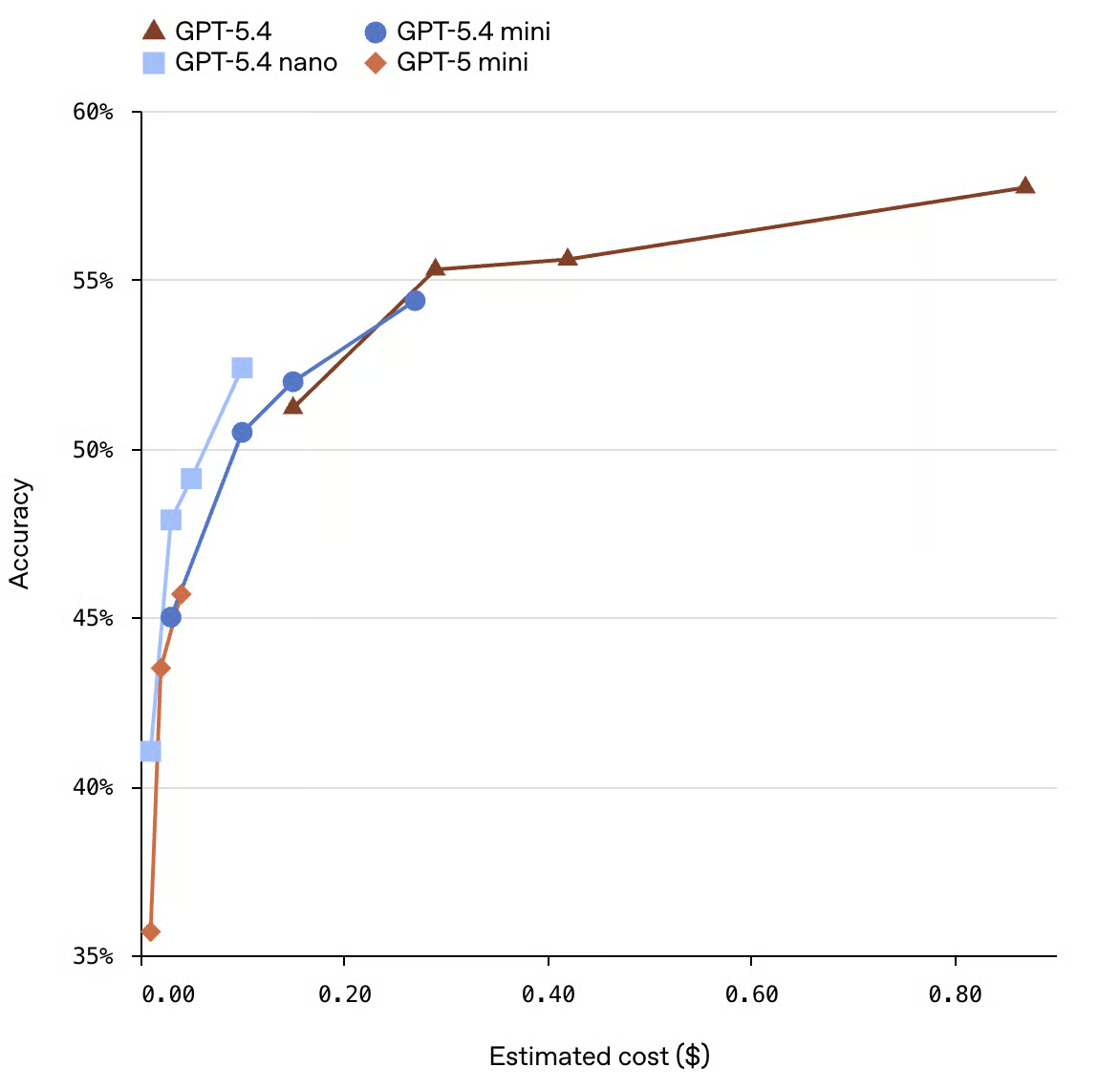
Las curvas ilustran los rendimientos decrecientes: puedes invertir más cómputo/dinero en un modelo y obtener mejoras modestas en precisión, pero los saltos se vuelven cada vez menores. Los últimos puntos porcentuales de GPT-5.4 cuestan mucho más que los primeros. Este tipo de gráfico ayuda a los ingenieros a decidir si merece la pena exprimir ese 3–4% adicional de precisión en su caso de uso concreto.
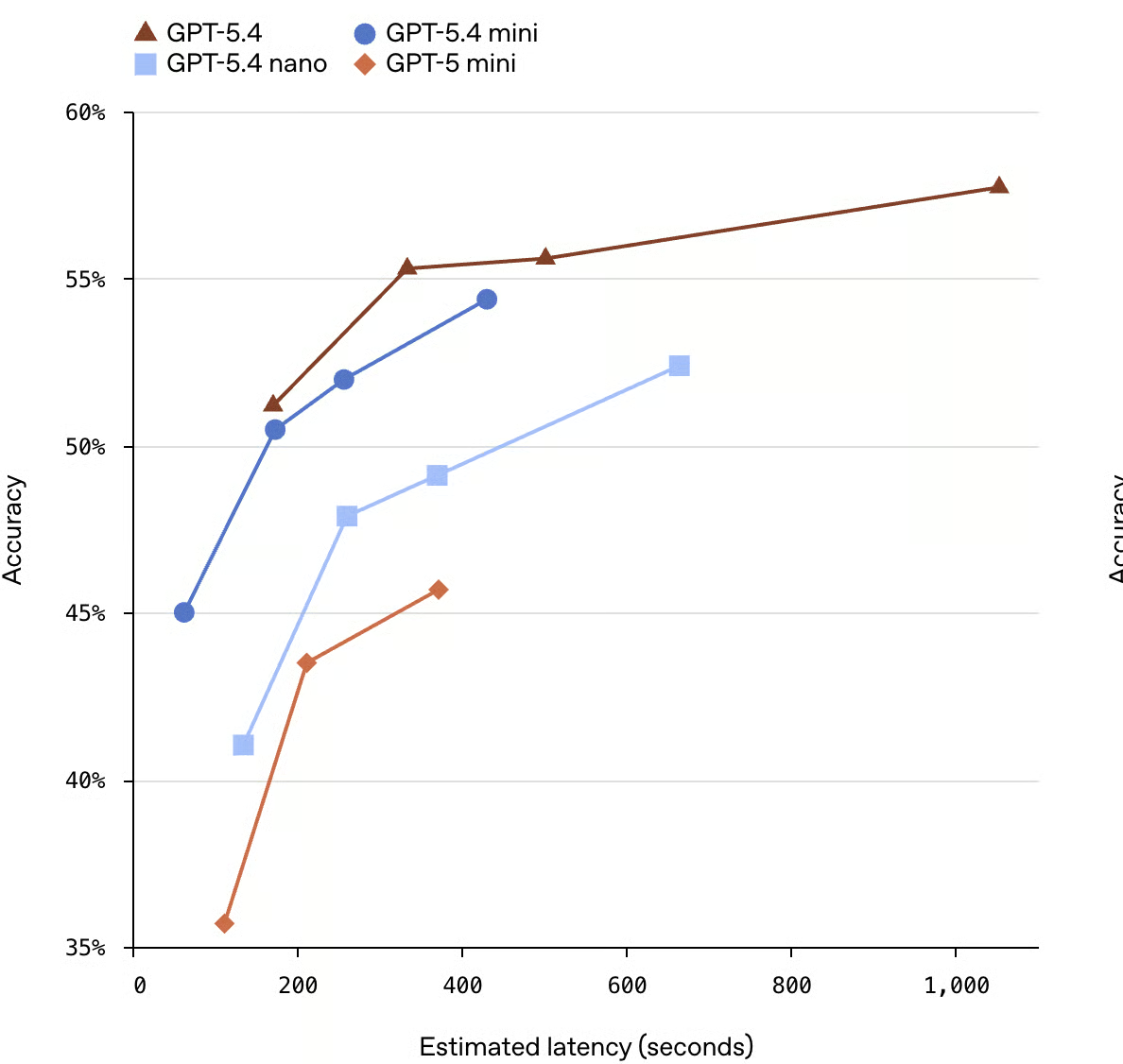
Aun así, conviene analizar el gráfico con espíritu crítico: el eje Y empieza en el 35%, no en 0%. Esto exagera visualmente las diferencias entre modelos. La ventaja de GPT-5.4 frente a GPT-5 mini parece mayor en un gráfico que arranca en 35% que en uno que empieza en cero.
Además, OpenAI señala que estas cifras de latencia no provienen de ejecuciones reales en producción; son estimaciones modeladas. Hay algo un poco incongruente en esto. OpenAI sugiere decisiones de infraestructura basándose en un gráfico con estimaciones de modelo únicamente.
También resulta extraño ver estimaciones modeladas sin barras de error. Apostaría a que, de haberlas incluido, se solaparían bastante.
Deberías poder encontrar GPT‑5.4 mini en la interfaz web de ChatGPT, en Codex y en la API. En ChatGPT es el modelo «Thinking» predeterminado para los usuarios de los planes Free y Go, y el modelo de respaldo para el resto de usuarios que hayan alcanzado su límite de uso de GPT-5.4 Thinking.
GPT‑5.4 nano, en cambio, solo está disponible a través de la API.
GPT-5.4 mini cuesta 0,75 $ por 1 M de tokens de entrada y 4,50 $ por 1 M de tokens de salida. GPT‑5.4 nano, que de nuevo solo está disponible en la API, cuesta 0,20 $ por 1 M de tokens de entrada y 1,25 $ por 1 M de tokens de salida. Por estos precios, obtienes una ventana de contexto de 400k.
Obviamente es mucho más barato que el modelo insignia de OpenAI (2,50 $/15 $ por 1 M de tokens de entrada/salida).
Lo realmente interesante es que GPT-5.4 nano tiene un precio inferior al de muchos modelos pequeños de menor rendimiento de la competencia, en concreto Claude Haiku 4.5, con un precio de 1 $ por millón de tokens de entrada y 5 $ por millón de tokens de salida. Así que OpenAI ha recortado el precio de Claude Haiku en ambos casos.
Pero ¿cómo se comparan los modelos en las pruebas? Compararlos no es trivial porque se han evaluado en variantes distintas. Los resultados de SWE-bench no son comparables, ya que usan versiones totalmente diferentes. Claude Haiku 4.5 se probó en SWE-bench Verified y obtuvo una puntuación del 73,3%, mientras que GPT-5.4 nano se probó en SWE-bench Pro (Public) y obtuvo un 52,4%. Pro es la prueba más reciente y más difícil.
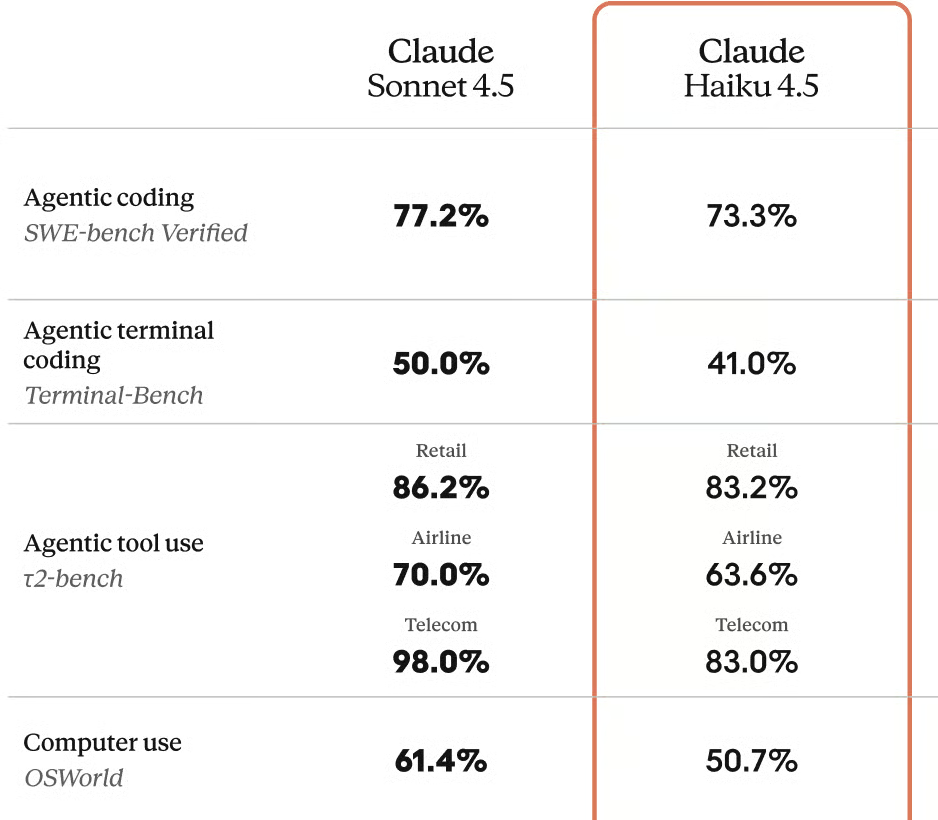
Puntuación de Claude Haiku 4.5 del 50,7% en OSWorld
En las dos comparativas más limpias «manzanas con manzanas», GPT-5.4 nano va por delante en ambas.
Sin embargo, Haiku 4.5 podría tener ventaja en el uso del ordenador según OSWorld, aunque, de nuevo, las variantes del benchmark complican la comparación.
OSWorld-Verified es la prueba más dura, pero la brecha de casi 12% parece bastante significativa. Somos más cautos a la hora de descartarla porque, a diferencia de SWE-bench Verified y SWE-bench Pro, donde se sabe que los modelos que lo hacen bien en Verified suelen rendir peor en Pro, hay menos evidencias de que ocurra lo mismo con OSWorld y OSWorld-Verified.
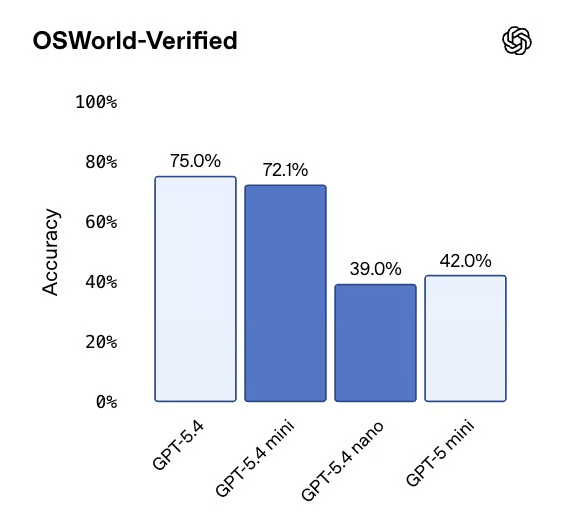
Puntuación de GPT-5.4 nano del 39% en OSWorld-Verified
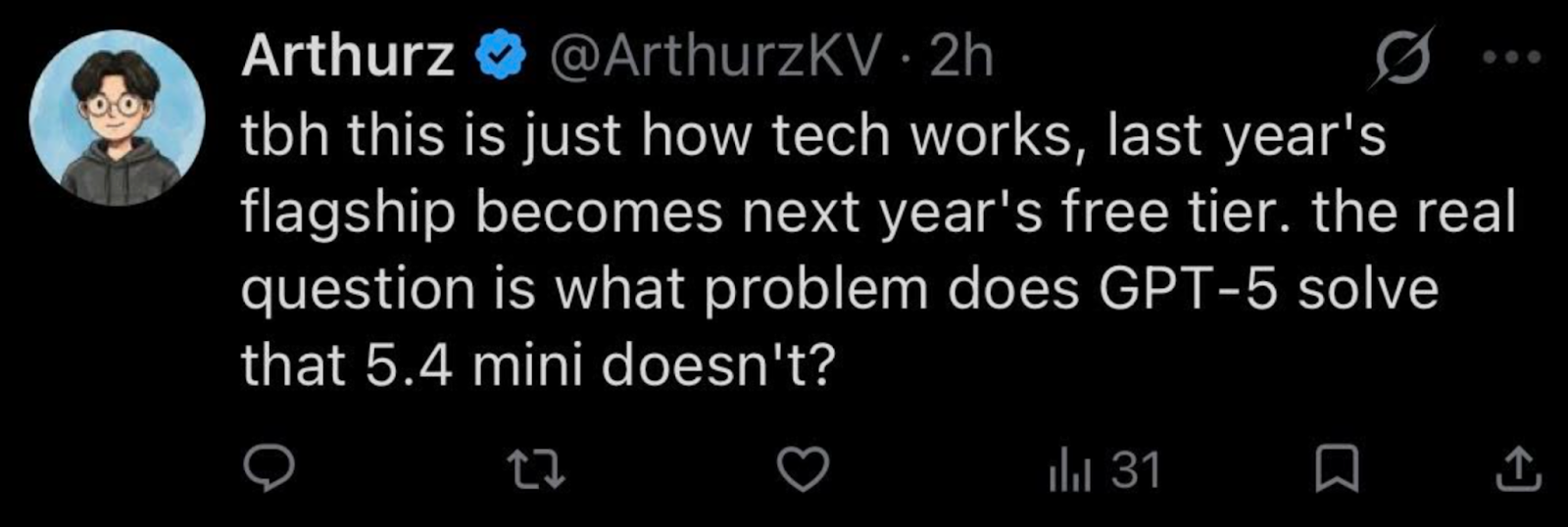
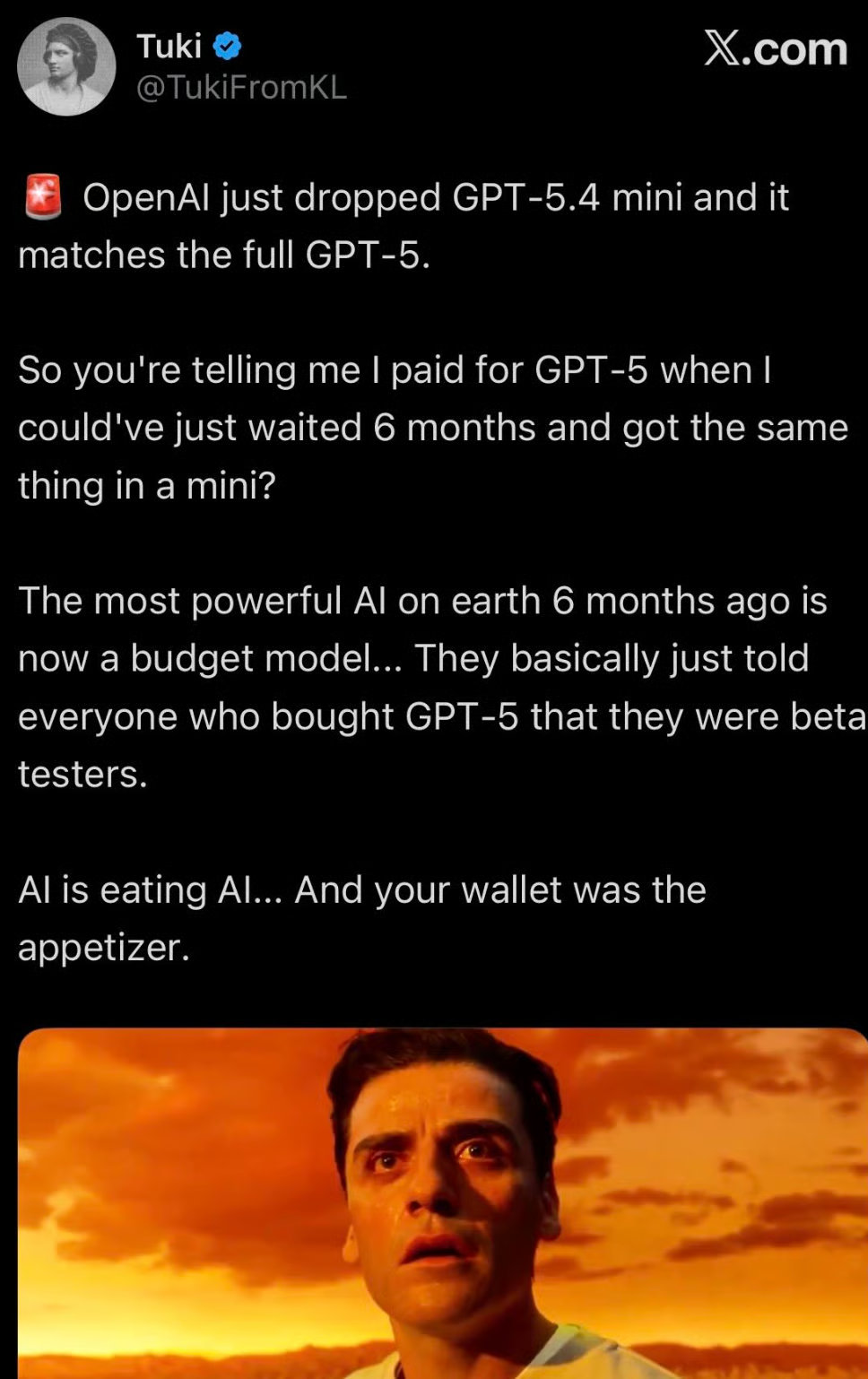
Muchas reacciones en línea apuntan a un patrón conocido en tecnología: el buque insignia de este año acaba en el plan gratuito del próximo. Era de esperar, pero el ritmo del cambio impresiona.
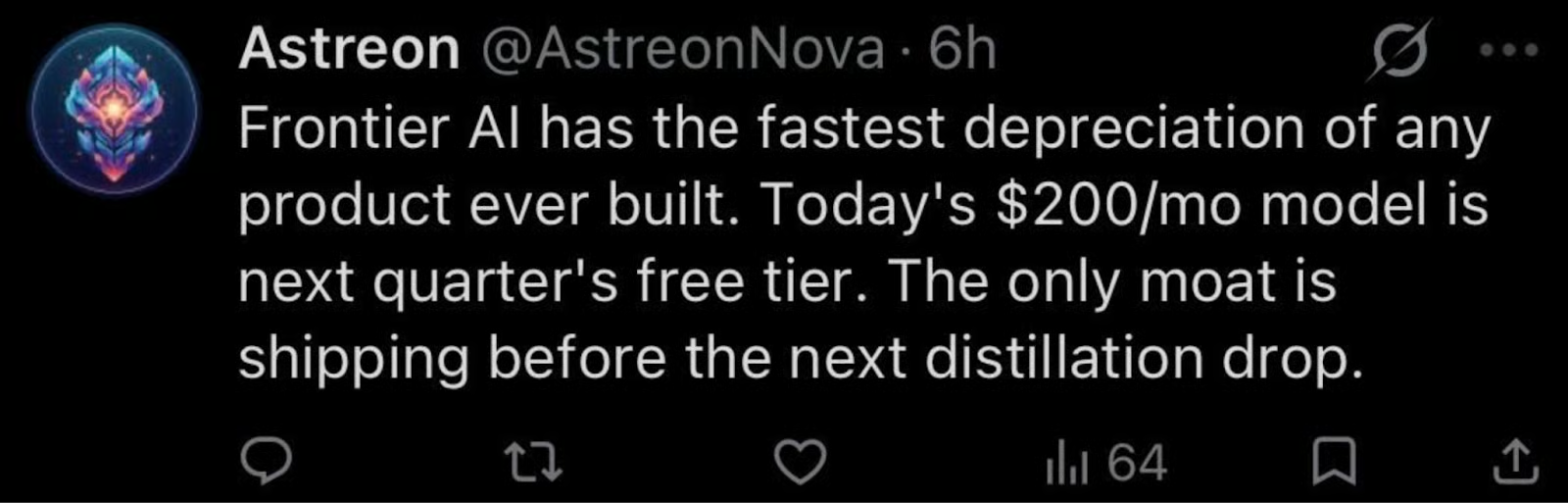
Se dice que la frontier AI tiene la depreciación más rápida de cualquier producto jamás creado. Muchos se preguntan si el modelo por el que hoy pagas un premium seguirá mereciendo la pena dentro de seis meses. A veces, los desarrolladores no quieren cambiar de modelo sin más si ya han pasado por un proceso de fine-tuning o si han calibrado coste y rendimiento.
Los benchmarks muestran una clara escalera de rendimiento desde GPT-5.4 hasta 5.4 mini y 5.4 nano. Pero para muchas tareas, la elección práctica depende más de la latencia y el presupuesto que de exprimir unos puntos porcentuales extra.
Para muchas apps en producción, GPT-5.4 mini puede ser un nuevo gran predeterminado, ya que su calidad se siente frontier y, al mismo tiempo, es lo bastante barato y rápido para usos de alto volumen.
GPT-5.4 nano es más un especialista para cargas en tiempo real muy grandes y muy sensibles a la latencia. También es ideal como subagente para hacer el trabajo «en masa» más sencillo, delegado por modelos Thinking de mayor rendimiento.
En un mundo donde el buque insignia del año pasado se convierte en el «mini» de este año, diseñar sistemas capaces de intercambiar modelos con facilidad es mejor estrategia que optimizar para un único lanzamiento. Te recomiendo nuestro curso Building Scalable Agentic Systems, que aborda esta cuestión y te enseña a usar frameworks agentic como el Model Context Protocol (MCP).
Cursos de IA agentic
Curso
programa
programa
blog
Abid Ali Awan
9 min
blog
Josep Ferrer
8 min
blog
Abid Ali Awan
9 min
Tutorial
Moez Ali
11 min
Tutorial
Arunn Thevapalan
12 min
Tutorial
Zoumana Keita
12 min