
Curso
Introdução a agentes de IA
1 h 30 min
146.4K
Pratique e programa seu progresso.
Continuar Com O GoogleA IA está indo além de chatbots simples e começando a agir sozinha na forma de agentes.
Mesmo assim, embora a tecnologia siga avançando, a maioria das empresas não está vendo resultados concretos. Na prática, até 95% dos projetos-piloto de IA nas empresas não geram valor de negócio claro. Isso geralmente acontece porque sistemas diferentes não funcionam bem em conjunto ou não estão devidamente conectados.
É aqui que entra o OpenAI Frontier, uma plataforma criada para ajudar a resolver esse problema. Ele foi apresentado junto com o lançamento do mais novo e mais capaz modelo da OpenAI, o GPT-5.3 Codex. Para se manter atualizado com os modelos mais recentes da OpenAI, confira também nosso guia sobre o GPT-5.4.
Neste artigo, vou explicar como ele funciona, quais recursos oferece, como se compara aos concorrentes e como pode transformar o futuro do software corporativo.
Para uma visão dos fundamentos dessa mudança, recomendo nosso curso Introduction to AI Agents.
O OpenAI Frontier é uma plataforma corporativa criada para ajudar empresas a criar, lançar, gerenciar e monitorar grupos de agentes de IA ou “colegas de trabalho de IA”, como a OpenAI os chama em seu artigo de apresentação.
Em vez de funcionar como um bot de IA conversacional isolado, o Frontier atua como uma camada que integra a IA diretamente aos fluxos de trabalho corporativos.
Em alto nível, a arquitetura da plataforma foi construída do zero para dar suporte a isso, como mostra o diagrama abaixo:
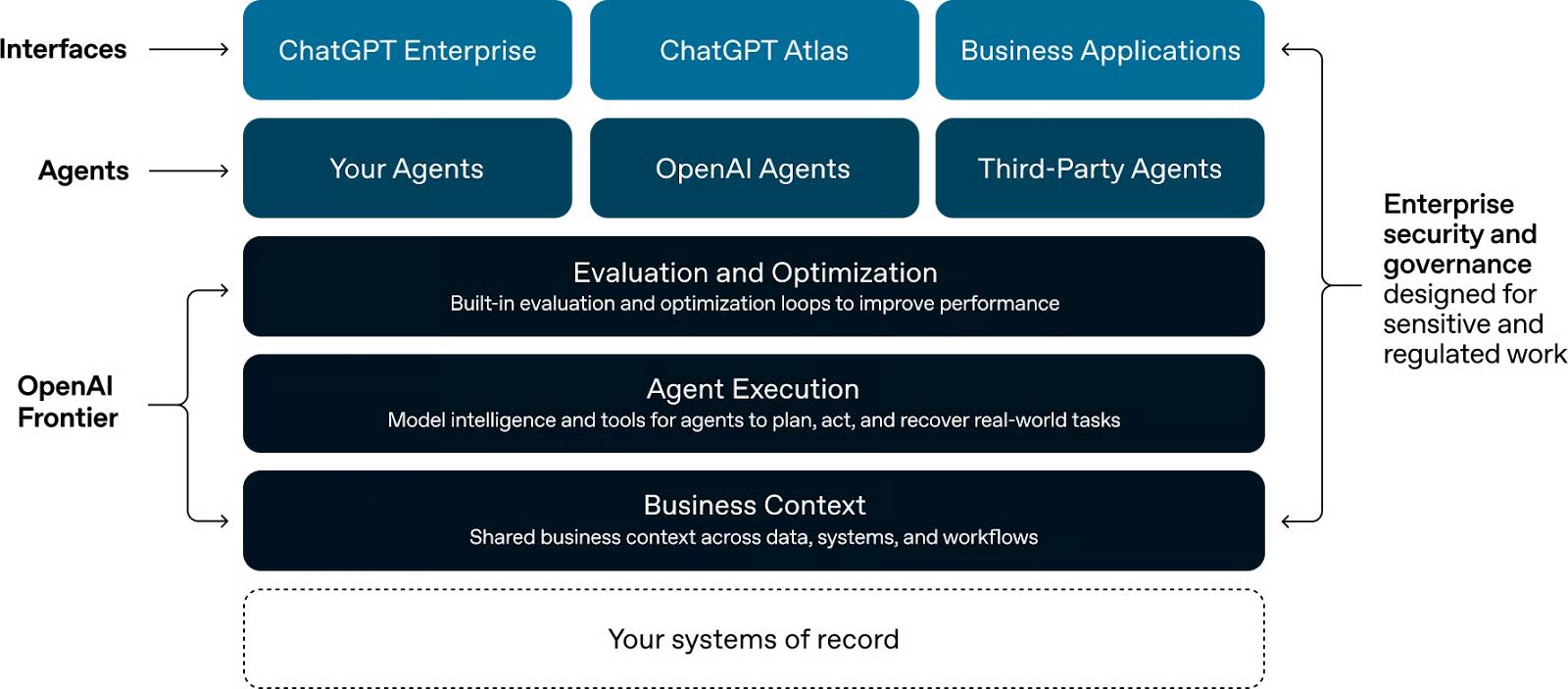
Vamos olhar de perto as diferentes camadas:
Por causa de ferramentas como o Frontier, saber construir agentes de IA está virando uma habilidade essencial. Para aprender a criar um agente de IA passo a passo, confira nosso tutorial do OpenAI AgentKit.
Ferramentas como o Frontier são essenciais porque atacam diretamente o “gap de oportunidade em IA” nas empresas. Hoje, existe um grande descompasso entre o que modelos avançados de IA conseguem fazer e o que as empresas conseguem colocar em produção com confiabilidade.
Muitas empresas têm dificuldade com ferramentas de IA isoladas que não evoluem além de pequenos pilotos. Se você é líder e quer evitar essa armadilha, recomendo nosso guia sobre como escalar IA na sua organização.
O grande desafio não é mais apenas acessar modelos de IA, mas sim incorporá-los com segurança aos processos centrais do negócio. O Frontier muda essa abordagem ao tratar a IA não como mais um recurso de software, mas como uma infraestrutura central que sustenta toda a empresa.
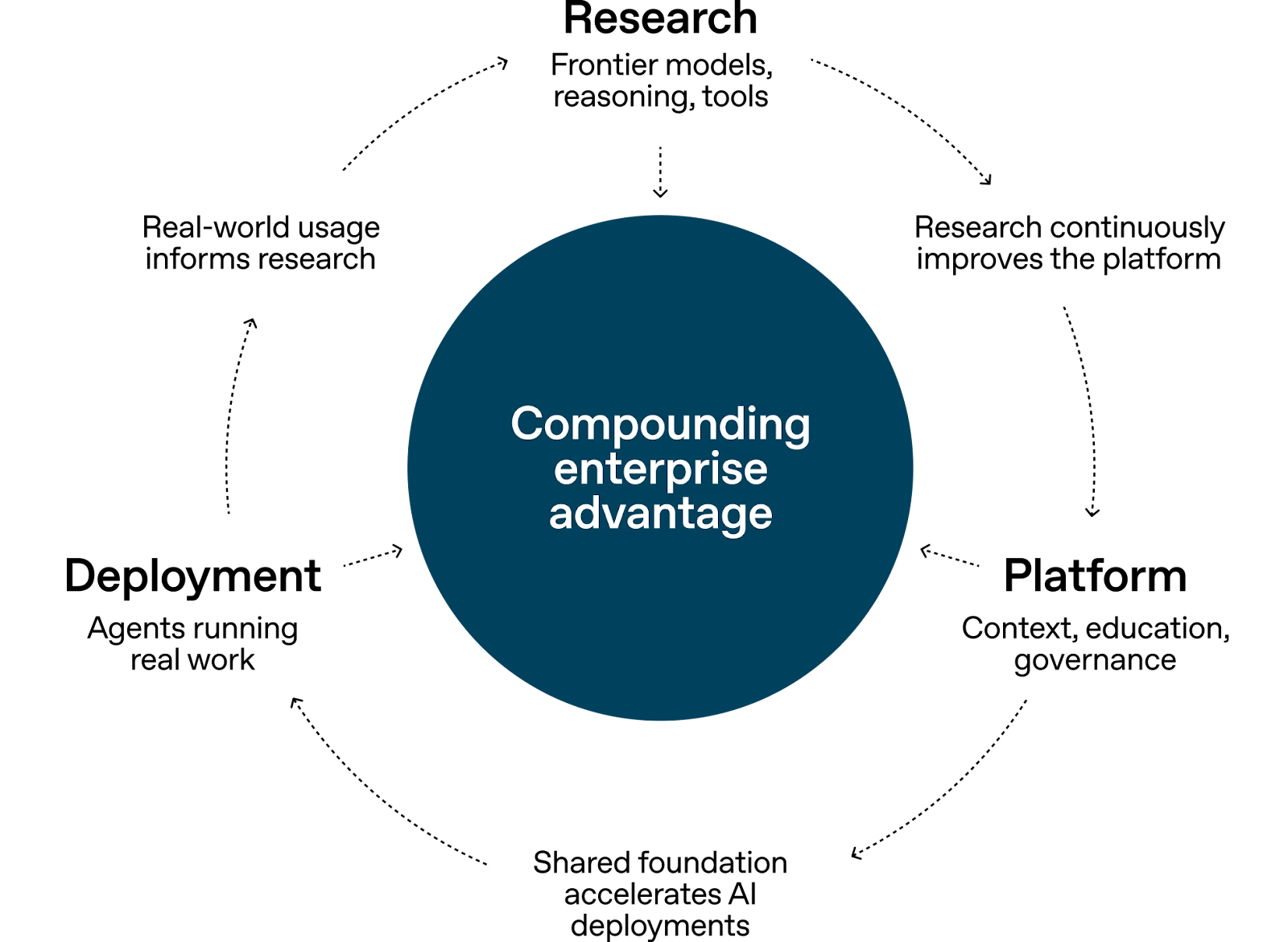
Empresas que incorporam IA à sua infraestrutura dessa forma criam uma vantagem competitiva cumulativa. À medida que os agentes concluem mais tarefas em toda a organização, o sistema aprende continuamente e se otimiza. Com o tempo, isso gera uma superioridade operacional que os concorrentes não conseguem reproduzir com facilidade.
Em vez de cobrar por usuário, esse modelo precifica com base nos resultados que a IA entrega de fato. As empresas pagam pelo trabalho concluído por agentes autônomos de IA, não apenas pelo acesso ao software. Isso pode mudar como empresas de software monetizam e remodelar como as organizações utilizam trabalhadores digitais.
O OpenAI Frontier é estruturado em capacidades centrais desenhadas para tratar agentes de IA como colaboradores humanos. A plataforma inclui:
O Frontier conecta diferentes sistemas da empresa em uma camada compartilhada única, como:
Isso dá aos colegas de trabalho de IA um entendimento consistente de processos, termos e metas da companhia, criando uma memória confiável para todo o time.
Os agentes do OpenAI Frontier fazem mais do que responder perguntas. Eles conseguem analisar arquivos de forma autônoma, executar código e operar os softwares corporativos. Com isso, conseguem agir e concluir com segurança projetos complexos que exigem várias etapas entre diferentes departamentos.
Para entender a base técnica por trás dessas habilidades e praticar na prática, recomendo nosso curso Developing AI Systems with the OpenAI API.
Assim como acontece com colaboradores humanos, a qualidade de um agente melhora ao longo do tempo por meio de ferramentas de avaliação integradas. A plataforma permite que gestores revisem ações dos agentes, ofereçam feedback direto e otimizem o comportamento, deixando o sistema cada vez mais preciso e útil a cada tarefa concluída.
Escalar agentes sem perder o controle é um desafio central na transição para IA agentic. Por isso, a segurança é rigidamente aplicada.
Cada agente recebe uma identidade única com limites exatos sobre o que pode ou não pode fazer. Isso garante que os agentes acessem apenas os dados necessários para suas funções específicas, mantendo um registro claro de todas as ações para auditoria e conformidade.
Com o Frontier, não é preciso reconstruir os sistemas atuais de software da empresa. O sistema foi projetado com padrões de conexão abertos, o que significa que ele se conecta diretamente aos aplicativos e serviços em nuvem que sua organização já usa. Isso acelera a implantação e reduz o risco técnico.
Implementar esses sistemas em grande escala exige expertise técnica. A OpenAI conecta as empresas a engenheiros dedicados que trabalham lado a lado com o time. Eles ajudam a desenhar a arquitetura, estabelecer regras de segurança e garantir que os agentes operem de forma estável e confiável no dia a dia.
Atualmente, o OpenAI Frontier está disponível para um grupo limitado de primeiros adotantes corporativos, incluindo HP, Oracle e Uber, com uma disponibilidade mais ampla sendo liberada nos próximos meses.
O acesso requer contato direto com a equipe de vendas enterprise da OpenAI, já que não há preços públicos nem cadastro self-service. As implantações são altamente customizadas e frequentemente viabilizadas pela "Frontier Alliance", um programa de parceria estratégica com grandes consultorias como McKinsey, BCG, Accenture e Capgemini.
O mercado de inteligência artificial está cheio de plataformas corporativas criadas para automatizar trabalho. Para uma visão mais ampla do setor, veja nossa comparação dos melhores agentes de IA em 2026.
Veja como o Frontier se compara a outras ferramentas importantes disponíveis hoje e onde cada sistema se destaca.
O Claude Cowork se destaca por oferecer automação sem código e integrações profundas com apps do dia a dia, como Slack, Figma e Asana. Ele também se baseia em IA constitucional para manter fluxos de trabalho dos agentes seguros e confiáveis.
No entanto, o Claude Cowork não tem alguns recursos-chave que o Frontier oferece. Ele não consegue orquestrar agentes de múltiplos fornecedores e não conta com uma camada de contexto semântico de negócios compartilhada para conectar dados isolados da empresa.
Isso faz do Clouse Cowork uma ótima opção para experimentação em times pequenos, enquanto o Frontier é construído para coordenação em nível enterprise entre sistemas corporativos completamente separados.
Se você quer saber mais sobre a plataforma de agentes da Anthropic, nosso tutorial do Claude Cowork tem tudo para você começar.
Google Vertex AI tem um diferencial focado em escalabilidade multimodal nativa de nuvem. Isso torna a plataforma do Google extremamente poderosa para implantações em tempo real e intensivas em dados.
Comparado ao Frontier, o Vertex AI não traz onboarding de agentes embutido nem permissões baseadas em identidade especialmente pensadas para trabalhadores de IA autônomos. O Vertex AI é a melhor escolha para processamento pesado de dados e escala de infraestrutura, enquanto o Frontier foi desenhado especificamente para orquestração multiagente e gestão de tarefas.
O Microsoft Copilot Studio oferece um ambiente low-code para criar agentes de IA com governança rígida. Sua maior vantagem é a integração nativa com o ecossistema Microsoft, o que o torna uma ótima opção para ambientes híbridos que usam nuvem e data centers próprios. Veja-o em ação no nosso guia do Copilot App Builder.
Assim como o Claude Cowork, o Copilot Studio não consegue gerenciar agentes de múltiplos fornecedores e não possui uma camada de contexto semântico de negócios compartilhada. O Copilot Studio é ideal para empresas profundamente investidas em produtos Microsoft, mas o Frontier oferece uma forma totalmente agnóstica de gerenciar uma frota diversa de trabalhadores de IA.
|
Plataforma |
Forças e recursos centrais |
O que falta em relação ao Frontier |
Melhor para (caso de uso ideal) |
|
OpenAI Frontier |
Orquestração de agentes multi-fornecedor, camada compartilhada de contexto semântico de negócios, onboarding de agentes embutido, permissões baseadas em identidade, agnóstico a modelos. |
N/D (referência) |
Coordenação em nível enterprise e gestão de uma frota diversa de trabalhadores de IA em sistemas separados. |
|
Claude Cowork |
Automação sem código, integrações profundas com apps (Slack, Figma, Asana), segurança via IA constitucional. |
Não orquestra agentes de múltiplos fornecedores; não possui camada de contexto semântico de negócios compartilhada. |
Experimentação em times pequenos e fluxos diários seguros e confiáveis. |
|
Google Vertex AI |
Escala multimodal nativa de nuvem, capacidades poderosas de processamento pesado de dados. |
Onboarding de agentes embutido; permissões baseadas em identidade para trabalhadores de IA autônomos. |
Implantações intensivas em dados e em tempo real, além de escala de infraestrutura. |
|
Microsoft Copilot Studio |
Ambiente low-code, governança rígida, integração perfeita ao ecossistema Microsoft. |
Não orquestra agentes de múltiplos fornecedores; não possui camada de contexto semântico de negócios compartilhada. |
Ambientes híbridos (nuvem/on-premise) e empresas muito investidas em produtos Microsoft. |
O Frontier já está gerando resultados mensuráveis em setores operacionalmente complexos:
Para tirar o máximo de uma plataforma como o OpenAI Frontier, as empresas precisam de duas coisas:
Enquanto o primeiro ponto já é requisito para sistemas de informação convencionais, o segundo é crucial. Em nosso relatório The State of Data + AI Literacy 2026, 72% dos líderes pesquisados dizem que o letramento em IA é importante para o trabalho do dia a dia em suas organizações.
Ainda assim, 59% relatam um gap significativo de habilidades em IA que impede a adoção eficiente. Para enfrentar esse gap, treinamentos de letramento em IA em toda a organização são eficazes: organizações com um programa maduro de letramento em IA têm quase o dobro de chance de reportar retorno significativo sobre os investimentos em IA.
Recursos como o DataCamp for Business oferecem cursos que ajudam os times a desenvolver essas competências, de gestão de dados à supervisão de IA. Ao combinar boas práticas de dados com uma força de trabalho capacitada, as empresas extraem o máximo valor de sistemas de IA autônoma e transformam pilotos em impacto real de negócio.
Seja você uma startup ou uma grande empresa, o DataCamp for Business oferece as ferramentas para capacitar e requalificar seu time e construir uma cultura orientada por dados que ajuda você a se manter competitivo no mercado. Você pode solicitar uma demonstração hoje para saber mais.
O OpenAI Frontier representa uma mudança definitiva no futuro do trabalho, evoluindo a IA de ferramentas de produtividade isoladas para uma força de trabalho digital totalmente gerenciada.
Ao introduzir a computação orientada a resultados, ele desafia diretamente os modelos tradicionais de licenciamento por assento do SaaS e força as organizações a repensarem como a lógica de negócio é executada.
À medida que os agentes de IA se tornam a nova unidade de trabalho empresarial, as empresas que conseguirem usar plataformas de orquestração como o Frontier alcançarão vantagens cumulativas em velocidade operacional, redução de custos e escalabilidade massiva.
Cursos sobre agentes de IA
Curso
Curso
Pratique e programa seu progresso.
Continuar Com O Googleblog
blog
Khalid Abdelaty
15 min
blog
Adel Nehme
15 min
blog
Javier Canales Luna
9 min
Tutorial
Zoumana Keita
12 min
Tutorial
Zoumana Keita
14 min