
Curso
Conceptos de LLMOps
1 h
19.9K
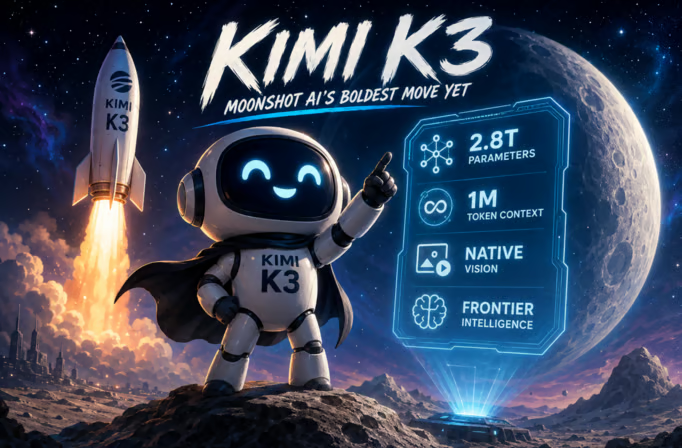
Moonshot AI ha anunciado Kimi K3, el nuevo buque insignia de su línea Kimi y el mayor modelo de pesos abiertos publicado hasta la fecha (2,8 billones de parámetros). Los pesos completos aún no están disponibles. Moonshot dice que los liberará en diez días.
Aun así, el número de parámetros no es la historia principal. Moonshot es una startup con sede en Pekín respaldada por Alibaba (que también desarrolla los modelos Qwen, si recuerdas, con Qwen 3.7 como último lanzamiento), y lleva tiempo peleando por ganar relevancia mientras DeepSeek y otros laboratorios chinos saturan el panorama.
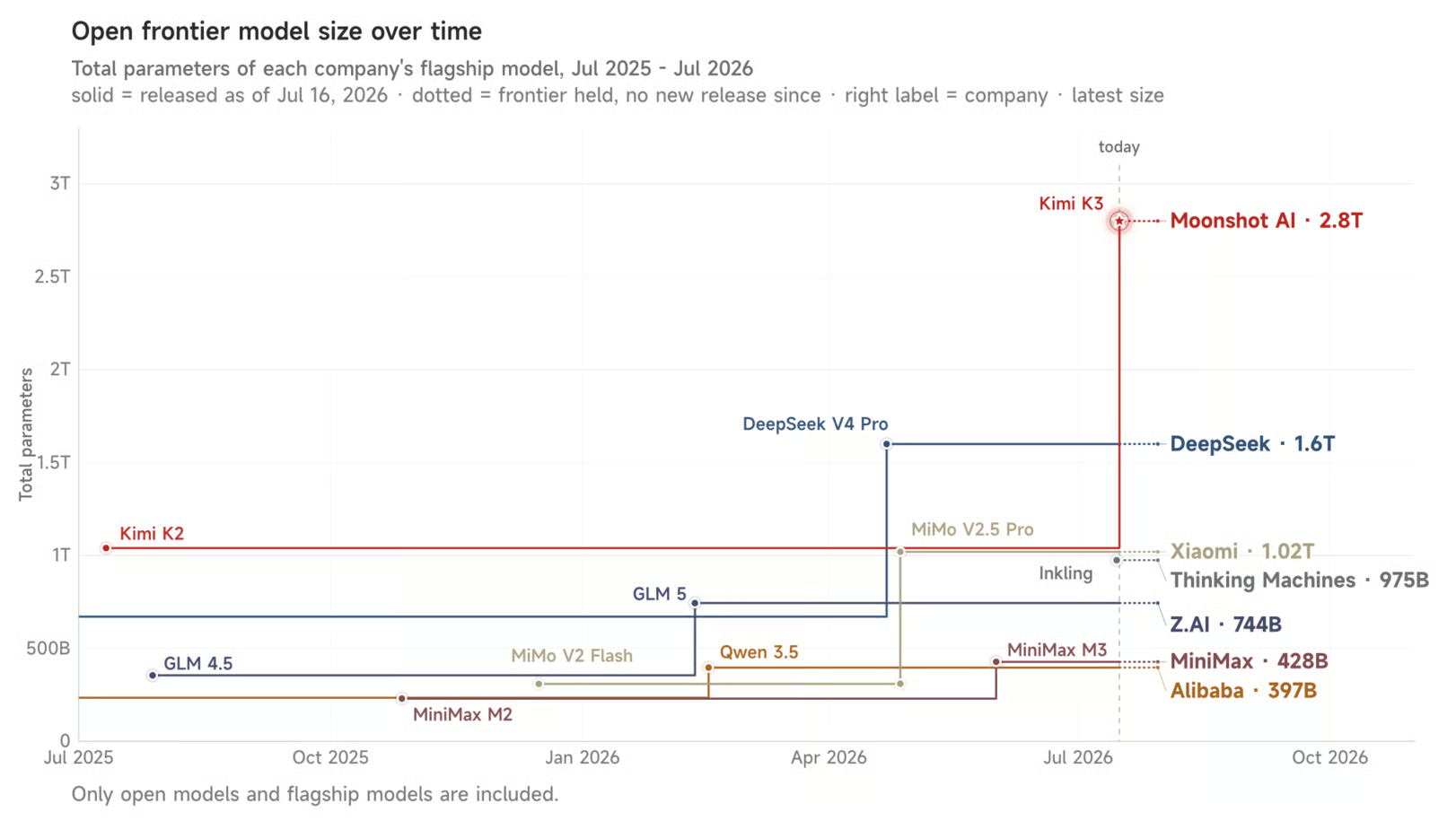
En tamaño, K3 es aproximadamente un 75% más grande que V4 de DeepSeek. En los propios benchmarks de Moonshot, supera a Claude Opus 4.8 y GPT-5.5, aunque queda por detrás de Claude Fable 5 y GPT-5.6 Sol.
El precio es la señal más clara. K3 cobra tarifas de vanguardia. Ese es el problema para los laboratorios de EE. UU.: si un modelo chino puede cobrar lo mismo y rendir a un nivel cercano, se desinfla la idea de que el precio premium es lo que diferencia a los modelos estadounidenses.
Hemos hablado un poco de precios e historial. Pero ¿qué sabemos de Kimi K3, de cómo está construido y de cómo rinde?
Kimi K3 está especialmente bien posicionado para lo que Moonshot llama "escenarios de inteligencia de frontera": programación a largo plazo, trabajo de conocimiento y razonamiento.
Para ello, admite una ventana de contexto de 1 millón de tokens y comprensión visual nativa. Esto último significa que puede recibir imágenes y vídeo directamente como entrada.
Lo más comentado es lo visible: la ventana de 1 millón de tokens y la comprensión visual nativa, que ya he mencionado.
Para lograrlo, Moonshot hizo cambios en el backend en tres áreas:
El modelo se construye alrededor de dos componentes nuevos: Kimi Delta Attention (KDA), un mecanismo de atención lineal híbrido, y algo llamado Attention Residuals (AttnRes). Ambos buscan que la información se propague con mayor fiabilidad a lo largo de secuencias largas y redes profundas.
Además, Moonshot llevó más lejos la esparsidad de su configuración Mixture-of-Experts con un marco "Stable LatentMoE", activando una pequeña fracción de expertos por pasada. Combinado con cambios de entrenamiento y datos, Moonshot afirma que esto da a K3 aproximadamente 2,5 veces la eficiencia de escalado de su predecesor, K2.
Moonshot posiciona K3 como fuerte en trabajos de ingeniería de largo recorrido: sostener tareas multietapa con mínima supervisión, navegar por grandes bases de código y coordinar herramientas de terminal.
También destaca un nicho concreto: combinar código con razonamiento visual, como usar capturas de pantalla y feedback visual para iterar en desarrollo de videojuegos, frontend o tareas de CAD. Hay muchos ejemplos de Kimi K3 en desarrollo de juegos, como un juego inspirado en Paper Mario, un juego de reparto en avión y algo que recuerda a Halo.
Moonshot afirma que sus evaluaciones internas (basadas en flujos de colaboración entre agentes reales, no en benchmarks públicos) muestran mejoras consistentes para la variante "max" de Kimi K3 en tareas de trabajo de conocimiento de estilo productivo.
¿Qué implica esto para quien lo use? Documentos, bases de código o vídeos más largos pueden introducirse como una única entrada en lugar de trocearlos y recombinarlos, y en una misma petición se puede mezclar texto, imágenes y vídeo sin tuberías extra.
Si se confirman, las ganancias de eficiencia deberían traducirse también en más capacidad por dólar de cómputo que K2.
La documentación del API da una idea más clara de lo que cambia para quienes construyen con el modelo:
Pensamiento siempre activo: K3 se ejecuta en modo de razonamiento por defecto, configurado mediante un parámetro de nivel superior reasoning_effort en lugar del antiguo indicador thinking de la línea K2. Por ahora, solo se admite el nivel max.
Streaming con razonamiento separado: Las respuestas en streaming exponen reasoning_content y la content final como deltas separados, para que puedas mostrar u ocultar el "pensamiento" del modelo.
Entrada visual, sin URLs públicas: Las imágenes deben enviarse como base64 o mediante una referencia a archivo subido; el modelo no acepta URLs de imagen sin procesar, y el vídeo se gestiona mediante una subida de archivo separada.
Salida estructurada: Se admite salida con JSON Schema y modo strict, pero esto solo restringe el campo final content, no el rastro de razonamiento.
Modo parcial: Puedes fijar un prefijo en la respuesta del asistente y hacer que el modelo continúe desde ahí. Es útil si quieres forzar una apertura concreta.
Carga dinámica de herramientas: Las definiciones de herramientas pueden inyectarse a mitad de conversación mediante un mensaje system, aplicándose desde ese punto en adelante.
Caché de contexto automático: El cacheado es automático y no requiere parámetros adicionales.
Algunos otros límites a tener en cuenta si integras el API: max_completion_tokens tiene por defecto 131.072 y se limita a 1.048.576, y parámetros de muestreo como temperature y top_p son fijos y no configurables.
Kimi también funciona muy bien en tareas de automatización del navegador. Lee más en nuestro tutorial de la extensión de navegador de Kimi.
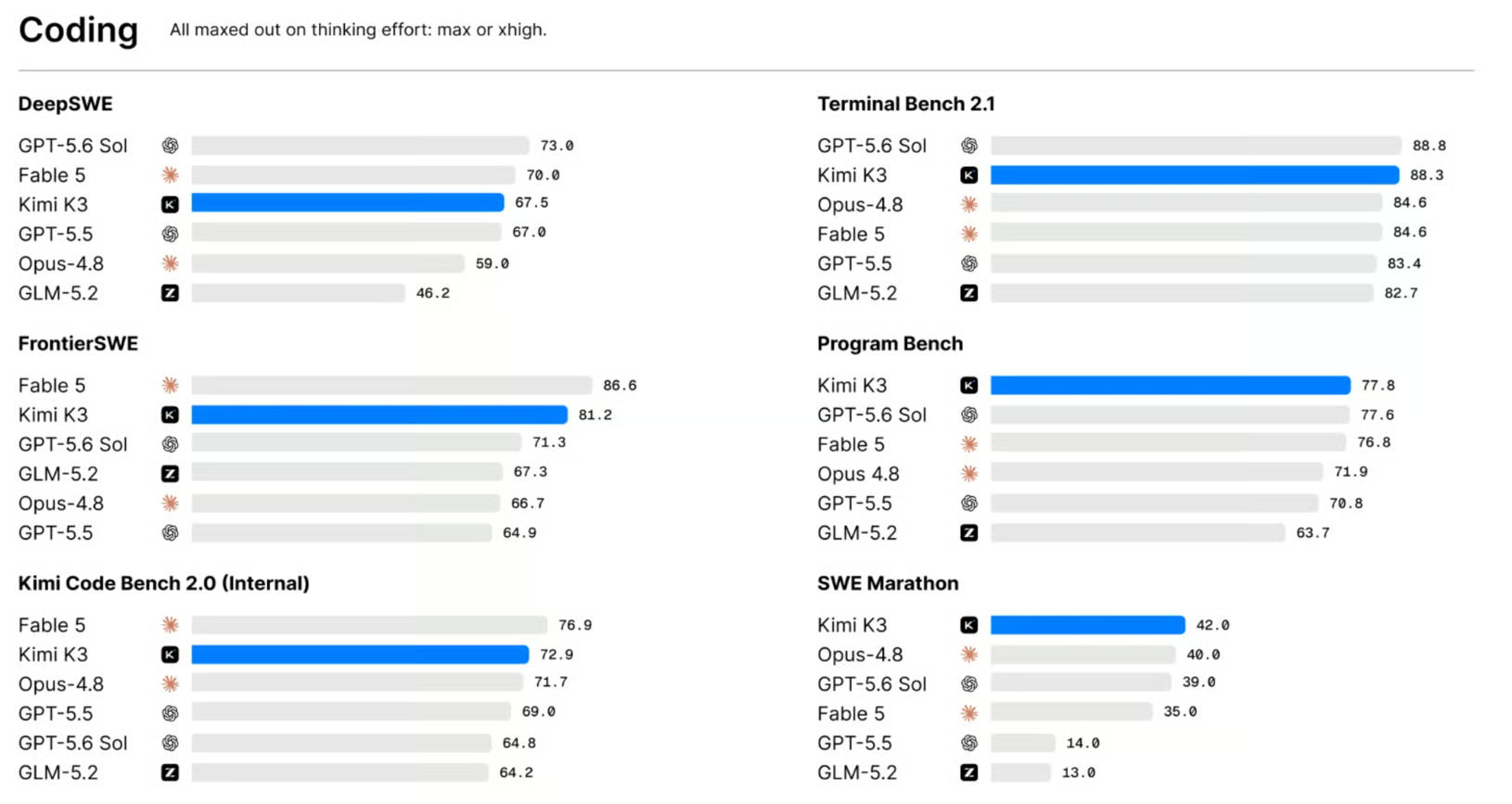
Los materiales de lanzamiento de Moonshot sí incluyen cifras reales de benchmarks, pero hay que tener en cuenta que distintos modelos se ejecutaron con distintos arneses de agentes. K3 se probó con el propio KimiCode de Moonshot; los modelos Claude con Claude Code o Terminus 2; los GPT con Codex. No es una comparación limpia: cada modelo se prueba dentro de sus mejores herramientas.
Estas son las conclusiones en tres categorías.
Como puedes ver en el gráfico, K3 no arrasa en los benchmarks de código, pero es competitivo en casi todo. Lidera claramente en Program Bench y SWE Marathon, se queda a medio punto de GPT-5.6 Sol en Terminal-Bench 2.1 y supera a Opus 4.8 en la mayoría de pruebas individuales. Donde pierde con claridad es en DeepSWE y FrontierSWE, donde Fable 5 y GPT-5.6 Sol se distancian.
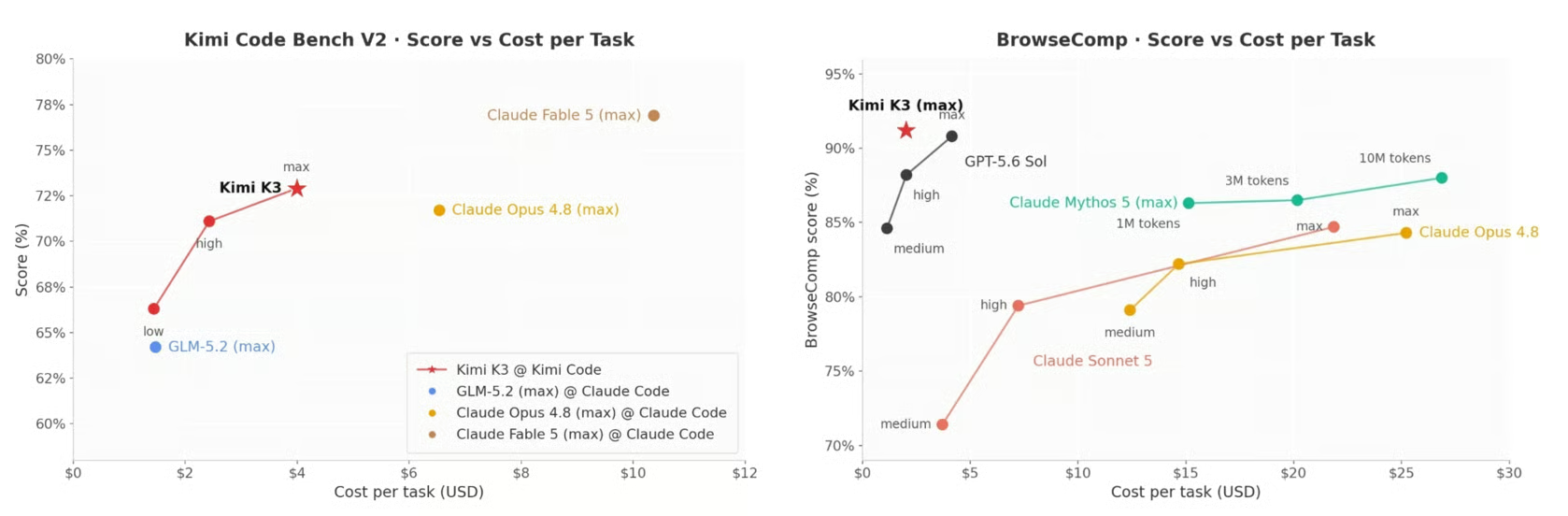
En el gráfico Kimi Code Bench V2 de Moonshot, K3 obtiene una puntuación similar a Opus 4.8 con aproximadamente la mitad del coste por tarea, y lejos de lo que cuesta Fable 5 por unos puntos extra. El gráfico BrowseComp cuenta una historia similar: K3 puntúa por encima de GPT-5.6 Sol y Claude Fable 5 costando una fracción por tarea.
El gráfico de parámetros del modelo es revelador. Es la visual más clara de la afirmación de "mayor modelo de pesos abiertos" mencionada antes, mostrando cómo Moonshot salta de los 1T parámetros de Kimi K2 directamente por encima de DeepSeek, Xiaomi y el resto hasta 2,8T en un solo lanzamiento.
Así se compara Kimi K3 con otros laboratorios chinos que están publicando modelos ahora mismo. A alto nivel, parece que el campo de pesos abiertos chino se divide en dos: laboratorios como DeepSeek y Z.AI siguen compitiendo por precio bajo, y Moonshot empieza a cobrar más.
DeepSeek V4 es más pequeño que K3 y tiene un precio muy inferior.
K3 apuesta por otra vía: es más grande y Moonshot cobra en consecuencia en lugar de competir por precio.
Esta comparación es interesante porque Alibaba respalda tanto a Moonshot como, por supuesto, a su propia línea Qwen.
Aun así, son diferentes: el buque insignia de Qwen, Qwen 3.7 Max, no es de pesos abiertos. Es cerrado, propietario y solo usable a través de productos de Alibaba o anfitriones de API de terceros. Alibaba sigue lanzando modelos Qwen más pequeños con pesos abiertos, pero su modelo de máxima gama ha pasado a ser cerrado.
GLM-5.2 se acerca más al manual clásico open source chino: un modelo realmente sólido, con licencia MIT y con precios muy por debajo de las tarifas de frontera occidentales. Es más pequeño que K3 y mucho más barato, y se ha ganado fama por ofrecer rendimiento casi de frontera en programación a una fracción del coste.
Así quedan los números, usando el Intelligence Index de Artificial Analysis (una puntuación compuesta a partir de nueve benchmarks, ejecutados de la misma forma en todos los modelos) como referencia:
| Modelo | Parámetros | Fecha de lanzamiento | Intelligence Index | Terminal-Bench 2.1 | Precio ($/M in / out) | ¿Pesos abiertos? |
|---|---|---|---|---|---|---|
| DeepSeek V4 Pro | 1,6T (49B activos) | 24 abr 2026 | 44 | No listado de forma independiente | $0,44 / $0,87 | Sí |
| Qwen 3.7 Max (Alibaba) | No divulgado | 20 may 2026 | 56,6 | No directamente comparable | $2,50 / $7,50 | No — solo API |
| GLM-5.2 (Z.AI) | 744B (40B activos) | 13 jun 2026 | 51 | 78 | $1,40 / $4,40 | Sí |
| Kimi K3 | 2,8T (16 de 896 expertos activos) | 16 jul 2026 | 57 | 88,3 | $3,00 / $15,00 | Sí |
Un par de notas: Qwen 3.7 Max se incluye como referencia, pero no es de pesos abiertos, como decía, así que no es un verdadero par en esta comparación, aunque tenía sentido incluirlo en la tabla. Además, la verificación independiente de terceros aún se está poniendo al día en general, así que nada es definitivo.
Ahora, veamos cómo se compara Kimi K3 con los modelos cerrados y propietarios de Anthropic y OpenAI.
Opus 4.8 ha sido el buque insignia de Anthropic durante meses y, según las cifras de Moonshot, K3 lo supera en varias pruebas individuales, especialmente en programación. K3 logra 88,3 en Terminal-Bench 2.1 frente a 84,6 de Opus 4.8.
La diferencia mayor es esta: Opus 4.8 es cerrado. K3 es de pesos abiertos, así que cuando se publiquen los pesos cualquiera podrá autoalojarlo, afinarlo o ejecutarlo sin depender de los servidores de Moonshot.
Como se ve en los gráficos, K3 supera a Opus 4.8 por un punto en el Intelligence Index, pero la brecha se amplía en el resto: K3 cuesta aproximadamente la mitad por tarea y responde con el primer token unas 20 veces más rápido.
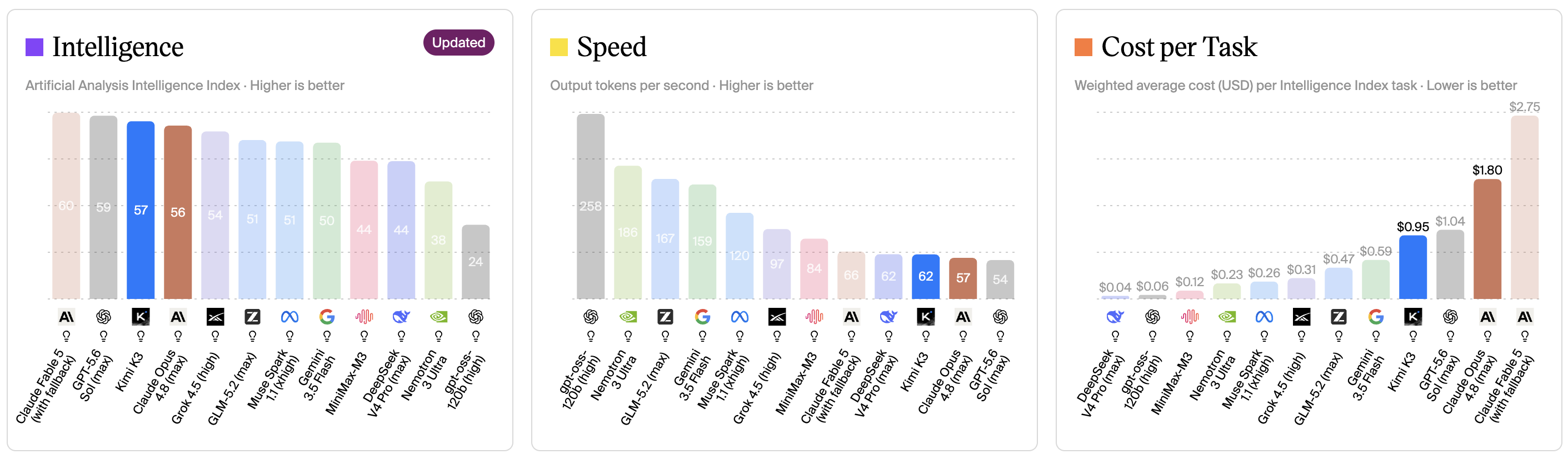
Fable 5 es el modelo más nuevo y capaz de Anthropic, y es al que K3 no alcanza. Lidera con claridad en inteligencia global y cuesta bastante más ejecutarlo. Fable 5 tiene un precio de $10/$50 por millón de tokens frente a los $3/$15 de K3. Pero la propuesta de K3 no es "tan bueno como Fable 5", sino "casi hasta ahí, por una fracción del precio".
Como muestran los gráficos, Fable 5 lidera con holgura en el Intelligence Index y es incluso un poco más rápido que K3 en velocidad de salida pura. Donde K3 gana es en coste: funciona a aproximadamente un tercio del precio por tarea de Fable 5.
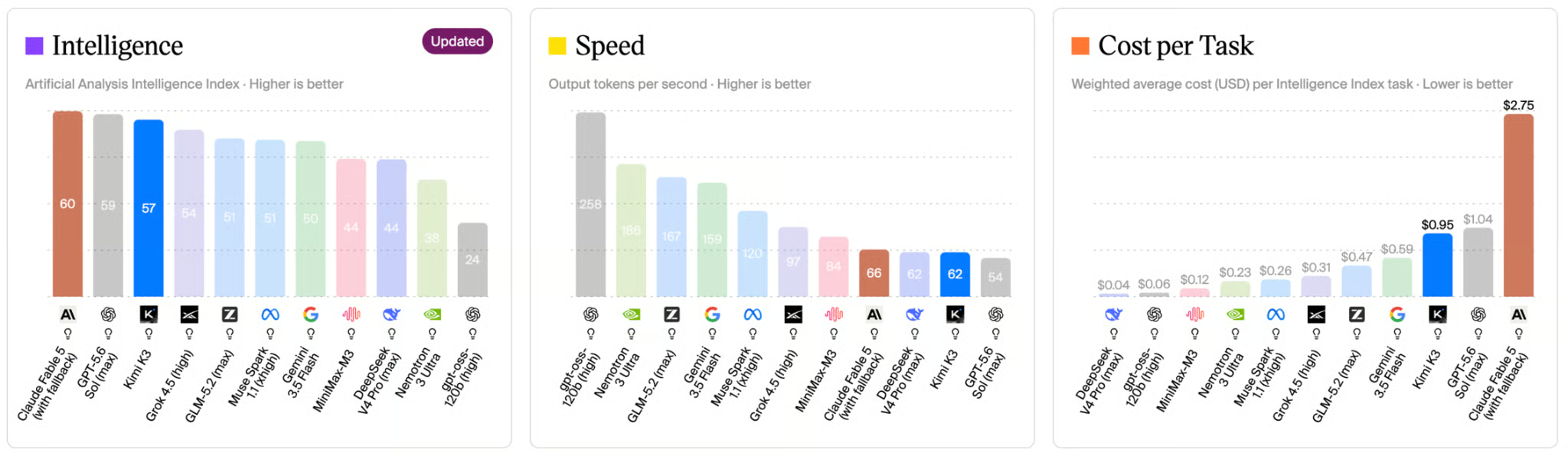
GPT-5.5 queda justo por debajo de K3 en los benchmarks de Moonshot y se sitúa en un rango de precio similar al de otros buques insignia de EE. UU., muy por encima de K3.
Según los gráficos, K3 supera ligeramente a GPT-5.5 en el Intelligence Index y cuesta un poco menos por tarea. GPT-5.5 genera tokens algo más rápido una vez en marcha, así que ambos se reparten ventajas según qué factor te importe más.
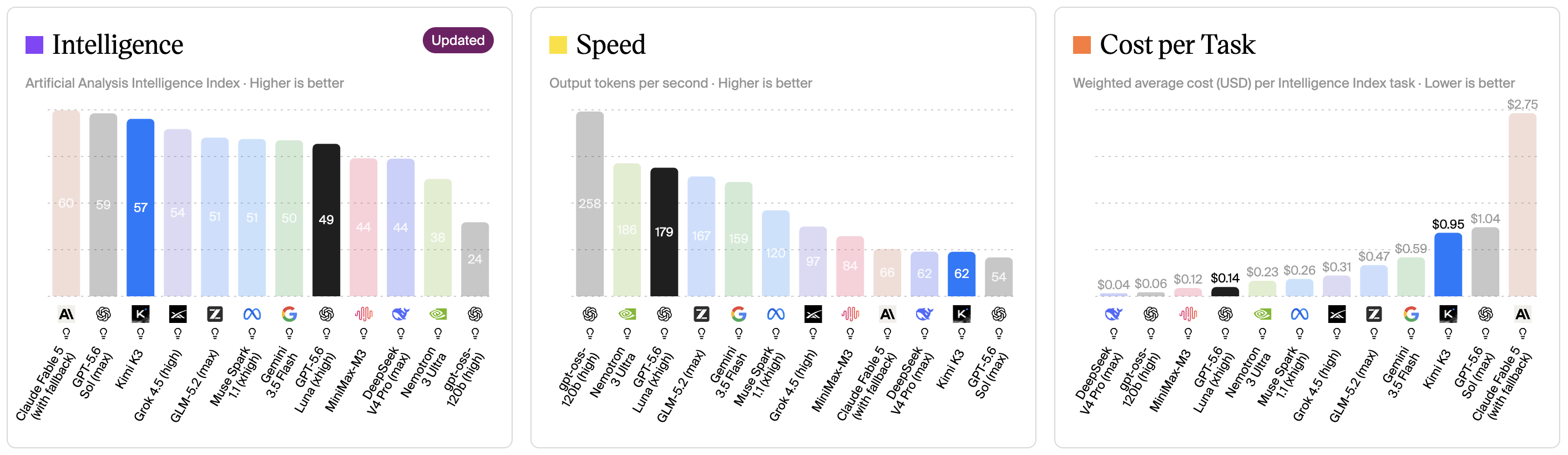
GPT-5.6 Sol es el modelo más nuevo y caro de OpenAI en esta comparación y, en Terminal-Bench 2.1, está prácticamente empatado con K3. Sol obtiene 88,8 frente a los 88,3 de K3.
La diferencia importante es la misma que con Opus 4.8: Sol es de pesos cerrados, así que solo puedes usarlo a través de productos de OpenAI (ChatGPT, Codex, el API), mientras que K3 es de pesos abiertos. Cuando salgan los pesos, cualquiera podrá autoalojarlo o afinarlo.
Como verás en los gráficos, Sol supera a K3 en el Intelligence Index, pero K3 gana en velocidad y coste.
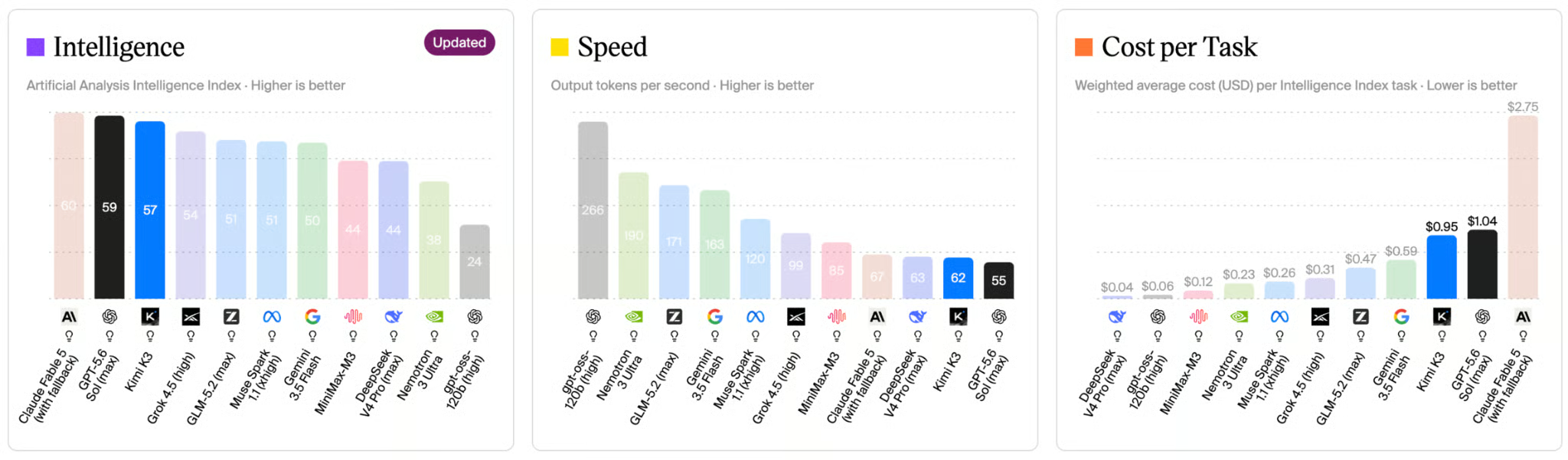
Kimi K3 ya está disponible, aunque no del todo. El modelo se lanzó ayer y ya puede usarse hoy en kimi.com, las apps móviles de Kimi, Kimi Work, Kimi Code y el API de Kimi con el ID de modelo kimi-k3. También empieza a aparecer en enrutadores de terceros como OpenRouter y OrcaRouter.
Lo que aún no ha salido son los pesos abiertos. Moonshot dice que los publicará antes del 27 de julio de 2026, mientras sigue trabajando con socios de inferencia y mantenedores open source para alinear detalles técnicos. Hasta entonces, puedes usar K3 a través de los servicios alojados de Moonshot, pero no descargarlo ni autoalojarlo.
Te recomendamos suscribirte a nuestro boletín semanal de IA, The Median, para estar al día de lanzamientos como este.
En cuanto al precio, K3 usa facturación plana por uso y no por niveles según contexto, pese a la ventana de 1M de tokens. Las tarifas oficiales de Moonshot son $0,30 por millón de tokens de entrada con acierto de caché, $3,00 por millón de tokens de entrada sin acierto de caché y $15,00 por millón de tokens de salida — con una tasa de acierto de caché superior al 90% en cargas típicas de programación, lo que reduce el coste efectivo de entrada en la práctica.
Moonshot es claro en su blog técnico sobre las limitaciones:
Kimi K3 es el mayor modelo de pesos abiertos publicado hasta la fecha. Incorpora una arquitectura de atención nueva orientada de lleno a contextos largos y cargas de trabajo con agentes. En los benchmarks públicos no es el ganador absoluto —Fable 5 y GPT-5.6 Sol se le adelantan—, pero es muy competitivo en tareas de programación, agentes y multimodalidad a una fracción del coste.
Ese es el hilo conductor del artículo: K3 no intenta ganar en todas las categorías. Busca que la relación precio-capacidad sea difícil de ignorar, igual que hizo DeepSeek con R1 y más recientemente GLM-5.2 — con la diferencia de que, esta vez, Moonshot cobra tarifas de frontera para lograrlo, no de descuento.
Aprende IA con DataCamp
Curso
Curso
Curso
blog
Abid Ali Awan
9 min
blog
blog
Josep Ferrer
8 min
Tutorial
Moez Ali
11 min
Tutorial
Zoumana Keita
12 min
Tutorial
Dimitri Didmanidze
8 min