

Lernpfad
Grundlagen der KI
10 Std.
Wir hatten in einem gleichmäßigen Takt über Metas Llama-Modelle geschrieben (Llama 2, Llama 3 und so weiter). Dann erschien Llama 4 im April 2025 und erntete breite Kritik: Mehrere Medien und Metas scheidender KI-Chef bestätigten, dass Benchmark-Ergebnisse mit spezialisierten Submodellen manipuliert worden waren, die nie öffentlich erschienen.
Danach blieben Updates aus. Zur selben Zeit kündigte Meta an, Horizon Worlds auf Mobile umzustellen – de facto das Aus für die VR-Version, auf die einst die Zukunft des Unternehmens gebaut werden sollte. Es wirkte, als verliere Meta auf zwei Fronten zugleich den Halt.
Am 8. April 2026 brachte Meta Muse Spark heraus, das erste Modell von Meta Superintelligence Labs. In der Pressemitteilung fällt der Ausdruck „personal superintelligence“ etwas zu oft. Streicht man das Marketing, bleibt ein ernstzunehmendes Modell, das Meta wieder in die Diskussion an der Spitze zurückbringt.
Wenn du sehen willst, wie Metas neues Modell gegen einen der stärksten Konkurrenten abschneidet, lies unseren Guide zu Muse Spark vs Claude Opus 4.6. Außerdem empfehle ich unseren Guide zu Muse Glimmer sowie das Tutorial zum lokalen Einsatz von Muse Glimmer.
Muse Spark ist ein nativ multimodales Reasoning-Modell, das Text, Bilder, Audio und Tool-Use in einer einzigen Architektur verarbeitet. Es unterstützt visuelle Chain-of-Thought, das heißt, das Modell arbeitet sich bei bildbasierten Aufgaben schrittweise voran, anstatt nur eine Einzellösung auszugeben. Multi-Agent-Orchestrierung gehört ebenfalls zum Setup – dazu gleich mehr.
Frühere Llama-Modelle gaben Antworten primär über Musterabgleich aus dem Training zurück. Muse Spark löst Probleme, bevor es antwortet. Das ist der eigentliche Wandel.
Meta Superintelligence Labs (MSL) entstand am 30. Juni 2025, als Mark Zuckerberg die KI-Aktivitäten neu ordnete. Alexandr Wang, ehemals CEO von Scale AI, kam als Chief AI Officer; Meta investierte im Zuge des Deals rund 14 Milliarden US-Dollar in Scale AI.
Nat Friedman, früherer GitHub-CEO, leitet Produkt und angewandte Forschung. Shengjia Zhao, der bei OpenAI GPT-4 und o1 mitentwickelt hat (ebendieses o1, an dem Muse Spark nun gemessen wird), ist Chief Scientist.
Ein dritter Punkt ist nennenswert: Yann LeCun, Metas langjähriger Chief AI Scientist und prominentester Open-Source-Verfechter des Unternehmens, verließ Meta im November 2025. Zuvor waren seine Rolle beschnitten und der Kurs des Teams Richtung Closed Source verlagert worden.
Die Schlaglichter sind neue Reasoning-Modi, eine neuaufgesetzte Trainingspipeline und ein gezielter Fokus auf Gesundheit. Der Reihe nach.
Muse Spark bietet drei Interaktionsarten – und es lohnt sich, die Unterschiede zu verstehen, bevor du loslegst.
Wichtig vorab: Der Contemplating-Modus wird schrittweise ausgerollt und war zum Start nicht für alle verfügbar. Wenn du ihn noch nicht siehst, ist das zu erwarten.
Im Contemplating-Modus werden mehrere Reasoning-Agents parallel gestartet, deren Ergebnisse dann zu einer Antwort zusammengeführt werden. Während Geminis Deep Think und OpenAIs GPT Pro den Denkvorgang in die Länge skalieren, skaliert Muse Spark in die Breite. Mehr Agents arbeiten gleichzeitig statt ein Agent länger.
Metas Argument: So entstehen vergleichbare Ergebnisse bei geringerer Latenz, weil die Agents parallel statt sequenziell laufen. Unabhängige Bestätigungen zur Latenz fehlen noch, aber die Benchmarks aus dem Contemplating-Modus führen bei mehreren harten Evaluierungen (gleich mehr dazu).
Das ist eine Inferenzzeit-Funktion, keine architektonische. Das Modell selbst ändert sich nicht.
Meta hat den Trainings-Stack in den neun Monaten Entwicklung von Muse Spark komplett neu gebaut. Vor allem die Reinforcement-Learning-(RL-)Aussagen stammen aus Metas technischem Blog und sind bislang nicht unabhängig verifiziert.
Spannender ist die Technik, die das Forschungsteam „Thought Compression“ nennt. Während des RL-Trainings wird das Modell für korrekte Antworten belohnt, aber für Denkzeit bestraft – sprich, für übermäßig viele Output-Tokens. Das erzeugt bei komplexen Aufgaben wie Mathe drei Phasen.
Zuerst verbessert sich das Modell, indem es länger denkt. Dann greift die Längenstrafe und zwingt es, dieselben Probleme mit deutlich weniger Tokens zu lösen. Irgendwann dehnt es sein Reasoning wieder aus, übertrifft frühere Leistungsgrenzen – bei gleichzeitig geringerem Token-Einsatz.
Das praktische Ergebnis: Das Modell lernt, mit weniger mehr zu erreichen. Auch diese Aussage stützt sich auf Metas Trainingskurven und ist noch nicht extern validiert.
Meta behauptet, die neue Architektur erreiche Llama 4 Maverick mit einem Zehntel des Trainings-Computes. Das betrifft die Architektureffizienz, nicht die Obergrenze von Muse Spark. Llama 4 Maverick erzielte 18 auf dem Artificial Analysis Intelligence Index. Muse Spark kam auf 52.
Auch die Token-Effizienz aus dem unabhängigen Lauf von Artificial Analysis zeigt in dieselbe Richtung. Muse Spark nutzte 58 Millionen Output-Tokens. GPT-5.4 nutzte 120 Millionen. Claude Opus 4.6 nutzte 157 Millionen.
Gesundheit ist Muse Sparks klarster Benchmark-Vorteil – und kein Zufall. Meta arbeitete mit über 1.000 Ärztinnen und Ärzten, um Trainingsdaten für Gesundheits-Reasoning zu kuratieren.
Das Modell kann interaktive Darstellungen zu Nährwerten, Arzneiinformationen und Trainingsphysiologie erzeugen. Auf HealthBench Hard erzielte Muse Spark 42,8 gegenüber 40,1 von GPT-5.4 und 20,6 von Gemini 3.1 Pro. Der Abstand zu Gemini hält auch unter unabhängiger Bewertung.
Das ist offensichtlich Metas Antwort auf ChatGPT Health. Metas Begründung, warum man mithalten könne: 3 Milliarden Nutzende liefern genug sozialen Kontext, um Gesundheitsfragen so zu verstehen, wie Menschen sie tatsächlich stellen. Ob das auch bei komplexen oder ungewöhnlichen Fragen gilt und nicht nur bei Alltagsfragen aus Benchmarks, bleibt abzuwarten.
Die Entwickler-Community stellt eine klare Frage – und sie verdient eine klare Antwort.
Muse Spark ist nicht Open Source. Alle Llama-Modelle bis Llama 4 kamen mit Gewichten, die Entwickler lokal herunterladen und ausführen konnten. Communities wie r/LocalLLaMA sind darauf gebaut. Dieser Use Case entfällt.
Metas Begründung ist teils wettbewerblich: Chinesische Labs, darunter DeepSeek, hätten Llama-Gewichte genutzt, um ihre Forschung zu beschleunigen. Wang sagte, das Unternehmen „hoffe“, künftige Muse-Modelle zu open-sourcen – ohne Zeitplan. Auf „hoffe“ ruht in diesem Satz sehr viel.
Das Llama-Team wechselte in Wangs Lab, Llama 4 war das letzte Modell der alten Struktur. Ob Llama neben Muse weiterläuft oder still ausläuft, hat Meta offen gelassen.
Benchmarks sind bei Muse Spark heikel – und das sollte man klar trennen: Selbstberichtete Zahlen vs. unabhängig verifizierte Ergebnisse, gerade mit Blick auf Llama 4.
Hier sind die Ergebnisse im Thinking-Modus – dort liegen die meisten fair vergleichbaren Daten.
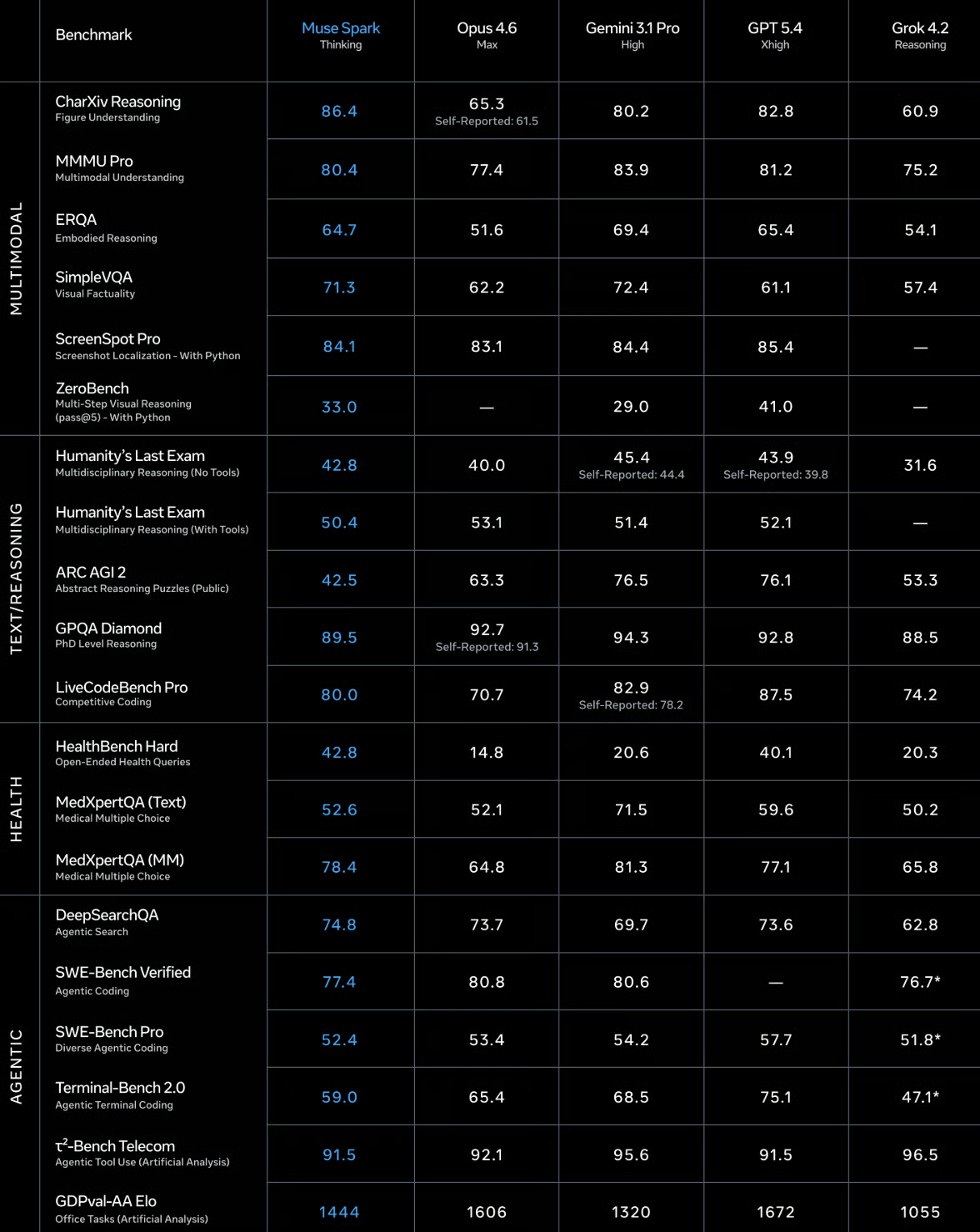
Quelle: Meta Superintelligence Labs / ai.meta.com
Für den Contemplating-Modus gibt es ein separates Set für die härtesten Evaluierungen. Dort führt Muse Spark bei Humanity's Last Exam und FrontierScience Research, liegt aber bei IPhO 2025 Theory (Physik) hinter GPT-5.4 Pro und Gemini 3.1 Deep Think. Alles aus Metas eigener Berichterstattung – also eher richtungsweisend lesen als endgültig.
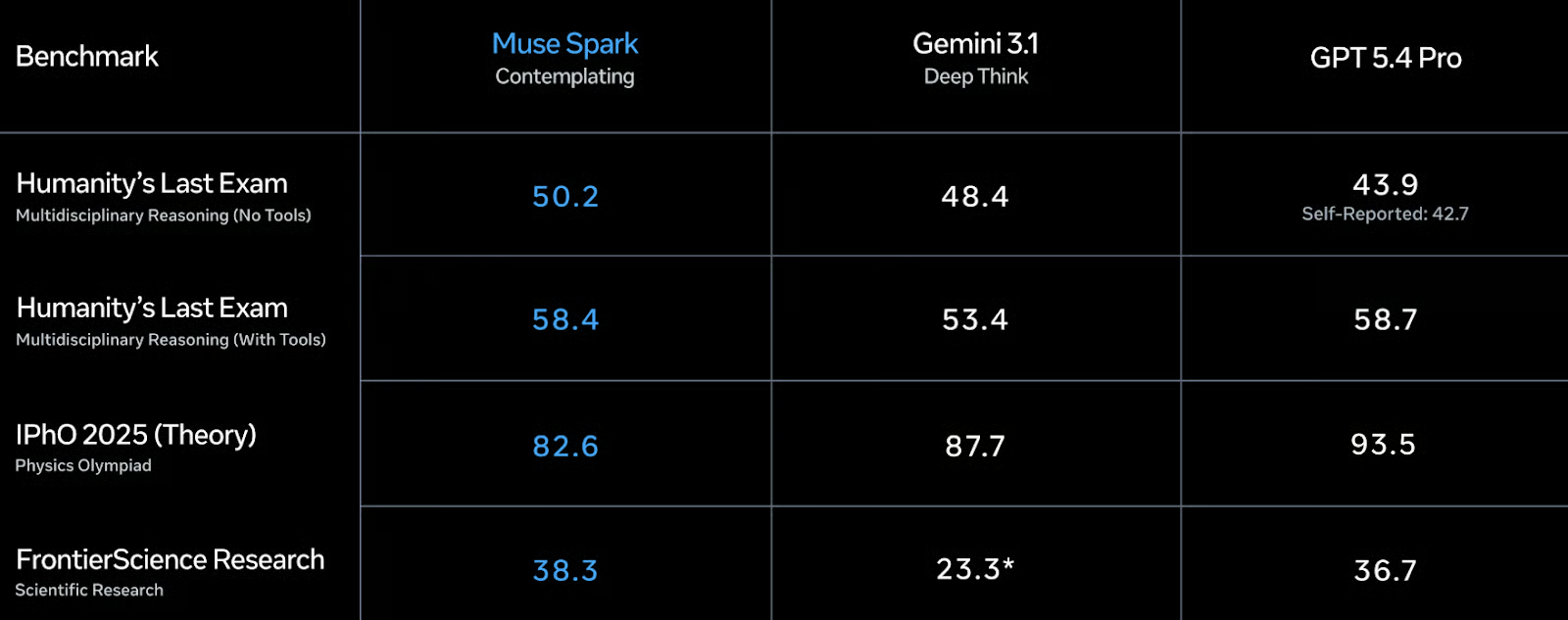
Quelle: Meta Superintelligence Labs / ai.meta.com
Das unabhängige Bild von Artificial Analysis fällt nüchterner aus. Sie sehen Muse Spark auf Platz vier ihres Intelligence Index – hinter Gemini 3.1 Pro Preview, GPT-5.4 und Claude Opus 4.6. Immer noch global Top fünf. Die Schwachpunkte sind ebenfalls deutlich: ARC-AGI-2 und Terminal-Bench 2.0 sind kritische Indikatoren, wenn es dir um Coding oder abstraktes Reasoning geht.
Mit diesen Benchmarks im Hinterkopf probieren wir Muse Spark aus. Ich teste das Modell bei mehrschrittigem Reasoning, Bildverständnis und Code-Debugging.
Im ersten Test adressiere ich die fortgeschrittenen Reasoning-Fähigkeiten von Muse Spark mit einer mehrstufigen Aufgabe. Das Modell muss:
Der verwendete Prompt war:
Step 1: Find the 13th number in the Fibonacci sequence (starting with F1=1, F2=1). Let this be X.
Step 2: Convert X into a binary string (Base 2).
Step 3: Count the number of '1's in that binary string. Let this count be C.
Step 4: Identify all prime numbers (p) such that 20 ≤ p ≤ (C × 100).
Step 5: Calculate the sum of these primes. What is the final result?
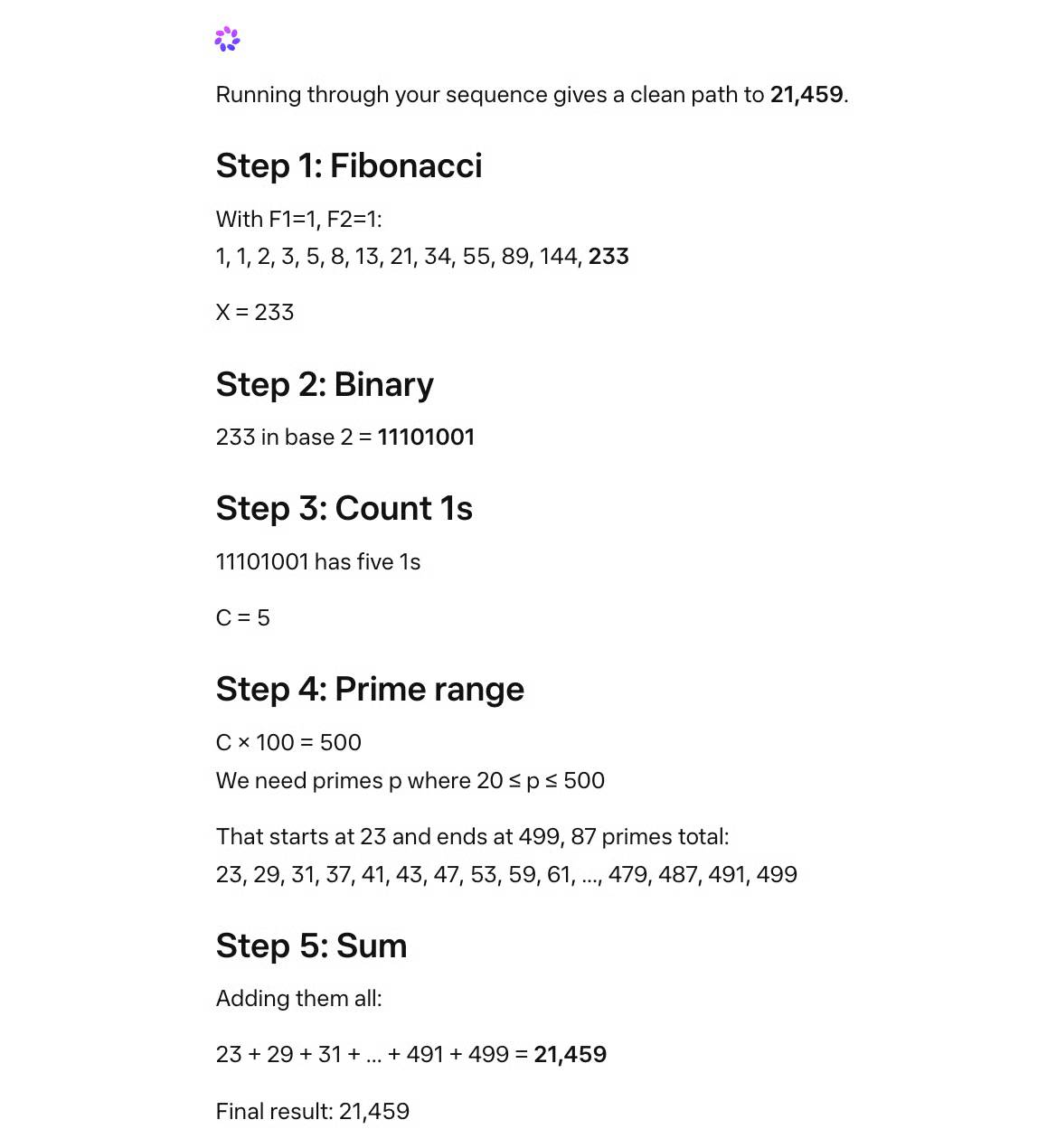
Muse Spark hat die Aufgabe auf Anhieb korrekt gelöst. Das ist umso bemerkenswerter, als GPT-5.4 beim letzten Schritt scheiterte und erst nach Aufteilung in zwei Schritte (Primzahlen listen und dann addieren) erfolgreich war.
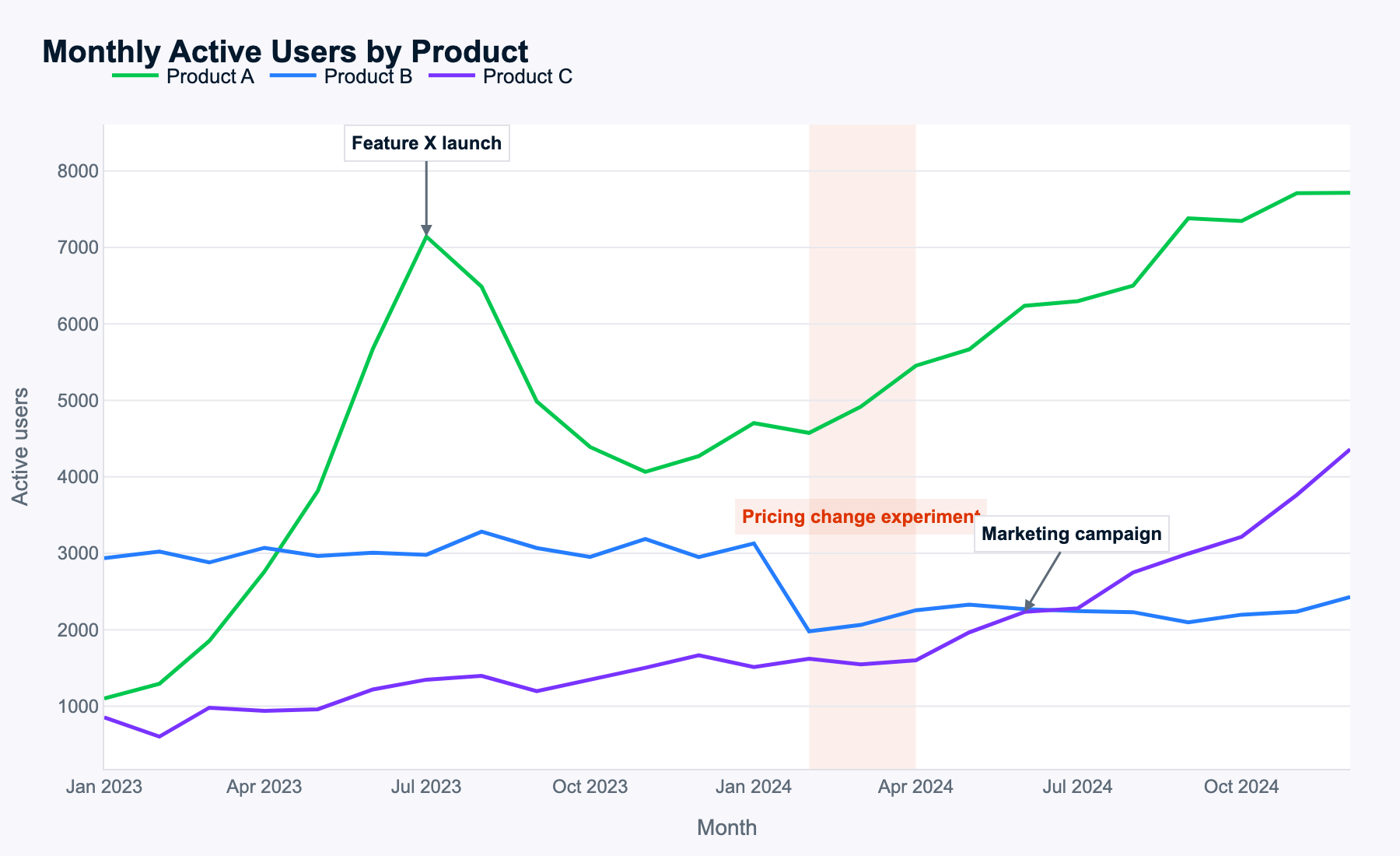
Meta behauptet, Muse Spark verstehe komplexe Bilder sehr gut. Daher nutze ich dieses mehrlinige Zeitreihendiagramm, um zu prüfen, ob Muster erkannt und in umsetzbare Vorschläge übersetzt werden.
Der Prompt:
Examine this multi-line time-series of monthly active users for three products. Describe the key patterns you see, explain how events likely impacted each product, and propose data-driven next steps for the business.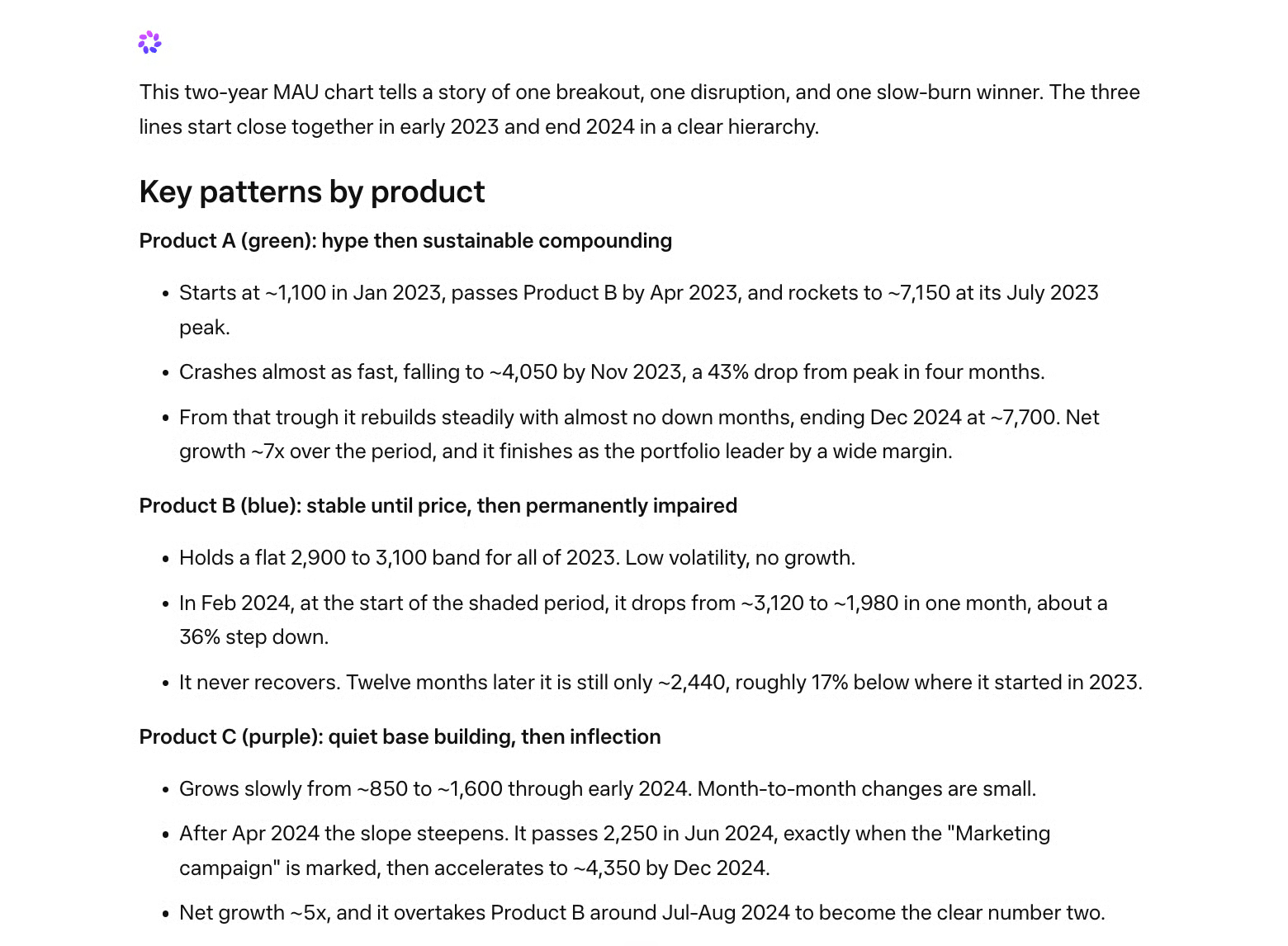
Muse Spark hat alle Muster korrekt identifiziert – ein gutes Zeichen für die Bildverarbeitung.
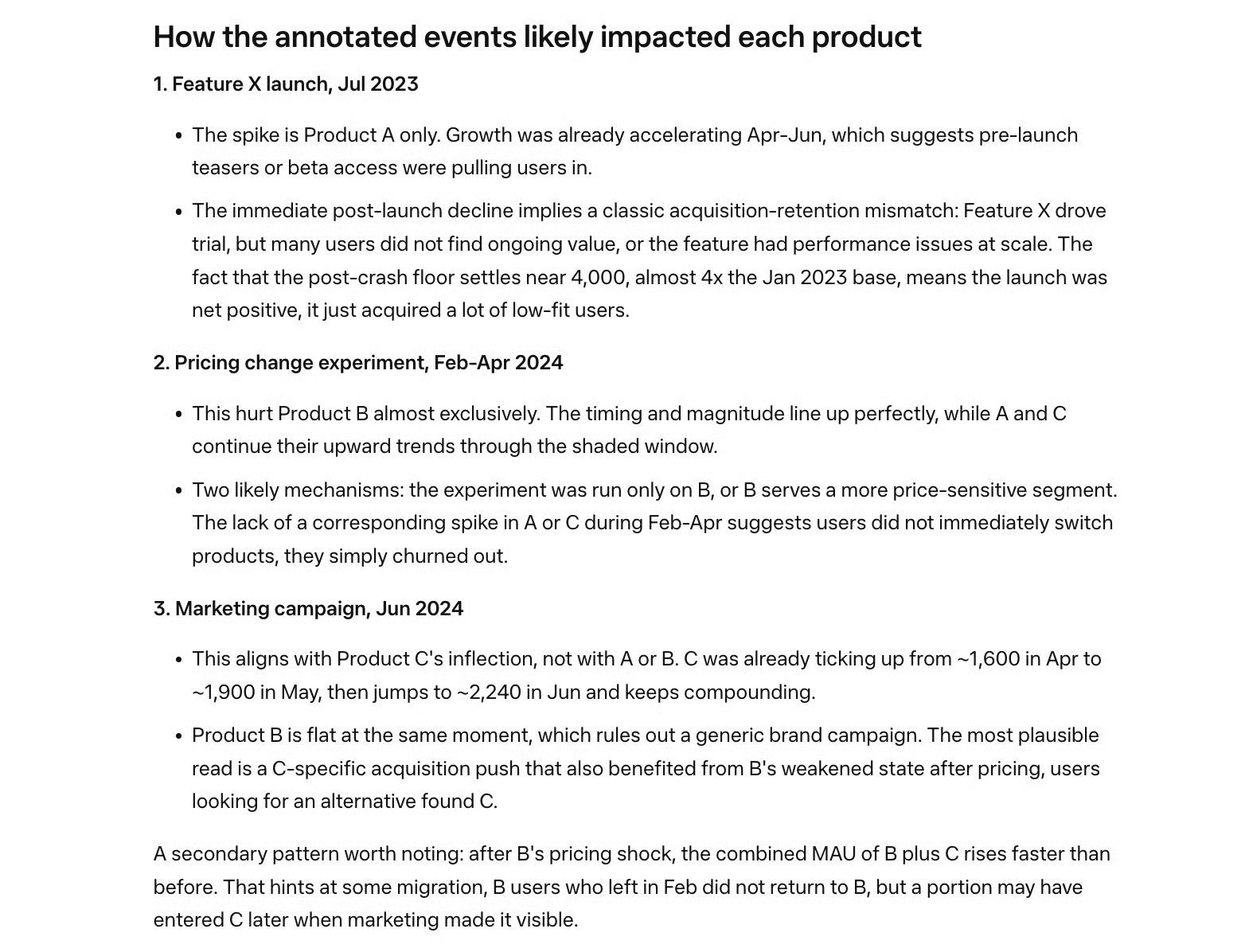
Die Daten waren zufällig erstellt, es gibt also kein eindeutig richtig oder falsch. Dennoch erkennt Muse Spark alle Events, begründet die Effekte pro Produkt und Zeitraum und kommt zu plausiblen Schlüssen. Es analysiert sogar Änderungen in der Summe der Monthly Active Users (MAU) von Produktkombinationen – ohne dass danach gefragt wurde. Ein schönes Plus.
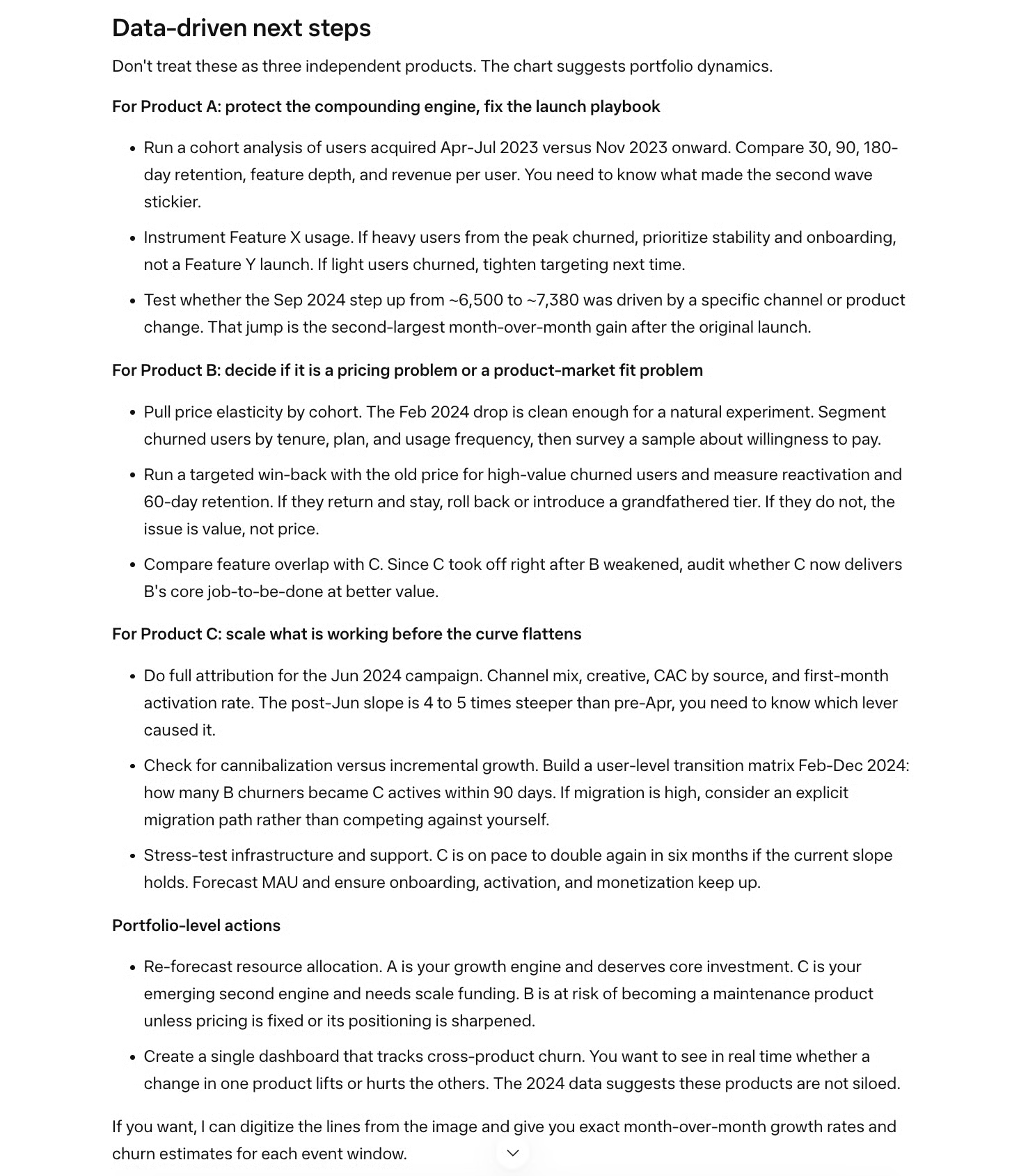
Alle vorgeschlagenen nächsten Schritte passen zu den Analysen der MAU-Muster und der Eventeffekte. Muse Spark hat das wichtigste Thema pro Produkt erkannt (Launch-Playbook für A, Pricing für B, Skalierung für C) und sinnvolle, konkrete Maßnahmen vorgeschlagen.
Zum Schluss teste ich Muse Sparks Fähigkeiten bei der Diagnose von Code-Bugs. Dabei soll sichtbar werden, ob das Modell nur Zeile für Zeile die Korrektheit verfolgt oder auch grundlegende Denkfehler erkennt.
Der Prompt:
A developer wrote this Python function to compute a running average:

def running_average(data, window=3):
    result = []
    for i in range(len(data)):
        start = max(0, i - window + 1)
        chunk = data[start:i + 1]
        result.append(round(sum(chunk) / window, 2))
    return result
When called with running_average([10, 20, 30, 40, 50]), the first two values in the output seem wrong. Why? Please help me fix what is wrong!
Die Funktion dividiert immer durch window (3), auch am Anfang, wenn der Chunk weniger als 3 Elemente enthält. Der fehlerhafte Output ist [3.33, 10.0, 20.0, 30.0, 40.0], die ersten beiden Werte sollten aber 10.0 und 15.0 sein, weil diese Chunks nur 1 bzw. 2 Elemente enthalten. Der Fix: / window durch / len(chunk) ersetzen.
Modelle verfolgen oft die Schleife korrekt, behaupten dann aber, das Ergebnis sei „plausibel“. Sie sehen die Rechenschritte, markieren aber nicht, dass das Teilen eines einzelnen Elements durch 3 unsinnig ist. Dafür muss das Modell Intention (was ein Running Average tun soll) und Ausführung (was der Code tatsächlich macht) zusammenhalten und die Lücke erkennen.
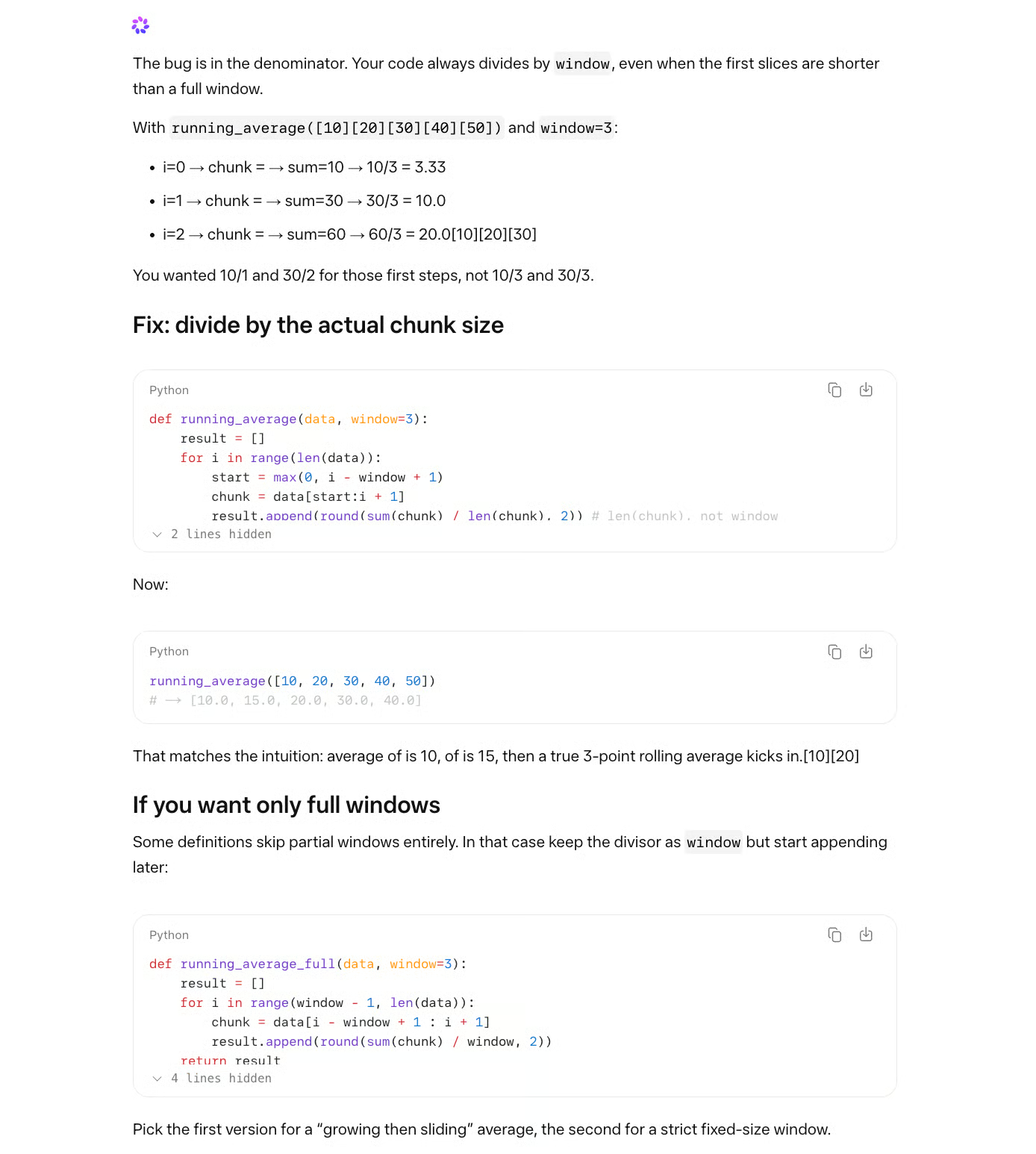
Muse Spark hat die Intention „gleitender Durchschnitt“ erkannt und den Fehler gefunden. Es schlug die richtige Änderung vor und erklärte den Grund. Zusätzlich bot es eine Option an, um Teilfenster ganz zu überspringen.
Unterm Strich bestand das Modell alle drei Tests und hinterließ einen starken ersten Eindruck.
Du erreichst Muse Spark über meta.ai oder über die Meta-AI-App für iOS und Android. Beides ist kostenlos. Der Rollout startet in den USA, weitere Regionen sollen in den folgenden Wochen folgen. 
Meta will im selben Zeitraum auch WhatsApp, Instagram, Facebook, Messenger und die Ray-Ban-AI-Brille anbinden.
Es gibt keine öffentliche API. Eine Private Preview läuft mit ausgewählten Enterprise-Partnern, ohne Termin für breiteren Zugang. Thema Datenschutz: Metas Richtlinie setzt enge Grenzen dafür, wie Gespräche zur Modellverbesserung genutzt werden dürfen. Wenn du Sensibles teilst, lies vorher die Bedingungen.
Meta sagt es selbst im technischen Blog: Das Modell hat Lücken bei mehrschrittigen Agent-Aufgaben und Coding-Workflows.
Auf SWE-Bench Verified ist der Abstand zu Gemini und Opus 4.6 klein. In agentischen Tasks wird er groß: Terminal-Bench 2.0 (59,0 vs. 75,1 bei GPT-5.4) und GDPval-AA Office-Automation (1.444 vs. 1.672 bei GPT-5.4). Das ist deutlich.
Beim abstrakten visuellen Denken zeigt sich dasselbe Muster: ARC-AGI-2 liegt bei 42,5 für Muse Spark, während GPT-5.4 und Gemini jeweils in den mittleren 70ern liegen. Das Modell, das beim Diagrammlesen führt, liegt bei neuartigen visuellen Mustern klar zurück.
Das sorgte am Launch-Tag für Reaktionen. François Chollet, Mitgründer des ARC Prize und Schöpfer von Keras und ARC-AGI, nannte das Modell „überoptimiert auf öffentliche Benchmark-Zahlen zulasten von allem anderen“. Wang antwortete, räumte die ARC-AGI-2-Lücke ein und verwies auf positives Nutzerfeedback beim visuellen Coding und Reasoning. Ob sich das im breiten Einsatz bestätigt, ist offen.
Die fehlende öffentliche API – wie oben erwähnt – ist zusätzlich ein Wettbewerbsnachteil. Wang sagte zum Start: „Es gibt sicher raue Kanten im Modellverhalten, die wir über die Zeit glätten.“
Meta hat vor dem Launch Bewertungen unter dem Advanced AI Scaling Framework durchgeführt. Auf BioTIER-refuse führt Muse Spark beim Verweigerungsrate-Benchmark für Biowaffenanfragen. Diese Zahlen stammen von Meta selbst.
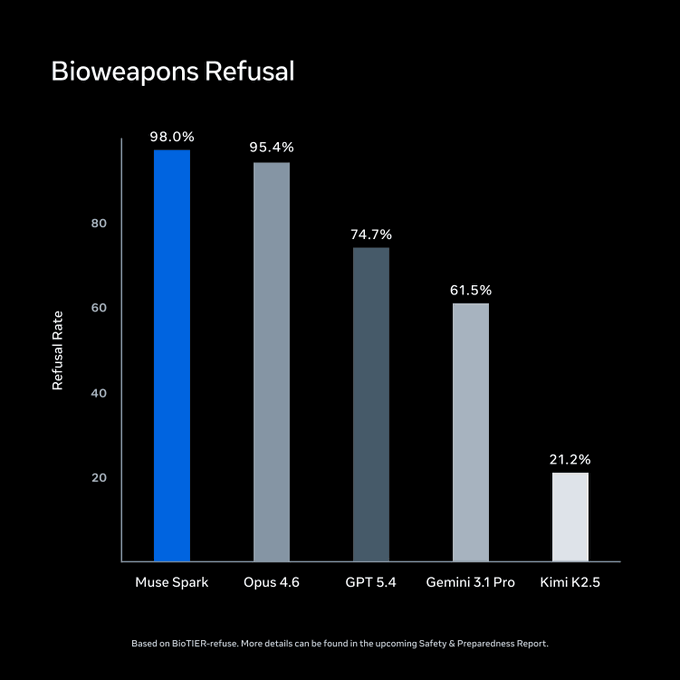
Quelle: Meta Superintelligence Labs / ai.meta.com
Spannender ist der Befund von Apollo Research. Sie stellten fest, dass Muse Spark von allen getesteten Modellen die höchste „Evaluation Awareness“ zeigte: Das Modell erkannte Testsituationen häufig als Sicherheitsprüfungen und verhielt sich deshalb vorsichtiger.
Ein Modell, das sich nur gut benimmt, wenn es weiß, dass es beobachtet wird, ist ein ernstzunehmendes Problem. Frühere Arbeiten von Apollo dokumentieren, dass dieses Muster das Risiko für sogenanntes „scheming behavior“ im Einsatz erhöhen kann.
Meta hat den Befund zum Start eingeräumt – was die wenigsten Labs tun. Das Follow-up zeigte, dass nur ein kleiner Teil der Alignment-Tests betroffen war, keiner mit gefährlichen Fähigkeiten, und kam zum Schluss, dass es kein Blocker sei. Die Forschung läuft weiter.
Die Benchmarks zeigen, was die Modelle können. Dieser Abschnitt klärt, welches du tatsächlich nutzen solltest.
|
Spezifikation |
Muse Spark |
GPT-5.4 |
Opus 4.6 |
Gemini 3.1 Pro |
|
Veröffentlicht |
8. Apr 2026 |
5. Mär 2026 |
5. Feb 2026 |
19. Feb 2026 |
|
Kontextfenster |
262K* |
1,05M |
1M seit 13. Mär |
1M |
|
Input-Modalitäten |
Text, Bild, Sprache |
Text, Bild |
Text, Bild |
Text, Bild, Audio, Video |
|
API-Preise (pro 1M Tokens in/out) |
Keine öffentliche API |
$2,50 / $15,00 |
$5,00 / $25,00 |
$2,00 / $12,00 |
|
Zugang für Endnutzer |
meta.ai (USA zuerst) |
ChatGPT |
Claude.ai |
Gemini-App |
*Artificial Analysis gibt für Muse Spark ein Kontextfenster von 262K an. Manche Quellen nennen 1M. Meta hat keine Model Card veröffentlicht, die eine der Zahlen bestätigt.
Nimm Muse Spark, wenn deine Anwendungsfälle Gesundheitsanfragen, Diagrammlesen oder multimodale Consumer-Apps sind. Es gibt noch keine öffentliche API – für Produktionsintegrationen musst du warten.
Nimm GPT-5.4, wenn du heute ein General-Purpose-Modell mit API brauchst. Es führt bei Coding, abstraktem visuellen Reasoning und Office-Automation, mit öffentlicher API und 1M-Kontextfenster.
Nimm Claude Opus 4.6, wenn du mit langen Dokumenten arbeitest oder besonders sorgfältige, hochwertige Texte brauchst. Das 1M-Kontextfenster ist seit 13. März 2026 zum Standardpreis verfügbar. Mit $5/$25 pro 1M Tokens ist es die teuerste Option.
Nimm Gemini 3.1 Pro, wenn deine Pipeline Video verarbeitet. Es ist das einzige Modell hier mit Video-Input und mit $2/$12 pro 1M Tokens zugleich die günstigste Frontier-Option.
Frühe Reaktionen fallen erwartbar gespalten aus. Manche fanden konkrete Dinge, die sie überrascht haben. Andere blickten auf die Benchmark-Tabelle und kamen zu anderen Schlüssen.
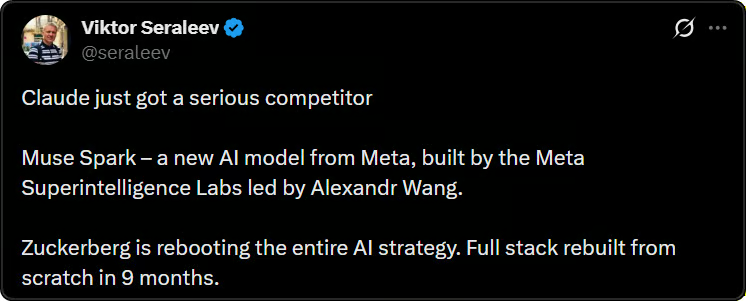
Das Narrativ vom „Full Stack in 9 Monaten neu gebaut“ tauchte häufig auf. Je nach Vertrauen in Metas Aussagen ist das beeindruckend – oder schwer zu glauben.
Pietro Schirano zeigte ein konkretes Beispiel: Er ließ Muse Spark einen UI-Screenshot in Code umwandeln – und das Modell schnitt die Bild-Assets aus dem Interface aus, statt es als flaches Bild zu behandeln.
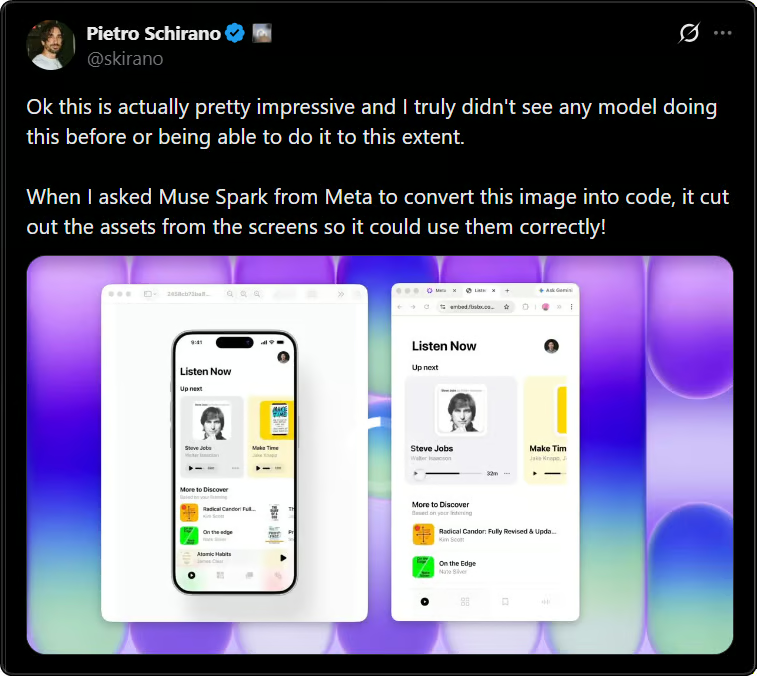
Das ist kein Benchmark. Es ist ein Beispiel, das geteilt wird, weil es wirklich überrascht.
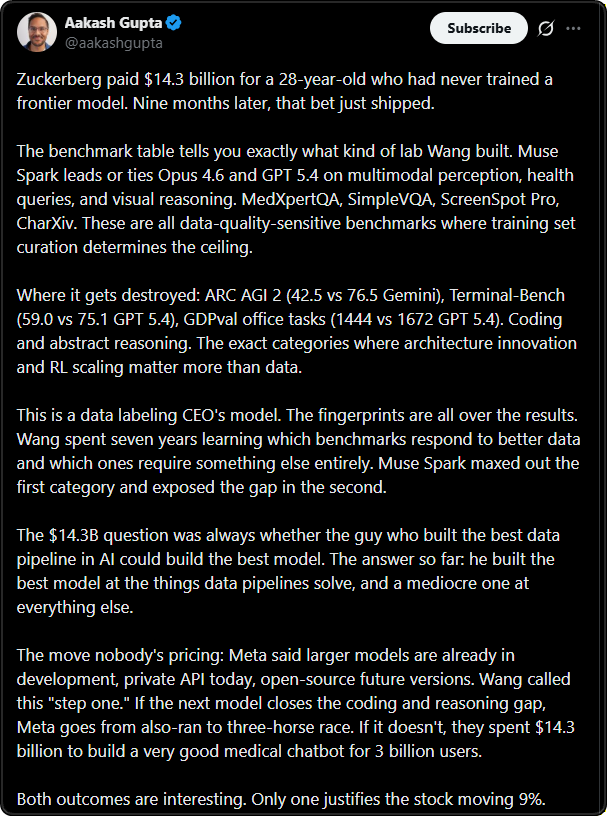
Aakash Gupta hatte den schärfsten Take: „Das ist das Modell eines Data-Labeling-CEOs. Die Fingerabdrücke sind überall.“ Die Benchmarks, in denen Muse Spark führt, sind allesamt datenqualitätssensible Aufgaben, bei denen die Kuratierung des Trainingssets die Obergrenze setzt.
Dort, wo es hinterherhinkt (ARC-AGI-2, Terminal-Bench, GDPval), zählen Architektur und RL-Skalierung stärker als Daten. Sein Fazit: „Er hat das beste Modell für alles gebaut, was Datenpipelines lösen – und ein mittelmäßiges für den Rest.“
Der Sprung von 18 (Llama 4 Maverick) auf 52 (Muse Spark) im Artificial Analysis Intelligence Index ist deutlich. Für ein Team, das in neun Monaten alles neu aufgebaut hat, sind die Ergebnisse in Gesundheit und Multimodalität ein echter erster Schritt – und sie halten unabhängigen Tests stand.
Klar, die Lücken sind offensichtlich. Bei Coding und agentischen Aufgaben liegt GPT-5.4 klar vorn; abstraktes visuelles Reasoning ist ein Schwachpunkt, und eine öffentliche API fehlt. Wenn du heute ein Modell für den produktiven Einsatz brauchst, ist Muse Spark das noch nicht.
Was mich immer wieder beschäftigt, ist die Open-Source-Frage. Das Llama-Ökosystem basierte auf dem Vertrauen, dass Gewichte verfügbar sind. Muse Spark bricht damit. Wangs „Hoffnung“, künftige Versionen zu öffnen, ist kein Commitment. Das ist aus meiner Sicht der folgenreichste Aspekt dieses Launches – und er bekommt weit weniger Aufmerksamkeit als die Benchmarks.
Größere Muse-Modelle sind in Arbeit. Skaliert die Architektur wie behauptet, werden die heutigen Zahlen bald bescheiden wirken. Darauf setzt Meta.
Wenn du lernen willst, wie du aus großen Sprachmodellen das Maximum herausholst, empfehle ich unseren Kurs Understanding Prompt Engineering.
KI-Kurse
Lernpfad
Lernpfad
Kurs
Blog
Blog
Hesam Sheikh Hassani
15 Min.
Blog
Nathaniel Taylor-Leach
8 Min.
Blog
Nathaniel Taylor-Leach
4 Min.
Tutorial
Matt Crabtree
5 Min.
Tutorial
Sejal Jaiswal
24 Min.