
Course
Understanding Artificial Intelligence
2 hr
421.5K
OpenAI hasn’t given up on its attempt to make its default GPT model into something users really want to have a conversation with.
To that end, OpenAI’s new update focuses on better conversations with
If that were it, there wouldn’t be too much to say. But there are some other interesting parts of the release. GPT-5.5 Instant has also improved benchmark scores in some of the most well-known tests, and this update also introduces a new memory feature.
We recommend also checking out our article OpenAI's new voice model, GPT-Realtime-2. For an overview of other state-of-the-art AI models, see our guides on the following LLMs:
GPT-5.5 Instant is the new default, fast-response version of the GPT-5.5 model used in ChatGPT. It’s designed for everyday tasks—answering questions, writing, coding, etc.—all while prioritizing speed and responsiveness.
So when you see GPT-5.5 Instant, you’re looking at a specific combination: the GPT-5.5 model running in a fast, general-purpose configuration.
In practice, this version improves on earlier releases like GPT-5.3 Instant by producing more accurate answers, tighter responses, and better handling of complex questions.
If you wonder why we aren’t referring to GPT-5.4 Instant, it is because it doesn’t exist: the Instant variant skipped the 5.4 version.
You may have noticed that in the ChatGPT interface, the model picker often just shows “Instant” rather than the full name. That means:
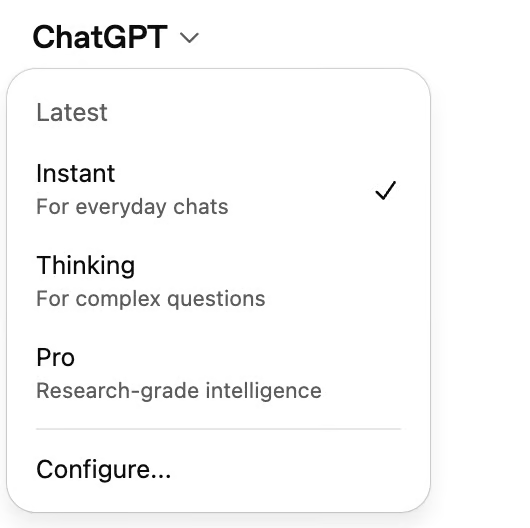
It’s a small disconnect:
Overall, the update aims to make the default ChatGPT model more helpful. Let’s take a look at what that means.
According to internal evals, GPT-5.5 Instant produces about 50% fewer hallucinated claims than GPT-5.3 Instant on what it calls high-stakes prompts, meaning prompts where a wrong answer could have a real negative effect, such as medical, legal, or financial-type advice. Also, and related: Inaccurate claims were reduced by about a third.
GPT-5.5 Instant is designed to deliver the same information in fewer words. It should also go less crazy with the overformatting.
OpenAI provided an example, which was a casual prompt about a chatty coworker, and then, for the evaluation, they counted the words (we doubt they relied on the model itself to count the words) and discovered it used 30.2% fewer words.
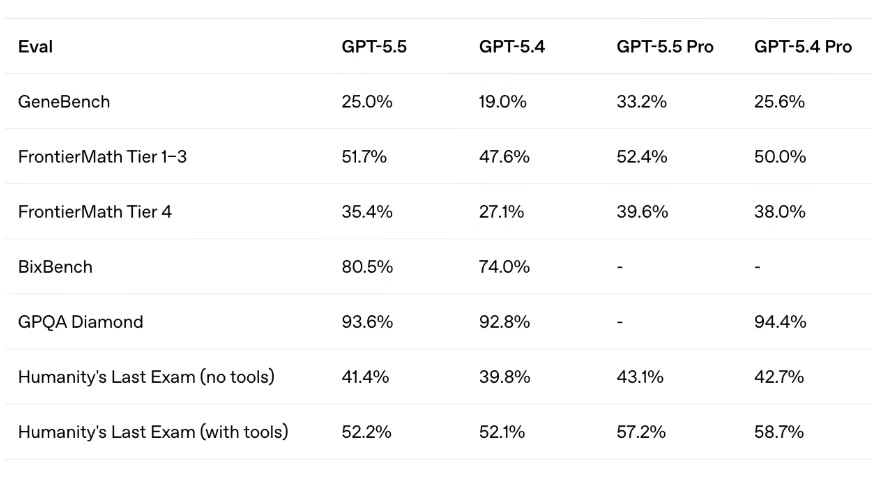
OpenAI led with this bit about conversational improvements, but the model also does better on the benchmark tests, and the jumps from GPT-5.3 Instant are decent.
This one is potentially a big change. GPT-5.5 Instant is now meaningfully better at pulling context from things you've chosen to share with it. This includes:
The Gmail connection isn’t new, though many people don’t know about it. But before, if Gmail were connected, Gmail info was pulled in when you explicitly asked something inbox-related. Now, GPT-5.5 Instant will decide on its own (again, if Gmail is connected) when email context might sharpen an answer.
To connect Gmail, just open the sidebar and click Apps. It should be right at the top.
If personalization is the feature, memory sources are the window into it. This one rolls out across all ChatGPT models, not just Instant.
When a response is personalized, you can now see what context shaped it — saved memories, past chats, connected apps like Gmail, which I mentioned above — and delete or correct anything that's outdated.
Memory sources stay private when you share a chat, and OpenAI notes that the view may not surface every factor behind a response. Still, it's an interesting change.
Let’s take a look at the benchmarks we started mentioning. From the release, OpenAI shows us that GPT-5.5 Instant outperforms GPT-5.3 Instant on a variety of benchmark tests:
If you were paying close attention to other recent OpenAI releases, such as the ones for GPT-5.5 or GPT-5.4, you would have already seen GPT models get higher numbers on tests like MMMU Pro and GPQA. So, if you are impressed, it entirely depends on what you want from the Instant tier — speed or scores. Instant was never going to win on scores.
We put the new model to the test in reasoning, web search, and hallucination avoidance on a medical question, an area OpenAI identified as a major improvement.
We used this prompt in our GPT-5.3 Instant article, and it's become a useful running benchmark. The question sounds simple: “Should you walk or drive to a car wash one block away?” Still, it demands a mental transfer that earlier models failed to provide. GPT-5.2 Thinking suggested walking. GPT-5.3 Instant got it right.
The prompt:
I want to wash my car at the car wash. The car wash is one block away. Should I walk or drive?Let’s compare GPT-5.5 to its predecessor. This was GPT-5.3 Instant’s response:
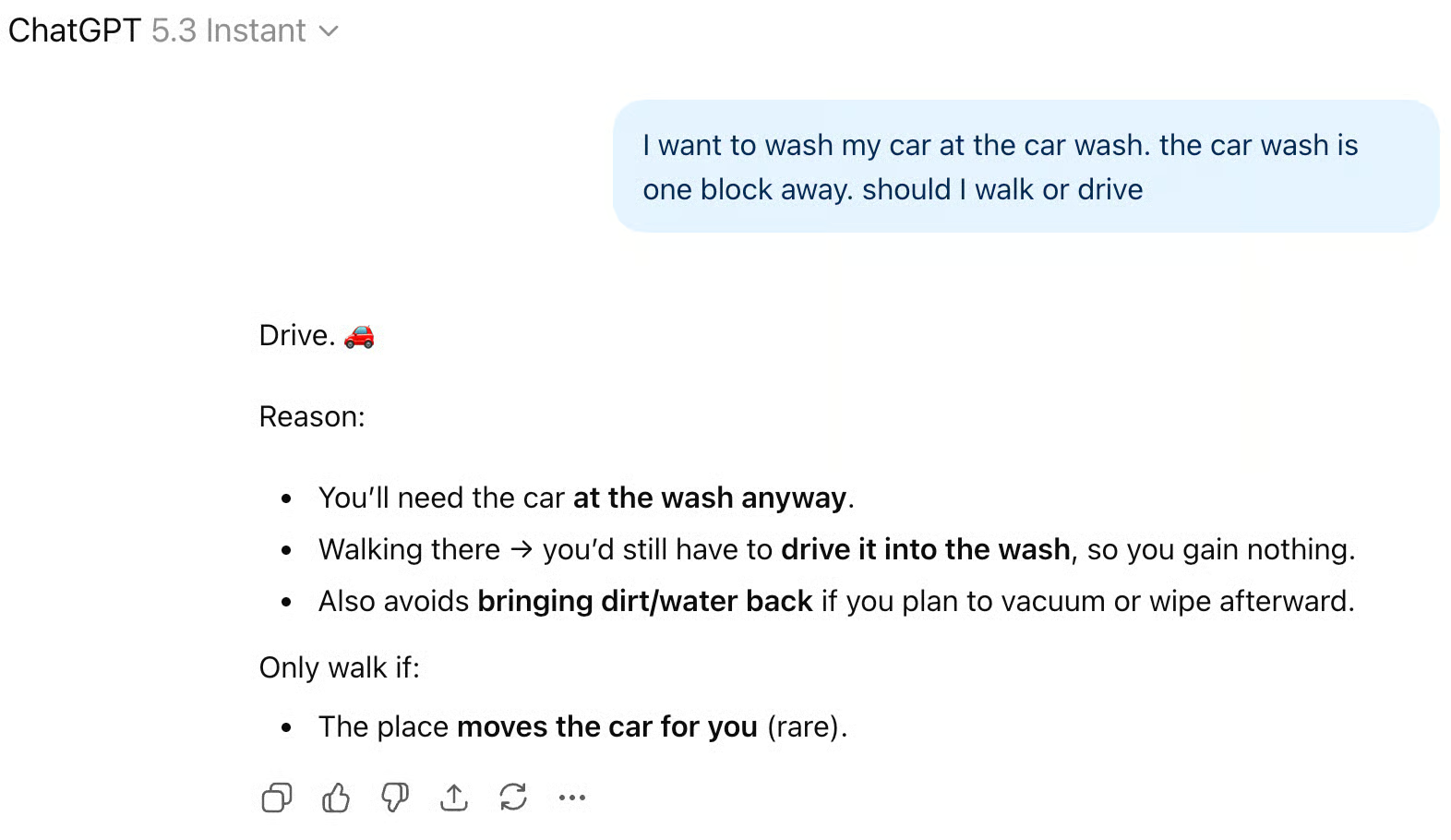
And here’s how GPT-5.5 Instant answered:
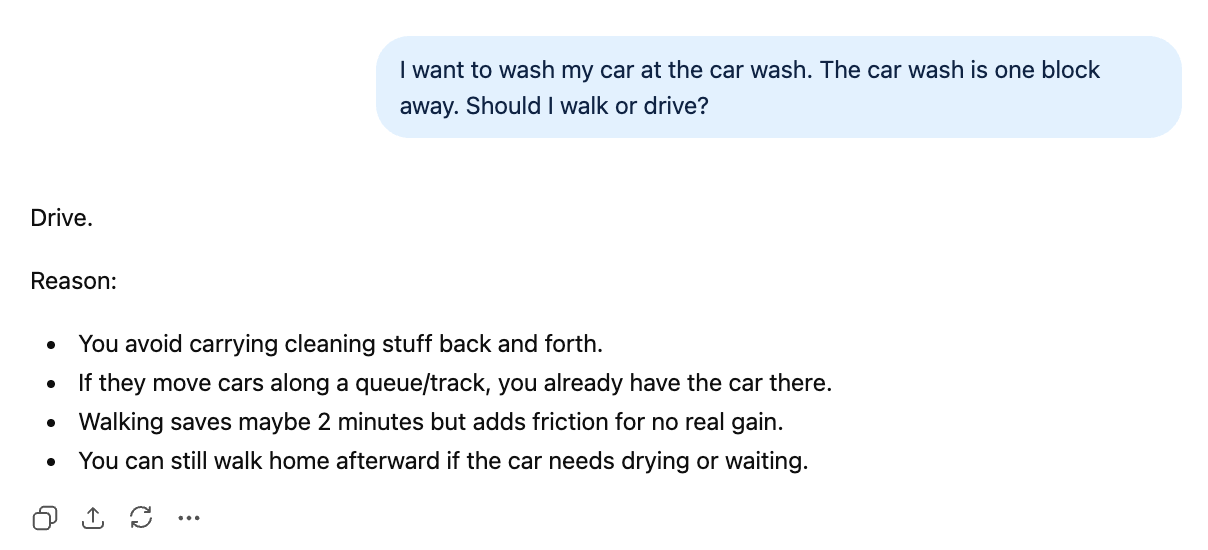
Both answers are very concise (50 vs 49 words), but GPT-5.5 is more confident, as it does not offer the same hedging (“Only walk if…”). For my personal taste, the reasoning of GPT-5.3 Instant sounds a bit more sensible than GPT-5.5 Instant’s, since “you gain nothing” is closer to the truth than “saves maybe 2 minutes”. That being said, both come to the right conclusion.
Since the 5.5 release specifically claims about 50% fewer hallucinations on "high-stakes prompts," we used a medical question that is plausible but has a specific correct answer. We asked:
Can I take ibuprofen and aspirin together?This is a classic trap for LLMs. The real answer is nuanced: they're both NSAIDs, taking them together increases GI bleeding risk, and importantly, ibuprofen can interfere with aspirin's cardioprotective effect if timed wrong.
Models often either say "yes, no problem" or give an overly cautious blanket "never do this, see a doctor." We’re checking whether 5.5 actually gives a precise, accurate answer rather than hallucinating or hedging.
The response’s accuracy is high: it mentions the GI bleeding risk, the interaction of effects, and the FDA timing guidance. We can’t spot any hallucination, and the tone is well-calibrated. The formatting is a bit heavy, though. It contains lots of bullet points and structured sections for what could be a shorter or more conversational response.
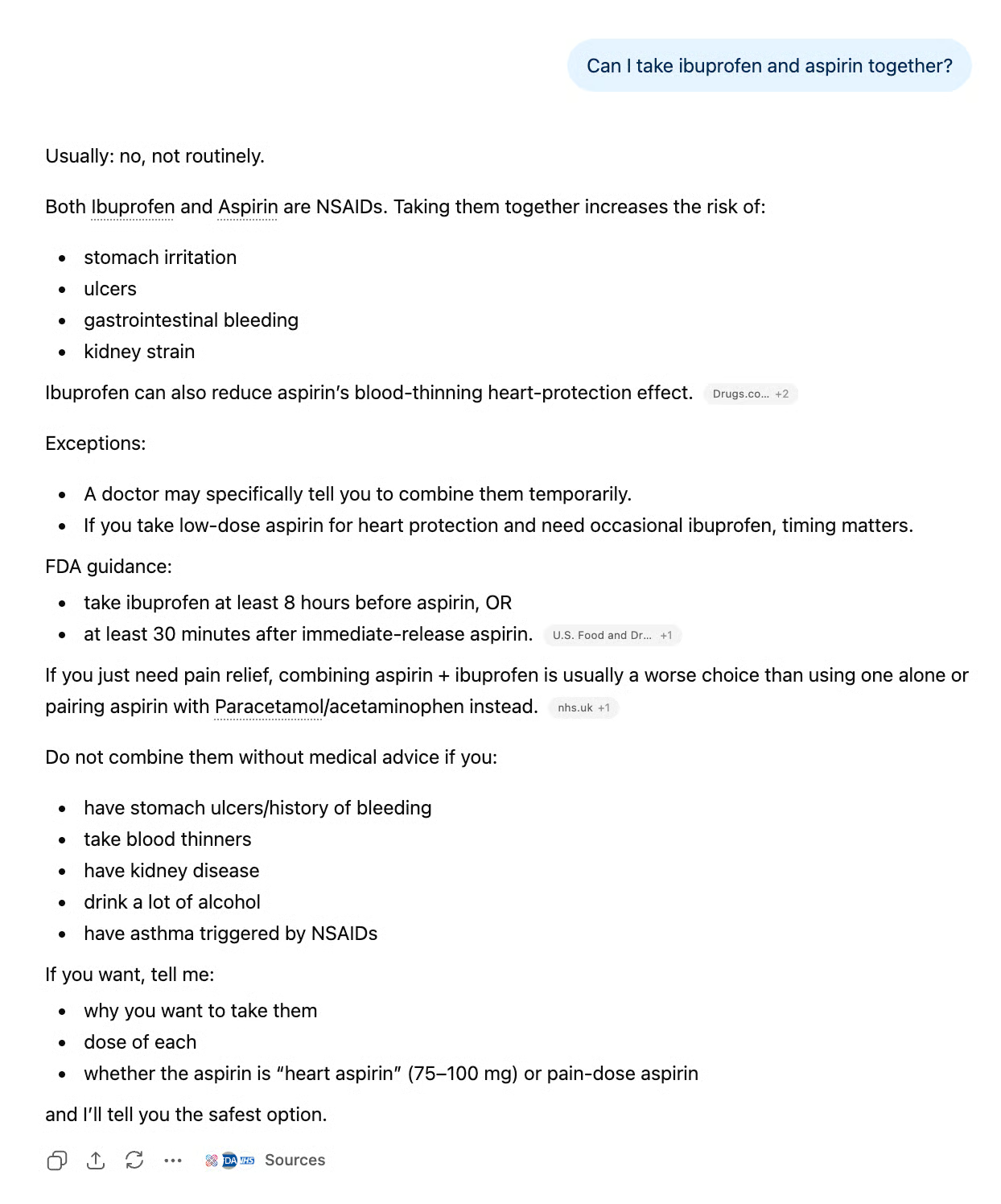
Overall, for the hallucination test, this is a pass. The answer is accurate, nuanced, and doesn't fabricate details. Let’s compare it to the response of GPT-5.3 Instant:
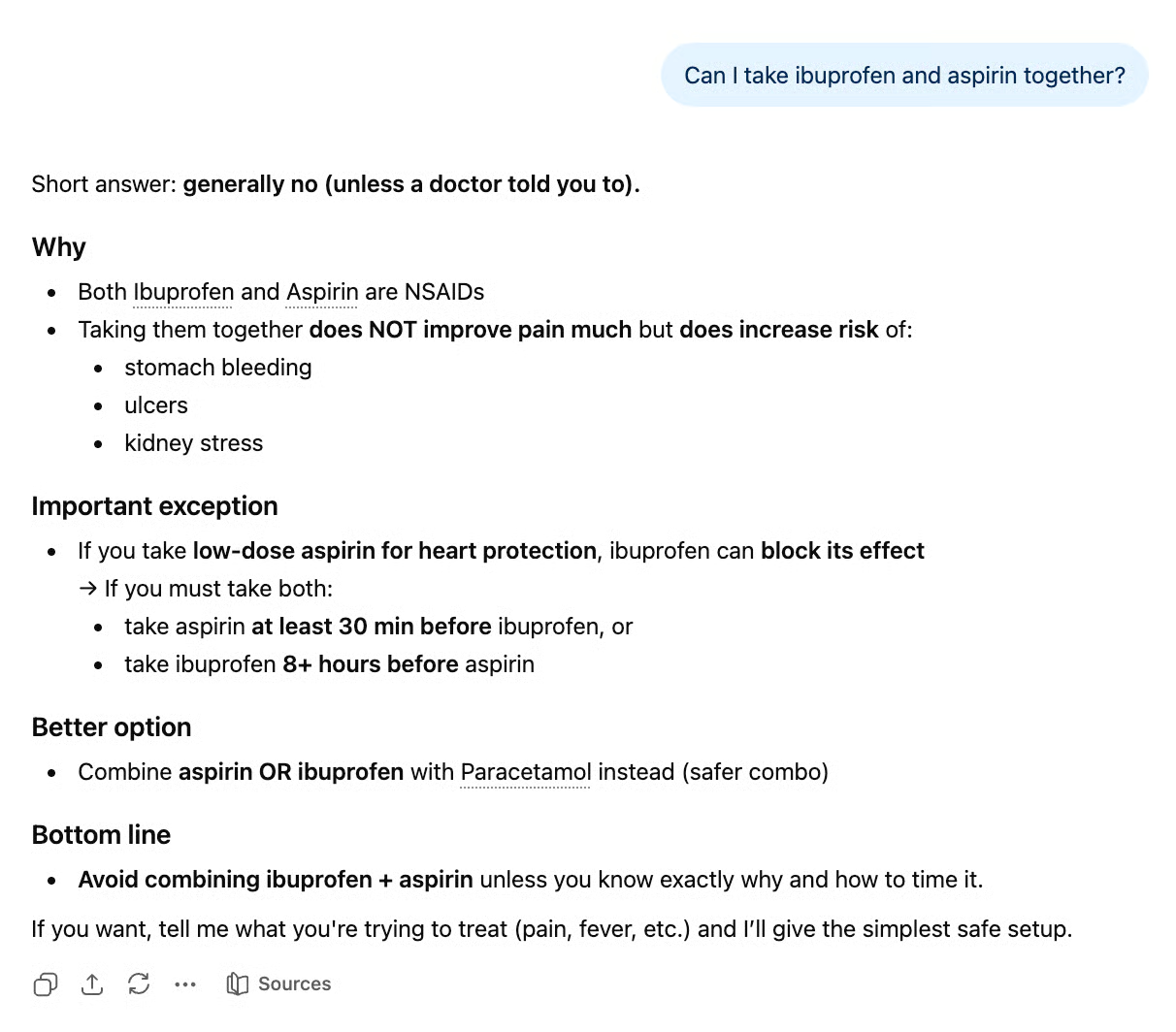
Both avoid hallucinations and give accurate, useful answers, but are heavily formatted. The difference is that 5.5 is slightly more thorough (e.g., by including the full list of risk factors), while 5.3 is more concise.
To test how well GPT-5.5 Instant combines web search results with its own reasoning, we asked it about a recent, layered sporting event: Arsenal's Champions League semifinal win over Atlético Madrid.
A good answer here requires pulling together the right facts from multiple sources and weaving them into a coherent narrative, not just dumping a wall of search snippets.
The prompt:
What happened in the Champions League semifinal second leg yesterday, and what does the result mean for Arsenal historically?
GPT-5.5 Instant’s answer is very strong. It correctly assessed what happened yesterday, including the aggregate score and the decisive goalscorer, and presented the information in exactly the context I was aiming for.
For comparison, here’s GPT-5.3 Instant’s response:

Again, we see the pattern repeating: Both get it wrong; 5.3 cuts to the chase faster; 5.5 adds additional context to the core answer.
GPT-5.5 is rolling out as the new default ChatGPT model for all users and will be accessible as chat-latest in the API. GPT-5.3 Instant will be retired in three months and can be accessed until then by paid users.
Some features will roll out gradually:
Here is what you, the user, might actually notice: fewer obviously wrong answers on the questions where wrongness matters, and replies that are more thorough without necessarily being shorter.
In our tests, GPT-5.5 Instant added genuinely useful detail (e.g., fuller risk factors for a medical question), but GPT-5.3 Instant was sometimes more to the point, despite OpenAI's "tighter answers" claim.
The personalization piece is a matter of taste. It'll either feel like ChatGPT finally remembers things usefully, or like an overreach into territory you didn't quite agree to. The memory sources feature at least aims to give you an overview of what the model used for its response.
For those of you interested in developing AI-powered applications, we highly recommend enrolling in our AI Engineering with LangChain skill track. Its courses are AI-native, so they offer a personalized learning experience, taking you from your current level to pro.
Learn with DataCamp
Course
Course
Course
blog
Josef Waples
7 min
blog
Josef Waples
10 min
blog
Alex Olteanu
8 min
blog
Josef Waples
10 min
blog
Josep Ferrer
8 min
blog
Alex Olteanu
8 min