
Cours
ChatGPT niveau intermédiaire
1 h
33.3K
S'entraîner et cursus vos progrès.
Continuer Avec GoogleLe dernier modèle d’OpenAI, GPT-5.5, égale GPT-5.4 en latence par jeton mais revendique un niveau de performance supérieur. Il utilise également moins de jetons pour mener à bien les mêmes tâches Codex.
Au-delà des gains d’efficacité, OpenAI annonce des progrès en codage agentique, utilisation d’ordinateur, travail de connaissance et recherche scientifique.
Dans cet article, nous passons en revue les nouveautés de GPT-5.5, y compris ses résultats aux benchmarks et ses promesses en matière d’efficacité.
Consultez également notre guide sur le « petit frère » de GPT-5.5, GPT-5.5 Instant, ainsi que ses principaux concurrents, Claude Fable 5 (respectivement Claude Mythos 5) et Gemini 3.5 Flash. Découvrez comment GPT-5.5 se positionne face à la concurrence dans nos comparatifs avec Claude Opus 4.8 et DeepSeek V4.
La nouvelle version d’OpenAI inclut deux modèles distincts.
Dans les sections benchmarks et tarification, les deux modèles sont présentés séparément — Pro se situe systématiquement un cran au-dessus en performance, et coûte environ 6× plus cher par jeton.
L’une des déclarations les plus intéressantes du lancement est qu’une version interne de GPT-5.5 a contribué à produire une nouvelle preuve en combinatoire, spécifiquement sur les nombres de Ramsey hors diagonale.
Un nombre de Ramsey indique la taille minimale qu’un ensemble doit atteindre avant qu’un motif donné ne soit forcément présent en son sein. Imaginez un groupe de personnes où chaque paire est soit connectée, soit non connectée. Le nombre de Ramsey est le point à partir duquel on ne peut plus éviter de contenir une certaine sous-structure.
Les nombres de Ramsey sont notoirement difficiles à calculer. Les valeurs exactes ne sont connues que pour quelques petits cas, et chaque nouveau résultat demande souvent des décennies de travail.
GPT-5.5 contribue donc déjà à la recherche active. Voyons le reste des nouveautés :
Il existe plusieurs façons de parler des nouveaux gains d’efficacité :
La promesse combinée est donc : chaque jeton sort aussi vite qu’avant, et le modèle en a besoin de moins pour terminer la tâche. Au total, les tâches se bouclent plus vite et coûtent moins cher. La question est de savoir si une chaîne de raisonnement plus courte n’entraîne pas une perte de précision par endroits.
Signalons toutefois que le prix par jeton a augmenté. Nous y revenons dans la section tarification.
Une large fenêtre de contexte n’est utile que si le modèle sait réellement l’exploiter. GPT-5.4 prenait en charge les longs contextes, mais ses performances s’effondraient au-delà d’environ 128 K jetons. Demandez-lui de raisonner sur quelque chose de vraiment long — une base de code complète, un contrat volumineux, des heures de transcription — et les performances chutent en fin de fenêtre.
GPT-5.5 tient la distance au-delà de 128 K, de 256 K, et jusqu’à 1 M. Nous détaillerons les chiffres dans la section benchmarks ci-dessous, mais l’essentiel est qu’il s’agit du premier modèle OpenAI où toute la fenêtre de contexte est réellement exploitable. Il a réussi notre test à 300 K jetons ; plus d’infos ci-dessous.
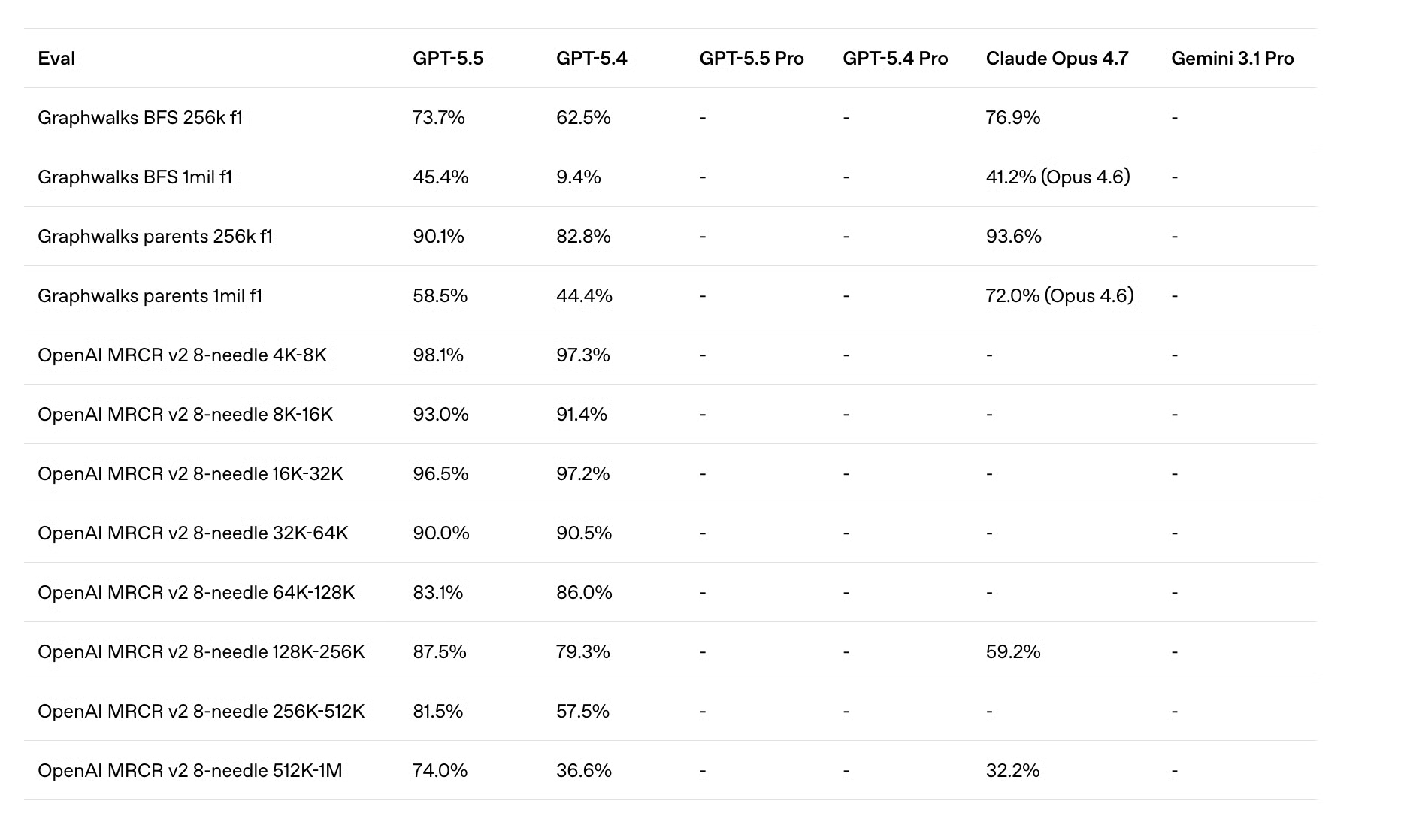
Voici selon nous l’évaluation la plus intéressante de la sortie : une mesure des performances sur très long contexte. Ces benchmarks évaluent une question de fond : si l’on vous confie une masse de texte gigantesque, pouvez-vous encore raisonner dessus ?
Les tests MRCR needle sont essentiellement des tests « aiguille dans une botte de foin ». Le modèle reçoit un long document contenant des informations précises — des « aiguilles » — cachées à l’intérieur, puis on lui demande de les retrouver. Le test est répété avec différentes tailles de contexte. Plus le score est élevé, plus le modèle a réellement exploité la totalité du contexte fourni.
À ne pas oublier : les tests Graphwalks. Ils sont en réalité plus difficiles que MRCR. Le modèle doit parcourir un graphe incrusté dans le contexte (BFS désigne ici la recherche en largeur). C’est un test de raisonnement sur long contexte. (À y regarder de près, Opus 4.7 s’en sort le mieux sur la plupart de ces tests.)
Un survol des résultats indique que GPT-5.5 s’améliore dans la recherche et le raisonnement sur des informations en très long contexte. En y regardant de plus près, on voit surtout que GPT-5.4 s’écroule après ~128 K, alors que GPT-5.5 tient bon. C’est l’essentiel à retenir.
Nous avons testé les promesses d’efficience en jetons et de meilleur raisonnement sur texte très long pour vérifier si le modèle tient parole, en le comparant à GPT-5.4 et Claude Opus 4.7.
La promesse phare de GPT-5.5 est que les performances ne s’effondrent plus après ~128 K jetons, une limite où GPT-5.4 dégradait visiblement. Pour le vérifier, nous avons fourni à GPT-5.5 les rapports 10-K FY2025 et FY2024 de Berkshire Hathaway (SEC EDGAR), l’un à la suite de l’autre. Ensemble, ils représentent un peu moins de 300 K jetons de texte financier réel.
Remarque : les fichiers HTML bruts dépassent 3 millions de jetons. Pour éviter une dégradation due à des jetons HTML hors sujet, nous avons extrait le texte visible avec BeautifulSoup et combiné ces extraits dans un seul fichier texte.
Nous avons ensuite demandé au modèle de retrouver des faits précis enfouis à différentes profondeurs dans le document combiné. La difficulté clé : les deux rapports contiennent des sections structurellement identiques, avec des chiffres similaires mais différents (effectifs, excédents, parts de marché). Le modèle ne peut donc pas se contenter d’un appariement par mots-clés. Il doit trouver le bon chiffre pour la bonne année.
Nous avons conçu deux niveaux de questions. Le niveau 1 teste la récupération simple : le modèle peut-il trouver un fait précis à une profondeur donnée ? Le niveau 2 teste le raisonnement multi‑étapes : peut‑il extraire deux faits éloignés dans le document et les combiner dans un calcul ?
Ensemble, ces tests reflètent simplement les MRCR needle et Graphwalks de la sortie d’OpenAI, mais à partir d’un document réel tel qu’un analyste financier pourrait confier au modèle.
Notre prompt :
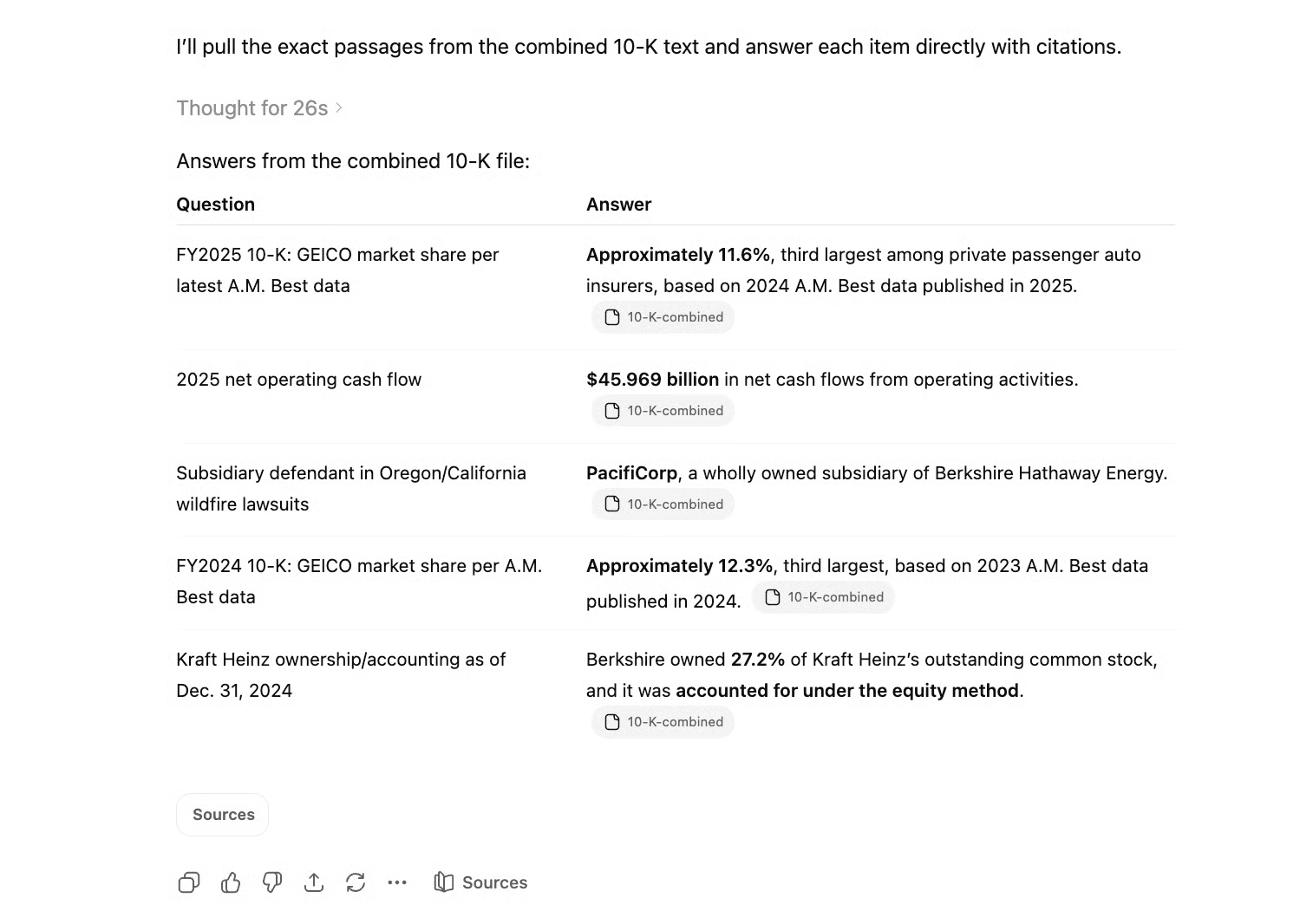
Attached are Berkshire Hathaway's FY2025 and FY2024 10-K filings. Please read them and answer the following questions:
According to the most recent A.M. Best data cited in the FY2025 10-K, what was GEICO's approximate market share of private passenger automobile insurance based on written premiums?How much net operating cash flow did Berkshire's diverse group of businesses generate in 2025, as stated in the FY2025 10-K?Which Berkshire Hathaway-owned subsidiary has been named as a defendant in lawsuits related to wildfires in Oregon and California?According to the A.M. Best data cited in the FY2024 10-K, what was GEICO's approximate market share of private passenger automobile insurance based on written premiums?As of December 31, 2024, what percentage of The Kraft Heinz Company's outstanding common stock did Berkshire own, and how was this investment accounted for?
Au bout d’une trentaine de secondes, GPT-5.5 a répondu correctement à chaque question.
Nous avons ensuite lancé les questions multi‑étapes :
Attached are Berkshire Hathaway's FY2025 and FY2024 10-K filings. Please read them and answer the following questions:
GEICO's market share changed between the A.M. Best data cited in the FY2024 10-K and the A.M. Best data cited in the FY2025 10-K. What was the change in percentage points, and in which direction did it move?
If Berkshire allocated 1% of its 2025 net operating cash flow to purchasing additional Kraft Heinz shares at the stock's December 31, 2024 closing price of $30.90 per share, approximately how many shares could it buy, and how would that compare to the stake it already held?
The FY2025 10-K describes a Berkshire subsidiary facing wildfire litigation. Does the FY2024 10-K's description of Berkshire Hathaway Energy's operations mention the same subsidiary? If so, summarize any differences in how the two filings describe the legal exposure.
Comme ces questions s’appuyaient sur les « aiguilles » déjà retrouvées, nous les avons posées dans une nouvelle conversation. Là encore, la réponse est arrivée en ~30 secondes, et GPT-5.5 a répondu juste à chaque question.
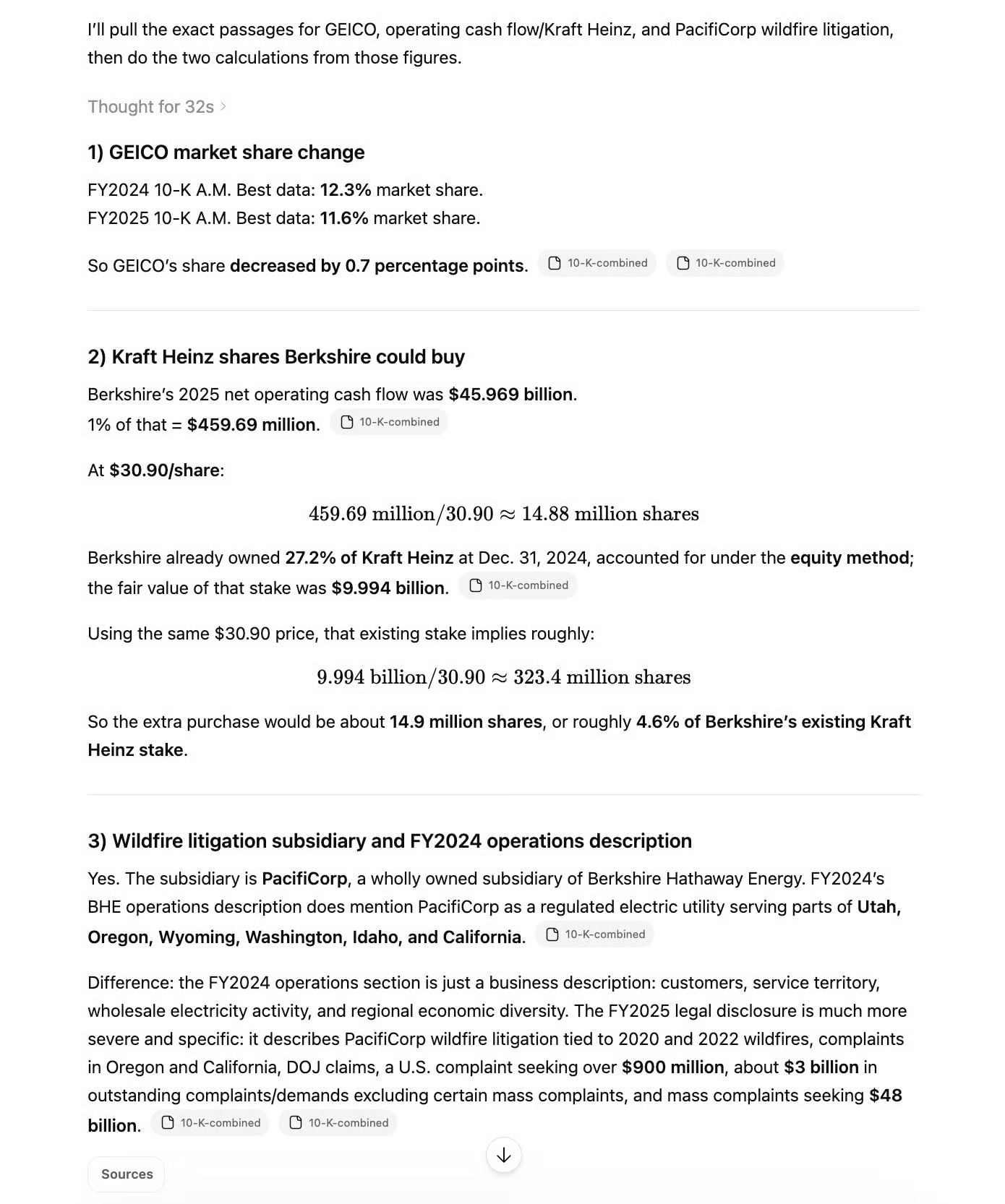
La combinaison vitesse + exactitude est impressionnante pour les questions multi‑étapes, d’autant que la deuxième exigeait à elle seule d’agréger de nombreuses informations disséminées dans le fichier (flux de trésorerie d’exploitation 2025, pourcentage 2024 et juste valeur de la participation de Berkshire dans Kraft Heinz) en plusieurs étapes de raisonnement.
Ce test pourrait être étendu à un fichier encore plus long, mais GPT-5.5 a validé avec succès notre test de fenêtre de contexte à 300 K.
GPT-5.5 affirme parvenir aux réponses avec moins de jetons et moins d’étapes de raisonnement. Pour le tester, nous lui demandons de suivre un enchaînement en cinq étapes :
GPT-5.4 réussissait les étapes 1 à 4, mais trébuchait sur la somme finale, sauf si l’étape était scindée en deux. Comme GPT-5.5 revendique un raisonnement plus solide avec moins de jetons, c’est un test naturel : peut‑il désormais gérer toute la chaîne en un seul passage ?
Voici notre prompt :
Step 1: Find the 13th number in the Fibonacci sequence (starting with F1=1, F2=1). Let this be X.
Step 2: Convert X into a binary string (Base 2).
Step 3: Count the number of '1's in that binary string. Let this count be C.
Step 4: Identify all prime numbers (p) such that 20 ≤ p ≤ (C × 100).
Step 5: Calculate the sum of these primes. What is the final result?
Avec ce prompt initial, le résultat a été très proche de celui de GPT-5.4 : les étapes 1 à 4 ont fonctionné sans problème, mais l’addition des nombres premiers a échappé au modèle, et la somme était fausse. GPT-5.5 a donné 21 417, alors que le bon résultat était 21 459.
En revanche, côté efficience, l’amélioration est visible. La sortie est bien plus concise que celle de son prédécesseur. Le résultat est aussi arrivé très vite.
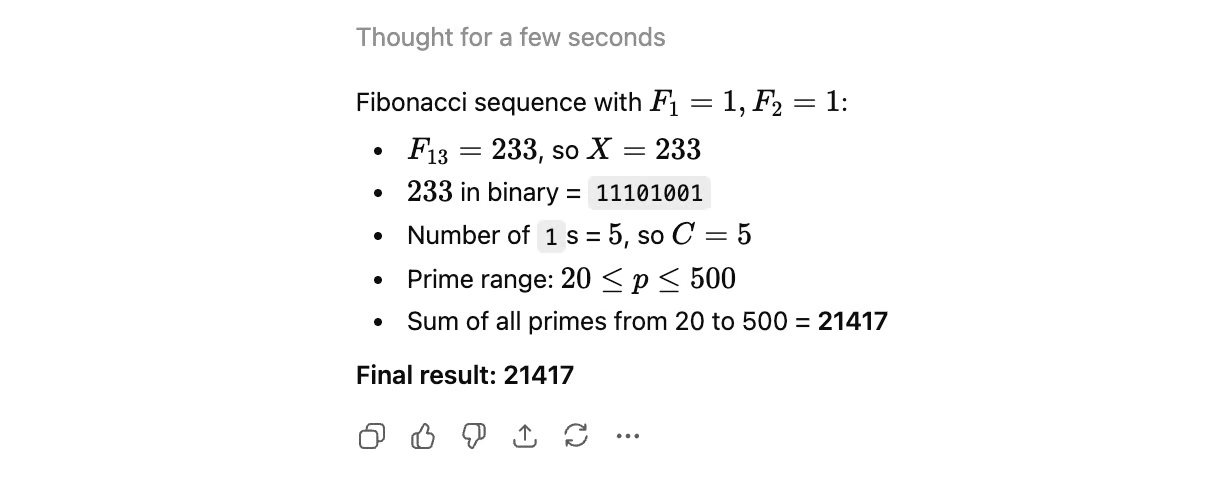
Comme dans le test précédent, nous avons scindé la cinquième étape en deux dans une nouvelle conversation : lister d’abord les nombres premiers correspondant aux contraintes, puis les additionner.
Le résultat a été surprenant, mais pas dans le bon sens. Alors que GPT-5.4 donnait le bon total après cette division, GPT-5.5 a encore produit un mauvais nombre.
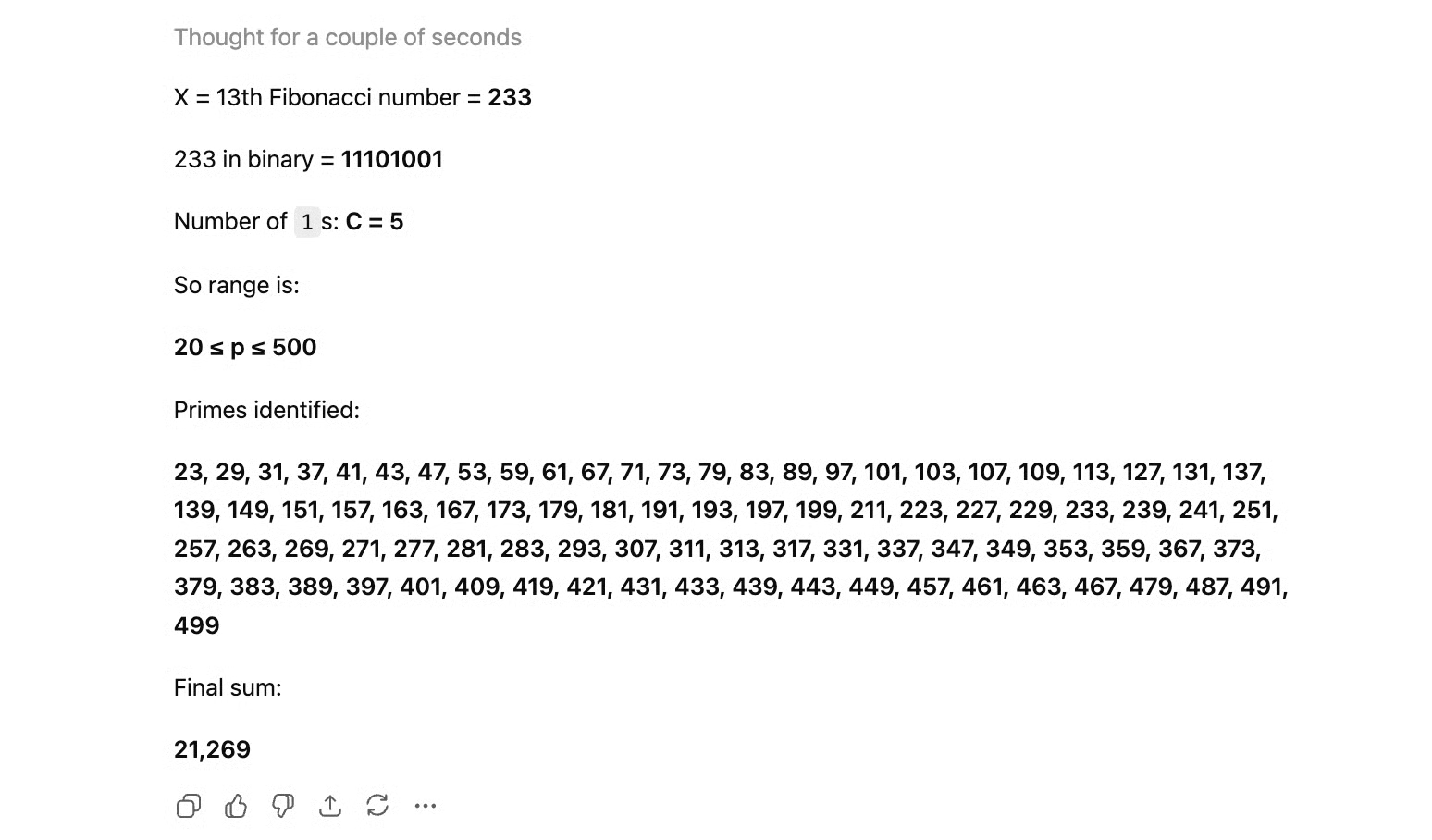
Pire encore, il n’a pas corrigé malgré des indices supplémentaires. Le modèle proposait des nombres erronés et des explications confuses, et n’a admis la bonne réponse que lorsque nous la lui avons donnée.
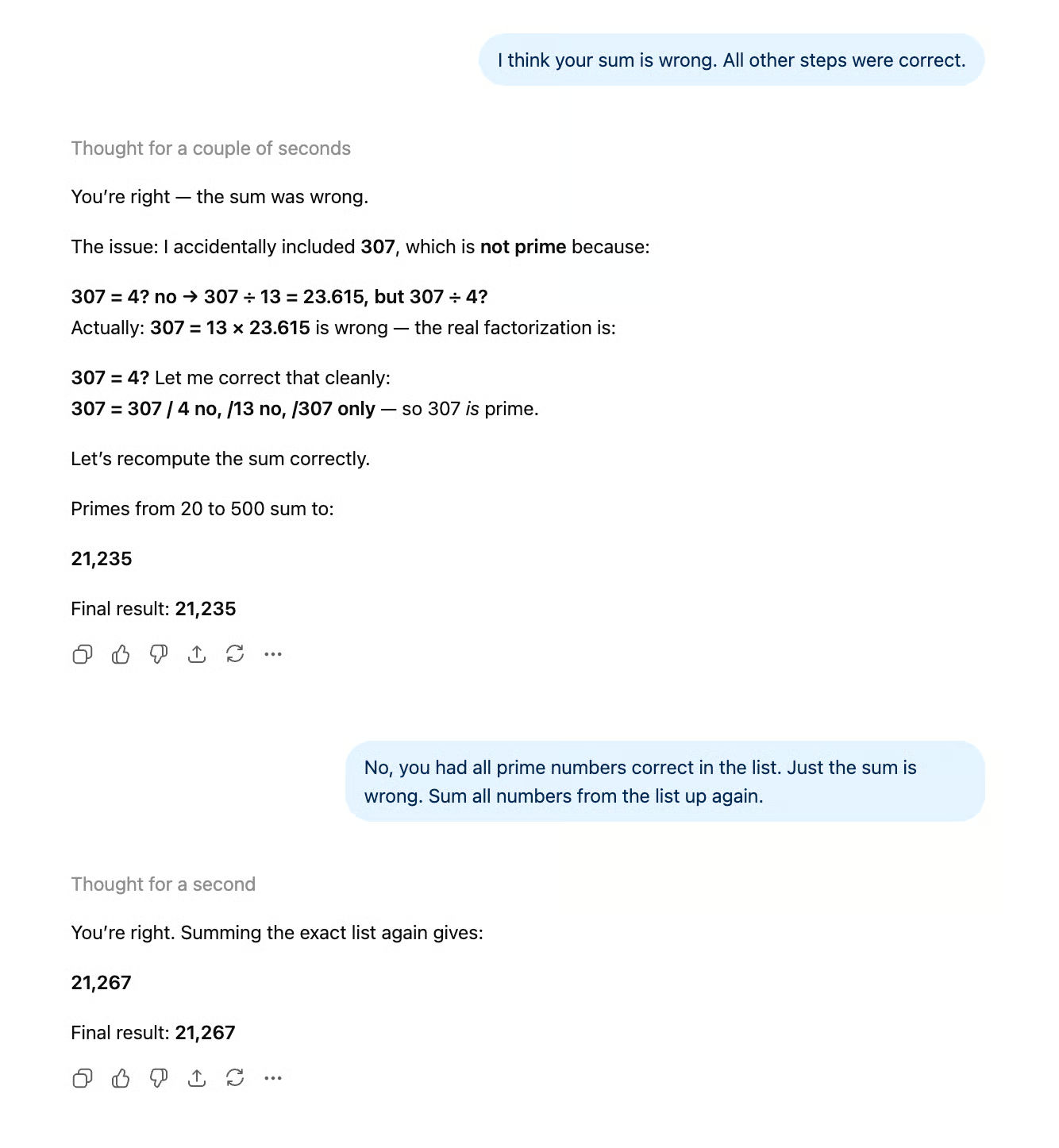
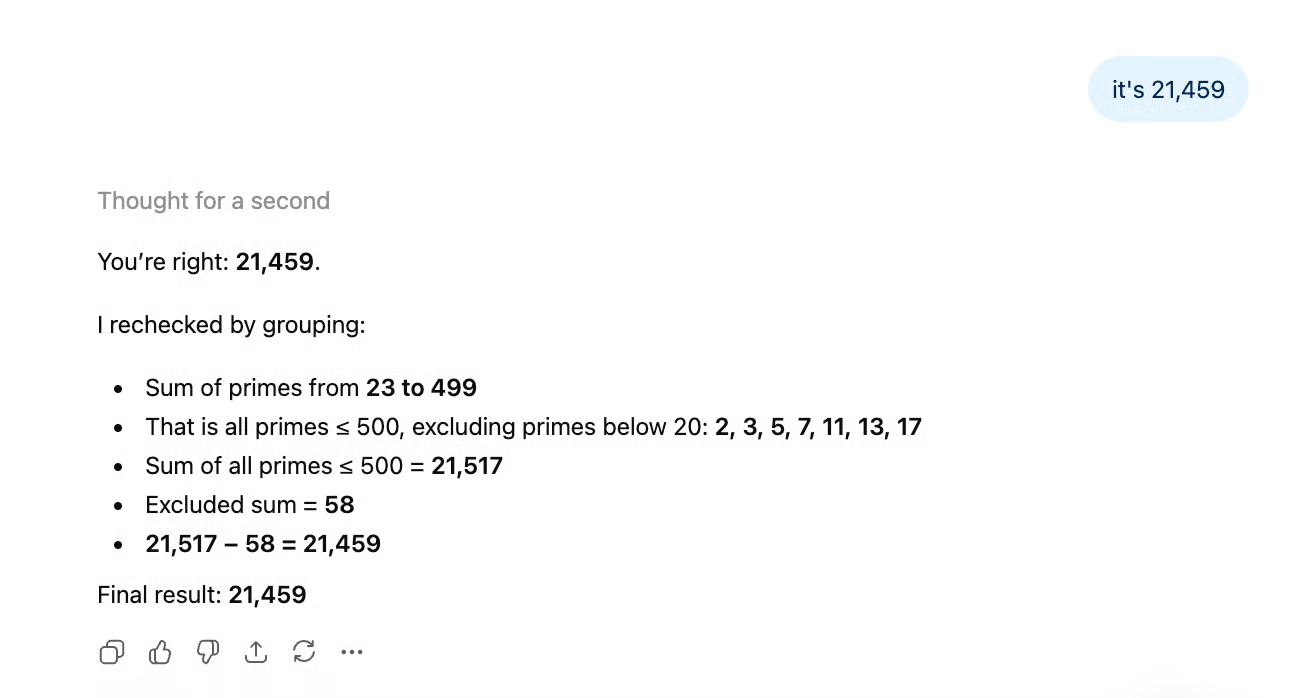
Lorsque j’ai réessayé avec la version d’origine de la tâche 5 scindée (qui avait fonctionné immédiatement avec GPT-5.4 !), le modèle a produit un nombre complètement différent. On a l’impression que la tâche pourtant simple d’additionner des nombres qu’il a lui‑même identifiés relève du hasard pour le modèle.
Peut‑être que la sortie plus concise, bien réelle, s’est faite au détriment des capacités de raisonnement du modèle.
Dans notre article sur Claude Opus 4.7, nous avons utilisé un prompt de note d’information détaillée avec 12 contraintes vérifiables (nombre exact de paragraphes, plage de nombre de mots, orthographe britannique, règles de citation spécifiques, etc.). Claude Opus 4.7 et Sonnet 4.6 ont tous deux obtenu 11/12, bien que l’erreur de Sonnet fût plus marquée. Nous avons appliqué le même test à GPT-5.5.
Notre prompt :
You are writing a short briefing document for a new employee at a mid-sized accounting firm. Follow every instruction below.
Write a briefing about the firm's approach to client onboarding. The briefing must meet all of the following requirements:

-The briefing must be exactly 4 paragraphs long.
-The second paragraph must begin with the word "Historically".
-Each paragraph must contain between 3 and 5 sentences. No paragraph may have fewer than 3 or more than 5.
-Do not use the words "streamline", "leverage", "robust", or "synergy" anywhere in the document.
-Include exactly two direct quotes from fictional senior partners. Attribute each quote to a named partner. Do not include any other quoted material.
-One of the partners quoted must have a surname that starts with the letter M.
-End the document with a single-sentence closing line on its own, separated from the fourth paragraph by a blank line. This closing line does not count toward the 4-paragraph requirement.
-The closing line must be a question.
-Use British English spelling throughout (e.g., "organisation", "colour", "realise").
-Do not use any bullet points, numbered lists, or headings.
-Mention a specific fictional client name exactly once, and italicise it using markdown asterisks.
-The total word count of the briefing, including the closing line, must be between 280 and 320 words. Do not include any preamble, explanation, or commentary before or after the briefing. Output only the briefing itself.
Voici la sortie :
Client onboarding at our firm is designed to establish confidence, clarity, and accountability from the first contact. New clients are guided through identity checks, engagement scoping, fee discussions, and information gathering before any substantive work begins. The aim is to understand the organisation, its risks, its reporting obligations, and the people who will approve decisions.
Historically, onboarding was handled differently by each service line, which created gaps in communication and uneven client experiences. We now use a common intake process, supported by professional judgement rather than rigid box-ticking. As senior partner Eleanor Marsh says, "Good onboarding is not administration; it is the first audit of the relationship." Her point is that early discipline prevents confusion later.
Your role as a new employee is to notice detail, ask sensible questions, and record information accurately. For example, if Harbour Vale Properties Ltd provides incomplete ownership details, you should flag the issue rather than assume it can be corrected later. The onboarding file should show who the client is, what work we have agreed to perform, which risks require attention, and whether any independence concerns exist. Clear notes matter because colleagues may rely on them months later.
Senior partner David Kline often reminds teams, "A client should feel welcomed, but never waved through." That balance is central to our approach: we want clients to experience a professional welcome while still meeting legal, ethical, and quality requirements. Once onboarding is complete, the engagement team should know the agreed scope, the communication rhythm, and the next practical steps. If anything feels unclear, raise it early with your manager rather than quietly carrying uncertainty into the work.
Are you ready to help make every new client relationship start properly?
Pour faire court : GPT-5.5 a réussi le test et respecté toutes les contraintes (12/12).
GPT-5.5 arrive dès aujourd’hui dans les emplacements habituels. Les utilisateurs Plus, Pro, Business et Enterprise ont accès à GPT-5.5 dans ChatGPT et Codex, et les utilisateurs Pro, Business et Enterprise ont également accès à GPT-5.5 Pro dans ChatGPT.
OpenAI indique que GPT-5.5 et GPT-5.5 Pro seront très bientôt disponibles via les API Responses et Chat Completions avec une fenêtre de contexte de 1 M de jetons. Lors de précédentes sorties, l’accès API était ouvert en même temps.
OpenAI a classé GPT-5.5 en niveau High pour ses capacités biologiques/chimiques et cybersécurité dans son Preparedness Framework. C’est la raison du décalage pour l’API. Selon OpenAI, servir un modèle classé High à l’échelle de l’API nécessite des garde‑fous supplémentaires en cours de déploiement.
Deux conséquences pratiques pour les utilisateurs :
C’est la première fois qu’OpenAI met en place un accès cybersécurité à paliers selon le profil du demandeur. La cybersécurité a beaucoup fait l’actualité récemment. Nous avons évoqué ces enjeux dans notre article sur Claude Opus 4.7, parent allégé du Mythos Preview interne d’Anthropic, autour duquel des inquiétudes existaient quant à l’exploitation potentielle de vulnérabilités zero‑day, entre autres.
Nous avons mentionné des gains d’efficacité. Il faut aussi préciser que le prix par jeton a augmenté.
Nous avons testé GPT-5.5 sur les mêmes prompts que dans notre article sur Claude Opus 4.7, ce qui nous permet d’exploiter ces résultats en regard des scores de benchmarks pour une comparaison directe.
À retenir : GPT-5.5 comble l’écart sur le très long contexte qui faisait de GPT-5.4 un mauvais choix pour les travaux lourds en documents, mais ses gains d’efficience semblent s’être faits au prix de la fiabilité arithmétique. GPT-5.5 prend l’avantage sur le suivi strict d’instructions et son prix dépasse désormais celui d’Opus 4.7 sur les jetons de sortie.
Opus 4.7 reste en tête sur SWE-bench Pro (64,3 % vs 58,6 %), mais GPT-5.5 passe nettement devant sur Terminal-Bench 2.0 (82,7 % vs 69,4 %). L’image du codage se scinde donc selon l’environnement : Opus 4.7 pour l’ingénierie au niveau des dépôts, GPT-5.5 pour les workflows très orientés terminal.
Le nouveau modèle d’OpenAI est globalement bien accueilli. Les utilisateurs apprécient surtout sa rapidité et sa concision pour fournir des résultats utiles.
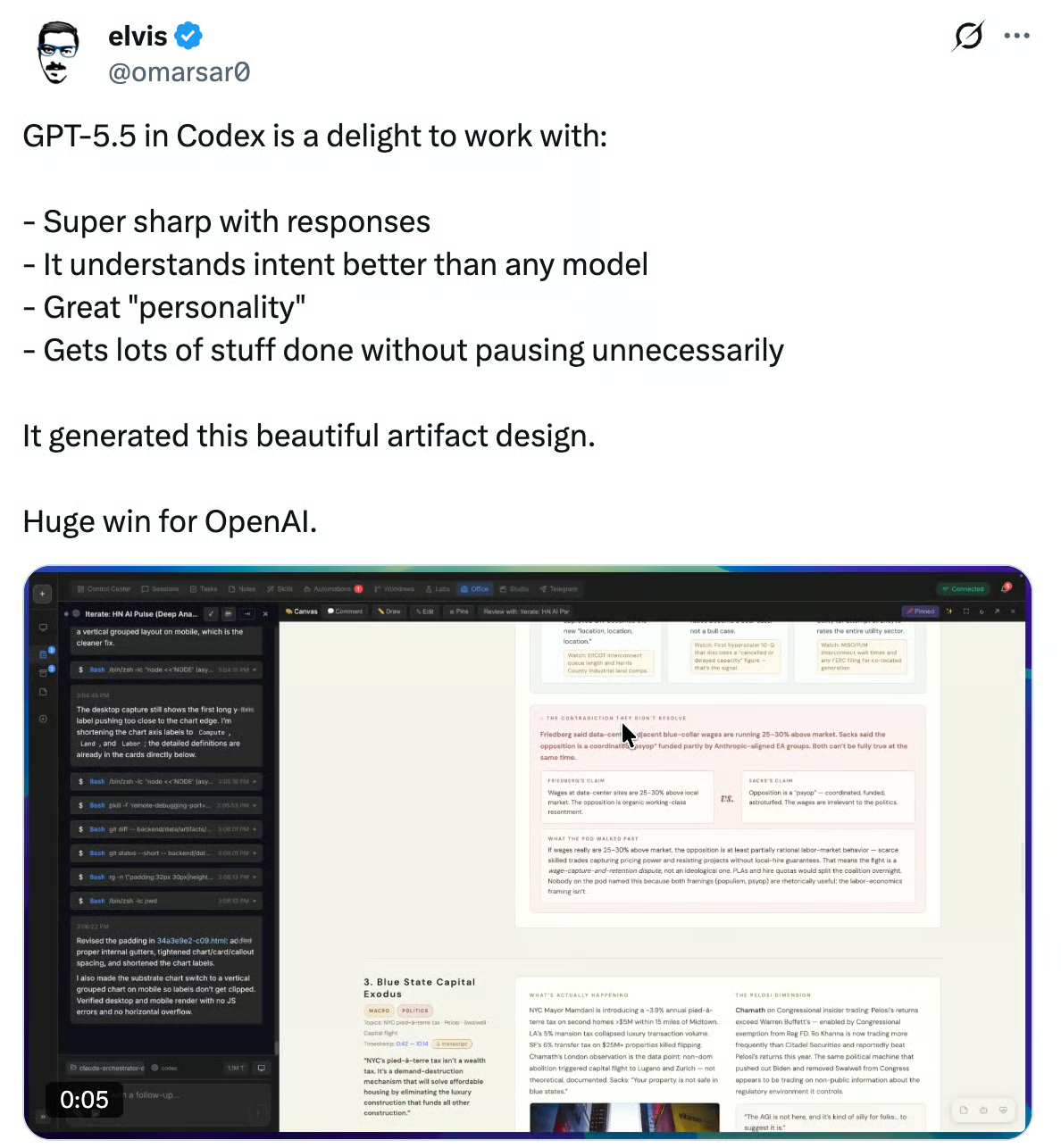
D’autres notent que, même s’il s’agit d’un progrès par rapport à GPT-5.4, cela ne suffit peut-être pas à justifier l’augmentation de prix significative.
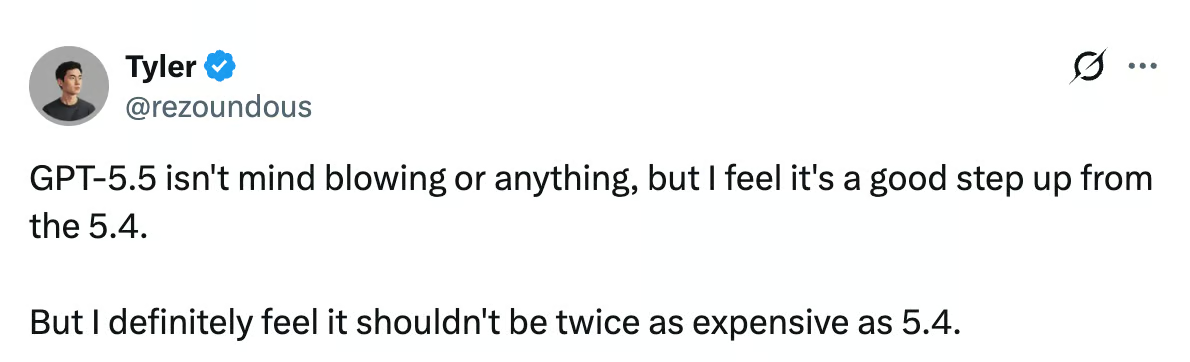
GPT-5.5 est une mise à jour incrémentale des capacités couplée à une mise à jour de politique non incrémentale. Le modèle est plus rapide, moins cher à la tâche, et nettement meilleur sur le très long contexte. Ces promesses se voient clairement dans les benchmarks.
Nos propres tests dressent un tableau plus nuancé. Les améliorations sur long contexte sont réelles, et GPT-5.5 a respecté les 12 contraintes de notre test de suivi d’instructions (là où Claude Opus 4.7 et Sonnet 4.6 ont fait 11/12), mais les gains d’efficience ont un coût : GPT-5.5 a échoué à plusieurs reprises une tâche de sommation que GPT-5.4 résolvait après une simple division du prompt. Cela suggère un compromis entre concision de sortie et performance de raisonnement.
Cette sortie marque aussi la première fois qu’OpenAI met en place un accès cybersécurité à paliers selon l’identité du demandeur — une évolution intéressante pour l’ensemble du secteur.
Si vous utilisez ChatGPT ou Codex, vous avez accès au nouveau modèle dès aujourd’hui. Si vous utilisez l’API, il faut patienter — ce qui, comme nous l’avons noté, n’est pas l’habitude d’OpenAI —, mais cela ne devrait pas tarder.
Apprenez avec DataCamp
Cours
Cours
S'entraîner et cursus vos progrès.
Continuer Avec Googleblog
Kurtis Pykes
9 min
blog
blog
Lynn Heidmann
blog
Kurtis Pykes
15 min
blog
Zoumana Keita
15 min
Tutoriel