{count, plural, one {Course} other {Courses}}
Large Language Models (LLMs) Concepts
{hours} hr
112.2K
This week, Meta released Muse Wonder and Muse Wonder Full, its first major model family after Muse Spark. Both are built for AI agents that handle multi-step jobs.
Meta's launch post calls Muse Wonder the result of a 14-month rebuild of its AI work. The two new terms to know are Active Memory, which recalls useful details from past conversations, and Active Focus, which keeps working when a task stalls.
Regular Muse Wonder is available through the Meta Model API and Muse Code, while Muse Wonder Full, the model behind most headline results, only runs in Muse Code on its two most expensive plans. We'll get more into all that later.
Here's what I took away from the launch:
Muse Wonder and Muse Wonder Full are reasoning models that Meta calls its most capable yet, built for agents that handle personal and work tasks. The model card lists text, image, video, and audio input and text-only output, so neither model generates images, video, or audio. Meta's developer docs add PDF input and put the context window at 1,048,576 tokens.
Meta's research blog says both build on Muse Spark's training work and were trained at Meta's Prometheus data center. There are no parameter counts.
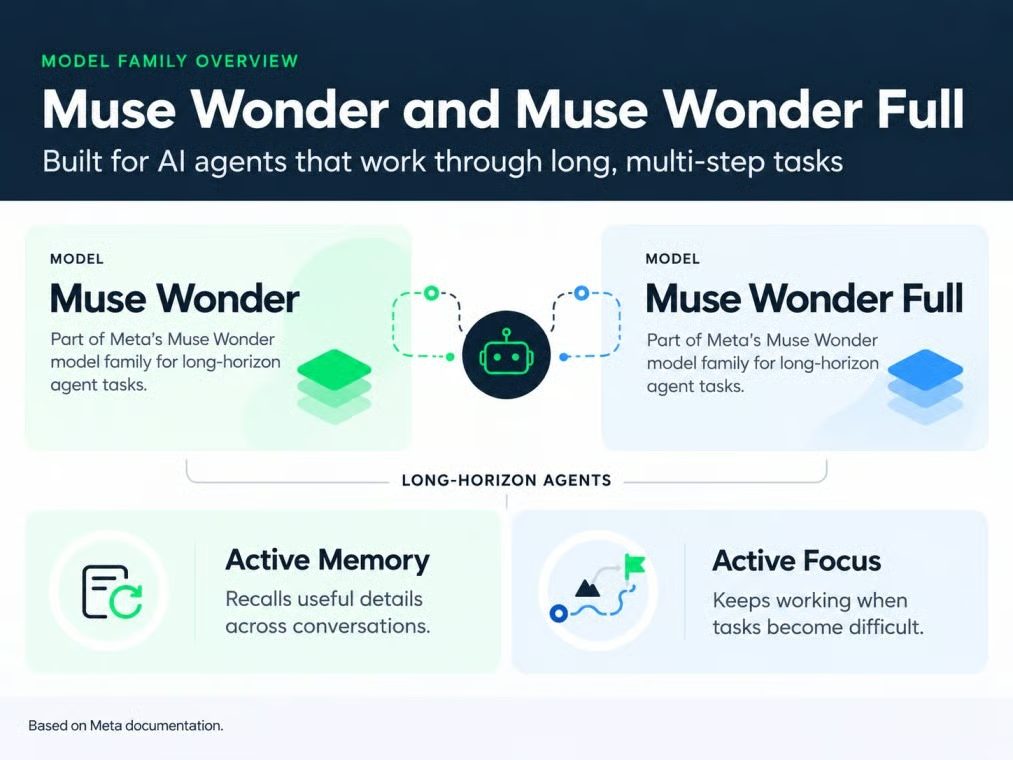
Muse Wonder comes in two variants. Image by Author.
Between the two, Muse Wonder Full is a separate, more capable model. The developer docs say turning regular Muse Wonder (muse-wonder-1.0) up to "max" reasoning doesn't switch it to Muse Wonder Full (muse-wonder-full-1.0).
You might have noticed Meta uses the Muse name for several things. To recap:
When Meta says Muse Wonder "does" something, Muse Code is often doing half the work. That applies to most of the coding results below.
Muse Wonder's key features are Active Memory and Active Focus, and long coding jobs are where Meta shows them off. The idea behind both is simple: an agent has to remember the right details and keep going when a plan fails.
Active Memory is Meta's term for carrying important details across conversations and pulling up the ones it needs now. Say you set a $3,000 home-office budget in March, raise it to $4,000 in April, and ask for a furniture shortlist in May. Good memory means the agent uses the April number without a reminder.
Meta's evidence is MemoryBench, its own test of long conversations where facts get updated. Muse Wonder scores 85.6 on it, but that says nothing about recall over months, and an app built on the API still has to store those facts itself. This is the feature I'm most curious about, because an agent working from an old budget can cost you money.
Active Focus is Meta's name for persistence: trying another approach, working through blockers, and checking in before important actions. Picture a code migration where 30 tests fail. A focused agent fixes its code and reruns the tests, where a weaker one just edits the tests so they pass.
Meta measures this with FocusBench, another of its own tests, and with SWE-Marathon, which I'll get to in the benchmarks section. Neither guarantees a finished task, and working in the background depends on the software around the model, a risk our OpenAI Dots explainer covers for always-on agents.
Muse Wonder plans long coding jobs and splits the work across helper agents, while Muse Code runs the tools and approvals. Meta's developer page pitches it for tasks that "run for hours," with many files edited at once.
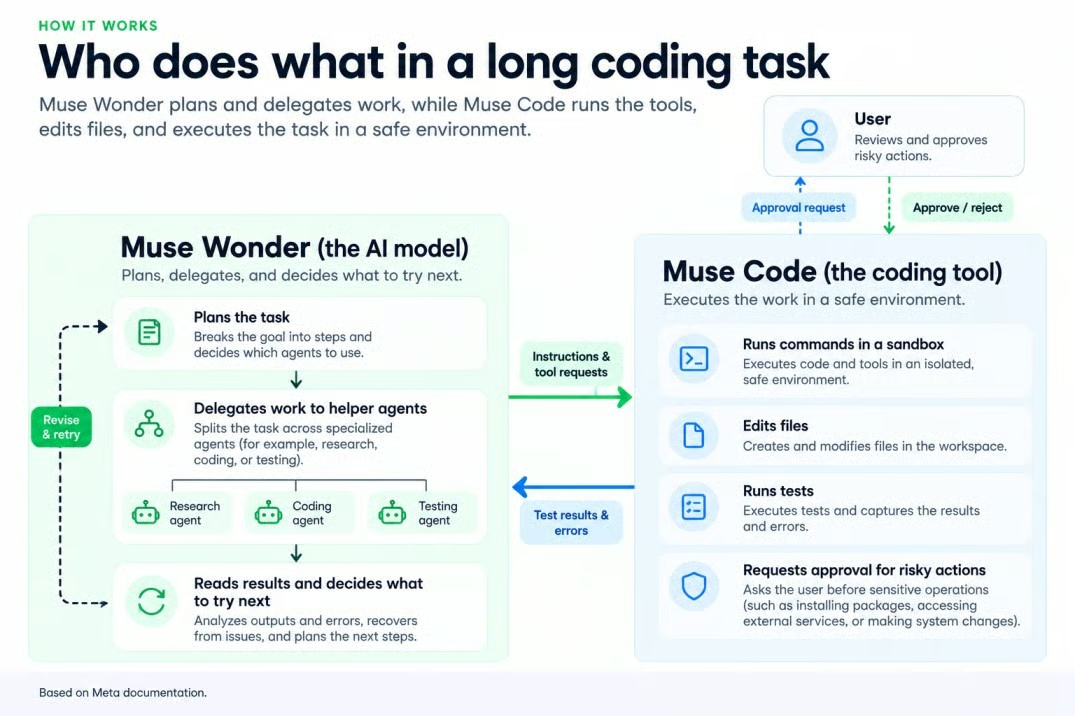
Muse Wonder plans; Muse Code executes. Image by Author.
One of Meta's demos is a playable 3D kitchen game built from images. It's an odd choice, since the model card lists 3D reasoning as a known weakness (I'd have picked a different demo).
Meta's table favors Muse Wonder Full on long coding and some professional benchmarks, while Claude Opus 5.5 leads on terminal coding and building programs from scratch. The numbers below are Meta's unless noted, with almost every model at its highest reasoning setting (I'll flag the one exception).
Muse Wonder Full tops both long coding tests in Meta's table. As I mentioned in the intro, it scores 79.0 on DeepSWE v1.1, with regular Muse Wonder close behind at 78.8. Those are Meta's numbers for now, because Datacurve's public DeepSWE leaderboard doesn't list Muse Wonder yet.
SWE-Marathon is the one I'd watch, because its 20 multi-hour projects score zero if a single test fails. Meta reports Muse Wonder Full at 57.5 (one notch below its highest setting) and Muse Wonder at 53.1, against 46.3 for Claude Opus 5.5 and 42.5 for GPT-6 Astra. Rival models ran inside their own companies' coding tools, so Meta itself says the comparison isn't fully fair, and with only 20 projects, one project can swing a score by several points.
Abundant AI's own SWE-Marathon leaderboard puts it more modestly: Muse Wonder Full at 53.1% and regular Muse Wonder at 52.5%, both at their highest setting in Muse Code, just ahead of Claude Sonnet 5.5 at 51.3%. Claude Haiku 5.5, which Anthropic released five days earlier, sits at 50.0%. The two lists come from separate tests, so don't mix them.
Meta's claim that Muse Wonder can carry out work across apps gets mixed support. On AutomationBench-AA, which checks whether business workflows end in the right state, Muse Wonder Full scores 45.4 against 41.6 for GPT-6 Astra and 41.2 for Claude Opus 5.5, so it leads while still failing most workflows.
OSWorld V2.1, a set of 108 desktop tasks, tells you more. Muse Wonder Full earns 78.4 in partial credit but fully completes only 39.4% of tasks, and both Claude models beat its partial score. For an insurance form, getting most steps right is still a failed task, so 39.4% is the number to watch.
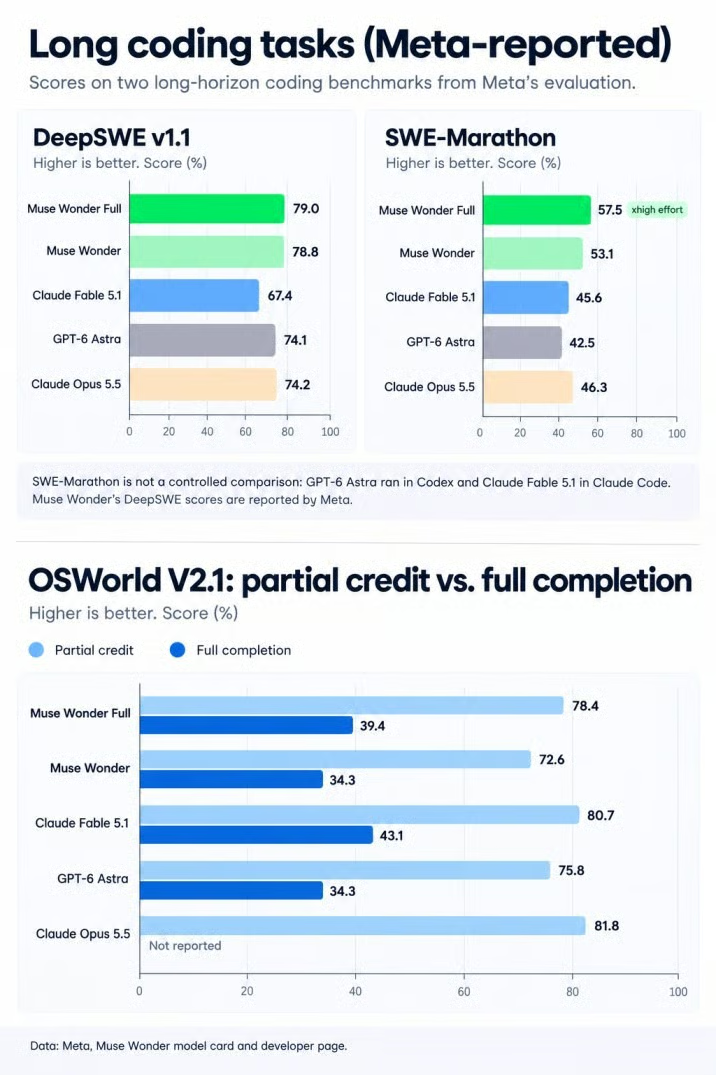
Coding leads hide lower completion rates. Source: Meta; image by Author.
Muse Wonder Full leads the legal benchmark and trails on health, with finance close to a tie. Its legal score sounds tiny, and it's still three times Claude Opus 5.5's. In Artificial Analysis's version, a legal document counts only if it meets every requirement with no made-up content, and Muse Wonder Full scores 13.1 against 4.2 for Claude Opus 5.5, which still means failing about 87% of tasks.
Finance is a near tie, with Muse Wonder Full at 59.1 on Vals Finance Agent V2 against 58.6 for Claude Opus 5.5. Health goes the other way: Muse Wonder Full scores 62.3 on HealthBench Pro, behind Claude Opus 5.5 (65.6) and GPT-6 Astra (65.3).
Muse Wonder Full trails Claude Opus 5.5 on six of the 14 tests in Meta's own table, and GPT-6 Astra beats it on three. This table collects the losses not covered above.
|
Benchmark |
What it tests |
Muse Wonder Full |
Muse Wonder |
GPT-6 Astra |
Claude Opus 5.5 |
Claude Fable 5.1 |
|
Terminal-Bench 4.0-AA |
Terminal coding |
57.1 |
52.0 |
59.1 |
59.6 |
52.0 |
|
ProgramBench |
Building programs from scratch |
59.0 |
50.0 |
52.5 |
70.5 |
55.5 |
|
AA Intelligence Index v4.3 |
Broad composite |
56 |
52 |
53 |
58 |
53 |
|
JobBench |
Professional tool use |
75.3 |
70.5 |
66.1 |
75.4 |
73.1 |
|
GDP.pdf |
Work from PDFs |
33.2 |
30.8 |
34.2 |
30.6 |
27.6 |
Source: Meta's Muse Wonder developer page at launch. All models at their highest reasoning setting.
ProgramBench is the loss coders should care about, and it isn't close. It asks models to rebuild a program from scratch, and an 11.5-point gap shows that editing an existing codebase and building from nothing are different skills.
Artificial Analysis lists Muse Wonder Full at 55.8, which Meta's table rounds to 56, while Claude Sonnet 5.5 scores 56.0.
Can you trust Muse Wonder's benchmark results? Not fully. Meta's model card shows that the table mixes three kinds of evidence:
As I noted earlier, almost every score uses the highest reasoning setting, so you're seeing each model at its best. Results shift with the tester, too: Anthropic reports 66.4% for Claude Opus 5.5 on Terminal-Bench 4.0, against 59.6 in Meta's table. Meta's claim that Muse Wonder Full handles unfamiliar tasks better than the Spark models rests on its own analysis.
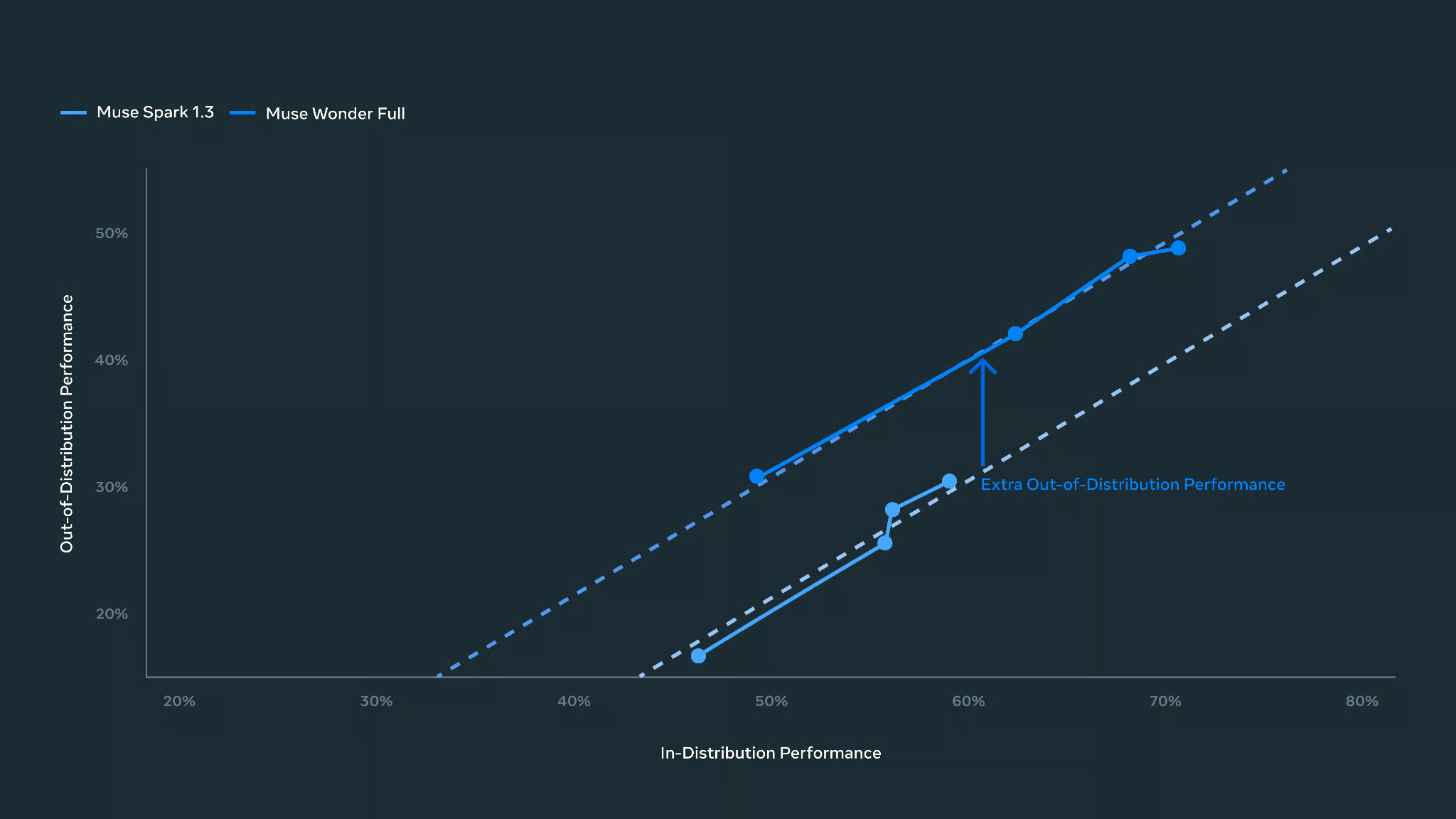
Meta compares performance on unfamiliar tasks. Source: Meta.
On Meta's numbers, Muse Wonder Full wins long coding jobs (but only inside Muse Code), Claude Opus 5.5 wins terminal work and building from scratch, and GPT-6 Astra tops just one row in Meta's table. This part pulls the benchmarks together, so it will sound familiar.
Automation is split, since Muse Wonder Full leads AutomationBench-AA while the Claude models lead on OSWorld partial credit. Among models with a reported full-completion score, none finishes most tasks. On broad reasoning, Claude Opus 5.5 leads the Artificial Analysis index, where regular Muse Wonder scores 52.4.
Price is where regular Muse Wonder looks weaker. GPT-6.1 Sol costs half as much per token and scores 51.8 on the same index, and Claude Sonnet 5.5 costs the same as GPT-6.1 Sol.
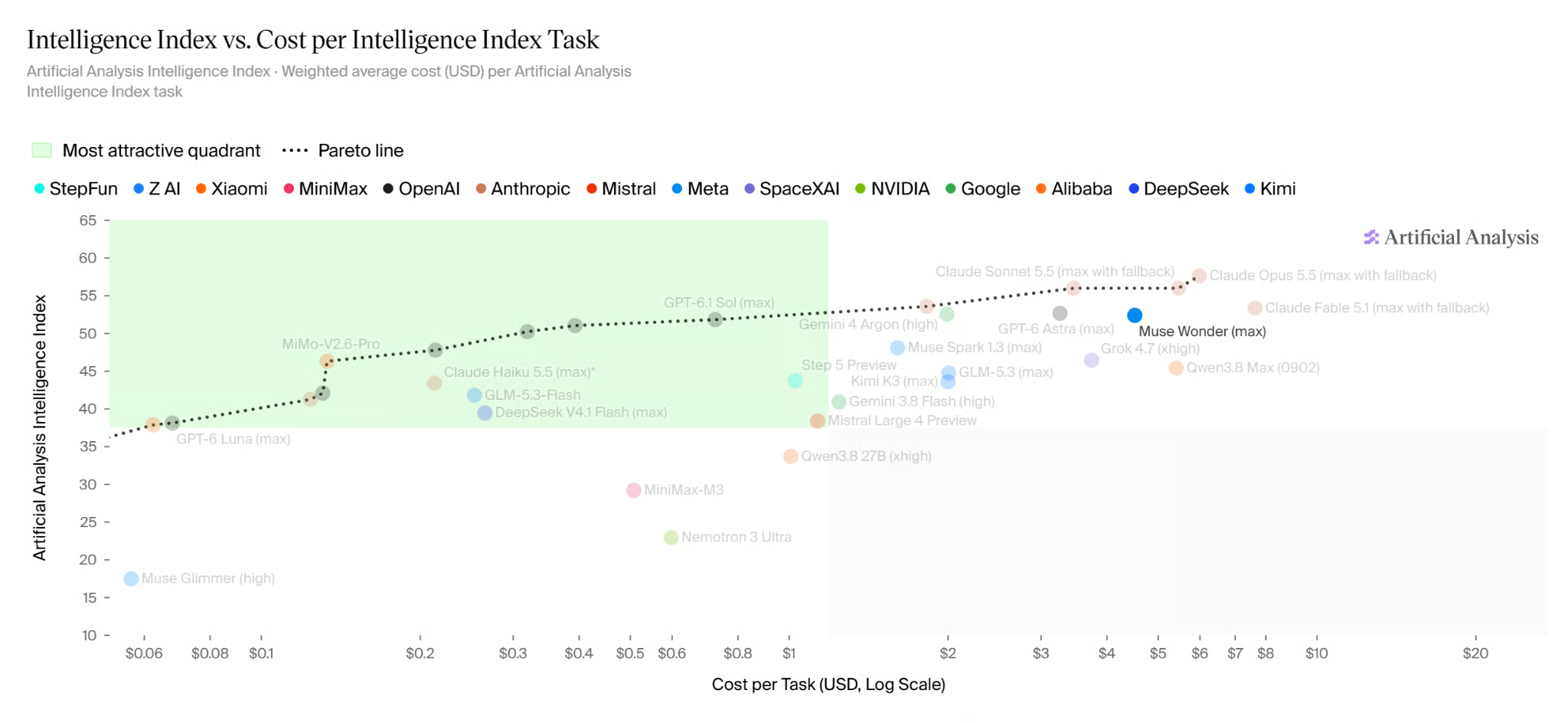
Muse Wonder trades cost against intelligence. Source: Artificial Analysis.
I almost left Gemini 4 Argon out of this section, because Meta didn't test it, and as our Gemini 4 Argon coverage notes, it went to trusted cybersecurity teams first. Without shared results there's no fair head-to-head, so pick by workload and the cost of finishing a task.
Muse Wonder fits two kinds of work best: large software changes and multi-step browser workflows. Long planning jobs, like Meta's wedding seating chart demo, depend more on the app around the model.
This use case has the strongest evidence, at least for changing code that already exists. In Muse Code, Muse Wonder works across files, runs tests, reads failures, and tries again, which is what DeepSWE and SWE-Marathon measure. On real code, give it only the permissions the task needs and have a person review the changes.
Meta's Saturday Run Planning demo shows Muse Wonder "working directly in a browser and across apps," and another demo handles an insurance claim. Since Muse Wonder Full fully finishes fewer than 4 in 10 desktop tasks, a real workflow needs your approval before anything is submitted or paid.
You pay for Muse Wonder in one of two ways: per token for regular Muse Wonder, or a flat monthly Muse Code plan, which, as I mentioned in the intro, is the only way to get Muse Wonder Full.
Meta's pricing page lists regular Muse Wonder at $4.00 per million input tokens, $0.20 for cached input, and $20.00 for output. That's a big jump from Muse Spark 1.3's $1.25 and $4.25, and it matches Claude Opus 5.5's prices, which tells you where Meta thinks Muse Wonder stands.
GPT-6 Astra lists at $10, $1 cached, and $50, and GPT-6.1 Sol at $2, $0.10, and $10. The hypothetical below applies those launch-day prices to one coding task with 3 million input tokens (2.4 million cached) and 200,000 output tokens, assuming no single request goes past 272,000 tokens, where GPT-6 Astra's prices go up.
|
Model |
Uncached input (0.6M) |
Cached input (2.4M) |
Output (0.2M) |
Total per task |
|
Muse Wonder |
$2.40 |
$0.48 |
$4.00 |
$6.88 |
|
Claude Opus 5.5 |
$2.40 |
$0.48 |
$4.00 |
$6.88 |
|
GPT-6 Astra |
$6.00 |
$2.40 |
$10.00 |
$18.40 |
|
GPT-6.1 Sol |
$1.20 |
$0.24 |
$2.00 |
$3.44 |
Equal token prices mean equal bills per attempt, so the number to compare is cost per finished task. If Muse Wonder finishes one time in two, that's $13.76, the same as a model at GPT-6.1 Sol's prices finishing one time in four (both rates invented for the example).
Muse Wonder Full comes only with Muse Code's monthly plans, which charge a flat rate instead of per token. You can skip this part if you only plan to use the API. Meta's subscriptions documentation lists four plans:
Meta's Muse Code product page shows prices only for Power and Maximum, which is an odd thing to leave out, so check the lower plans at checkout. Regular Muse Wonder is on every plan.
Each plan has a usage limit that resets over time. Unused allowance doesn't carry over, and the subscription can't be used as API credit.
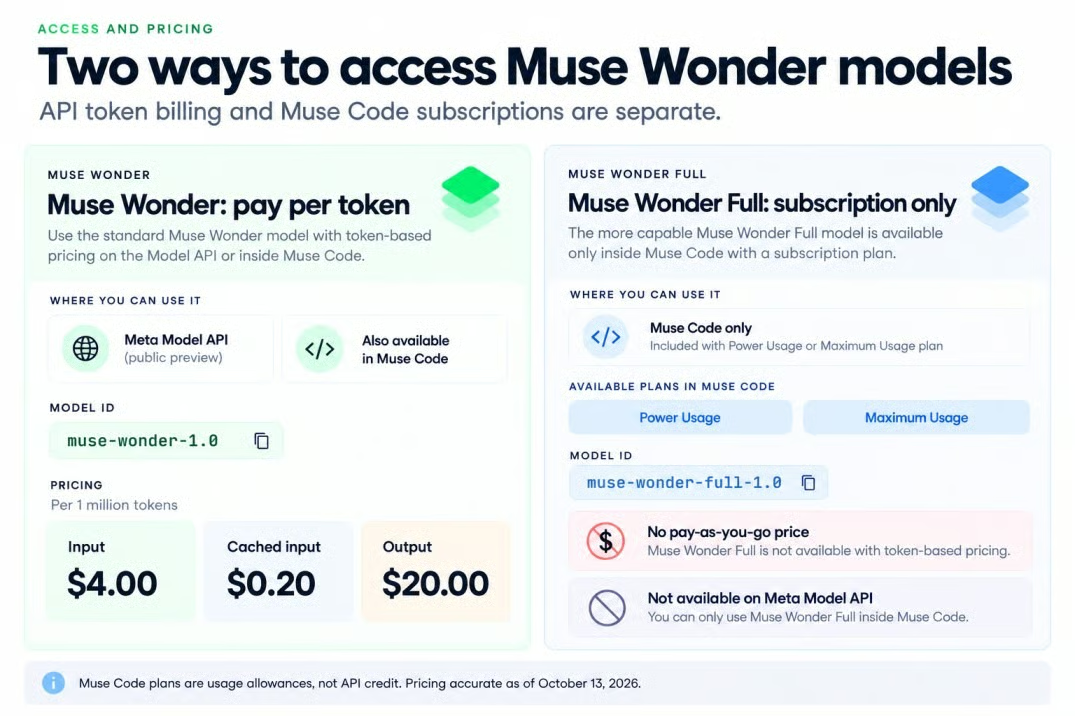
Muse Wonder pricing follows two routes. Source: Meta; image by Author.
Power is the cheapest way to try Muse Wonder Full, though Meta hasn't said how many large tasks its allowance covers. That's the part I'd watch, since one early user said a few small requests used about half of an entry plan's 5-hour limit, as I'll cover in the developer reactions.
To recap the split from the intro: regular Muse Wonder is available through the Meta Model API and Muse Code, and Muse Wonder Full only through Muse Code.
To use the Muse Wonder API, you need a Meta developer account, an API key, and billing, and the model ID is muse-wonder-1.0. Meta still calls the API a "public preview" on its product page, code built on OpenAI's SDK can be pointed at it, and Meta also lists OpenRouter as a route.
Access isn't global. Meta's Geographic Use Policy blocks several places, including China, Russia, Iran, Pakistan, Eritrea, and Ethiopia.
To get Muse Wonder Full, you need a Power or Maximum Muse Code plan, a Meta account, and to be 18 or the age of majority where you live. As I covered in the pricing section, it isn't on the Model API at any price, and its ID, muse-wonder-full-1.0, works only inside Muse Code. Muse Code's documentation lists macOS, Linux, and Windows, though its product page mentions only macOS and Windows.
The risks here come from the same things Meta is pitching: long runs and access to your private files.
The model card names three weaknesses that can affect an agent. Each one causes a different problem:
These are not isolated answer-quality problems when the model can use tools. A wrong click or bad assumption early in a two-hour task can spoil the rest.
It depends on the mode, so read this before pointing Muse Code at a private repository. Meta's Terms of Service, updated three days before launch, say Meta won't train on content sent to its Standard Services, while content sent in Contributor mode may be used to "train, develop, evaluate, and improve" its models.
Muse Code subscriptions start in Contributor mode, in exchange for more usage, and you have to switch to Standard in your settings. The switch only applies going forward, so anything you already sent can still be used for training. I find that default hard to like.
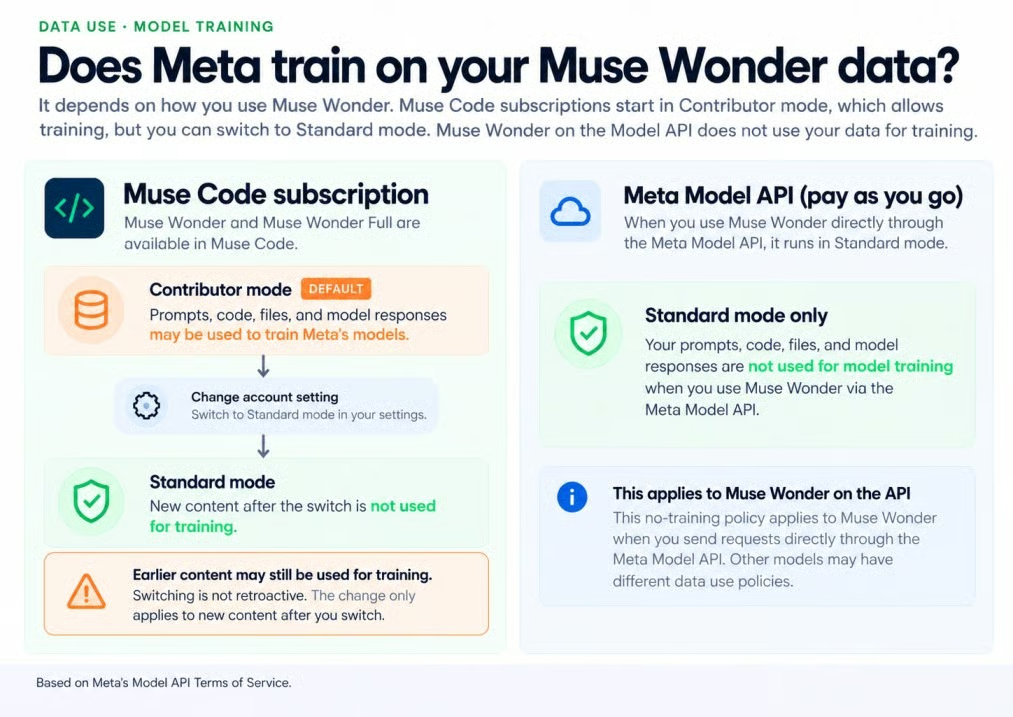
Contributor content may train Meta models. Source: Meta Terms; image by Author.
The terms also say you "must not submit sensitive, confidential, or personal information" in Contributor mode, including private code. Regular Muse Wonder on the pay-as-you-go API runs in Standard mode only.
Meta tested Muse Wonder Full under its Superintelligence Scaling Framework. Without safeguards, Meta doesn't rule out it reaching the high-risk level for chemical and biological threats, and with safeguards it rates every risk area "moderate or lower."
A risk rating isn't a safety guarantee, and a fuller safety report is still coming "soon." The model card's advice is simple: require human confirmation for actions you can't undo, and keep the agent in a sandbox with limited permissions.
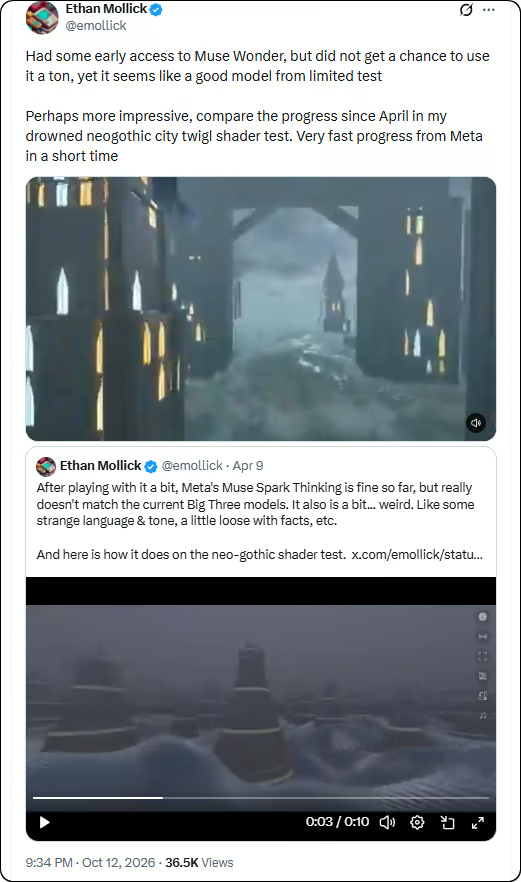
Launch-day reactions on X split between rapid progress, uneven performance, and frustration with usage limits. These are short tests and personal impressions, not controlled evaluations.
The cautious positive view came from an early tester who had limited time with Muse Wonder but thought it looked good. The bigger point was how far Meta's models had come since Muse Spark in April.
A broader category test told a less tidy story. Muse Wonder Full ranked near the top for agents and coding, but fell behind on writing, front-end design, and creative work.
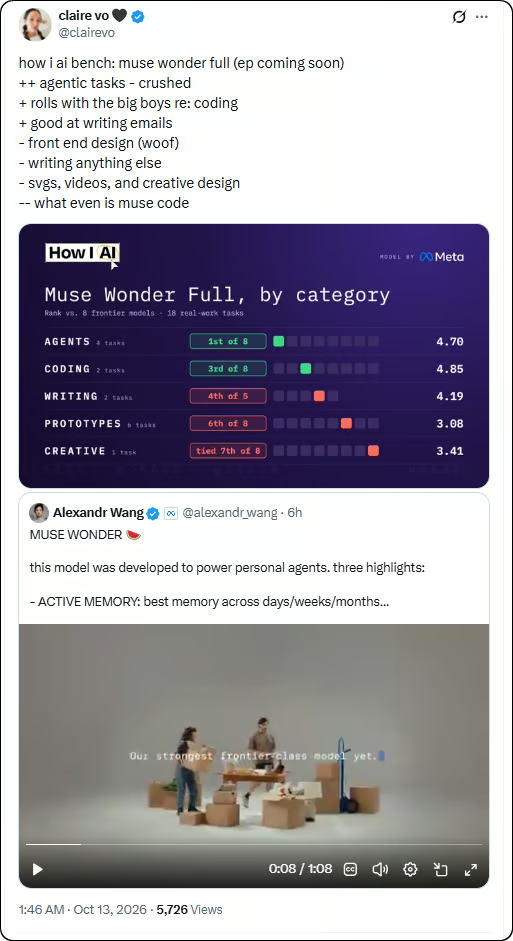
The sharpest complaint was about cost and plan limits. In one same-prompt lawn mower test, Muse Wonder Full used about $4.11 in API-equivalent tokens but produced a weaker 3D result than Claude Opus 5.5, and the tester said finishing required an upgrade from the $50 plan to the $200 plan.

Together, the posts suggest Muse Wonder is competitive but uneven. More repeated tests are needed before treating any one result as typical.
Most of the launch evidence still comes from Meta. Muse Wonder Full has no pay-as-you-go API, and regular Muse Wonder costs the same as Claude Opus 5.5 while trailing it on several tests.
I'd test regular Muse Wonder for API agents and Muse Wonder Full for long repository work. I'd keep Claude Opus 5.5 for terminal work or building programs from scratch, and use GPT-6.1 Sol or Claude Sonnet 5.5 when cost decides.
Learn with DataCamp
{count, plural, one {Course} other {Courses}}
{count, plural, one {Course} other {Courses}}
{count, plural, one {Course} other {Courses}}
{count, plural, one {blog} other {blogs}}
Matt Crabtree
10 min
{count, plural, one {blog} other {blogs}}
Matt Crabtree
10 min
{count, plural, one {blog} other {blogs}}
Matt Crabtree
10 min
{count, plural, one {blog} other {blogs}}
Matt Crabtree
10 min
{count, plural, one {blog} other {blogs}}
Matt Crabtree
8 min
{count, plural, one {blog} other {blogs}}
Khalid Abdelaty
14 min