演讲者


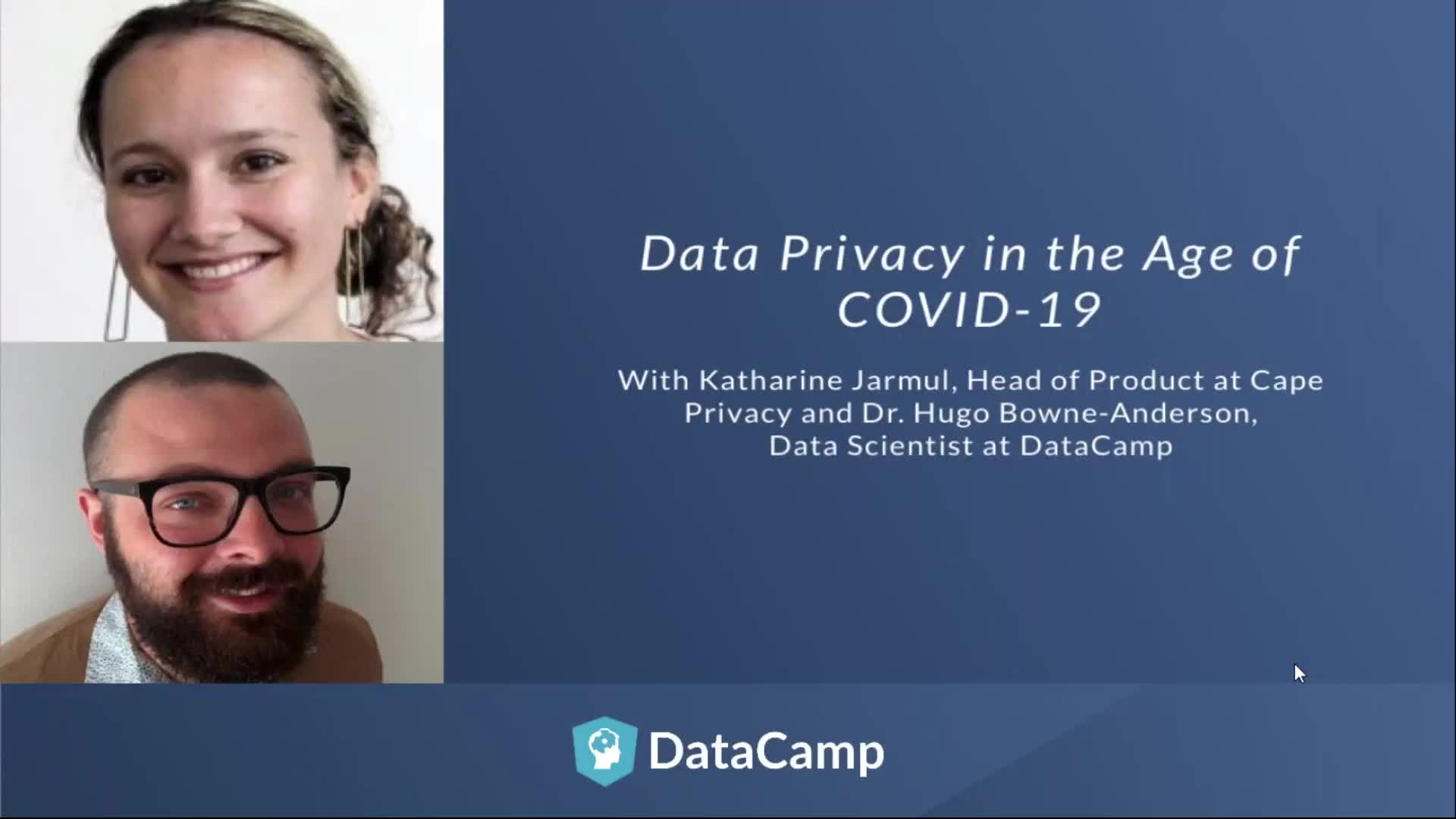
Katharine Jarmul
培训2人或以上?
让您的团队访问完整的 DataCamp 资料库,包括集中式报告、任务分配、项目管理等功能。Data privacy in the age of COVID-19
November 2021
Summary
As global awareness of data privacy grows, this insightful discussion explores the complex issues surrounding privacy in the COVID-19 era. Catherine Jarmal, head of product at Kate Privacy, and Dr. Hugo Bowne-Anderson from DataCamp review the current state of privacy-preserving technologies, the ethical implications of data collection, and the balance between convenience and privacy. The conversation discusses the difficulties of implementing secure machine learning systems and the significance of cross-disciplinary approaches to ensure data protection. Using examples from the tech industry, the dialogue emphasizes the need for transparency, informed consent, and the potential risks of centralized data systems. The speakers promote a careful review of privacy frameworks, encouraging individuals and organizations to consider the implications of data usage and the power dynamics involved. Through anecdotes and expert insights, the discussion emphasizes the importance of privacy as a fundamental right and the necessity for innovative solutions to address the evolving state of privacy.
Key Takeaways:
- Data privacy is a significant concern, particularly in the context of COVID-19, where data collection has increased.
- There is a need for balance between convenience and privacy, challenging the idea that security requires giving up privacy.
- Cross-disciplinary collaboration is vital for developing effective privacy-preserving technologies.
- Transparency and informed consent are vital in data collection and usage practices.
- Understanding privacy risks and implementing secure frameworks are necessary to protect individual rights.
Deep Dives
Data Privacy in the COVID-19 Era
...
阅读更多
Privacy-Preserving Machine Learning
The convergence of machine learning and data privacy presents both challenges and opportunities. Catherine Jarmal shares insights into her work at Kate Privacy, focusing on secure privacy-preserving machine learning systems. She discusses the importance of applying research to close the gap between theoretical frameworks and real-world applications. The conversation discusses various privacy techniques, including differential privacy and secure multi-party computation, highlighting the need for cross-disciplinary collaboration. Jarmal emphasizes the importance of equipping data scientists with the tools and knowledge to effectively implement privacy-preserving measures. By promoting collaboration between researchers, industry professionals, and legal experts, the goal is to create secure systems that protect privacy without hindering technological advancement.
Informed Consent and Data Transparency
Informed consent and transparency play a key role in the ongoing discourse about data privacy. The speakers emphasize the vital role these principles play in ensuring ethical data collection and usage. Jarmal points out the often-overlooked complexity of consent, drawing parallels with legal frameworks like GDPR, which advocate for clear and understandable consent processes. The discussion highlights the challenges of ensuring informed consent in an era of complex privacy policies and terms of service. By advocating for transparency and clarity in data collection practices, the conversation aims to empower individuals to make informed decisions about their data. The speakers call for a reevaluation of privacy norms, urging organizations to prioritize transparency and respect for user autonomy.
Challenges of Centralized Data Systems
The debate over centralized versus decentralized data systems is a recurring theme in the discussion. Jarmal examines the potential risks associated with centralized systems, including data breaches and misuse of information. The speakers explore alternatives like decentralized systems and federated analytics, which offer more privacy-preserving approaches. By decentralizing data collection and analysis, individuals retain more control over their information, reducing the risks associated with centralized databases. The conversation also discusses the technical challenges of implementing these systems, such as data validation and quality assurance. Ultimately, the speakers promote a balanced approach that considers both privacy and practicality, urging stakeholders to prioritize privacy in the design and implementation of data systems.
- Data Wrangling with Python: Tips and Tools to Make Your Life Easier
- Python Web Scraping: Hands-on data scraping and crawling using PyQT, Selnium, HTML and Python, 2nd Edition
- Human Compatible: Artificial Intelligence and the Problem of Control
- It's Complicated
- Automating Inequality: How High-Tech Tools Profile, Police, and Punish the Poor
有关的
white paper
2022 Data Trends and Predictions
Read about 9 trends shaping data science in 2022 and beyondwebinar
Data Skills to Future-Proof Your Organization
Discover how to develop data skills at scale across your organization.webinar
How Data Science is Transforming Healthcare
Learn how data science is transforming healthcare across verticalswebinar
Data Trends and Predictions 2022
9 major data science trends that will impact organizations in 2022 and beyond.webinar
How AI Can Improve Your Data Strategy
Find out how AI, ML, and data science can inform your data strategy.webinar