Customer story

How Arizona State University builds job-ready data and AI skills with DataCamp

Learn how ASU helps master’s students gain in-demand skills like SQL, Python, and R.

Request a Demo

Upskilling a small team? Get started today
150+

master’s students enrolled in DataCamp

2,680

learning hours completed

Drive measurable impact from upskilling

Request a Demo

The challenge: Blending academic knowledge with job-ready skills

The Biological Data Science MS program at Arizona State University (ASU) combines biological discovery with data-driven insight. 

Students often come to the program from strong STEM backgrounds, with deep subject matter knowledge. What varies is experience with modern data tools, which matters once students move into advanced coursework, research, and the job market. 

Data science is evolving quickly, and so are employers’ requirements. Skills like Python, R, and SQL are now table stakes for many roles, and topics like generative AI and transformer models are becoming mainstream across both industry and research. 

“We wanted to bridge the gap between the classroom and the job market,” said Nilesh Dixit, Graduate Program Director and Assistant Teaching Professor in the Biological Data Science MS program at ASU. “To complement the knowledge we teach in areas like biological sciences, applied computing, and statistics, we wanted to find a learning platform that allowed our students to gain practical skills—giving them the complete skillset employers are looking for right now, with no additional pressure on faculty or students.”

ASU really understands the wide breadth of starting skill levels of its students. Imposter syndrome is a real thing. Having this extra resource to bolster our learning not only allows students to feel more confident in their choice to trust ASU with their educational journey, but also allows students to know that DataCamp is a trusted partner to seek extra learning from.

Kaitlyn Schisler

Biological Data Science master's student at ASU

The solution: Hands-on learning with DataCamp

ASU uses DataCamp as a flexible, self-paced learning platform that complements coursework and research. The goal is to give students access to practical data skills at the right moments, without taking time away from core academic instruction. 

“There's so much in DataCamp that our students can explore and benefit from. Outside the courses, there’s also structured pathways, certifications, code-alongs, and competitions they can take part in,” said Nilesh.
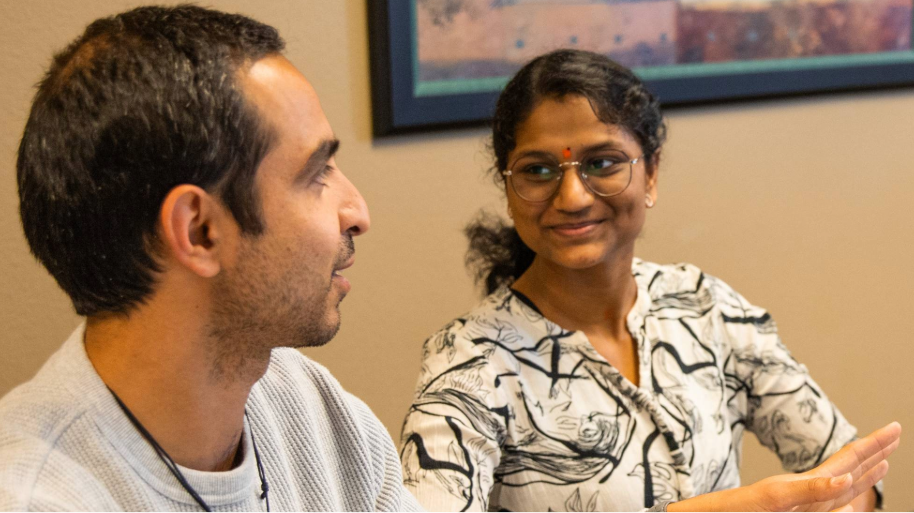
At the start of the program, students are encouraged to complete recommended DataCamp courses, to build core skills like Python, R, and SQL. This helps to create a consistent foundation, before classes move into more advanced topics. From there, they can also choose to explore the entire DataCamp curriculum.

“Students use DataCamp in different ways depending on their interests and goals,” said Nilesh. “Some focus on strengthening skills they need for coursework, while others explore topics that support their research and career plans, or areas they’re really interested in, like machinelearning or advanced AI techniques. We also encourage students who are preparing for industry roles to pursue certifications and include them on their resumes.”

DataCamp has been an amazing supplement for my coursework. I learn so much more quickly with the space to practice what I’ve learned. Last semester, I was learning about using the command line and programming with the Unix shell, and I needed some extra resources outside of class to better understand the material. DataCamp not only helped consolidate what I had learned in class, it gave me the practice I needed to really ace the course.

Maelstrom Lee

Biological Data Science master's student at ASU

Faculty use DataCamp as well, to support their own upskilling and complement classroom assignments.

“We’re very committed to keeping our own skills current," said Nilesh. "Teaching faculty use DataCamp datasets and scripts to enhance assignments, while research faculty use it to stay up to date in evolving areas like LLMs and transformer models.”

Solving real-world problems

DataCamp also plays an important practical role in the capstone project, where students select and solve a real problem. When students are working independently and immediate expert guidance is not available, they’re encouraged to use DataCamp to explore models, review code examples, and move their work forward. This is particularly helpful when students are working with newer or fast-moving areas like transformer models, and working with complex datasets.

“DataCamp helps our students become more confident in solving problems, and supports a realistic research experience where learning, experimentation, and application happen at the same time,” said Nilesh.

Thanks to the courses I've completed, I feel more confident in not only my coding foundations, but also other categories like cloud computing and AI. I really had an "I see it now" moment in the "AWS Cloud Practitioner (CLF-C02)" Skill Track. Having a virtual environment that I could actually explore the AWS services in really helped solidify what I was learning about in the videos and practicing it in the real world. Next up: learning more about Git, GitHub, and version control!

Kaitlyn Schisler

Biological Data Science master's student at ASU

The result: Real-world application, research impact, and career readiness

So far, ASU students have completed 2,680 learning hours on DataCamp, with strong engagement in Python, R, and SQL curriculum, core skills that support both academic work and career readiness.

“One of our students is working with cancer research data, and another student is analyzing smartwatch data to understand heartbeat irregularities,” said Nilesh. “They’re using R and Python templates in DataCamp to modify and experiment with real solutions.”
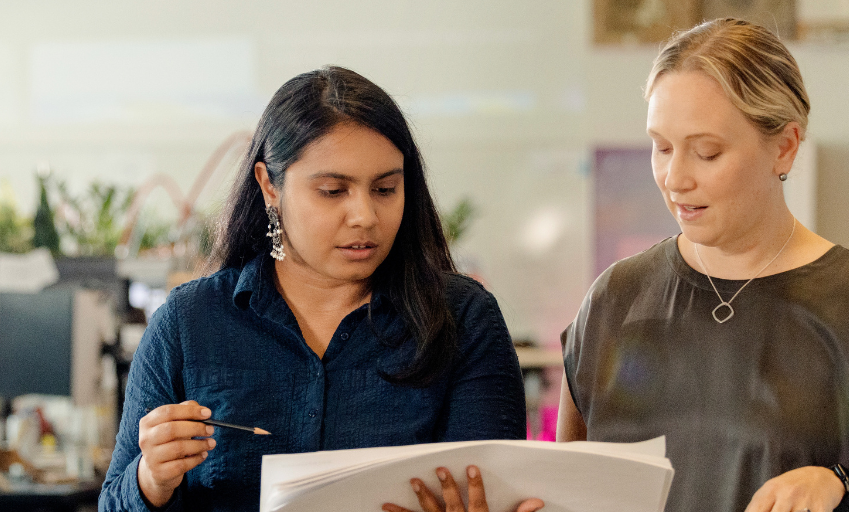
Graduates have shared that the experience helps them feel more confident discussing their skills in interviews and better prepared to meet employer expectations. 

“We’ve heard from many former students that the combination of their ASU studies and the practical skills from DataCamp has helped them to build a strong data science resume,” said Nilesh.

As someone going through a career change, DataCamp has really helped me feel empowered in my learning and like I can achieve success in data science.

Maelstrom Lee

Biological Data Science Master's Student at ASU

With DataCamp, I’ve been able to level up my own abilities to be a better fit for my target companies.

Kaitlyn Schisler

Biological Data Science Master's Student at ASU

Faculty, in turn, benefit from having a shared foundation for technical skills, allowing them to spend more time teaching higher-level concepts and domain expertise.

As ASU continues to evolve its master’s programs and build its partnership with DataCamp, flexibility and relevance remain central priorities. Tools will continue to change, and students will need ways to learn quickly, apply new skills, and adapt over time. DataCamp has become an important part of that solution, ensuring students build practical data skills they can use long after the program ends.

Explore related stories

How Bayer increased productivity with AI and data upskilling

Learn how Bayer built a culture of data fluency and innovation through its Data Academy, powered by DataCamp.

Read More
How Shifta built an AI-ready workforce with DataCamp

Learn how Shifta launched a company-wide upskilling program, helping teams across the business build confidence working with AI.

Read More
View all customer stories

See DataCamp in action

Discover how DataCamp can accelerate your data and AI transformation goals.
By continuing, you accept our Terms of Use, our Privacy Policy and that your data is stored in the USA.