Fill in the details to unlock webinar

By continuing, you accept our Terms of Use, our Privacy Policy and that your data is stored in the USA.

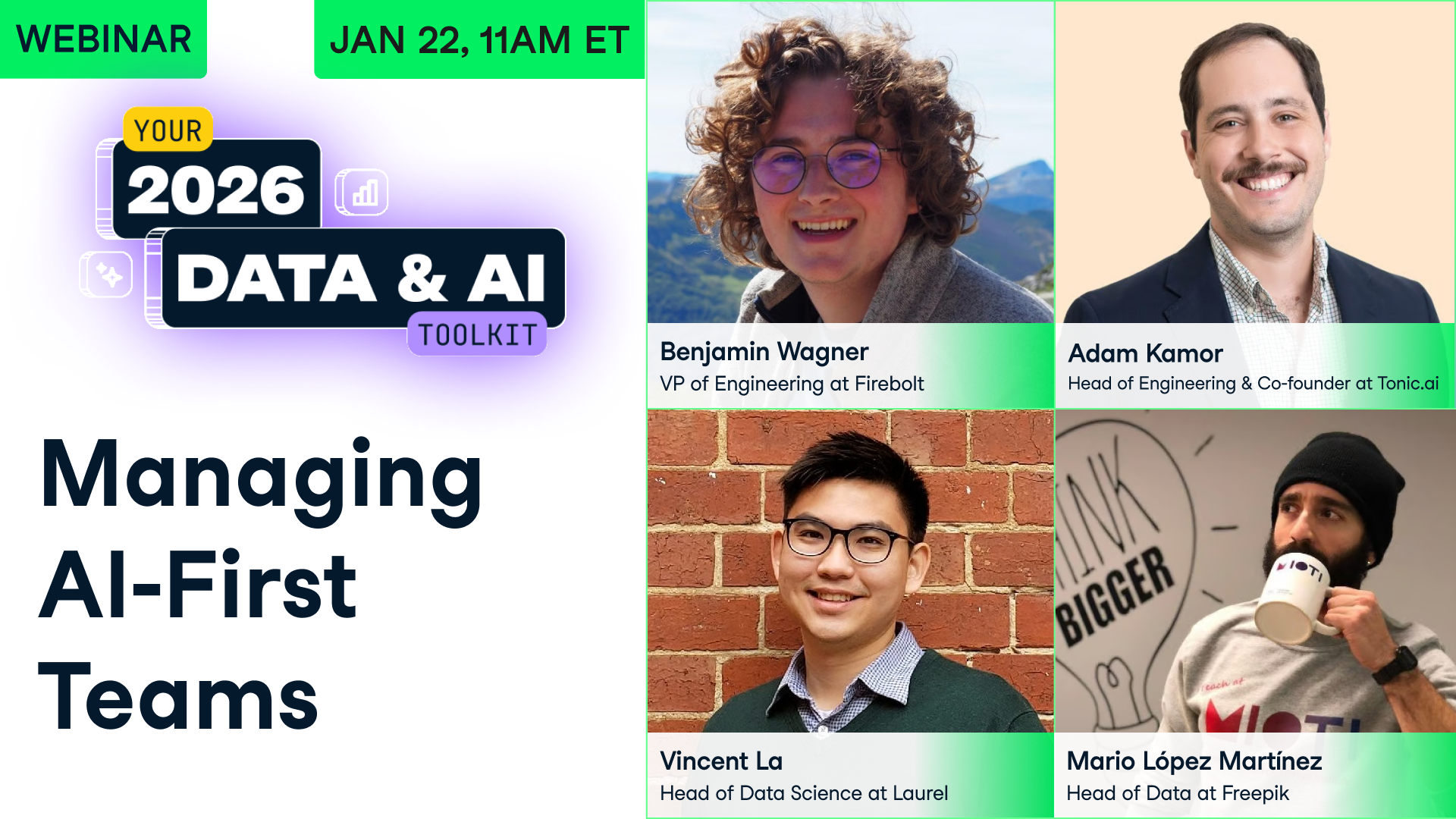
Speakers

For Business

Training 2 or more people?

Get your team access to the full DataCamp library, with centralized reporting, assignments, projects and more
Try DataCamp For BusinessFor a bespoke solution book a demo.

Managing AI-First Teams

January 2026
Webinar Preview

Session Resources

Summary

Managing AI-first teams is essential for organizations aiming to integrate AI into their operations effectively. The session explored the concept of AI-first teams, focusing on aligning AI strategies with business goals and ensuring technical teams are equipped to leverage AI tools. Experts from various fields shared insights on defining AI-first teams, measuring success, essential skills, and managing change within organizations. AI-first teams prioritize the use of AI tools to drive efficiencies and innovation. Success is measured by business impact, such as improved decision-making and productivity gains. Key skills include technical expertise in data management and a strong understanding of business needs. Change management is key to overcoming resistance and ensuring smooth integration of AI tools. The discussion highlighted the importance of leadership buy-in and clear objectives to guide AI adoption.

Key Takeaways:

  • AI-first teams prioritize AI tools to enhance efficiency and innovation.
  • Success is measured by business impact, beyond just technical achievements.
  • Essential skills include technical expertise and business understanding.
  • Change management is important for overcoming resistance to AI adoption.
  • Leadership buy-in and clear objectives are vital for successful AI integration.

Deep Insights

Defining AI-First Teams

AI-first teams are characterized by their proactive use of AI tools to drive efficiencies and innovation. Vincent La emphasized that an AI-first team is not only about using AI everyw ...
Read More

here but ensuring that data quality and governance are prioritized. "Data becomes your most strategic asset," he noted, highlighting the importance of high-quality data as the foundation for AI solutions. Adam Kamor added that AI-first doesn't mean AI-only, stressing the need for a balanced approach where AI tools complement human expertise.

Measuring Success

Success for AI-first teams is measured by the business impact they enable, such as improved decision-making and productivity gains. Vincent La pointed out that the goal is to enable a "federated data system" where teams can access and analyze data independently. Mario López Martínez shared an example of how AI tools allowed non-technical users to uncover valuable insights, leading to strategic business decisions. The focus is on outcomes rather than the amount of code written or AI tools used.

Essential Skills for AI-First Teams

Technical expertise in data management and a strong understanding of business needs are essential for AI-first teams. Vincent La introduced the concept of a "T-shaped" skill set, where individuals have broad knowledge across various areas but deep expertise in one. Mario López Martínez emphasized the importance of good engineering practices and domain knowledge. Adam Kamor highlighted the need for experienced engineers who can discern the quality of AI-generated code and adapt to new tools.

Managing Change and Overcoming Resistance

Change management is key for integrating AI tools into existing workflows. Mario López Martínez noted that while tech enthusiasts are eager to adopt new tools, process changes can be challenging. He emphasized the importance of communicating the benefits of new processes and building trust within the team. Adam Kamor suggested that leadership buy-in is crucial, as it sets the tone for the organization's AI adoption strategy. The focus should be on aligning AI initiatives with business objectives to ensure meaningful impact.


Related

webinar

AI and the Workforce: How Will AI Reshape Data and Technology Roles?

Industry experts explore how AI is reshaping the skills, responsibilities, and opportunities within the tech industry.

webinar

How Leaders Build AI Skills at Scale

Industry experts share how they’ve built AI training programs that scale without sacrificing relevance or engagement.

webinar

AI In The Enterprise: Developing AI Talent

Damien Herrick, Ita Petrika-Lindroos, and Thomas Bodenski discuss strategies for developing AI talent. Learn which AI skills and roles are in demand, how to attract the right talent, and how to build AI literacy across your organization.

webinar

Preparing Your Workplace for an AI-led Future

Three data experts from AXA UK, share how the company built its data and AI training program from the ground up.

webinar

AI Upskilling: Lessons from the Frontlines

Experts discuss their experiences running AI upskilling programs at scale. You’ll learn how to define training personas, boost adoption and engagement, and measure the ROI of your efforts.

webinar

How to Attract & Retain AI Talent

In this session we explore how to create a successful AI talent strategy. Learn about the key roles that leverage AI, the skills needed to excel in these positions, and how to develop AI literacy throughout your organization.