Chuyển đến nội dung chính
Trang chủ

AI Literacy Courses

AI literacy is the ability to understand, use, and critically evaluate AI tools. Our courses teach you how generative AI and large language models work, how to prompt them and check their answers, and how to use AI responsibly at work.

Tạo Tài Khoản Miễn Phí

Tiếp tục với GoogleHiển thị thêm tùy chọn

hoặc


Bằng cách tiếp tục, bạn chấp nhận Điều khoản sử dụng, Chính sách bảo mật và việc dữ liệu của bạn được lưu trữ tại Hoa Kỳ.
Group

Đào tạo từ 2 người trở lên?

Thử DataCamp for Business

Recommended for AI literacy beginners

Build your AI literacy with interactive, no-code courses curated by real-world experts

Khóa học

Ứng dụng AI trong công việc

Cơ bảnTrình độ kỹ năng
4.7+
23.961 đánh giá
2 gio
Khám phá trí tuệ nhân tạo (AI) là gì và cách sử dụng nó một cách có trách nhiệm để nâng cao hiệu quả và năng suất trong công việc!
AI Tutor

Lộ trình

Kiến thức AI cơ bản

4.7+
94 đánh giá
9 gio
Nắm vững những kiến thức nền tảng về AI, học cách tận dụng AI hiệu quả trong công việc và tìm hiểu sâu về các mô hình AI để thích ứng với bối cảnh AI không ngừng biến đổi.

Không biết bắt đầu từ đâu?

Làm Bài Đánh giá

Duyệt khóa học và lộ trình AI Literacy

Lộ trình

Cơ bản về MLOps

4.9+
14 đánh giá
14 gio
Khám phá nền tảng của Quản lý Hoạt động Học máy (MLOps), tìm hiểu các khái niệm về triển khai và giám sát mô hình học máy trong môi trường sản xuất!

Lộ trình

Cơ bản về GDPR và Bảo mật Dữ liệu

5
3 đánh giá
5 gio
Nắm vững GDPR, bảo mật dữ liệu và an ninh mạng để bảo vệ dữ liệu, đảm bảo tuân thủ và xây dựng niềm tin trong thế giới số.

Lộ trình

Nền tảng Trí tuệ Nhân tạo có Trách nhiệm

4.6+
3 đánh giá
6 gio
Nắm vững các nguyên tắc cơ bản của trí tuệ nhân tạo có trách nhiệm. Nâng cao các kỹ năng đạo đức, quản lý dữ liệu và tuân thủ cần thiết để quản lý trí tuệ nhân tạo (AI) trong suốt vòng đời của nó.

Lộ trình

Nguyên tắc cơ bản của khoa học ra quyết định

4+
1 đánh giá
4 gio
Bộ công cụ mạnh mẽ giúp đưa ra những quyết định thông minh hơn. Xây dựng, tối ưu hóa và đánh giá các mô hình quyết định, tránh thiên vị và áp dụng tư duy phân tích vào các vấn đề thực tế.

Tài nguyên liên quan về AI Literacy

blog

What is AI Literacy? A Comprehensive Guide for Beginners

Explore the importance of AI literacy in our AI-driven world. Understand its components, its role in education and business, and how to develop it within organizations.
Matt Crabtree's photo

Matt Crabtree

15 phút

blog

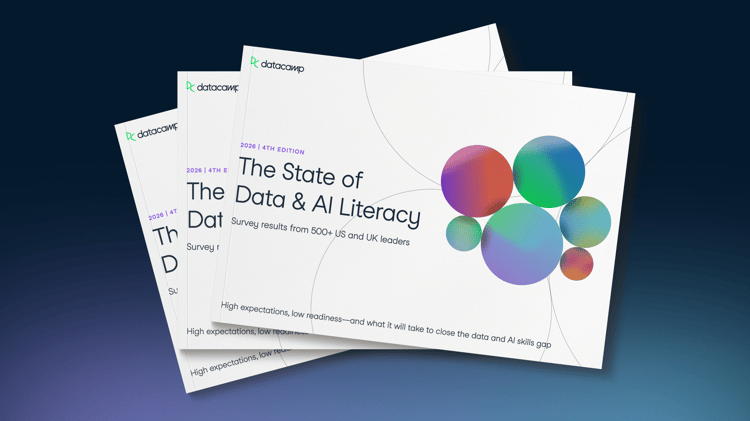
The State of Data and AI Literacy in 2026: Definitions, Statistics, and the AI Skills Gap

88% of enterprise leaders say basic data literacy is essential for day-to-day work. 72% say the same for AI literacy. Yet nearly 60% report a skills gap in their organization.
Lynn Heidmann's photo

Lynn Heidmann

5 phút

blog

What is the EU AI Act? A Summary Guide for Leaders

Understand the essentials of the EU AI Act in this summary guide for leaders.
Austin Chia's photo

Austin Chia

12 phút

Hướng dẫn

Ethics in Generative AI

Understand the transformative potential of generative AI and the necessary awareness of the risks associated with it.
Vidhi Chugh's photo

Vidhi Chugh

9 phút

Hướng dẫn

A Beginner's Guide to ChatGPT Prompt Engineering

Discover how to get ChatGPT to give you the outputs you want by giving it the inputs it needs.
Matt Crabtree's photo

Matt Crabtree

6 phút

buổi lập trình cùng giảng viên

ChatGPT Prompt Engineering for Beginners

In this webinar, you'll get ideas for incorporating ChatGPT into your workflows and learning the basics of writing good prompts.
Adel Nehme's photo

Adel Nehme


Frequently asked questions

What is AI literacy?

AI literacy is the ability to understand, use, and critically evaluate artificial intelligence. An AI-literate person knows how tools like chatbots and large language models (LLMs) work at a high level, uses them effectively for real tasks, recognizes their limits (such as hallucinations and bias), and uses them responsibly.

Why is AI literacy important?

AI tools are now part of everyday work in almost every role. Without AI literacy, people either over-trust AI output or avoid tools that could save them hours. AI-literate teams get more value from AI, catch errors before they spread, protect sensitive data, and meet growing regulatory expectations such as the EU AI Act.

What skills does AI literacy include?

AI literacy spans five skill areas: understanding how AI and LLMs work and where they fail; identifying good use cases; prompting clearly; evaluating outputs for accuracy, bias, and sourcing; and using AI responsibly, including data privacy and accountability. DataCamp's AI Fundamentals track and Understanding Prompt Engineering course cover these areas.

Do I need technical skills to become AI literate?

No. DataCamp's AI literacy courses are designed for non-technical learners and require no coding or math. You learn through interactive exercises, and you practice prompting real AI tools directly in your browser.

What is the difference between AI literacy and data literacy?

Data literacy is the ability to read, analyze, and communicate with data. AI literacy builds on it: AI systems learn from data, so judging an AI answer requires understanding data quality, bias, and statistics. Most organizations train both together.

How long does it take to build AI literacy?

You can grasp the essentials in about 2 hours with Introduction to AI for Work. The AI Fundamentals track takes about 9 hours and covers machine learning, LLMs, generative AI, and AI ethics, with a skill assessment at the end.

How can companies roll out AI literacy training for employees?

Start with a shared baseline for everyone, then add role-based paths for leaders, business teams, and technical staff. DataCamp for Business lets you assign AI literacy tracks, build custom learning paths, and report on progress and skills across teams. The Learning Leader's Guide to AI Literacy walks through the full approach.

Công nghệ và chủ đề khác

công nghệ

Phát triển kỹ năng dữ liệu của bạn với DataCamp for Mobile

Tiến bộ mọi lúc mọi nơi với các khóa học di động và thử thách lập trình 5 phút mỗi ngày của chúng tôi.