2026 Data4Good Analytics Competition
The Data4Good Analytics Competition is an international challenge for undergraduate students, master’s students, and industry professionals to upskill their business problem framing skills, AI/cloud services skills (AI-901: Microsoft Azure AI Fundamentals), and professional delivery of an analytics solution that supports a real-world partner who needs your help! Participants can win big time financial prizes and gain free training and certifications. Judges will select regional champions, with regional winners invited to present at The Johns Hopkins University Carey School of Business in spring 2027.
Have Questions?
Try our competition bot to get your questions answered. For any technical problems related to competition registrations, contact [email protected]. For any technical problems with taking the AI-900 exam, post your question in the support group
Student Eligibility & Rules
Teams must register as groups of 3-4 students — all undergraduate or master's students (no PhD students), as the evaluation varies based on education level. Each participant should submit a registration form and pay the registration fee.
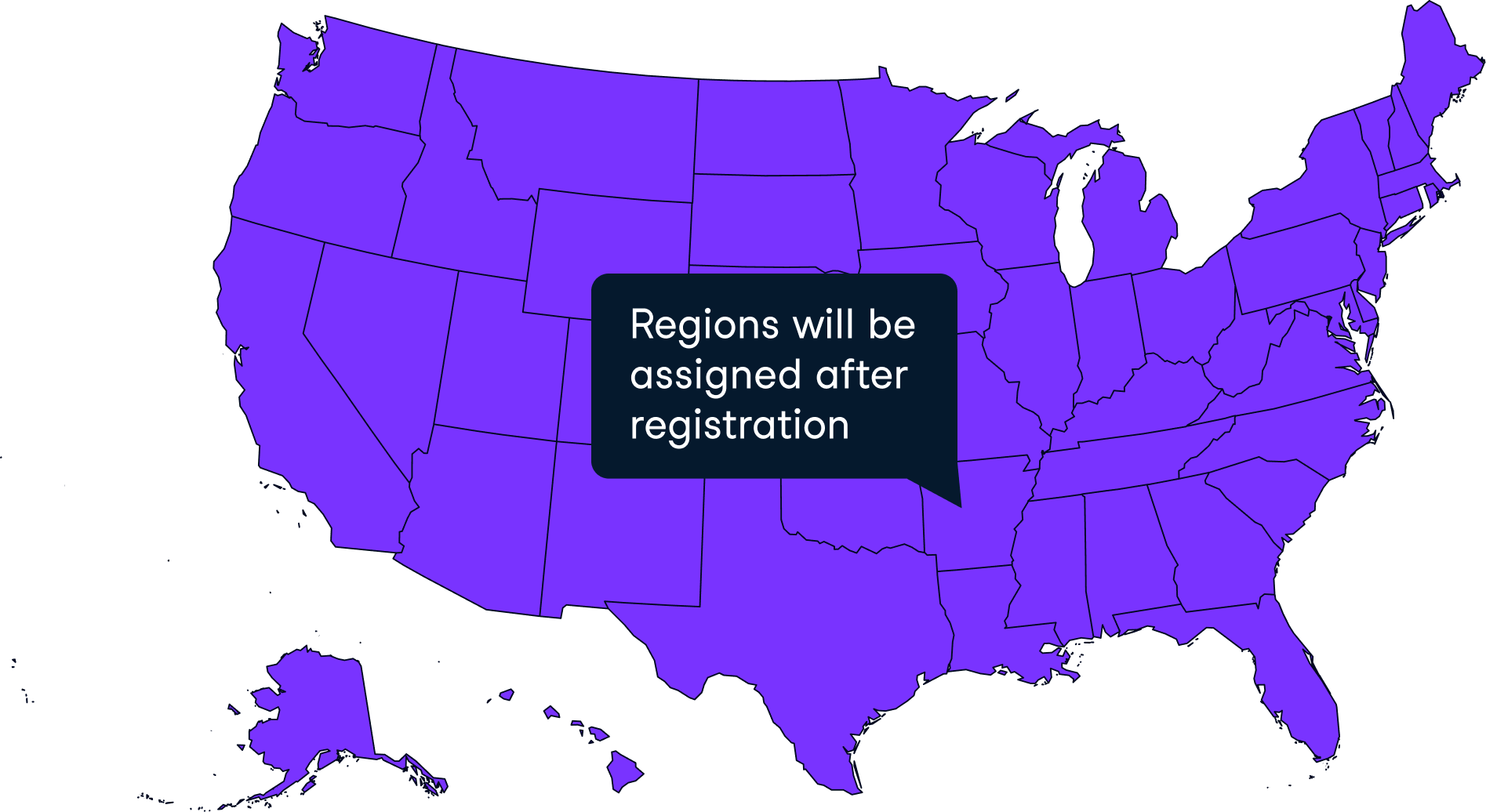
Regions will be assigned once registration closes. Teams must name their school when they register, and all members of a team must be from that same school.
All participants must use academic emails (e.g., .edu, ac.uk) to register and participate in all competition events. Please ensure you use the same email address in every form you fill out throughout the competition. Points errors arising from using different email addresses will not be corrected later.
Non-Student Eligibility & Rules (Practitioners or PhD Students)
A non-student may register themselves individually, or register a team. Each team can consist of up to 4 total individuals (PhD students may participate in this category). Each student should submit a registration form and pay the registration fee.
The Non-Student (Practitioners or PhD Students) track is not region bound as compared with the student track. You will be competing against all non-students.
Please ensure you use the same email address in every form you fill out throughout the competition to ensure points are properly allotted to you individually, or as a team. Points errors from using different email addresses will not be corrected later.
Competition Rounds
In the regional round, participating teams will first compete against other teams in their assigned regions. All regions will be assigned after the registration deadline. Non-USA participants will be in ‘Region 5 - International’. Non-Student (Practitioners and PhD Student) participants are not assigned to a particular region but are grouped into one track. In the national round, regional winners will be invited to compete at the final competition at The Johns Hopkins University Carey School of Business. Invited teams MUST participate in the final competition to be eligible to receive regional prize funds.
Case Challenge
More than 80% of the U.S. population live in urban areas with between 100,000 to 20,000,000 residents, with billions more living in cities internationally. With this many people concentrated in dense places there are many opportunities, but also many challenges. Among all the challenges cities around the world face, safety is almost always near the top, with many leaders and residents looking for data driven solutions to protect their community.
The goal of this year’s Data4Good competition is to help make cities better, so our urban areas can continue to grow, thrive and survive while providing opportunities for a better life to their residents.
To do this, we will use data from Tempe, Arizona in the U.S.A. Tempe is a midsize city approaching 200,000 residents geographically positioned near the center of a 5,000,000+ metropolitan area, making it the 5th largest urban population in the United States.
Value Proposition and Prizes
- FREE Proctored Microsoft AI-901: Microsoft Azure AI Fundamentals Certification (a $99 value retail)
- FREE six-month subscription to DataCamp
- FREE INFORMS Business Problem Framing training course (a $59 value retail)
- FREE Certified Analytics Professional - Essentials (CAP-E) Prep course (a $275 value retail)
- FREE access to SAS courses
- FREE Leading in AI & Analytics course (a $199 value retail)
- FREE DataBricks .....
- Region 1 (East) Undergraduate Team Champion: $2,000 | Graduate Team Champion: $2,000
- Region 2 (MidWest) Undergraduate Team Champion: $2,000 | Graduate Team Champion: $2,000
- Region 3 (South Central) Undergraduate Team Champion: $2,000 | Graduate Team Champion: $2,000
- Region 4 (West) Undergraduate Team Champion: $2,000 | Graduate Team Champion: $2,000
- Region 5 (International) Undergraduate Champion: $2000 | Graduate Team Champion: $2000
- Any Region (Non-student Practitioner) Champion: $2000
-
- Undergraduate Team National Champions ($5000)
- Graduate Team National Champions ($5000)
- All regional champions will receive one-year licenses to DataCamp to continue learning and access certifications
Platinium Sponsors

The Johns Hopkins Carey Business School
The Johns Hopkins Carey Business School emphasizes a multidisciplinary approach to business education, integrating Johns Hopkins’ strengths in fields such as health, science, engineering, and international studies. It is particularly known for its focus on healthcare management, finance, and innovation. Carey Business School offers a range of programs, including full-time, part-time, and online MBA degrees, specialized master’s programs, and executive education.
Databricks
Databricks is a unified, open analytics platform for building, deploying, sharing, and maintaining enterprise-grade data, analytics, and AI solutions at scale. The Databricks Data Intelligence Platform integrates with cloud storage and security in your cloud account, and manages and deploys cloud infrastructure for you.
Informs
INFORMS is a leading international professional association for analytics, operations research, management science, and related fields. Established in 1995 through the merger of ORSA and TIMS, INFORMS supports a global community of researchers, practitioners, and students by organizing conferences, publishing high-impact journals, offering professional development and certification programs, and fostering connections across disciplines.
Kaltura is a cloud-based video management and software platform. It functions like a secure, private version of YouTube for schools, universities, and businesses. Users can upload, host, record, stream, and share large video and audio files without public ads or external recommendations.
Gold Sponsors
Georgia Institute of Technology | Master of Science in Analytics
The Georgia Institute of Technology is a leading public research university in Atlanta, Georgia, known for its strong emphasis on engineering, computing, science, and technology-driven innovation. Its graduate programs benefit from close ties with industry, interdisciplinary research, and a rigorous academic environment. The Master of Science in Analytics at Georgia Tech is an interdisciplinary degree that combines strengths in statistics, operations research, computing, and business.
Informs Analytics Society
The INFORMS Analytics Society is the premier global community for professionals, researchers, and practitioners who use data-driven methods to optimize decision-making and drive business impact. Our society brings together experts in analytics, operations research, optimization, data science, machine learning (ML), and artificial intelligence (AI) to solve real-world challenges across industries including healthcare, finance, supply chain, manufacturing, government, and more.
SAS
SAS (Statistical Analysis System) is a leading software suite for data analytics, business intelligence, and predictive modeling. Trusted across industries such as healthcare, finance, and government, SAS helps organizations manage data, uncover insights, and make data-driven decisions with powerful statistical tools and visualizations
Silver Sponsors
Butler University - Lacy School of Business
The mission of the Andre B. Lacy School of Business is to prepare learners for success in life and leadership in business through experiential learning guided by a faculty engaged in research-driven thought leadership and known for relevant business experience.
Carnegie Mellon University | Tepper School of Business
At Carnegie Mellon’s Tepper School of Business, the Master of Science in Business Analytics (MSBA) program empowers the next generation of data leaders to turn information into impact. Designed for recent graduates or working professionals, this STEM-designated program—offered in a 9-month Full-Time or 20-month Part-Time Online format—blends AI, machine learning, and business strategy with hands-on capstone projects that solve real-world challenges. Ranked the #1 Business School for Business Analytics by U.S. News & World Report, the Tepper School develops data-informed thinkers who lead with purpose, proving that analytics can drive both innovation and positive change.
Cloud Ready Skills
For many learners, earning or maintaining a professional certification can feel out of reach. Cloud Ready Skills is an online learning platform that makes that journey accessible, automating everything from registration and learning resources to communications, exam bookings, and progress tracking. Rather than replacing an organization's existing content, it wraps around it — adding defined learning pathways, curated resources, interactive support, and active learner communities that keep people engaged through to certification. Learning partners, businesses, and academic institutions use the platform to run certification campaigns at any scale, from a single cohort to thousands of learners across a full annual calendar.
Georgia State University J. Mack Robinson College of Business
Located in the heart of downtown Atlanta, Georgia State University's J. Mack Robinson College of Business has spent more than a century preparing students to lead through ethical, innovative, and value-enhancing strategies in a technologically advanced world. Its STEM-certified M.S. in Data Science & Analytics — offered in 16-month full-time and 24-month part-time formats — grounds students in machine learning, Python, and big data, supplemented by hands-on boot camps in AI, SAS, AWS, and Microsoft Azure.
NC State University's Institute for Advanced Analytics
NC State University's Institute for Advanced Analytics, home of the nation's first Master of Science in Analytics (MSA) degree, has been at the forefront of data science education for 18 years. Its 10-month MSA program affords students an intensive cohort-based learning experience structured around teamwork and industry-sponsored practicum projects. The fully integrated MSA curriculum continuously evolves to meet the challenges today’s data scientists face.

Mitch Daniels School of Business - Purdue Business
The Mitch Daniels School of Business at Purdue University, renamed in 2023 from the Krannert School of Management, combines a strong STEM foundation with business education to prepare students for data-driven, technology-focused careers. Offering undergraduate, MBA, and specialized master’s programs through its Bruce White Undergraduate Institute and Krannert Graduate Institute, the school emphasizes analytics, supply chain, finance, and innovation.
The National Applied AI Consortium
The National Applied AI Consortium connects community colleges, industry leaders, and faculty nationwide to build a robust national AI talent pipeline. Led by Miami Dade College, Houston City College and Maricopa Community Colleges, we're democratizing AI education by bringing cutting-edge, industry-informed teaching to the undergraduate level.
UC Berkeley | Master of Analytics program
Taught by world-renowned faculty and located in the San Francisco Bay Area, the global hub of innovation and entrepreneurship, UC Berkeley's Master of Analytics program offers constant industry engagement, cutting-edge curriculum, and personalized career support. Join the No.1 public university and emerge as a supertech leader of tomorrow, ready to deliver impactful data-driven solutions.
University of Central Florida
The University of Central Florida (UCF) is a major public research university located in Orlando, Florida. Founded in 1963 as Florida Technological University to support the U.S. space program, it has grown into one of the largest universities by enrollment in the United States. UCF continues to have space root connections, as it developed and oversees the Florida Space Institute, Robinson Observatory, manages the National Astronomy and Ionosphere Center, and is the leader of the NASA Florida Space Grant Consortium.
nectarflow
nectarflow® helps organizations take the guesswork out of hiring and training, the two decisions every company has to get right. The right people change everything, and its platform gives leaders a clearer picture of candidates before the offer and proves training was understood, so teams are built with confidence.